Plant Reproduction
Students learn how flowering plants reproduce through pollination, fertilization, seed formation, and seed dispersal, while recognizing that some plants also reproduce asexually.
Illustrations are auto-generated and may be placeholders. They can be refreshed to match the narration.
Meaning of Plant Reproduction
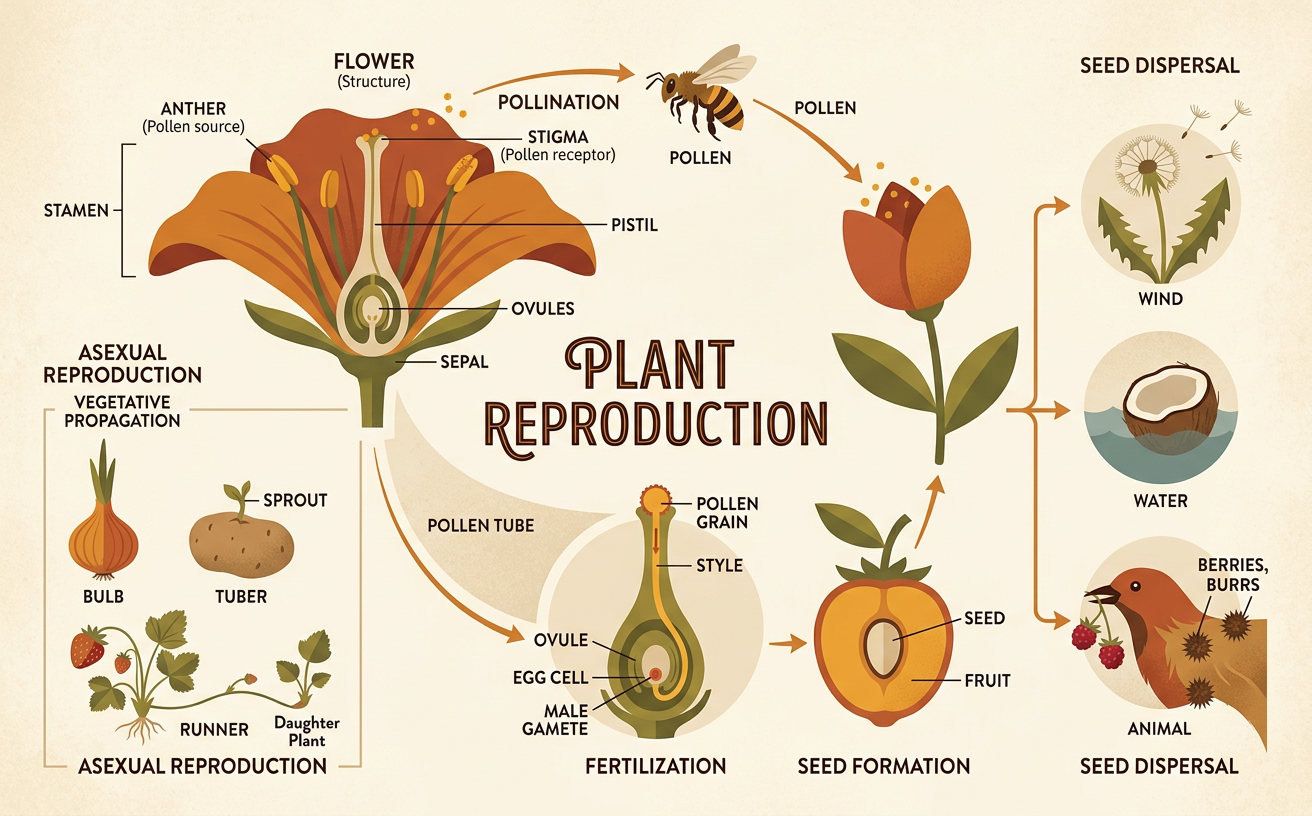
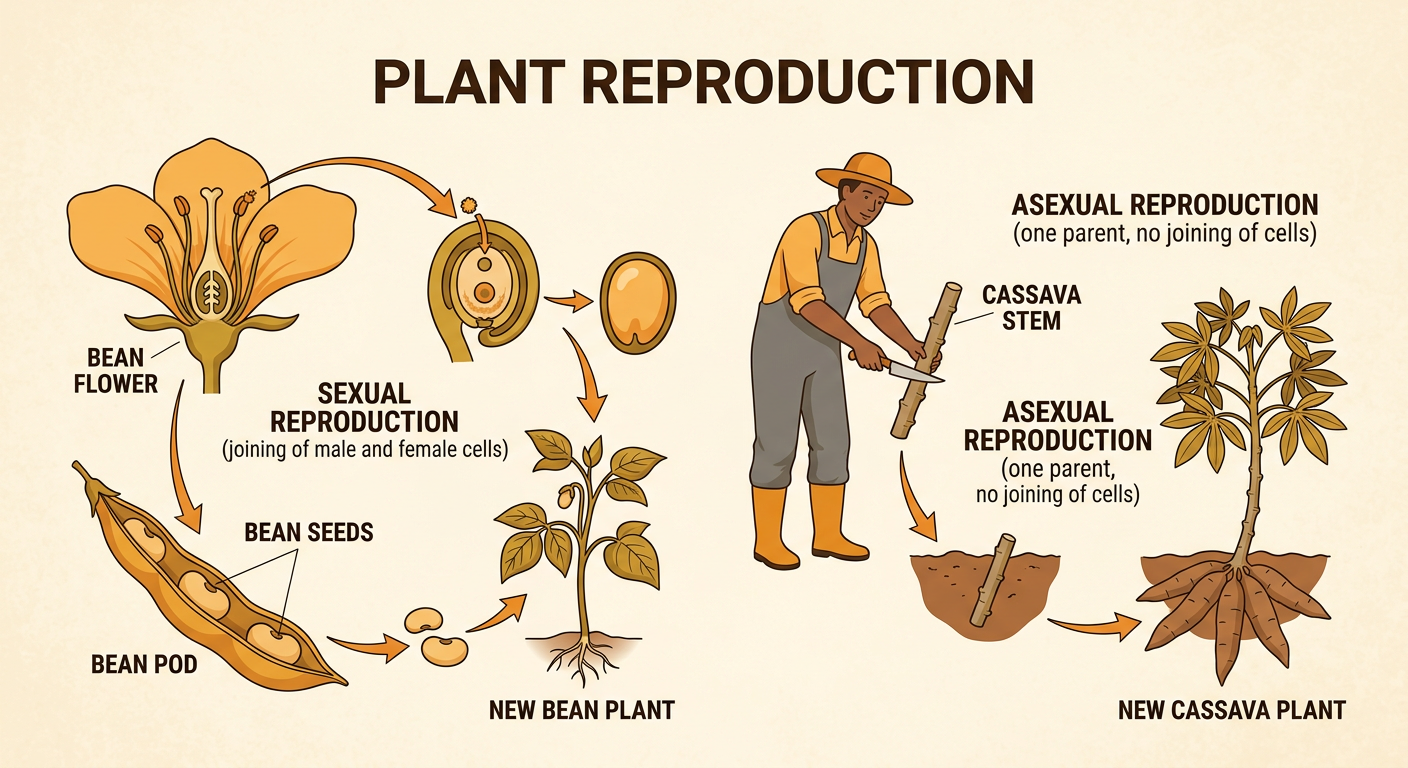
Plant reproduction is the process by which plants produce new plants of the same kind. It allows a plant species to continue from one generation to the next. Flowering plants commonly reproduce sexually. In sexual reproduction, pollen carries the male reproductive cell, which joins with the female reproductive cell inside an ovule. This process eventually produces seeds. For example, a bean flower can produce a pod containing seeds that may grow into new bean plants. Some plants also reproduce asexually. Asexual reproduction requires only one parent and does not involve the joining of male and female cells. New plants develop from parts such as stems, roots, or leaves. For example, farmers can grow cassava by planting pieces of its stem.
Reproductive Parts of a Flower
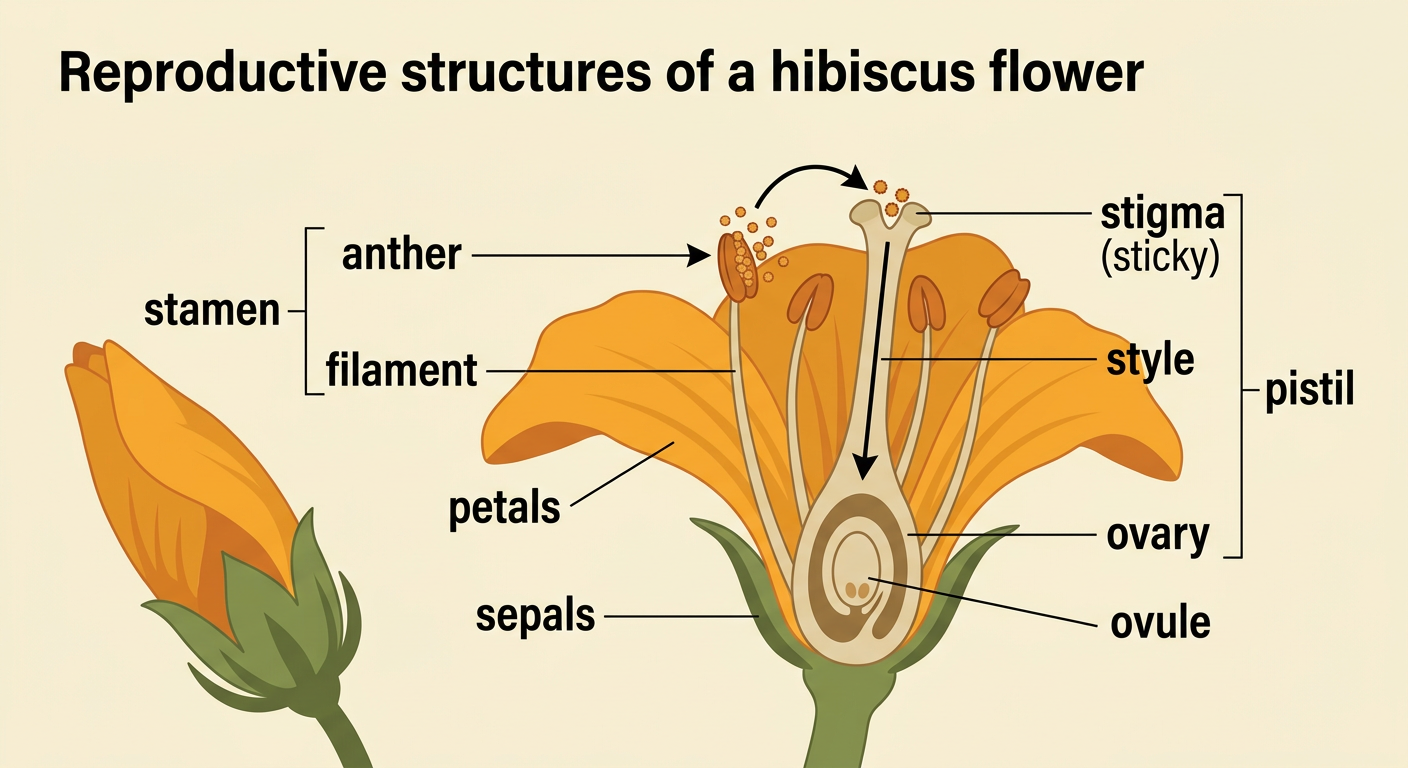
A flower contains structures that help a flowering plant reproduce. The male part is the stamen. Each stamen has an anther, which produces pollen grains, and a filament, which supports the anther. The female part is the pistil. Its sticky stigma receives pollen, while the style connects the stigma to the ovary. The ovary contains one or more ovules, where female reproductive cells are found. Petals often attract insects with their colors or scents, and sepals protect the flower while it is still a bud. Many flowers, such as hibiscus flowers, contain both male and female parts. These structures work together so that pollen can reach an ovule and a seed can begin to form after fertilization.
Pollination and Fertilization
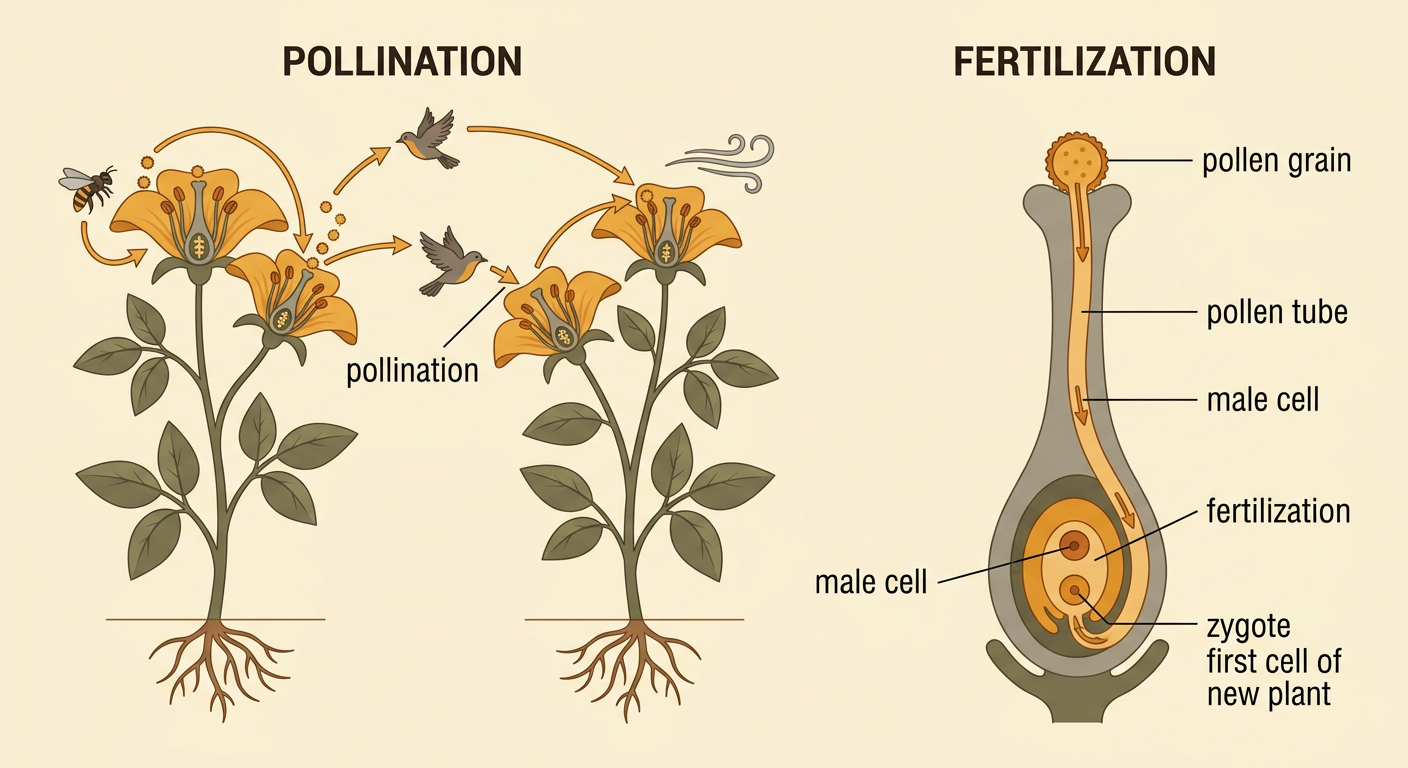
Pollination is the transfer of pollen grains from an anther to a stigma. In self-pollination, pollen reaches the stigma of the same flower or another flower on the same plant. In cross-pollination, pollen moves to a flower on another plant of the same species. Wind, water, insects, birds, and other animals can carry pollen. For example, a bee may collect nectar from a flower and leave pollen on the stigma of the next flower it visits. After pollination, a pollen grain can grow a pollen tube down through the style toward an ovule. The male reproductive cell travels through this tube. Fertilization occurs when the male cell joins the female cell inside the ovule, forming a zygote that can develop into an embryo.
Seed and Fruit Formation
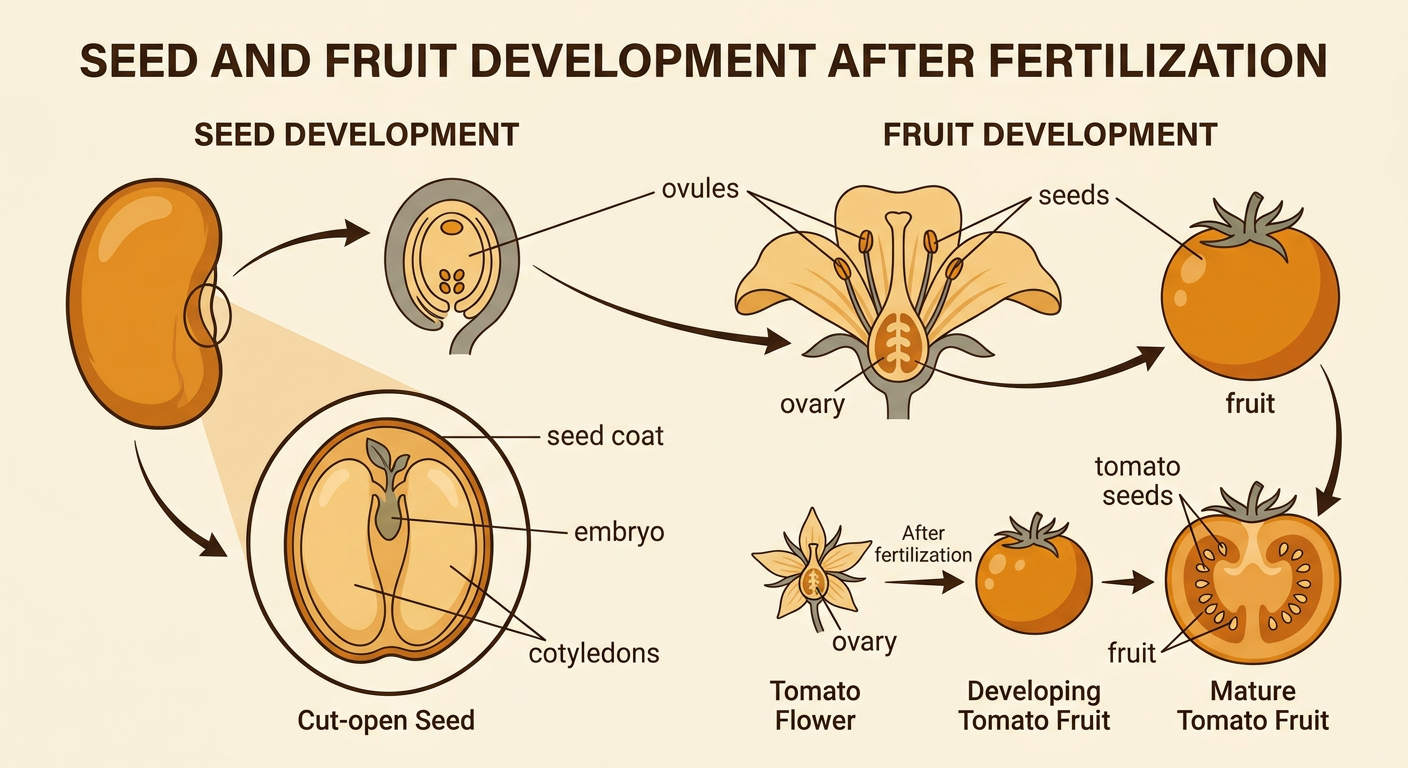
After fertilization, the zygote divides and develops into an embryo, which is the young plant inside a seed. The fertilized ovule becomes a seed, and its outer covering forms the seed coat. The seed coat protects the embryo from damage and drying. Food stored in the cotyledons or other seed tissues supplies energy when germination begins. At the same time, the ovary usually grows into a fruit, while other flower parts may dry up and fall off. A fruit protects the seeds and may also help disperse them. For example, after a tomato flower is pollinated and fertilized, its ovary enlarges into a tomato fruit. The ovules inside become tomato seeds. When conditions are suitable, a mature seed can germinate and grow into a new plant.
Seed Dispersal
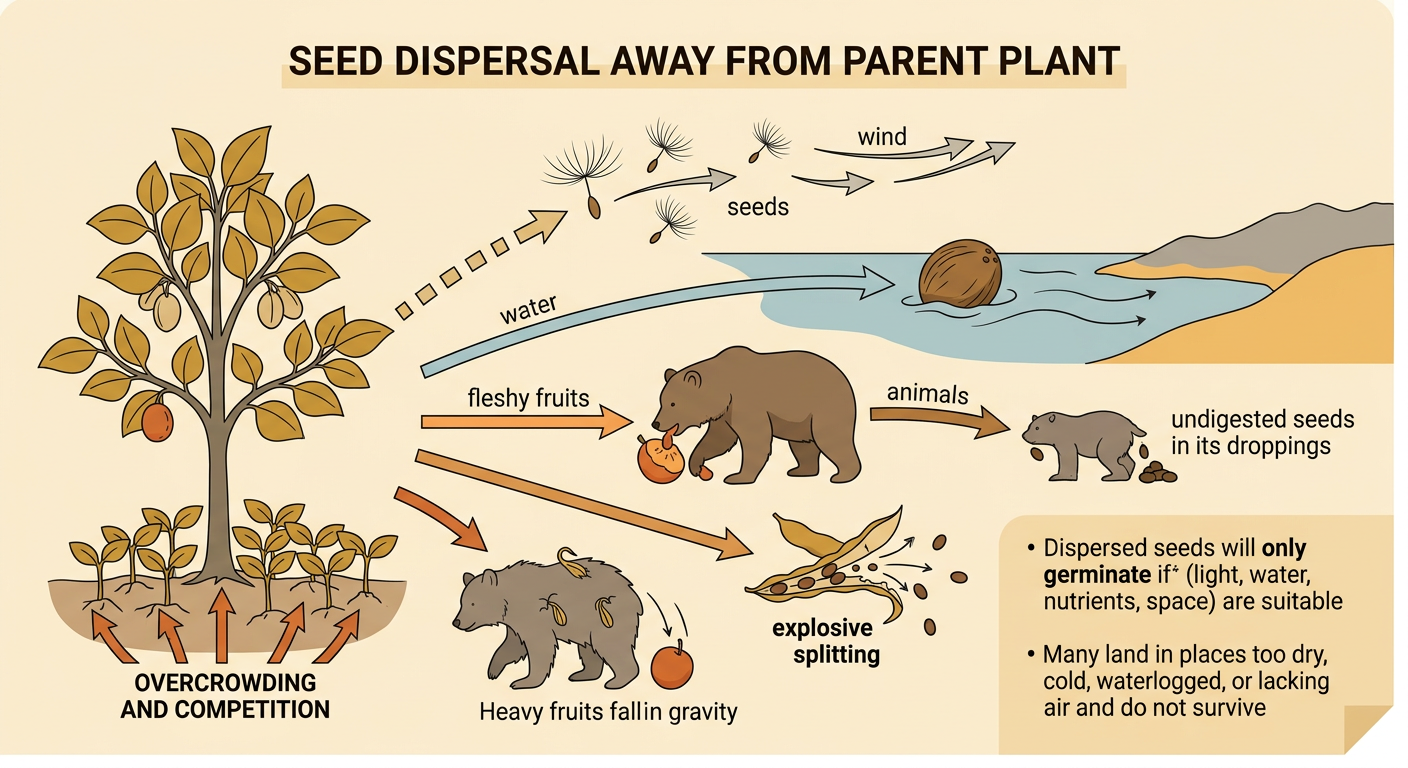
Seed dispersal is the movement of seeds away from the parent plant. Dispersal reduces overcrowding and competition for light, water, mineral nutrients, and space. Wind carries light seeds or fruits with wings or hairs, such as those of cotton. Water carries floating fruits, such as coconuts, to new places. Animals may eat fleshy fruits and later release the undigested seeds in their droppings. Hooked fruits can also cling to animal fur or people’s clothing. Some dry fruits, including certain bean pods, split suddenly and scatter their seeds. Heavy fruits may simply fall and roll away because of gravity. A seed that reaches a suitable place may germinate. However, many dispersed seeds do not survive because they land where water, air, warmth, or other conditions are unsuitable.
Asexual Reproduction in Plants
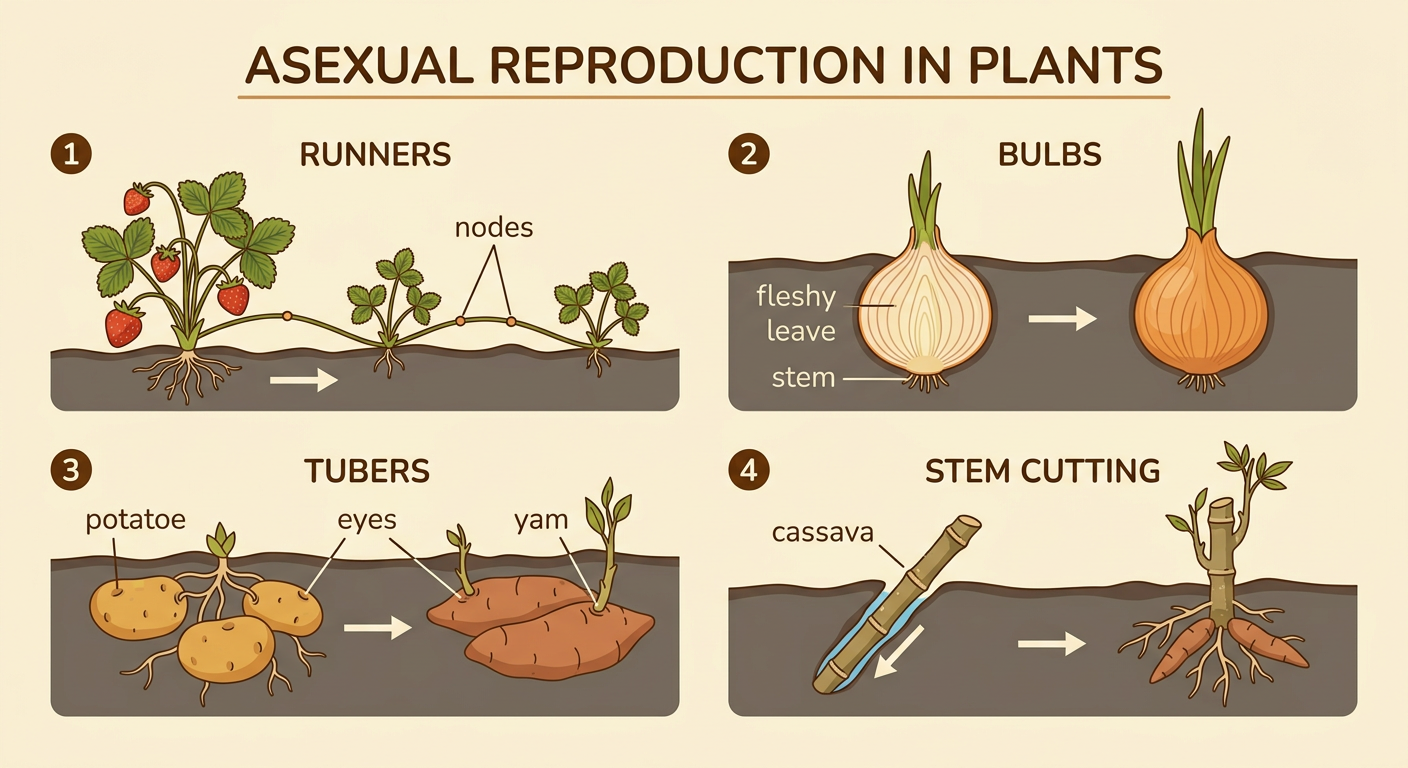
Asexual reproduction produces new plants from one parent without pollination, fertilization, or seed formation. It often occurs through vegetative parts such as stems, roots, and leaves. Runners are horizontal stems that form new plants at nodes, as in strawberry plants. Bulbs, such as onions, contain short stems and fleshy leaves that can produce new shoots. Tubers, such as yams and potatoes, have buds that grow into new plants. Some plants produce suckers from underground stems or roots. Farmers also use artificial methods. A cassava stem cutting planted in moist soil can develop roots and shoots. Asexual reproduction is usually fast and preserves useful features of the parent plant. However, the offspring are genetically very similar, so the same disease or environmental change may affect many of them.