Plant Structures Help Plants Survive
Students examine roots, stems, leaves, flowers, and other plant structures to explain how they support survival, growth, and reproduction in different environments.
Illustrations are auto-generated and may be placeholders. They can be refreshed to match the narration.
Observe Plant Structures
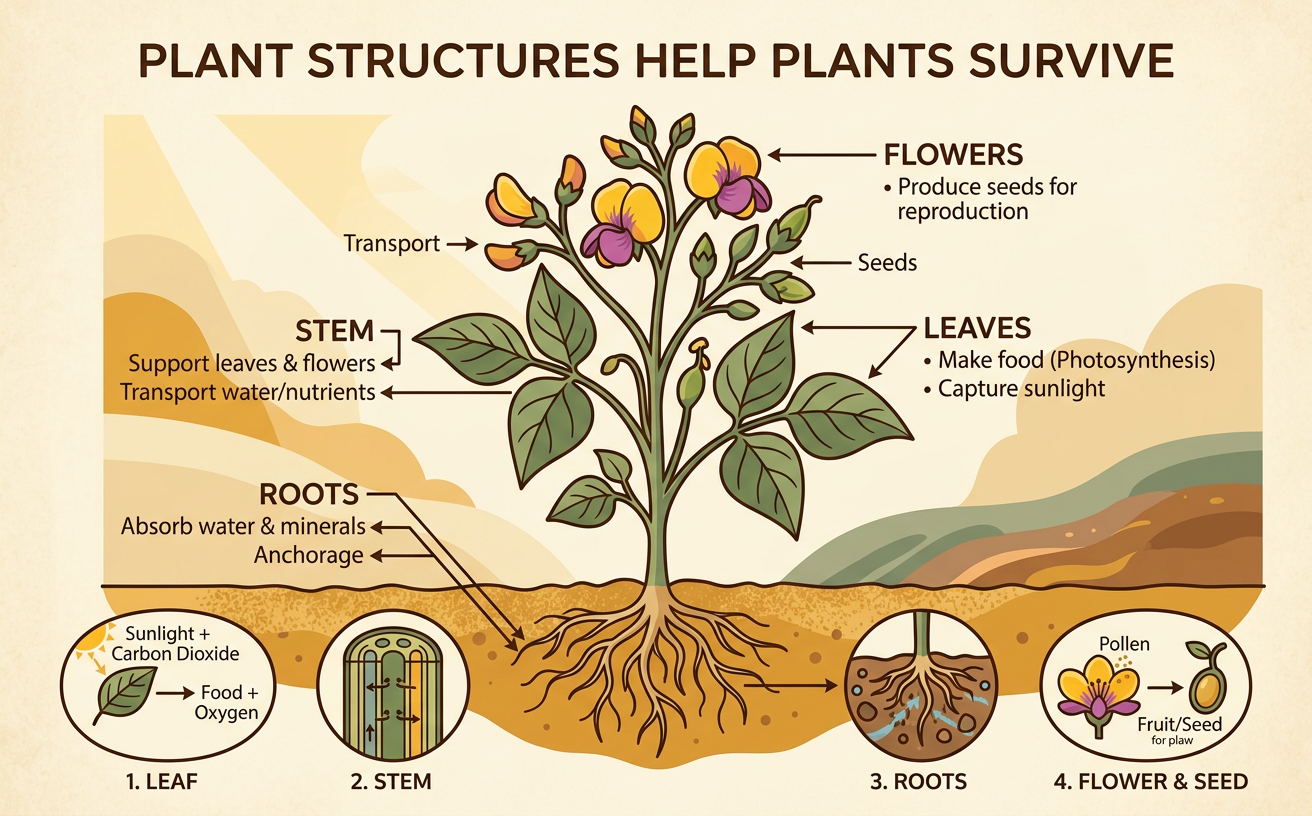
A plant has structures that help it live and grow. Roots usually anchor the plant and take in water and minerals from soil. The stem holds leaves and flowers where they can receive sunlight or reach pollinators. Inside the stem, tiny tubes transport water upward and carry sugars made by the leaves to other parts. Leaves capture sunlight and exchange gases with the air. Flowers help many plants reproduce by producing pollen and ovules that can become seeds. Fruits protect seeds and may help scatter them. For example, a bean plant has branching roots, a firm green stem, broad leaves, flowers, and seed-filled pods. Careful observations of shape, position, color, and texture provide clues about how each structure functions.

Match Structures to Functions
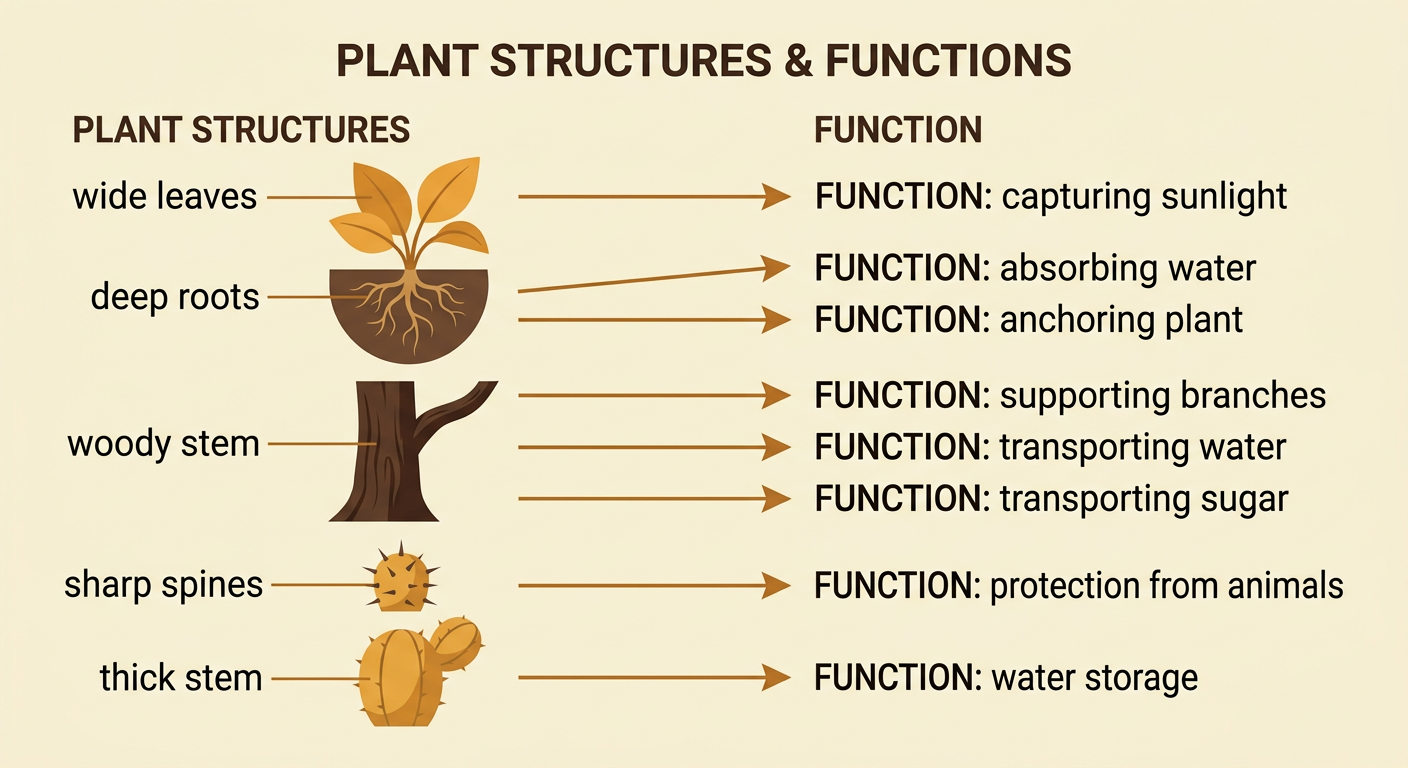
A structure is a body part, while a function is the job that part performs. To match them, look for evidence in the structure’s shape, material, and location. Wide leaves have large surfaces that collect sunlight for making sugar. Deep or spreading roots reach water and hold a plant in place. A woody stem supports heavy branches and transports materials. Bright petals and flower scents can attract animals that move pollen between flowers. Some structures provide protection. A cactus has sharp spines that discourage hungry animals, and its thick stem stores water. A pinecone protects developing seeds between tough scales. One structure can have more than one function. For example, a stem can provide support, transport water and sugar, and sometimes store food or water.
Compare Plants from Different Environments
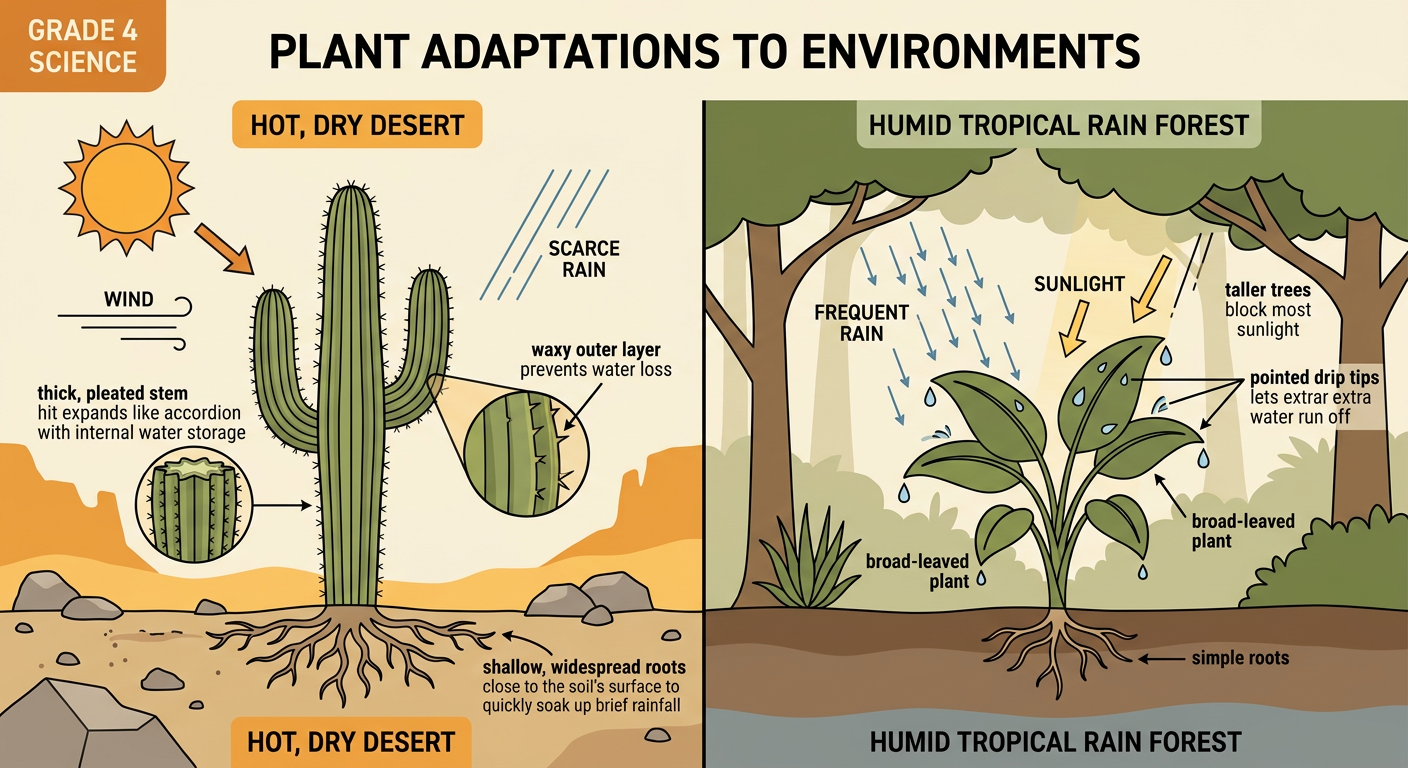
World regions differ in rainfall, temperature, wind, sunlight, and soil. Plants in each environment often have structures that help them survive those conditions. In a hot, dry desert, a saguaro cactus has a thick, pleated stem that stores water and expands after rain. Its waxy outer layer slows water loss, and its shallow, widespread roots quickly absorb brief rainfall. In a tropical rain forest, a broad-leaved plant receives frequent rain, but it may grow below taller trees where light is limited. Broad leaves capture available sunlight, and pointed drip tips help water run off. These differences do not mean that a plant chooses its structures. Over many generations, plants with helpful inherited traits are more likely to survive and reproduce in a particular environment.
Analyze Plant Measurement Data
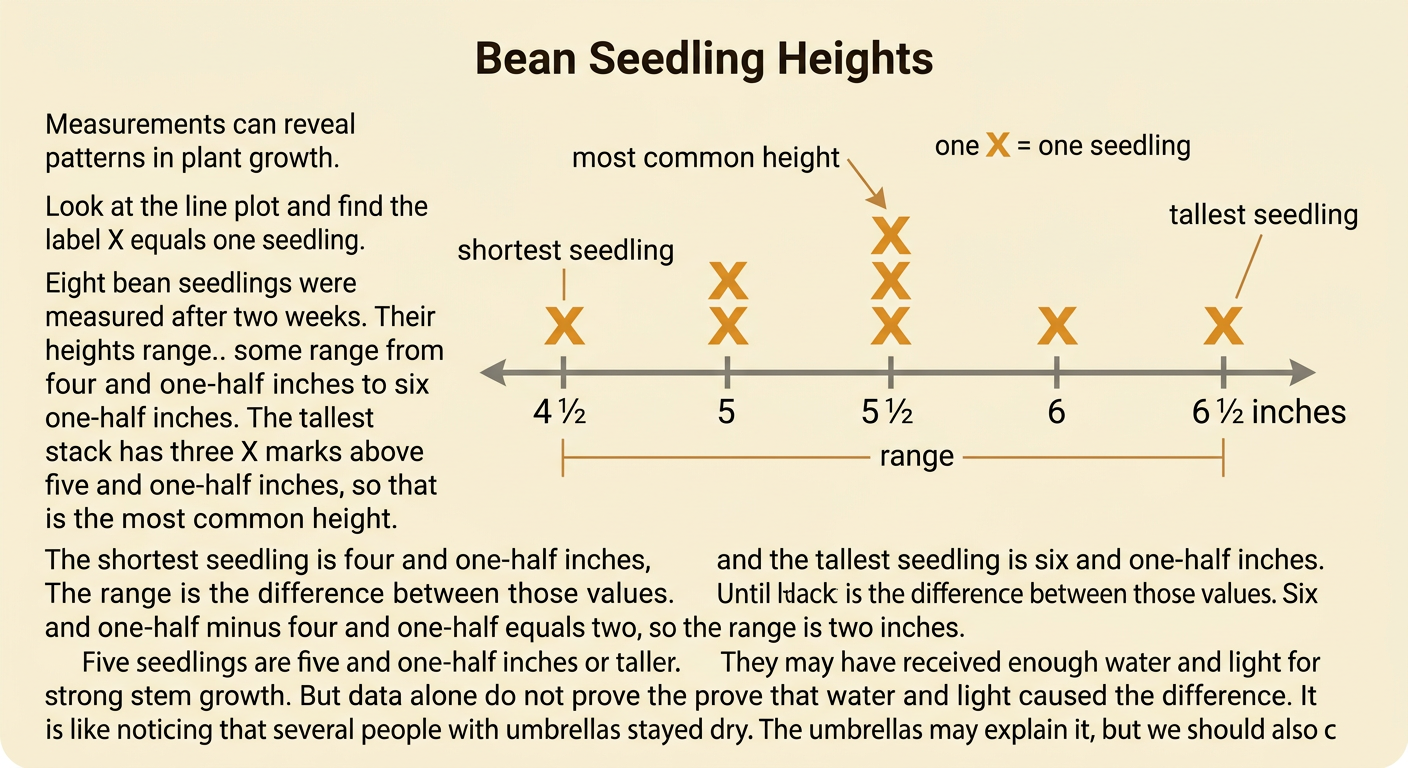
Measurements can show patterns in plant growth. Imagine that students measured eight bean seedlings after two weeks. Their heights, in inches, were 4 1/2, 5, 5, 5 1/2, 5 1/2, 5 1/2, 6, and 6 1/2. On a line plot, one X represents one seedling. The plot shows that 5 1/2 inches is the most common height because it has three X marks. The shortest seedling is 4 1/2 inches, and the tallest is 6 1/2 inches, so the range is 2 inches. The five seedlings measuring 5 1/2 inches or taller may have received enough water and light for strong stem growth. However, measurements alone do not prove the cause. Students should also compare growing conditions before explaining why the heights differed.
Build an Evidence-Based Explanation
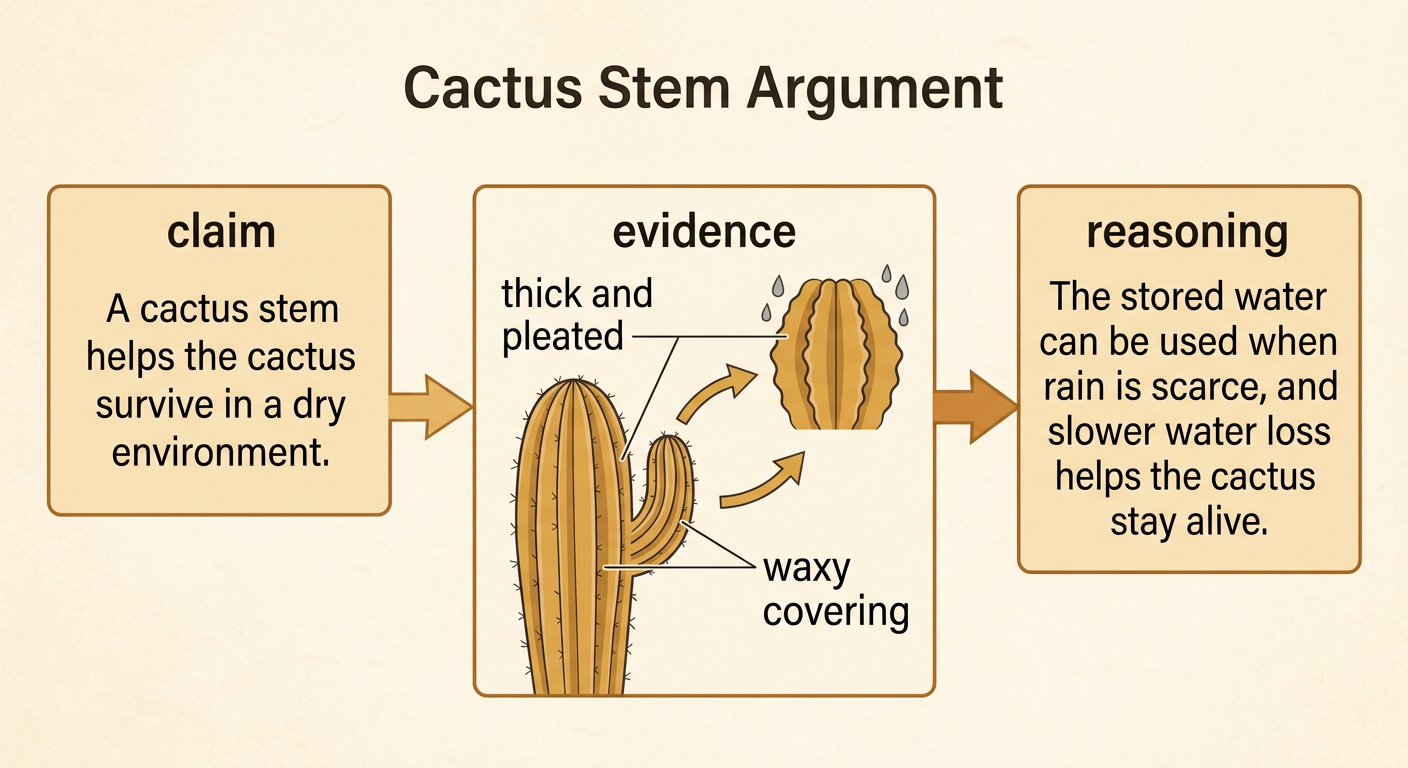
A scientific argument includes a claim, evidence, and reasoning. Begin with a claim that answers a question about how a plant structure supports survival, growth, or reproduction. Then give evidence from observations, measurements, diagrams, or informational text. Finally, explain why the evidence supports the claim. For example, claim: A cactus stem helps the cactus survive in a dry environment. Evidence: The stem is thick and pleated, and measurements show that it expands after rainfall. Its waxy covering also slows water loss. Reasoning: Stored water can be used when rain is scarce, while reduced water loss helps the plant remain alive. A strong explanation uses accurate details and avoids unsupported guesses. It may also compare structures, such as explaining why a cactus has a water-storing stem while a rain forest plant usually does not need one.