
Pollination Partnerships: How Plants Reproduce
Students examine how flower structures and animal pollinator behaviors work together to increase the reproductive success of plants.
Illustrations are auto-generated and may be placeholders. They can be refreshed to match the narration.
Why Plants Need Pollination
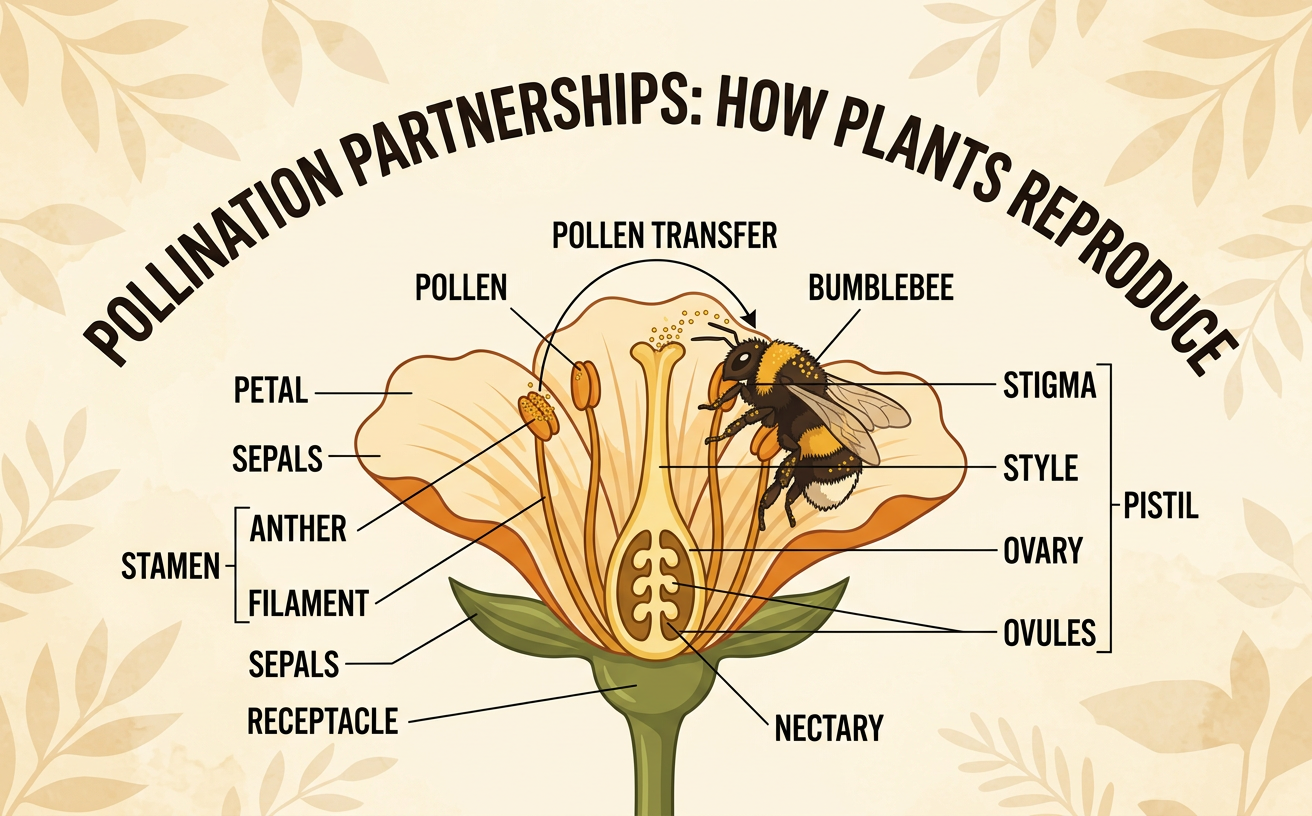
Flowering plants reproduce by making seeds, which can grow into new plants. Pollination is the transfer of pollen from an anther, the pollen-producing part of a flower, to a stigma, the pollen-receiving part. After compatible pollen reaches the stigma, a pollen tube may grow toward an ovule. A sperm cell then joins an egg cell in fertilization. The fertilized ovule can develop into a seed, and the surrounding ovary may become a fruit. Pollination increases the chance that plants will produce offspring. For example, when a bee carries pollen between two apple blossoms of the same species, fertilization may follow. The flower can then develop into an apple containing seeds. Without enough successful pollination, an apple tree may produce fewer or misshapen fruits.

Parts of a Flower
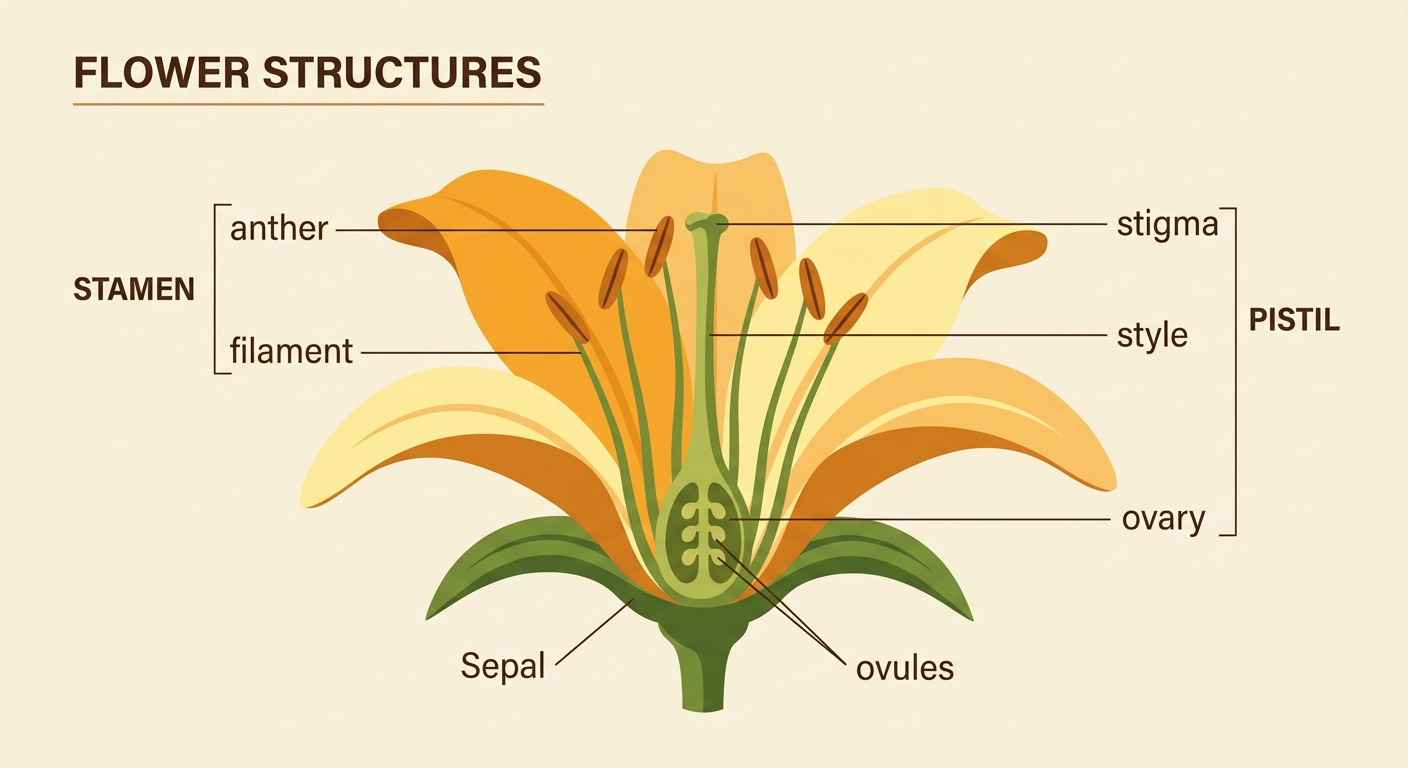
Each flower structure has a role in reproduction. The stamens are the male reproductive structures. Each stamen includes a filament that holds up an anther, where pollen is produced. The pistil is the female reproductive structure and includes the stigma, style, and ovary. The sticky or textured stigma receives pollen. The style connects the stigma to the ovary, which contains one or more ovules. Petals may attract animal pollinators with bright colors, patterns, or scents. Sepals protect the flower before it opens, and nectaries may produce sugary nectar. In a lily, long stamens place pollen where a visiting insect can brush against it. The central stigma is positioned to collect pollen carried from another lily. These specialized structures help pollen transfer and make successful reproduction more likely.
How Pollen Moves
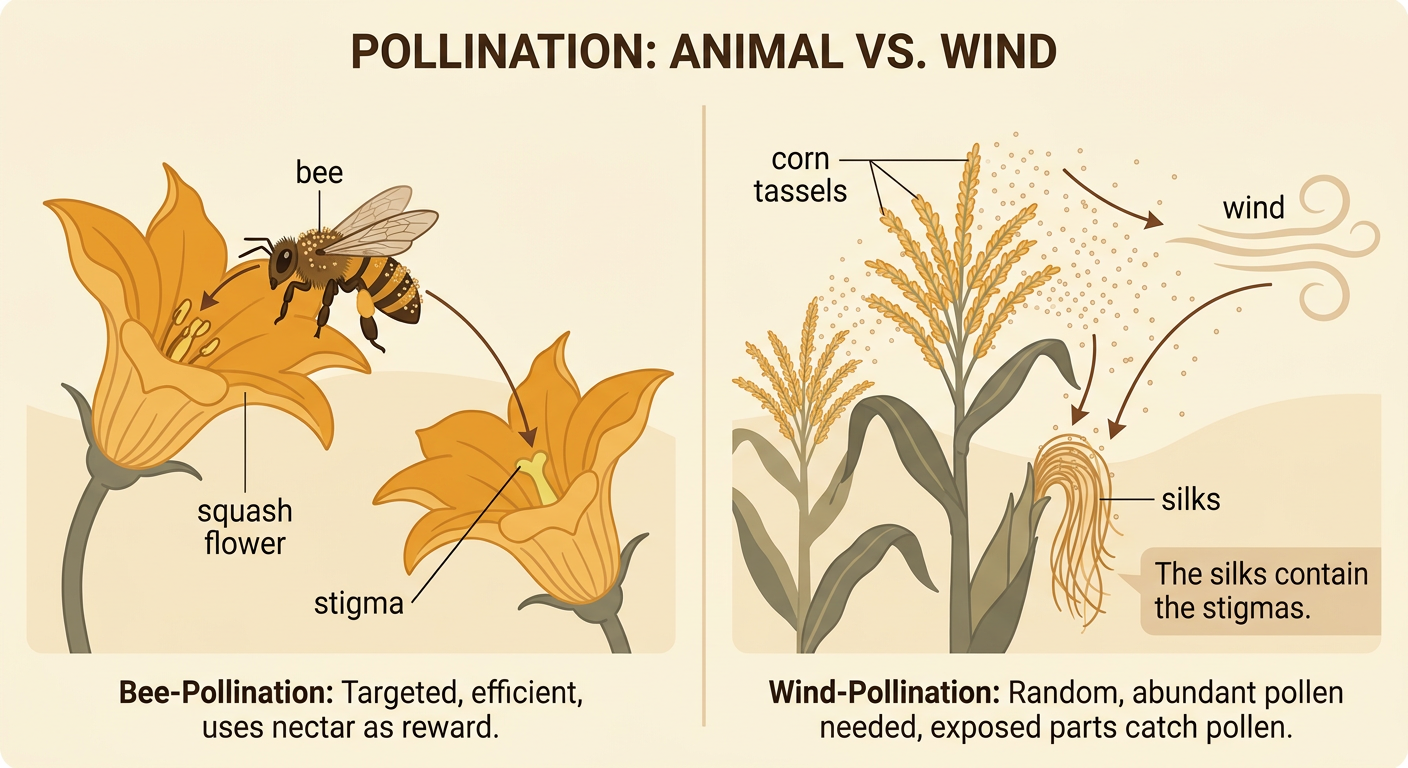
Pollen can move by animals, wind, and, in a few plant species, water. Animal-pollinated flowers often offer nectar or pollen as food. As an animal feeds, pollen sticks to its body and may be carried to another flower of the same species. Wind-pollinated plants usually produce large amounts of light, dry pollen and often have exposed anthers and feathery stigmas. For example, a bee entering a squash flower may pick up sticky pollen on its hairy body. When the bee visits a female squash flower, some pollen can rub onto the stigma. By contrast, corn releases clouds of pollen from tassels. Wind carries some grains to the silks, which contain the stigmas. Most pollen does not reach a suitable flower, so structures and animal behaviors that guide pollen transfer can greatly improve reproductive success.
Pollinator Behaviors and Plant Traits
Pollinator behavior and flower traits often fit together in ways that improve pollen transfer. Bees can see colors and patterns, smell floral scents, and learn which flower shapes provide food. Many bee-pollinated flowers have landing surfaces and nectar guides that point toward nectar. As a bee follows these guides, its body contacts anthers and stigmas. Hummingbirds hover and use long bills and tongues to reach nectar in deep, tubular flowers. These flowers are often red or orange and hold their reproductive structures where a bird's head will touch them. For example, when a hummingbird drinks from a trumpet-shaped flower, pollen may dust its forehead. At the next flower, that pollen may touch the stigma. The bird gains food, while the plant gains a more directed method of pollen transport.

Evidence from Pollination Examples
Scientists use observations and data to connect pollinator behavior with plant reproductive success. They may count visits, measure pollen on stigmas, or compare the number of fruits and seeds produced under different conditions. Imagine that researchers cover 20 blueberry flower clusters with mesh bags that exclude bees and leave 20 similar clusters uncovered. The covered clusters produce 12 berries, while the uncovered clusters receive many bee visits and produce 68 berries. If light, water, plant health, and other conditions are similar, the results support the claim that bee visits increased pollination and fruit production. The evidence is stronger when the study includes many plants and is repeated. However, the data show a relationship under the tested conditions; scientists should still check for other possible causes and gather additional evidence before making a broad conclusion.

Pollinators, Agriculture, and People
Pollinators support wild plant communities and many crops that people eat, including almonds, blueberries, melons, and squash. Farms may depend on wild pollinators, managed honey bee colonies, or both. Decisions about land and resources can help or harm these animals. Removing hedgerows may create more planting space, but it can also remove nesting sites and flowers used by pollinators. Planting strips of native flowers provides food across the growing season and can connect habitats separated by roads or fields. Careful pesticide timing and selection can reduce pollinator exposure while farmers manage crop pests. For example, a grower might avoid spraying insecticides while fruit trees are blooming and bees are actively visiting. Such choices involve economic trade-offs, but healthy pollinator populations can support crop yields, biodiversity, and the livelihoods of farmers and beekeepers.
