
Property Detectives: Hard, Soft, Bendable, or Rigid?
Students observe, describe, and group safe classroom objects by physical properties such as hardness, texture, and flexibility.
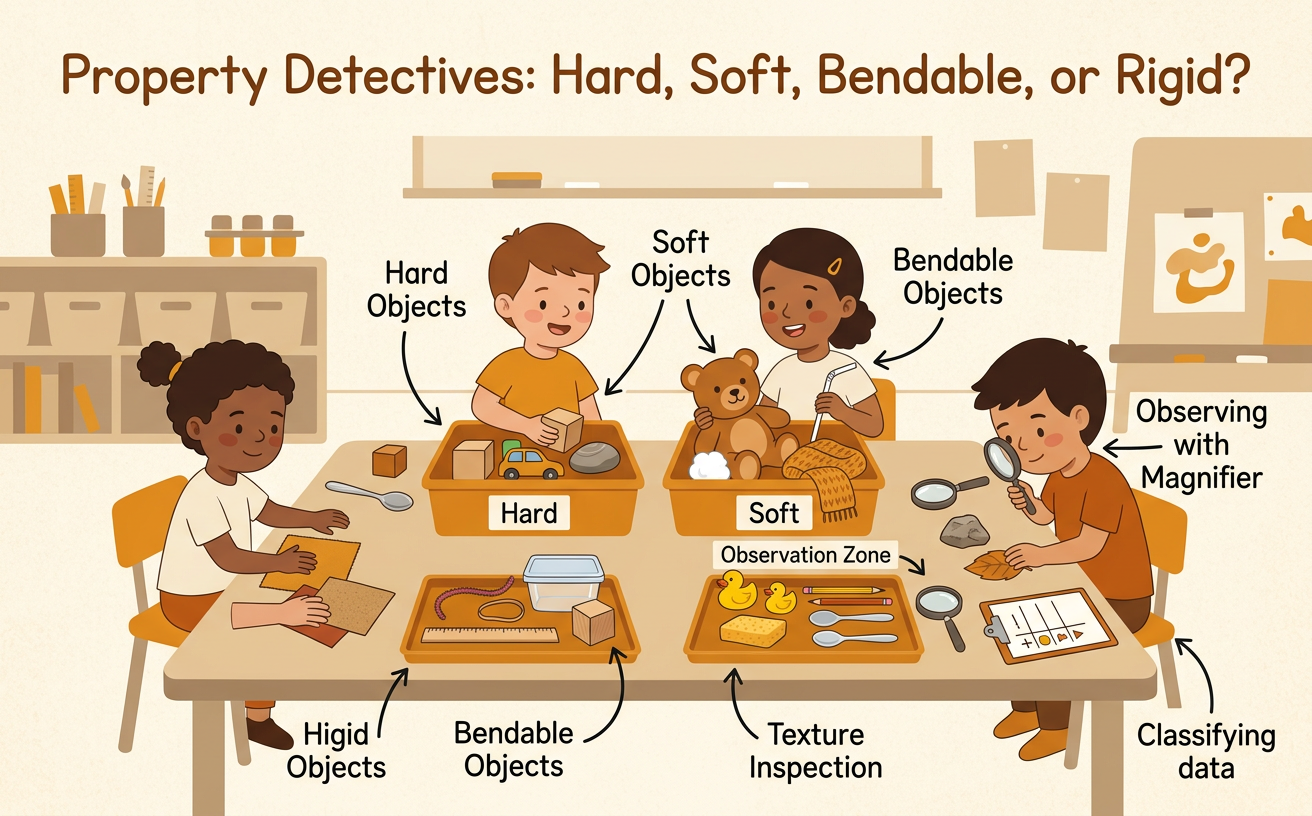
Illustrations are auto-generated and may be placeholders. They can be refreshed to match the narration.
Meet the Property Words
A property is something we can observe about an object. We can look at an object and gently touch it to learn about its properties. A hard object does not press in easily. A soft object can be pressed or squeezed. A bendable object can change shape without breaking. A rigid object keeps its shape when we gently try to bend it. Texture tells how a surface feels. It may feel smooth, rough, bumpy, or fuzzy. For example, a plastic block is hard, smooth, and rigid. A sponge is soft, bumpy, and bendable. One object can have more than one property. Use property words to tell a partner what you notice.

Observe Objects Safely
Scientists use careful steps to observe objects. First, wait until the teacher says an object is safe to test. Look closely at its color, shape, and surface. Then touch it with clean, dry hands. Press or bend it only a little. Keep objects away from your mouth, nose, eyes, and ears. Never taste an object. Do not test anything sharp, hot, broken, or unknown. Take turns and place each object back on the tray. For example, look at a cotton ball before gently touching it. You may notice that it is white, soft, and fuzzy. Tell your group what you observed, and listen while others share their ideas.

Test Texture and Flexibility
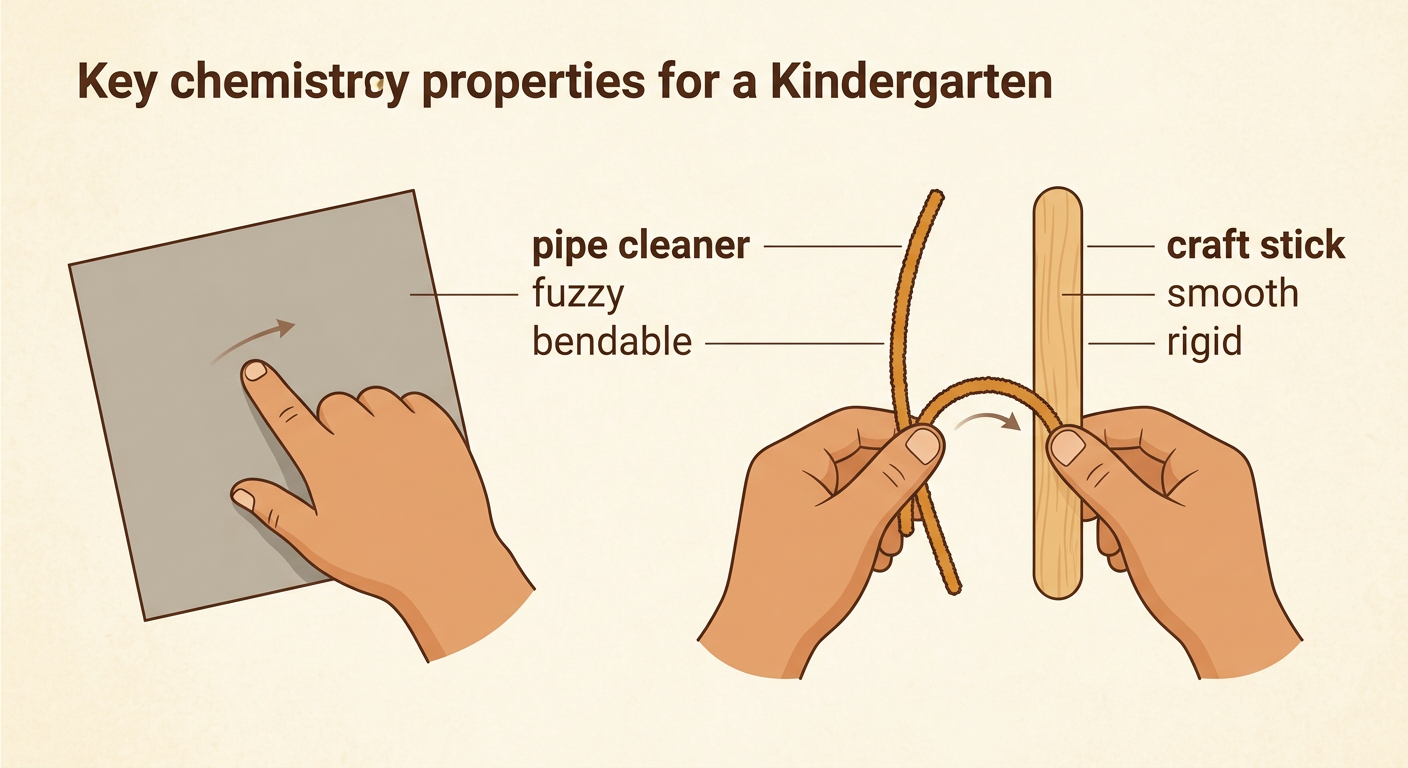
We can use simple tests to learn about texture and flexibility. To test texture, slide one fingertip gently across a safe surface. Does it feel smooth, rough, bumpy, or fuzzy? To test flexibility, hold the object as the teacher shows you and give it a very small bend. Stop if it cracks, breaks, or has a sharp edge. A pipe cleaner feels fuzzy and bends easily, so it is bendable. A wooden craft stick feels smooth but does not bend easily, so it is rigid. Objects can share one property and differ in another. Partners can use a sentence such as, “The pipe cleaner is fuzzy and bendable.” Listen to your partner and compare what both of you noticed.
Sort by One Property
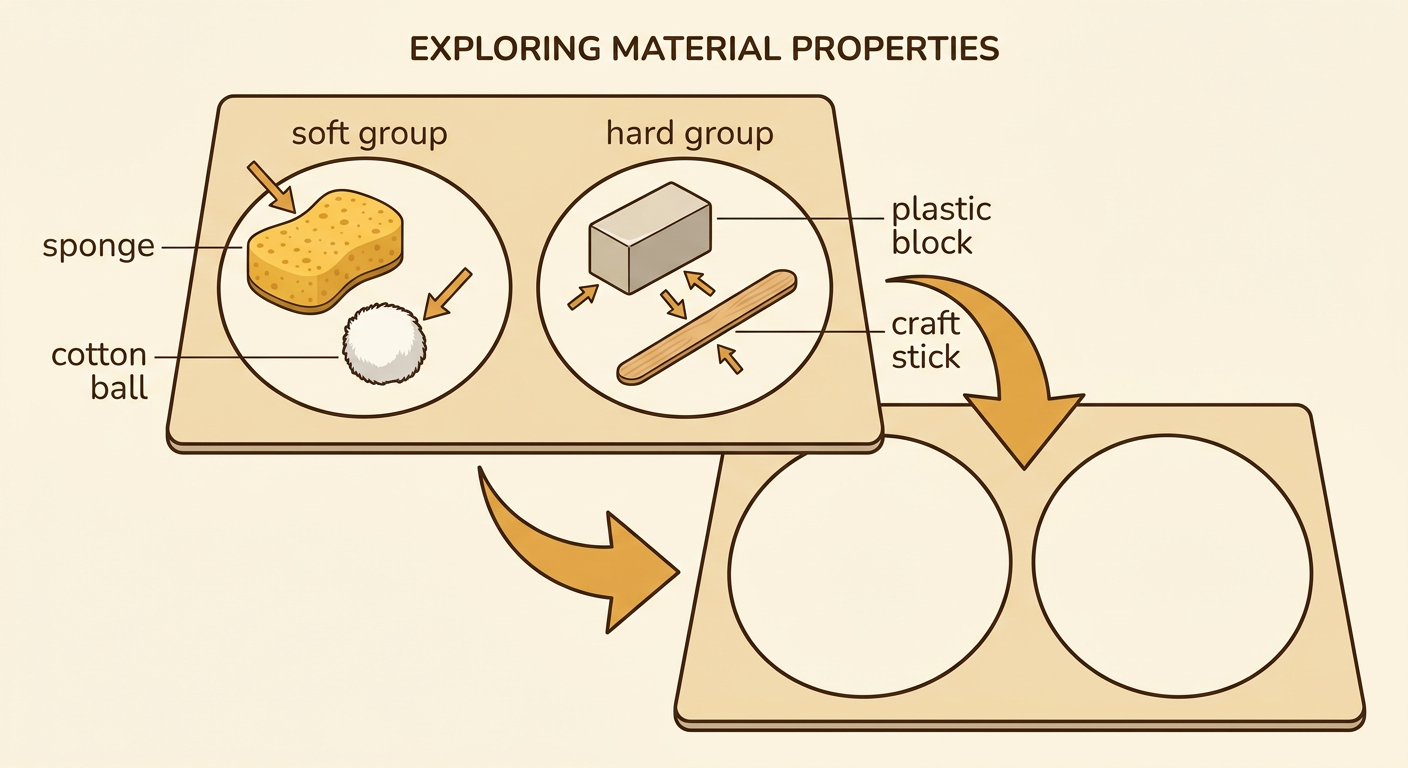
Sorting means putting objects into groups by a rule. Choose only one property for each sort so the rule is clear. You might sort a sponge, plastic block, cotton ball, and craft stick into soft and hard groups. The sponge and cotton ball go in the soft group. The plastic block and craft stick go in the hard group. Count the objects in each group and compare the groups. Then try a new rule, such as bendable and rigid. Some objects may be difficult to place, so talk with your group and test them again gently. The best material can depend on its job. A soft sponge is useful for wiping, but a rigid block is better for building. Each choice has a benefit and a limit.
Explain Our Groups
After sorting, explain the rule your group used. Point to each group and name the shared property. You can say, “We grouped the sponge and cotton ball together because they are soft.” Give evidence from your observation or test. For example, “They pressed in when we touched them gently.” Another student may ask a question or share a different idea. Listen, take turns speaking, and use property words in your answer. A different sorting rule can create different groups, and that is okay. A sponge and pipe cleaner may be together in a bendable group but separated in a texture sort. End by telling which material you would choose for a job. You might choose a soft cloth for cleaning because it bends and will not scratch the table.
