
Protecting Biodiversity: Choosing a Conservation Plan
Students analyze species data and textual evidence to compare conservation plans and recommend how a community should protect biodiversity while considering human needs.
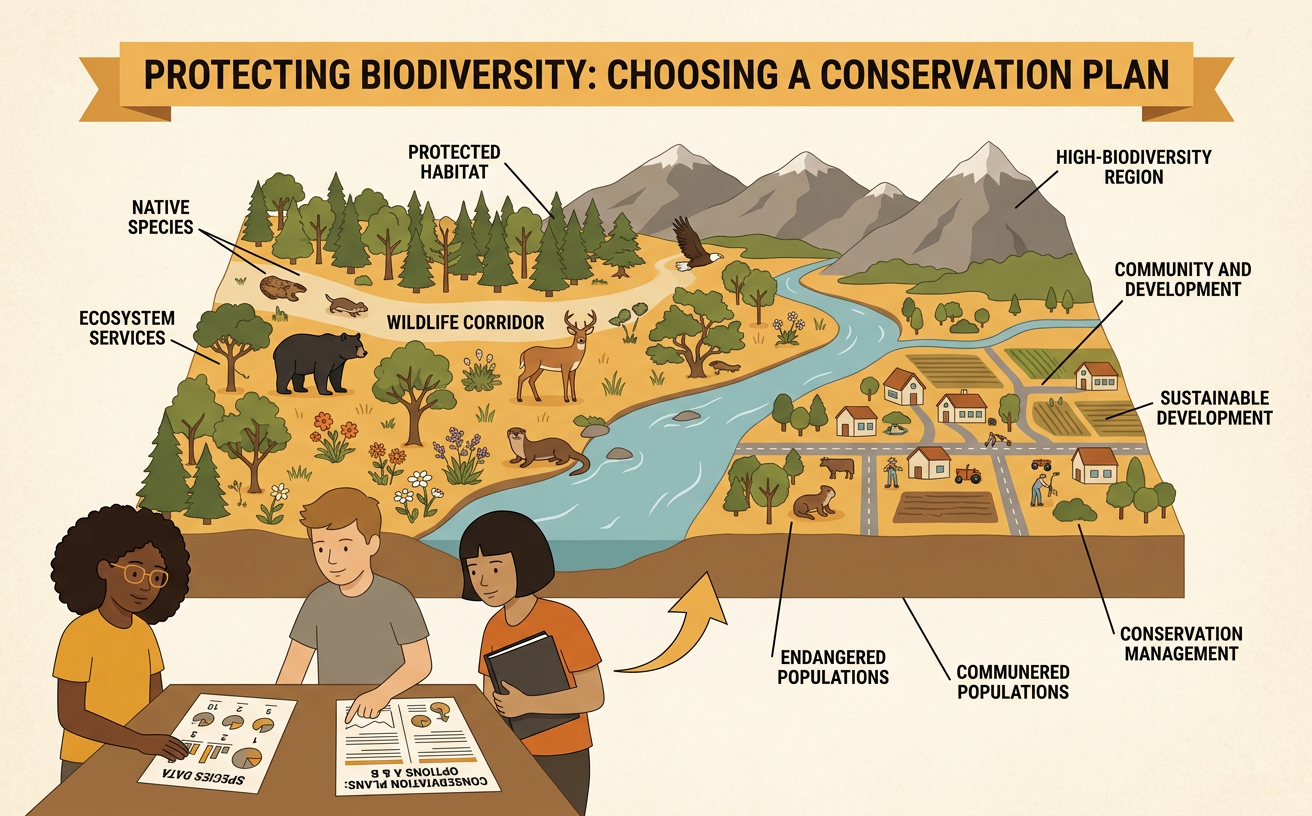
Illustrations are auto-generated and may be placeholders. They can be refreshed to match the narration.
What Is Biodiversity?
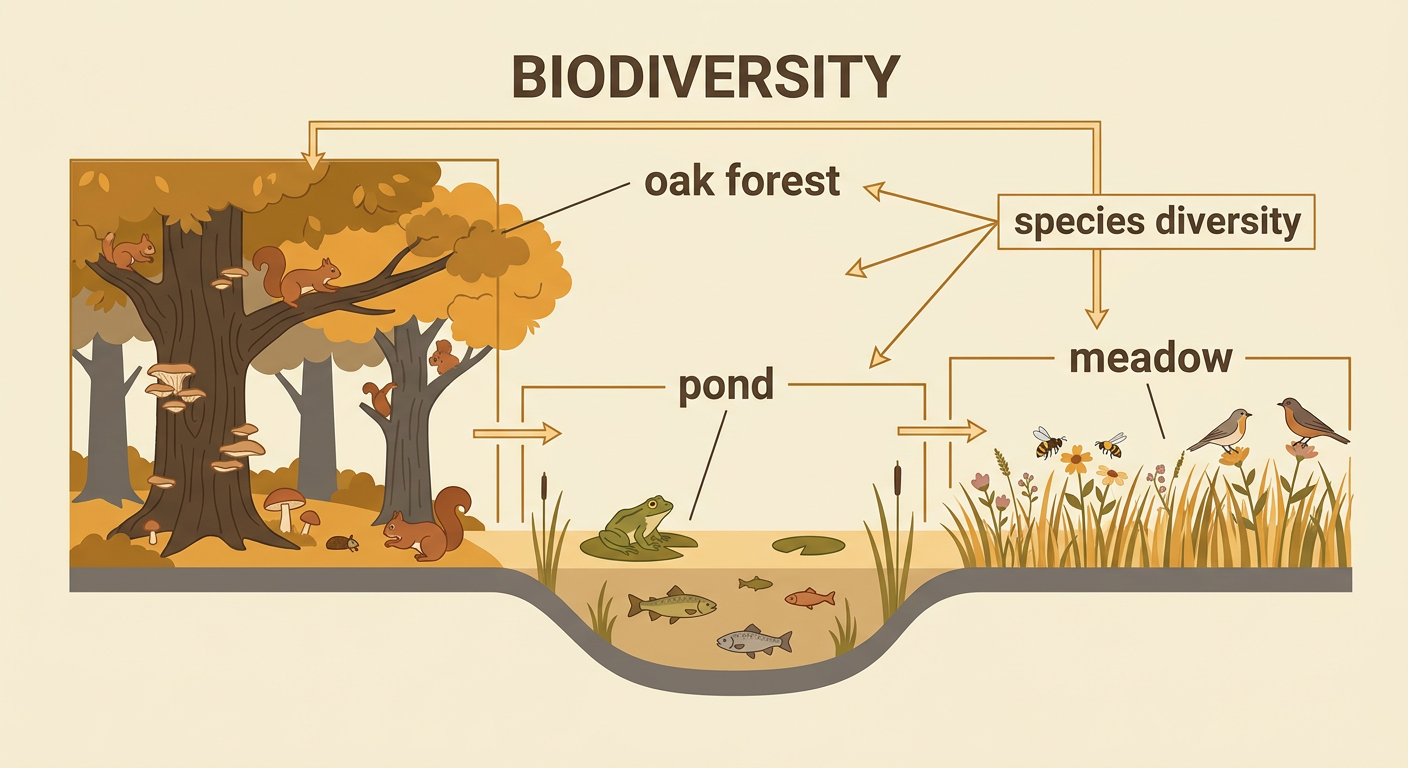
Biodiversity is the variety of living things in an area. It includes species diversity, or the number and balance of different species; genetic diversity, or differences among members of one species; and ecosystem diversity, or the variety of habitats. For example, a community park may contain an oak forest, a pond, and a meadow. Frogs, fish, insects, grasses, birds, and fungi use these habitats in different ways. A park with many native species and connected habitats generally has greater biodiversity than a lawn containing only one kind of grass. Scientists measure biodiversity by identifying species and counting how many individuals are present. A large number of organisms does not always mean high biodiversity. A pond with 500 fish of one species has lower species diversity than a pond with several fish, frog, insect, and plant species.
Why Biodiversity Matters
Biodiversity helps ecosystems function and provides ecosystem services that people depend on. Pollinating insects help flowering plants produce fruits and seeds. Wetland plants slow moving water, reduce flooding, trap some pollutants, and provide wildlife habitat. Decomposers return nutrients to soil, while predators can help prevent prey populations from becoming too large. Biodiversity can also make an ecosystem more resilient because several species may perform similar roles. If one pollinator declines, another may continue pollinating plants. Human communities receive food, clean water, recreation, cultural value, and income from healthy ecosystems. For example, protecting a marsh near a town can support fish and bird populations while reducing flood damage to homes. However, conservation decisions may affect where people build, farm, fish, or work, so communities must consider both ecological benefits and human needs.

Reading Local Species Data
Species data help communities identify changes, but the surveys must use similar locations, seasons, and methods. Imagine that volunteers surveyed the same wetland for the same number of hours each spring. They counted 40 chorus frogs in 2020 and 24 in 2024. The 2024 count is 24 out of 40, or 60 percent of the 2020 count. The decrease was 16 frogs, which is a 40 percent decline over four years, averaging 4 fewer frogs per year. This pattern may signal a problem, but it does not prove the cause. Students should also examine habitat and water-quality information. A report might state, “Native shoreline plants decreased after repeated mowing.” Citing that sentence connects the frog data to a possible habitat change. Reliable conclusions combine numerical patterns, specific textual evidence, and limits of the available data.

Comparing Conservation Plans
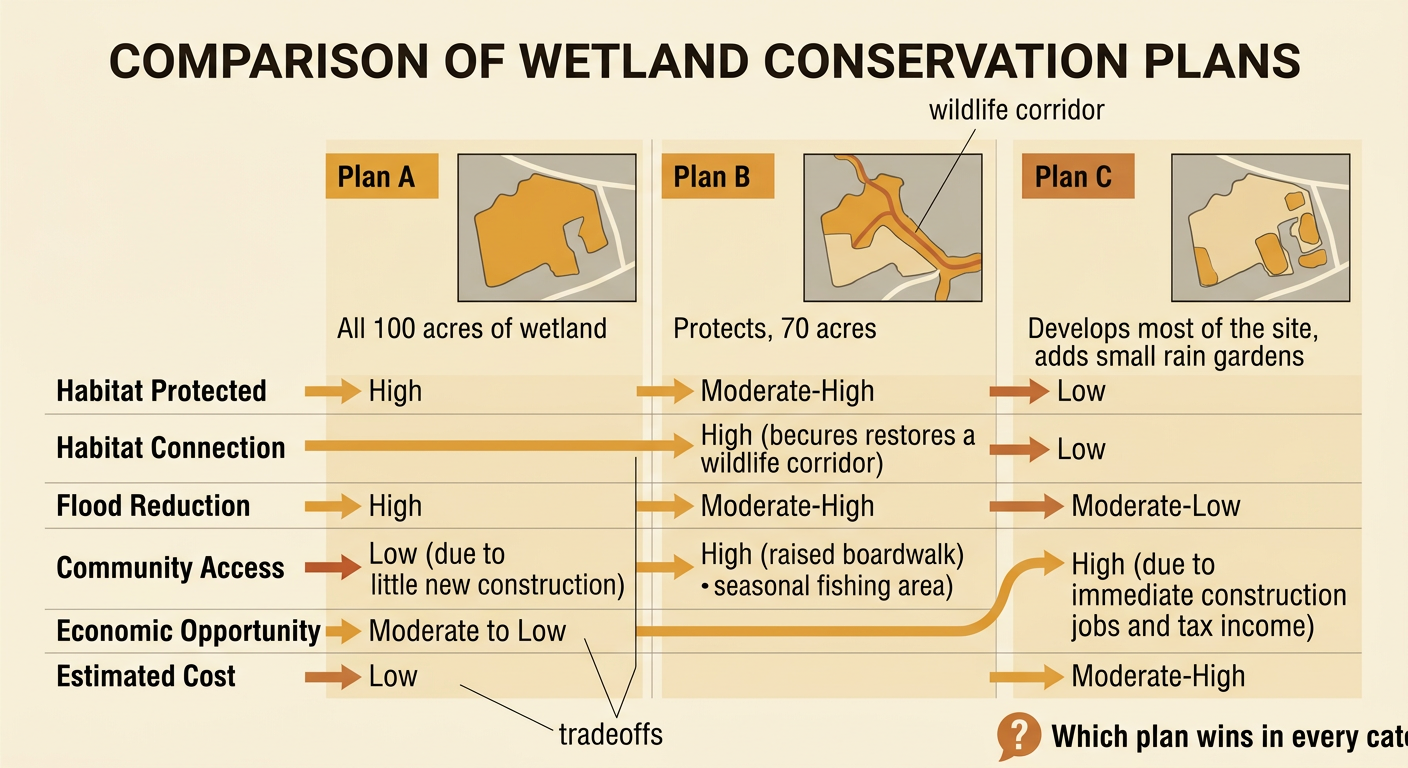
A community should compare conservation plans using the same criteria, such as biodiversity protection, ecosystem services, cost, access, and effects on jobs or cultural practices. Suppose a town is choosing among three plans for a 100-acre wetland. Plan A protects all 100 acres, offering the most habitat and flood storage but allowing little new construction. Plan B protects 70 acres, adds a wildlife corridor, and provides a raised boardwalk and seasonal fishing area. It preserves less habitat than Plan A but supports recreation and traditional fishing access. Plan C develops most of the site and adds small rain gardens. It may create more immediate construction jobs and tax income, but it protects the least connected habitat. A comparison chart can reveal tradeoffs. No plan is best in every category, so students must judge which benefits and costs matter most to the community.
Making an Evidence-Based Recommendation
An evidence-based recommendation states a claim, supports it with relevant evidence, and explains the reasoning. For the wetland example, a student might recommend Plan B. The claim could be: “The town should protect 70 acres, restore the wildlife corridor, and allow carefully managed public access.” Evidence includes the 40 percent frog decline, the report’s statement that native shoreline plants decreased, and information showing that connected wetlands provide habitat and flood reduction. The reasoning should explain that restoring vegetation and connecting habitats address likely threats while the boardwalk and seasonal fishing zone respect recreation, cultural practices, and local income. The student should also acknowledge that Plan A protects more habitat. A strong recommendation includes monitoring: survey frogs yearly with the same method, measure water quality, and review fishing and visitor effects. If biodiversity continues to decline, the town can adjust access rules or protect additional land.
