
Protecting Biodiversity from Human Impacts
Students examine evidence of how human activities affect biodiversity and compare possible solutions for protecting species and ecosystem services.

Illustrations are auto-generated and may be placeholders. They can be refreshed to match the narration.
What Is Biodiversity?
Biodiversity is the variety of life in an area. It includes genetic diversity within a species, the number of different species, and the variety of ecosystems. A healthy wetland, for example, may contain many kinds of plants, insects, fish, birds, and microorganisms. These organisms interact in food webs and help the wetland function. Biodiversity also supports ecosystem services, which are benefits people receive from nature. Wetlands filter water, reduce flooding, store carbon, and provide food and recreation. An ecosystem with many species may be more resilient because different organisms can perform similar roles when conditions change. However, biodiversity is not measured only by counting organisms. Scientists also consider which species are present, how common they are, and whether their populations are stable.

Human Activities That Change Habitats
Human activities can change the size, quality, and location of habitats. Building roads and neighborhoods may divide one large forest into smaller patches, making it harder for animals to find food, mates, or shelter. Farms and cities can also release fertilizers or other pollutants into rivers. Climate change shifts temperature and rainfall patterns, while introduced species may compete with native species. For example, a highway through a forest can isolate frog populations on opposite sides of the road. Human populations often grow near coasts, rivers, roads, and other places that provide water, transportation, jobs, or level land. Development in these locations can overlap with wetlands and other species-rich ecosystems. The impact depends on where an activity occurs, how large it is, and how long it lasts.

Reading Biodiversity Evidence
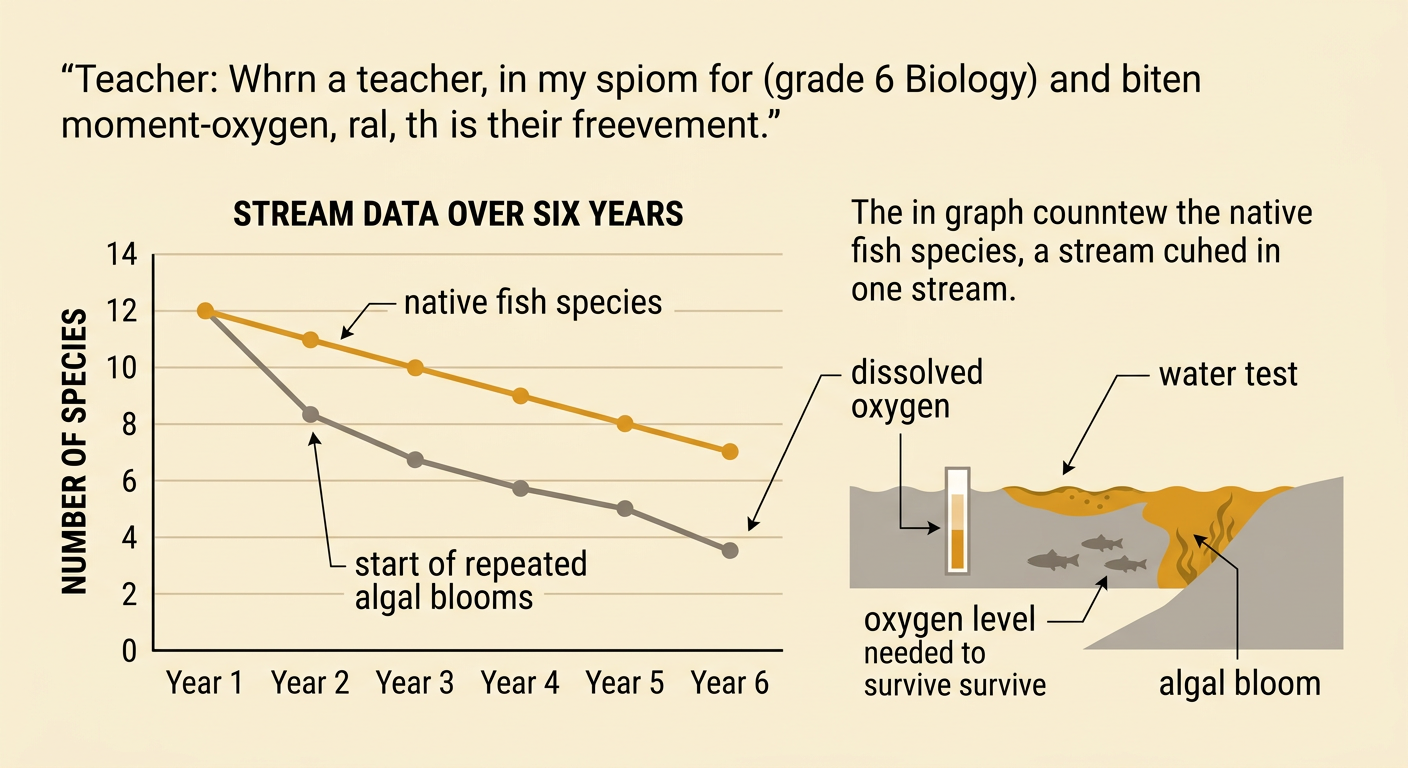
Scientists use several kinds of evidence to study biodiversity, including species counts, population surveys, satellite images, water tests, and maps. To interpret evidence, first identify what was measured, where and when data were collected, and whether the comparison was fair. Imagine a graph showing that the number of native fish species in a stream fell from 12 to 7 after repeated fertilizer runoff caused algal blooms. The graph shows a change, but additional evidence is needed to explain the cause. Water tests showing lower oxygen levels and observations of dead fish would strengthen the explanation. When reading a science text, cite the exact fact that supports your claim. Also examine the scale of the evidence. Data from one stream cannot automatically describe every stream, and a short study may miss long-term changes.
Comparing Conservation Solutions
Conservation solutions should be compared using clear criteria, such as how well they protect species, maintain ecosystem services, cost, affect people, and work over time. Suppose a road separates two forest habitats used by salamanders. One solution is a wildlife tunnel under the road. It reconnects habitat but requires construction and maintenance. A second solution is to close the road during seasonal migration. It costs less but may delay drivers and only helps during part of the year. A third solution is to protect a different forest parcel. That may preserve valuable habitat, but it does not reconnect the divided salamander population. No design is perfect. Students should use evidence to determine which solution best meets the most important criteria while recognizing constraints and trade-offs. Local land use and community needs are relevant parts of the comparison.

Making an Evidence-Based Recommendation
An evidence-based recommendation includes a clear claim, specific evidence, and reasoning that connects the evidence to the goal. For the salamander example, a student might recommend building a wildlife tunnel. Evidence could show that most salamander deaths occur while crossing the road and that tunnels at similar sites increased safe crossings. The reasoning should explain that reconnecting habitat can support breeding and reduce population loss. A strong recommendation also addresses trade-offs. The tunnel may cost more than a seasonal closure, but it can function throughout the year and cause fewer travel delays after construction. Students should cite the source of each important fact and avoid claiming more than the evidence shows. They can also propose monitoring, such as counting tunnel crossings and surveying salamander populations each spring, to test whether the solution works and to guide future improvements.
