
Pushes and Pulls Make Things Move
Students investigate how the strength and direction of a push or pull affect the movement of a toy object.

Illustrations are auto-generated and may be placeholders. They can be refreshed to match the narration.
Notice How Toys Move
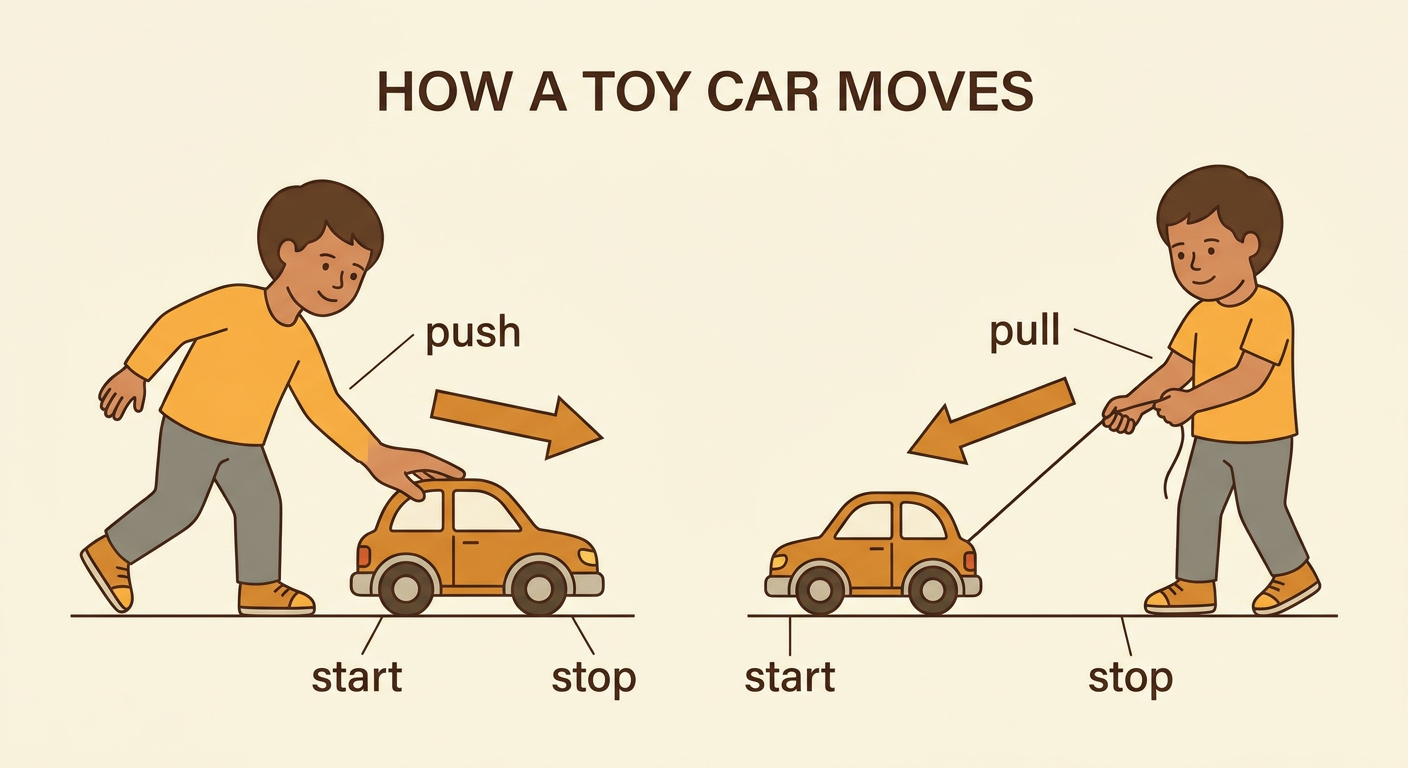
A toy can be still or moving. A push moves an object away from the person pushing it. A pull moves an object toward the person pulling it. Watch what happens when a partner gently pushes a toy car. Notice where the car starts, which way it moves, and where it stops. The car may move straight, turn, speed up, or slow down. Next, pull the car with a string and watch its path. For example, if Mia pulls the string toward herself, the car moves toward Mia. Motion can be described by its direction and distance. Before investigating, agree to keep toys on the floor and give each person enough space to work safely.
Explore Gentle and Strong Pushes
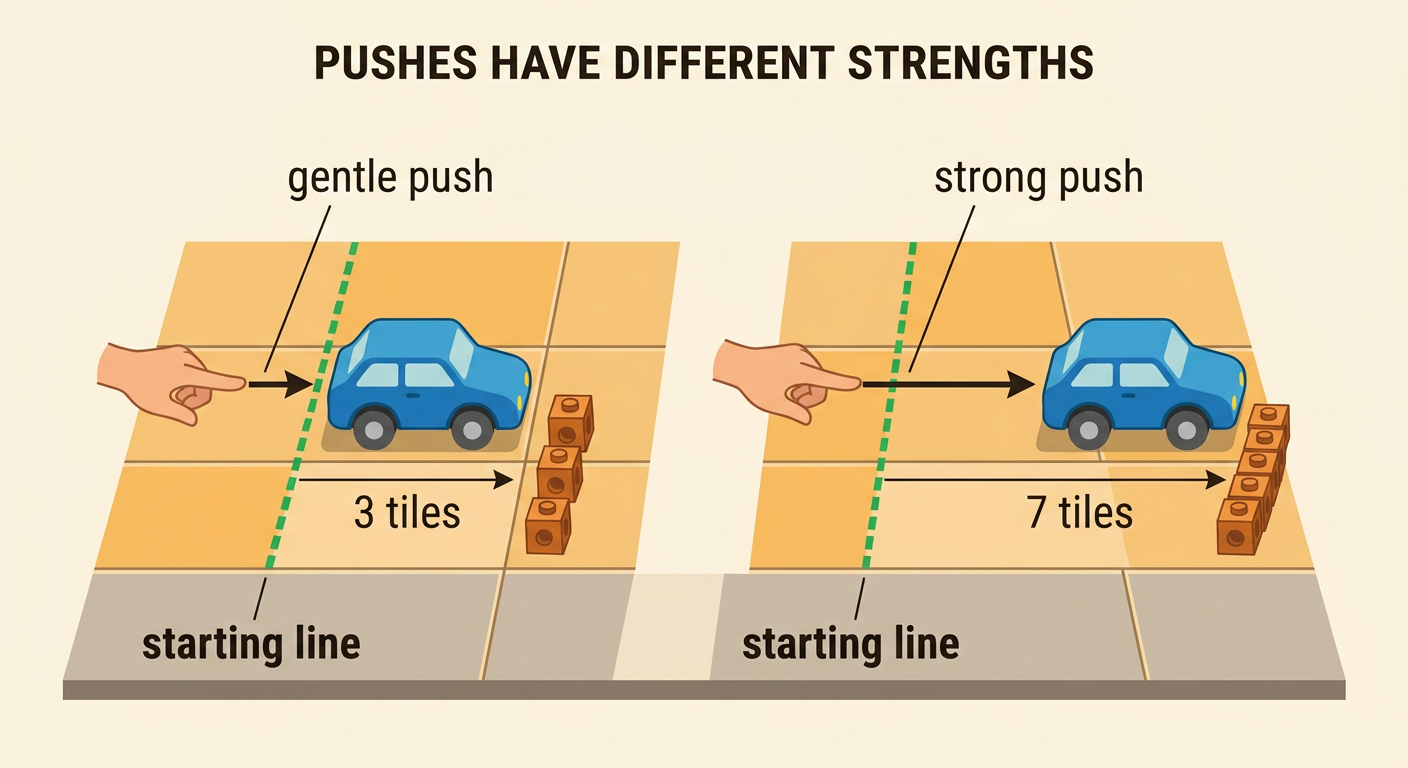
Investigate how push strength affects a toy car. Place the car at a marked starting line on a smooth, level floor. First, give it a gentle push. Mark where it stops and measure the distance using connecting cubes or floor tiles. Return the same car to the same starting line. Then give it a stronger push in the same direction. Mark and measure the new distance. Repeat each kind of push to gather more evidence. Keep the car, floor, starting place, and direction the same so that push strength is the main change. For example, the gentle push may move the car three tiles, while the stronger push may move it seven tiles. A stronger push often makes the car move faster or farther.
Explore Pulling in Different Directions
A pull can change the direction an object moves. Tie a string securely to a toy car and place the car on a marked starting spot. Put one target to the left and another target to the right. Pull the string gently toward the left target and observe the car’s path. Return the car to the starting spot. Then pull with about the same strength toward the right target. For example, when Leo pulls left, the car travels left. When he pulls right, the car travels right. Use arrows or yarn to show each path. Keep the toy, surface, and starting spot the same. Only the pull direction should change. Pull slowly, stay in your work area, and keep the string away from people’s bodies.

Compare What Happened
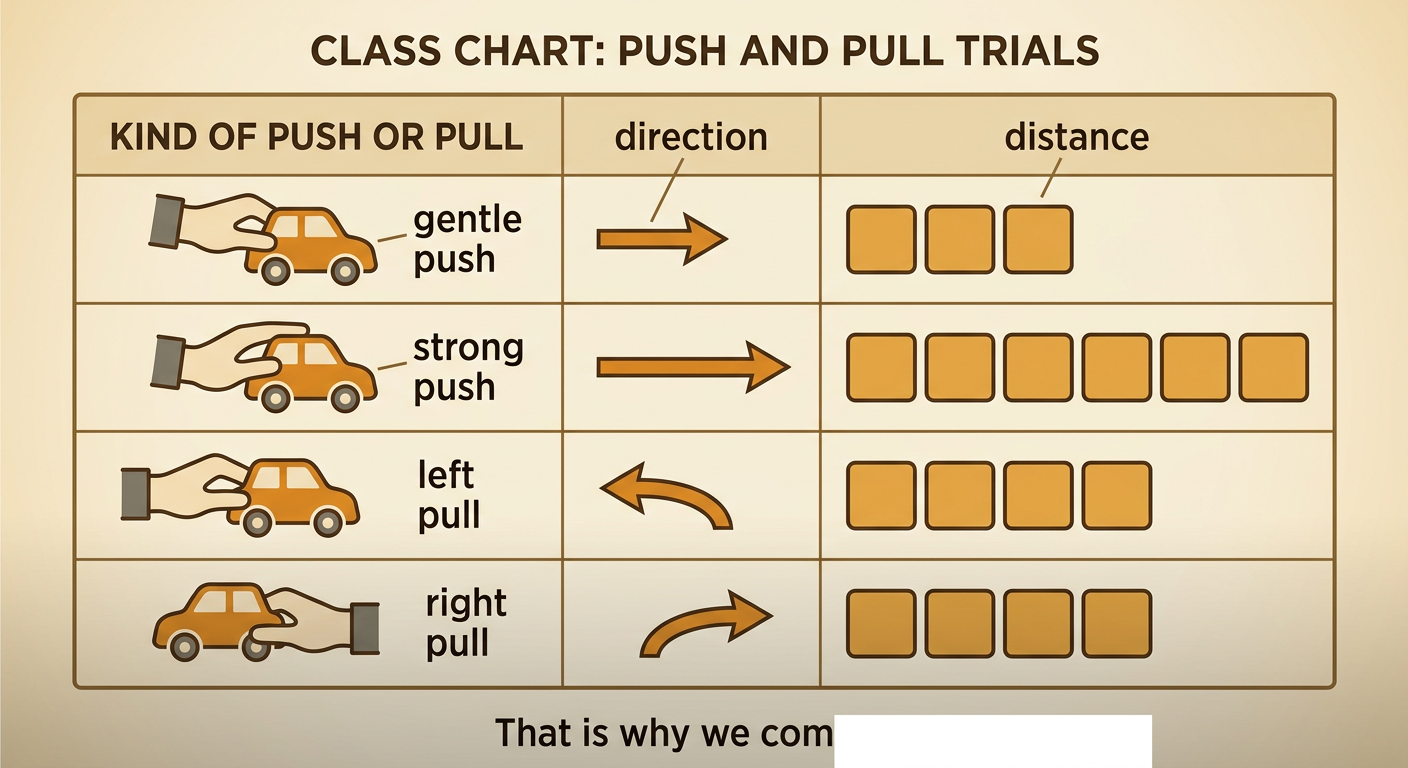
Now compare the results from all the trials. Look at the stopping marks, measurements, and path arrows. Describe measurable attributes, such as how many tiles the car traveled or whether one path was longer than another. You can make a class chart with columns for the kind of push or pull, direction, and distance. For example, the chart might show that a gentle push moved the car three tiles and a strong push moved it seven tiles. It might also show that pulling left made a left path and pulling right made a right path. Use the observations as evidence. Say, “The stronger push moved the car farther because it traveled more tiles.” Results may differ if the surface, toy, or push changes, so compare trials that were tested in the same way.
Share Evidence and Follow Discussion Rules
Share what your group discovered using words, measurements, and observations. Take turns speaking and listen while another person talks. Keep your hands still, look toward the speaker, and wait until the speaker finishes before responding. Ask a question if you need more information. You might ask, “How many tiles did your car travel?” Respond kindly and stay on the topic. For example, Ava may say, “Our strong push moved the car six tiles.” Ben can reply, “Our strong push moved it five tiles. Maybe our pushes were not exactly the same.” Use sentence starters such as “I noticed,” “My evidence is,” and “I agree because.” Follow the discussion rules your class chose. Working together helps everyone explain how the strength and direction of pushes and pulls affect motion.
