Reflection, Absorption, and Transmission of Light
Students investigate how different materials reflect, absorb, or transmit light and apply their observations to the design of visible public safety signs.

Illustrations are auto-generated and may be placeholders. They can be refreshed to match the narration.
Light and Materials
When light reaches a material, three main interactions can occur. Reflection happens when light bounces away from the surface. Absorption happens when the material takes in light energy, often changing some of it into thermal energy. Transmission happens when light travels through the material. Many objects cause more than one interaction. A clear window transmits most visible light but also reflects a small amount, which is why you may see your face in it. A mirror reflects most of the light that reaches it. A dark shirt absorbs much of the visible light and may become warmer in sunlight. The material’s color, thickness, texture, and composition affect how much light is reflected, absorbed, or transmitted.

Test Transparent, Translucent, and Opaque Samples
Test several samples with the same flashlight, distance, and room lighting so the comparison is fair. Place each sample between the flashlight and a white card. A transparent material, such as clear plastic, transmits enough light to form a bright, clear spot and may allow details to be seen through it. A translucent material, such as wax paper, transmits light but scatters it, producing a blurry glow. An opaque material, such as cardboard, transmits little or no visible light. Also observe the source side for reflected light. Use a light sensor, if available, to measure the light reaching the card. Record the material, the brightness behind it, the reflected brightness, and any temperature change. Repeat each test to make the evidence more reliable.

Identify Reflection, Absorption, and Transmission
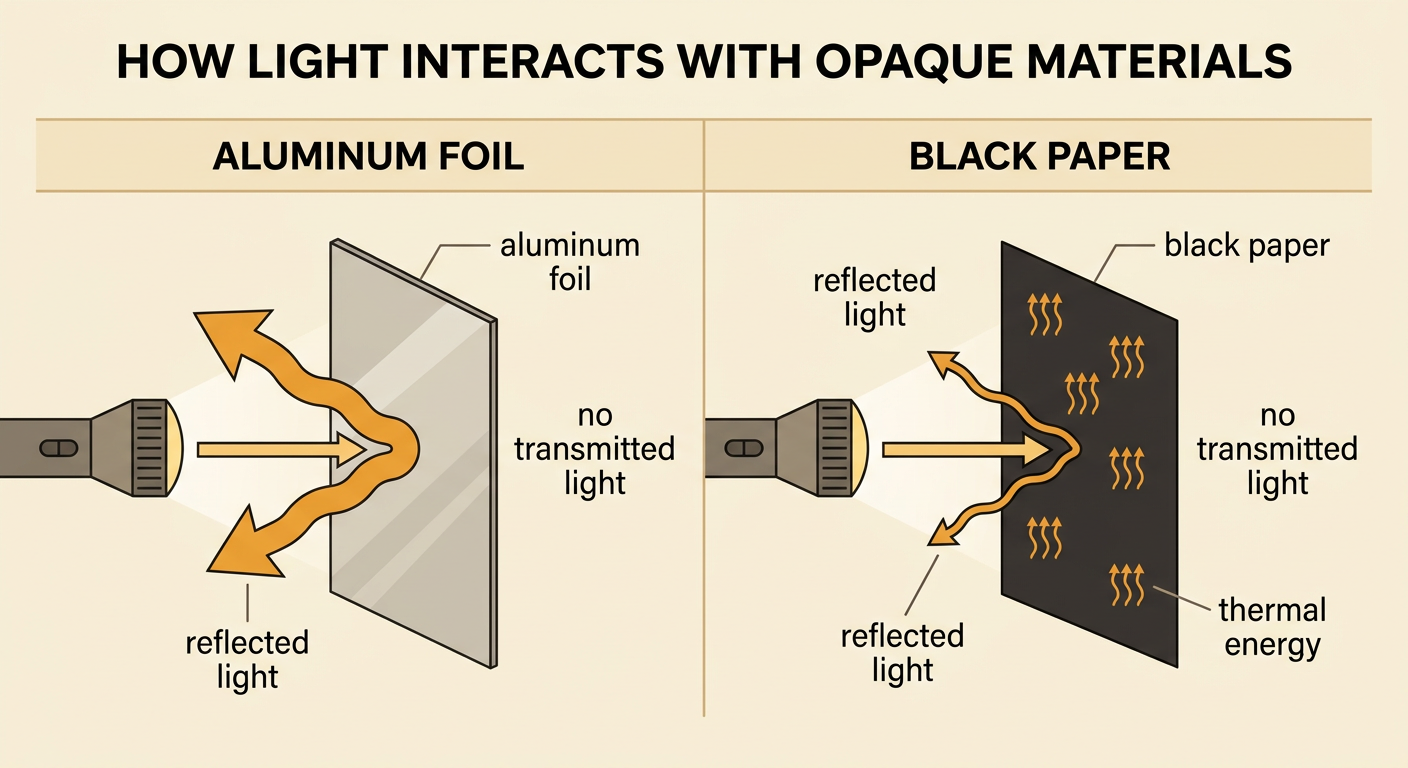
Use observations from both sides of a sample to identify what happened to the light. Light seen returning toward the flashlight side is evidence of reflection. Light detected behind the sample is evidence of transmission. Absorption is supported when little light is reflected or transmitted and the material gains thermal energy. However, darkness behind an object alone does not prove absorption because the light might have been reflected. For example, aluminum foil and black construction paper are both opaque. Foil reflects a large amount of light and may look bright from certain directions. Black paper reflects less visible light and absorbs more, so it may warm more under a lamp. Support each claim with specific evidence, such as measured sensor values, temperature data, or a recorded observation of brightness.
Model Light’s Path
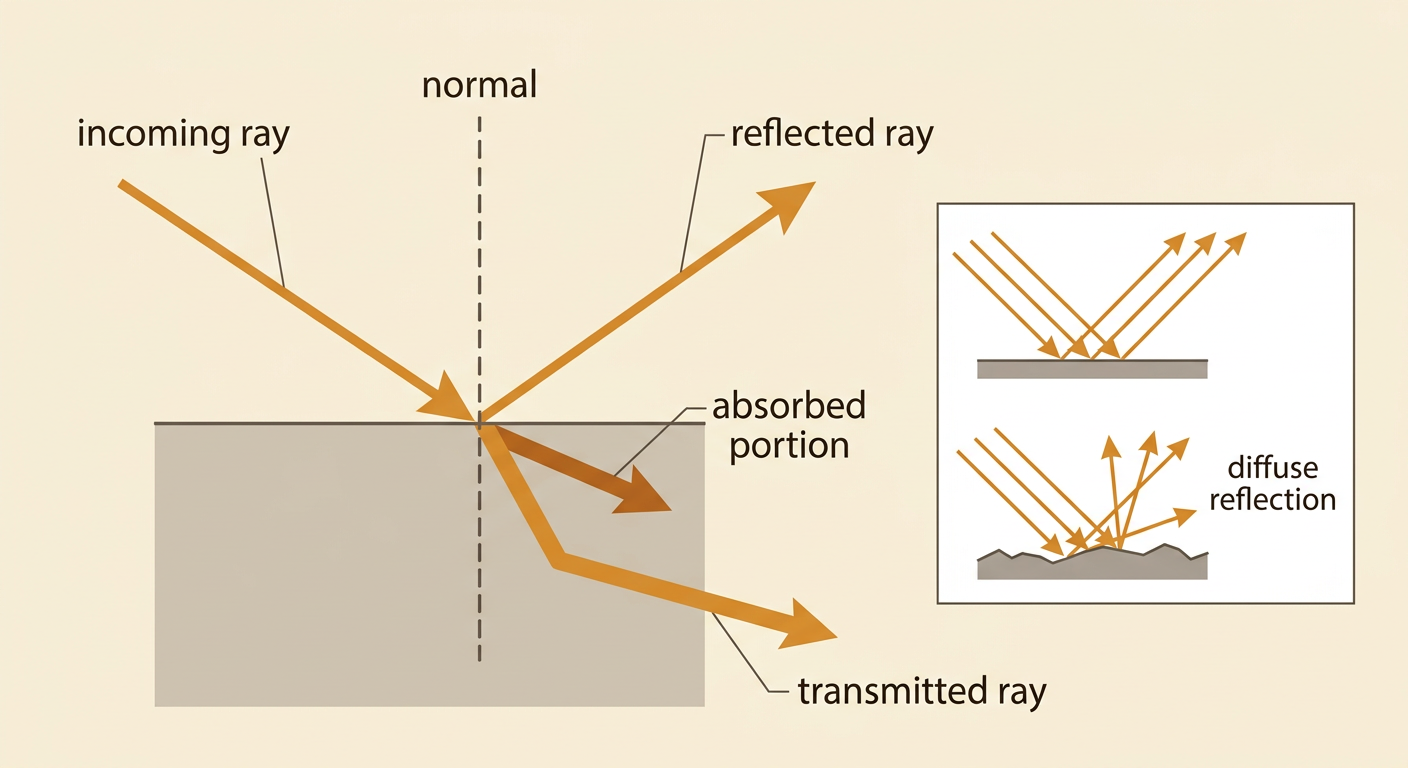
A ray model uses straight arrows to represent the direction light travels. Begin with an incoming ray aimed at a material. Draw a reflected ray leaving the front surface, an absorbed portion ending inside the material, and a transmitted ray continuing through the material. The thickness or number of arrows can represent relative amounts of light energy. At a smooth surface, the reflected ray leaves at the same angle at which the incoming ray arrives, measured from an imaginary line called the normal. A rough surface reflects rays in many directions, causing diffuse reflection. For example, a glossy metal sign can create a bright glare in one direction, while a matte sign spreads reflected light more widely. A model simplifies reality, but it should match the evidence collected during testing.
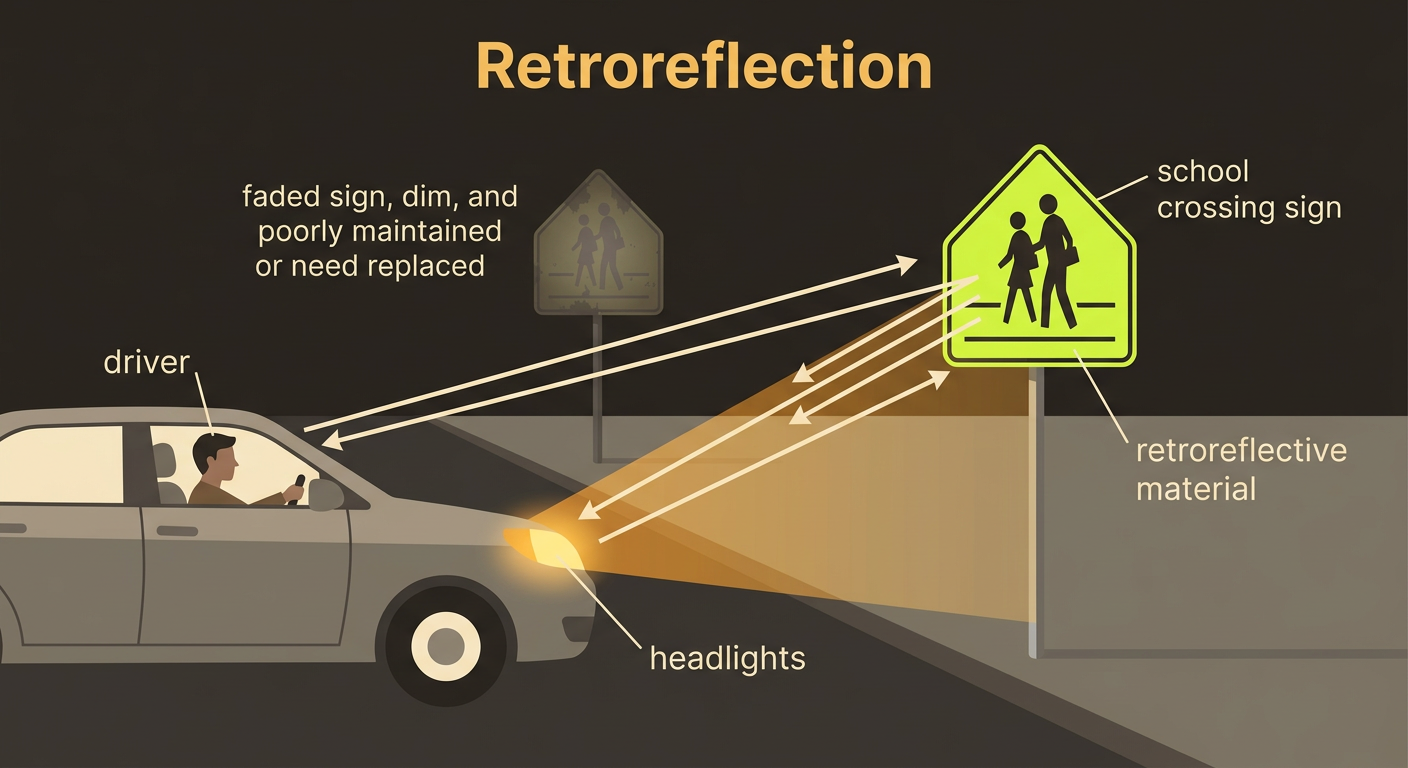
Apply the Evidence to Safety Signs
Public safety sign policies are intended to help people notice warnings, directions, and emergency information quickly. A school crossing sign, for example, needs strong color contrast in daylight and effective reflection at night. Retroreflective material sends much of the light from headlights back toward the driver, making the sign easier to see. Students can use test results to recommend a bright, durable surface that reflects light without allowing it to pass through. They should also cite specific evidence from an assigned safety rule, such as a sentence requiring signs to remain visible under expected conditions. Implementation may include standards for placement, size, materials, inspection, and replacement. These requirements can prevent crashes and improve access to information, but they also create costs. Poor maintenance may reduce visibility and weaken the policy’s intended protection.