Renewable and Nonrenewable Energy Resources
Students compare energy resources and explain how using them affects people and the environment.
Illustrations are auto-generated and may be placeholders. They can be refreshed to match the narration.
Where Energy Comes From
People use energy to light homes, heat buildings, cook food, and move vehicles. Energy and fuels come from natural resources found on Earth. Sunlight, wind, moving water, plants, coal, oil, and natural gas can all provide energy. Electricity is not taken directly from the ground; it is produced by changing energy from resources into electrical energy. For example, a wind turbine changes the energy of moving air into electricity. The locations of resources influence where people build energy facilities and settlements. Wind farms are often built in open, windy areas such as the Great Plains. Electricity then travels through power lines to communities. By studying where a resource is found, people can decide how to collect, transport, and use its energy.

Renewable Resources
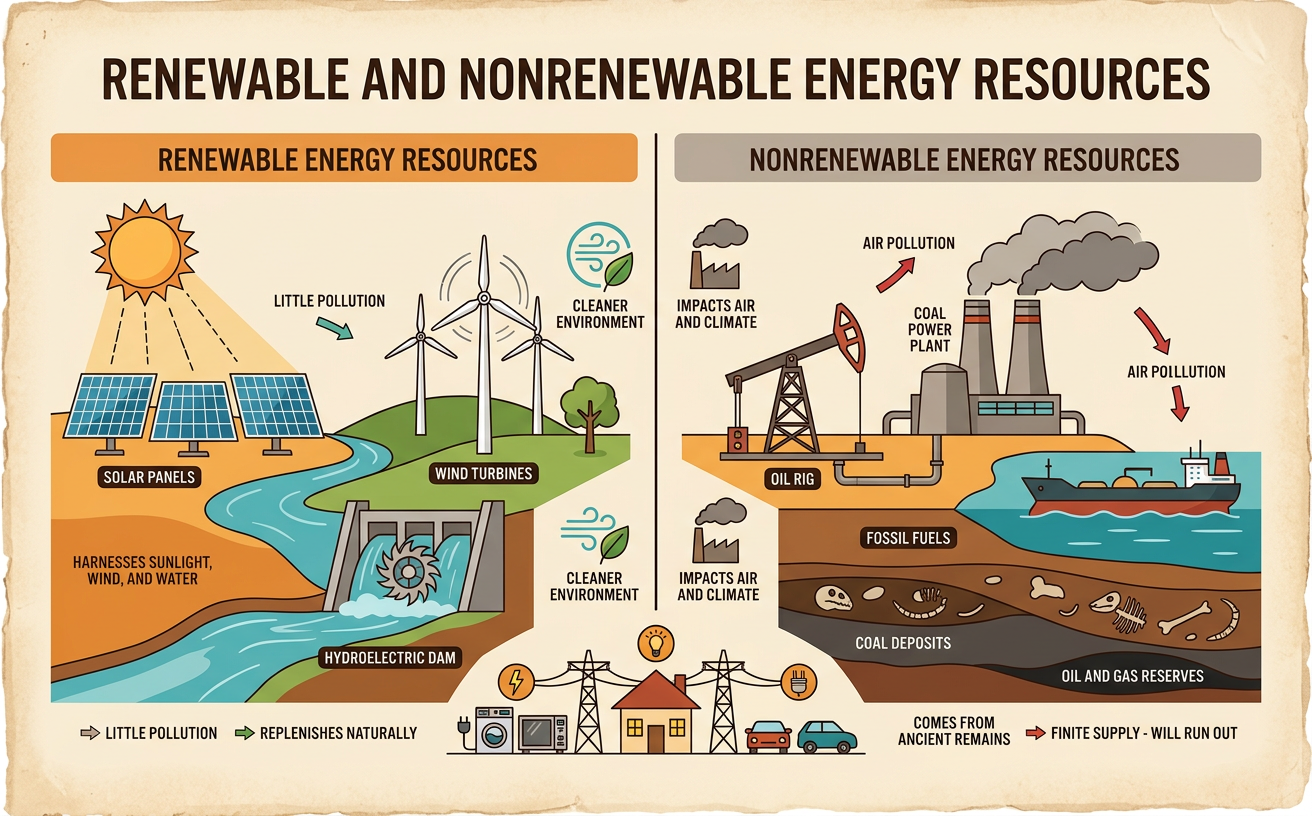
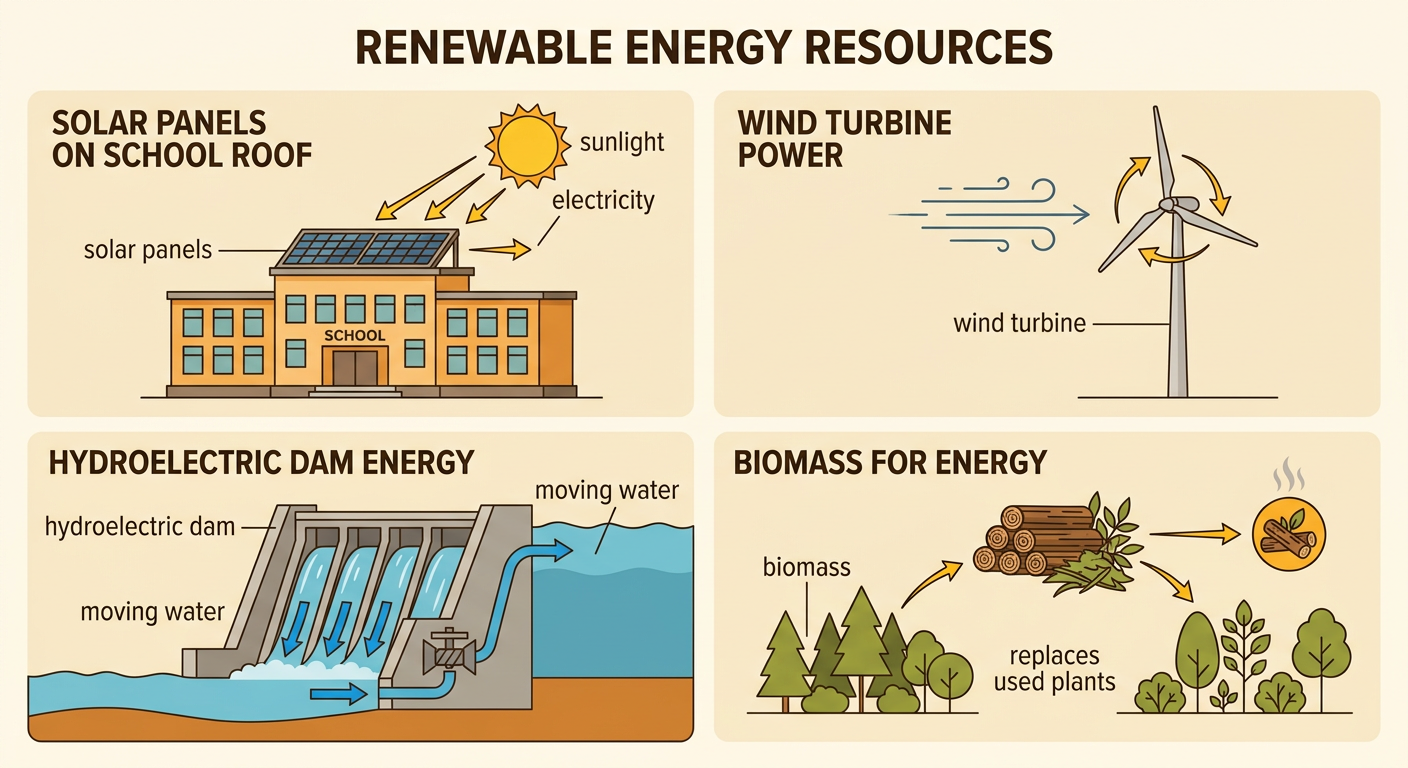
Renewable energy resources are naturally replaced in a relatively short time. Sunlight, wind, moving water, and heat from inside Earth are renewable resources. Biomass, such as wood and plant material, can also be renewable when people replace what they use. Solar panels change sunlight into electricity, while wind turbines use moving air. Hydroelectric dams use flowing or falling water to turn turbines. For example, a school might place solar panels on its roof. The panels produce electricity on sunny days without burning fuel. However, renewable does not mean unlimited or harmless. Solar panels do not produce electricity at night, and wind turbines produce less when the air is still. Communities often choose renewable resources that match their location, such as strong winds on open plains or abundant sunlight in the Southwest.
Nonrenewable Resources
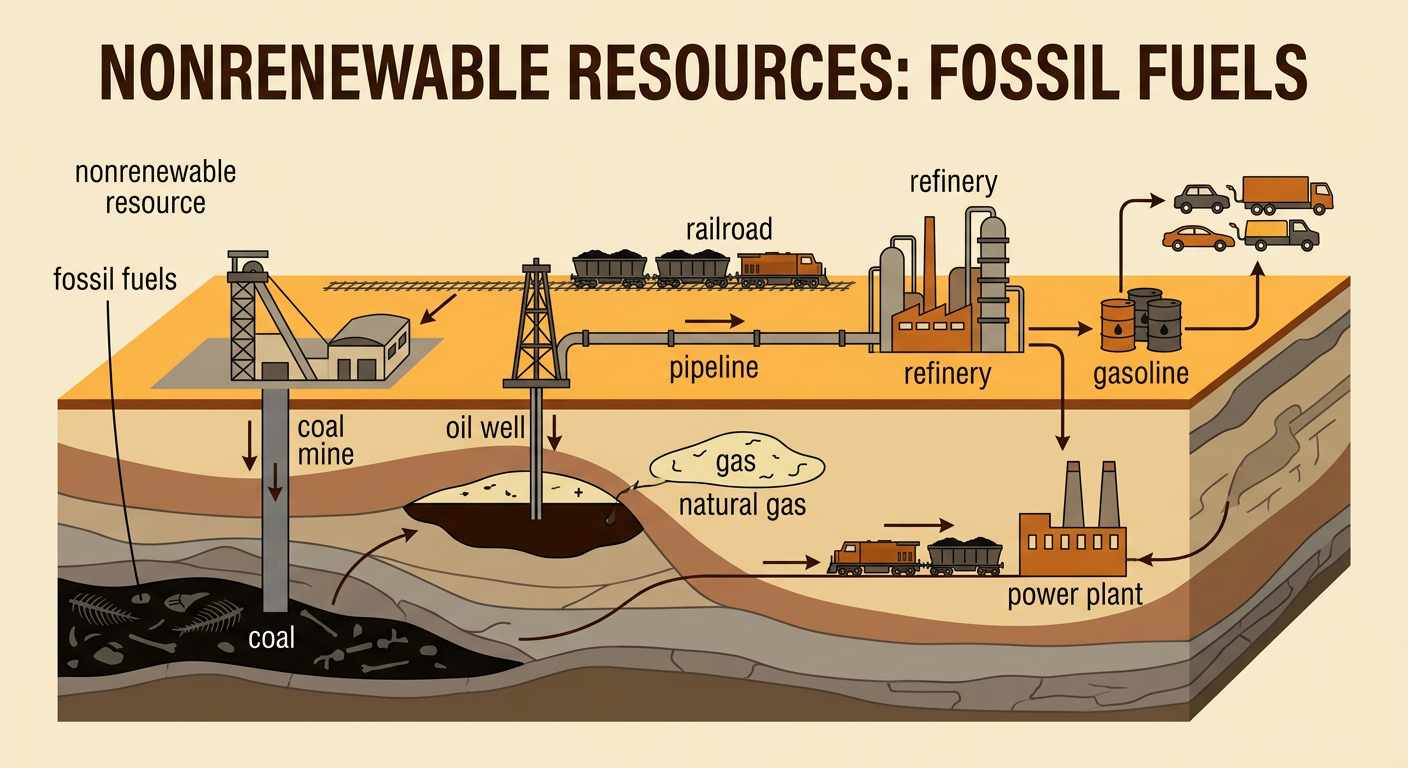
Nonrenewable resources exist in limited amounts and form much more slowly than people use them. Coal, oil, and natural gas are fossil fuels made from the remains of ancient organisms over millions of years. Uranium, which is used in nuclear power plants, is also nonrenewable. Coal and natural gas can be burned to heat water, create steam, and generate electricity. Oil is refined into fuels such as gasoline and diesel. For example, gasoline from oil powers many cars and trucks. Fossil fuel deposits are found only in certain places, so wells, mines, pipelines, railroads, and ports often develop near or between those locations. Workers and families may move to resource-rich areas for jobs. Because these resources are finite, supplies decrease as people remove and use them.
Environmental Effects
Every energy resource affects the environment in some way. Burning coal, oil, and natural gas releases air pollutants and carbon dioxide, a gas that contributes to climate change. Mining and drilling can disturb habitats, soil, and water. Renewable resources avoid burning fossil fuels during operation, but they can still have effects. A hydroelectric dam may flood land and block fish movement. Large solar farms require space, and making solar panels requires mined materials. Wind turbines can harm some birds and bats if they are poorly located. For example, placing turbines away from major migration routes can reduce wildlife risks. Evidence about these effects helps communities make informed decisions. People can also reduce environmental harm by saving energy, improving technology, restoring damaged land, and carefully choosing where energy facilities are built.

Comparing Energy Choices
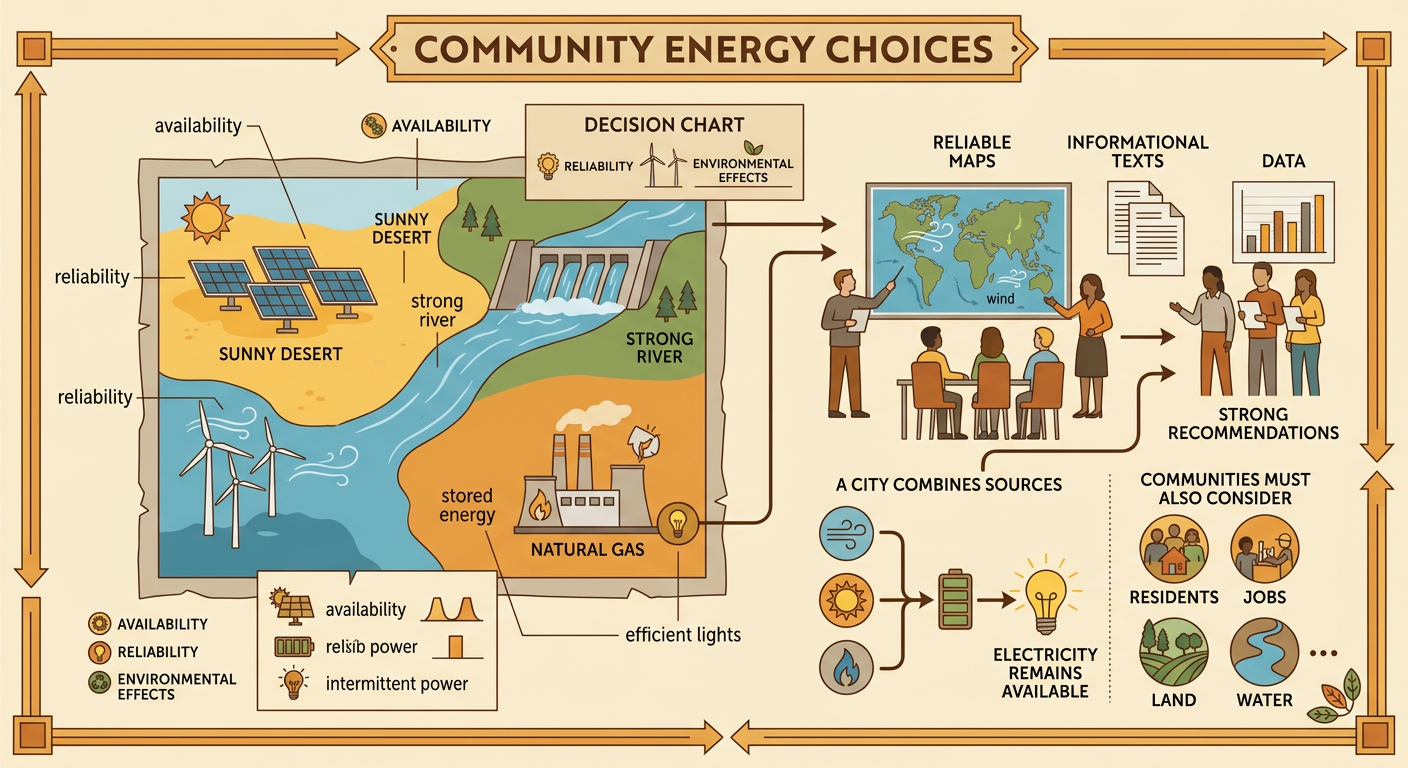
Communities compare energy choices by considering availability, reliability, cost, environmental effects, and local needs. No single resource is best in every place. A sunny desert town might use solar power, while a community near a strong river might use hydroelectric power. A city may combine wind, solar, natural gas, and stored energy so electricity remains available when sunlight or wind changes. People should use details from reliable informational texts, maps, and data when making a recommendation. For example, a map showing strong year-round winds supports the claim that wind power could work well in that location. People should also consider possible effects on residents, jobs, land, water, and wildlife. Using less energy through efficient lights, insulation, and public transportation reduces the amount of energy that must be produced from any resource.