
Retelling a Story in Order
Students listen to a short story and retell its beginning, middle, and end using key details and sequence words.
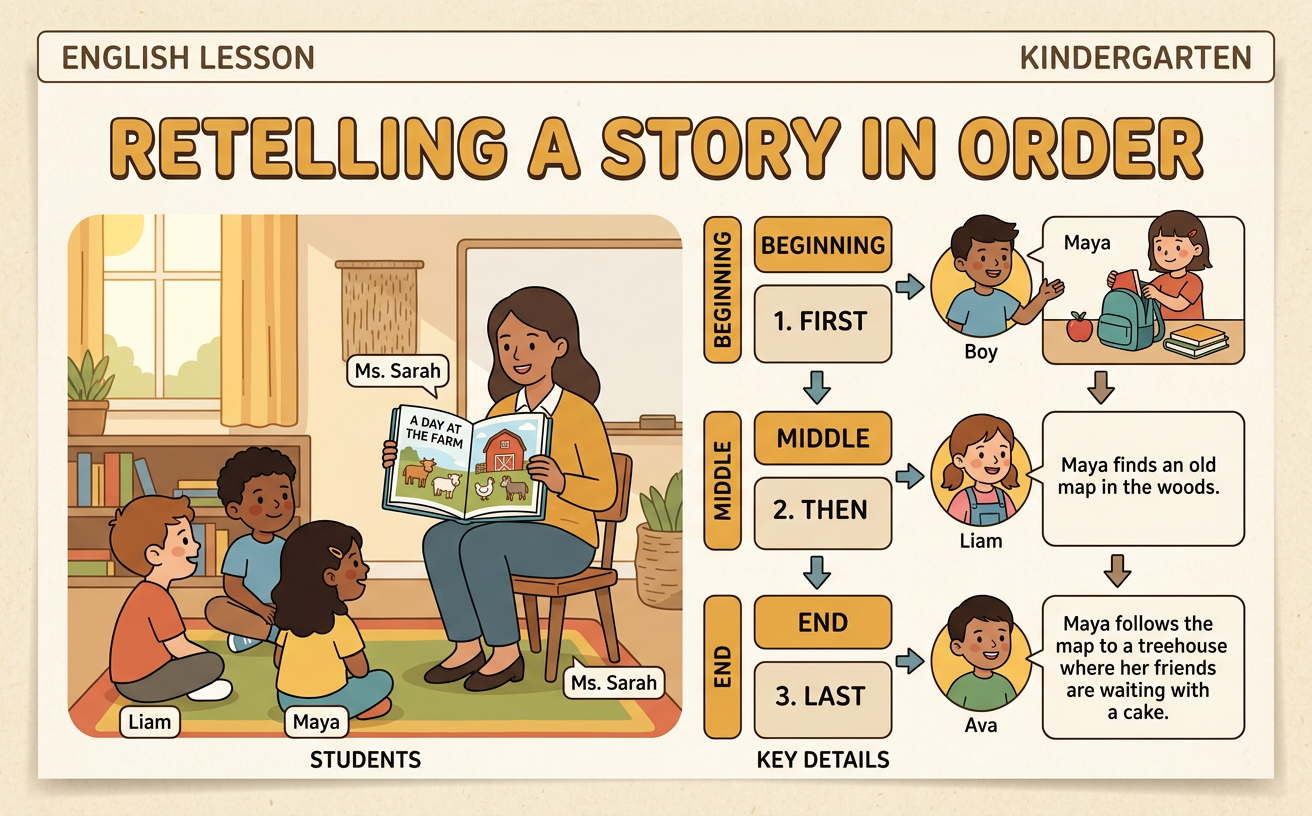
Illustrations are auto-generated and may be placeholders. They can be refreshed to match the narration.
Introduce Sequence Words
Sequence words tell the order in which events happen. First tells what happens at the start. Next and then tell what happens after that. Last tells what happens at the end. Imagine getting ready for school. First, you wake up. Next, you put on your clothes. Then, you eat breakfast. Last, you leave for school. If the events are mixed up, the listener may become confused. Saying that you leave for school before you wake up would not make sense. As you listen to a story, notice which event happens first, which events happen next, and which event happens last. These words will help you retell the story in the correct order.

Read the Story Aloud
Listen carefully to this short story. Ben wanted to grow a sunflower. First, he dug a small hole in the garden and placed a sunflower seed inside. He gently covered the seed with soil. Each morning, Ben watered the spot. Warm sunlight shone on the garden. One day, a green sprout pushed through the soil. Ben kept watering it, and the plant grew taller and taller. At last, a large yellow sunflower opened. A little bird landed beside it, and Ben smiled. As you listen, picture the people, places, and actions in your mind. Think about what Ben does at the beginning, what changes in the middle, and what happens at the end.

Identify Key Details
Key details are important pieces of the story. They tell who is in the story, where the story happens, and what important actions occur. In this story, Ben is the main character, and the garden is the setting. Ben plants a sunflower seed and waters it each morning. Sunlight helps the plant grow. A green sprout appears, and later a yellow sunflower opens. The color of Ben's shoes is not given because it is not needed to understand the story. Ask yourself, “Who is the story about? Where does it happen? What does the character do? What changes?” These questions help you choose details that belong in a clear retelling.
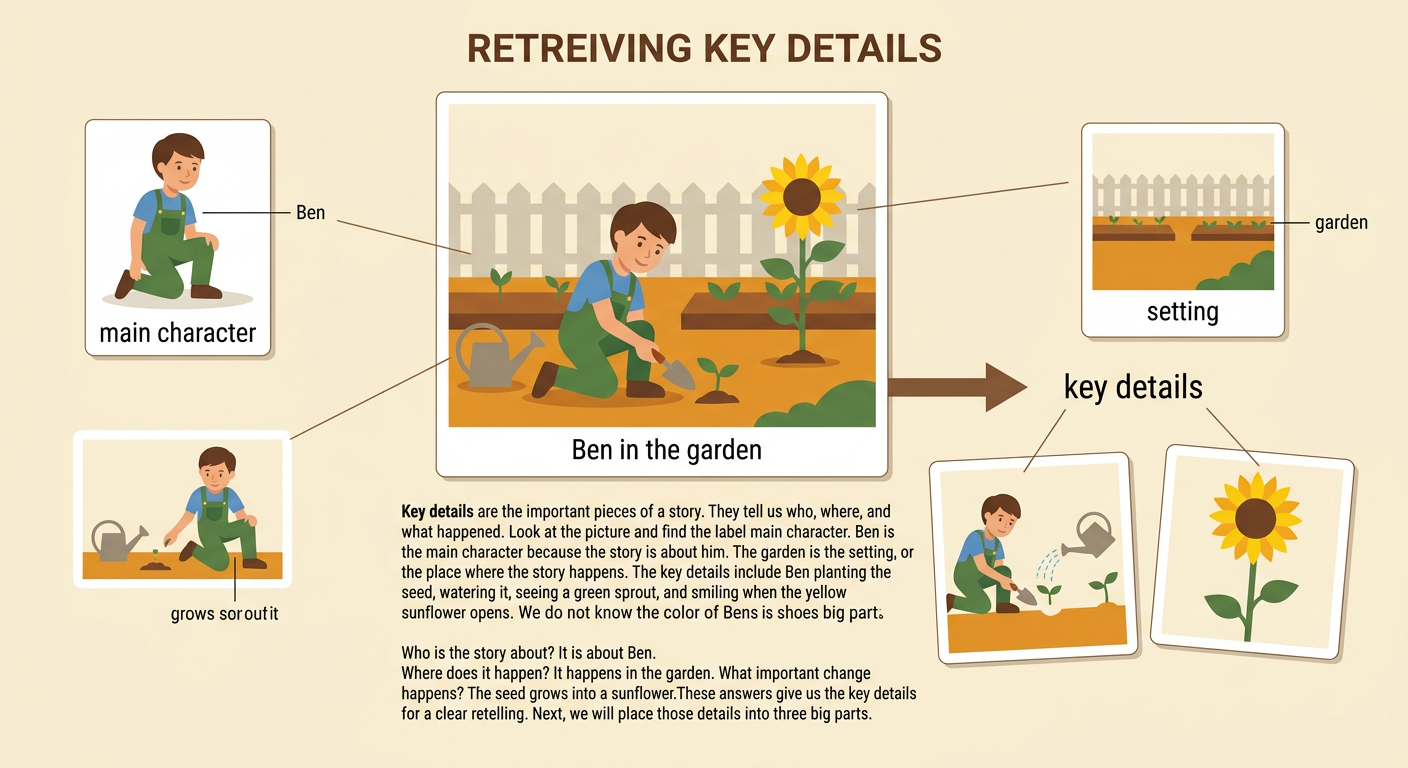
Order Beginning, Middle, and End
Most stories can be organized into a beginning, middle, and end. The beginning introduces the character and starts the action. In Ben's story, he plants a sunflower seed in the garden. The middle tells what happens as the story continues. Ben waters the seed, sunlight warms the soil, and a green sprout grows taller. The end shows how the story finishes. A large yellow sunflower opens, a bird visits, and Ben smiles. Place these events in order before you retell them. Do not put the blooming flower before the planted seed. You can say, “In the beginning,” “In the middle,” and “At the end” to help your listener follow the story.

Retell with a Partner
Now retell Ben's story to a partner in your own words. One partner speaks while the other listens. Begin by naming the character and setting. You might say, “In the beginning, Ben planted a sunflower seed in his garden.” Continue with key details: “Next, he watered the seed, and a green sprout grew.” Finish by saying, “At the end, a yellow sunflower opened, a bird visited, and Ben smiled.” Your retelling does not need every word from the story, but it should include the most important events in order. When you finish, your partner can ask, “What happened next?” Then switch roles so both partners have a turn to speak and listen.
