
Retelling a Story with Key Details
Students listen to a short story, identify its characters, setting, and major events, and retell the story in sequence.
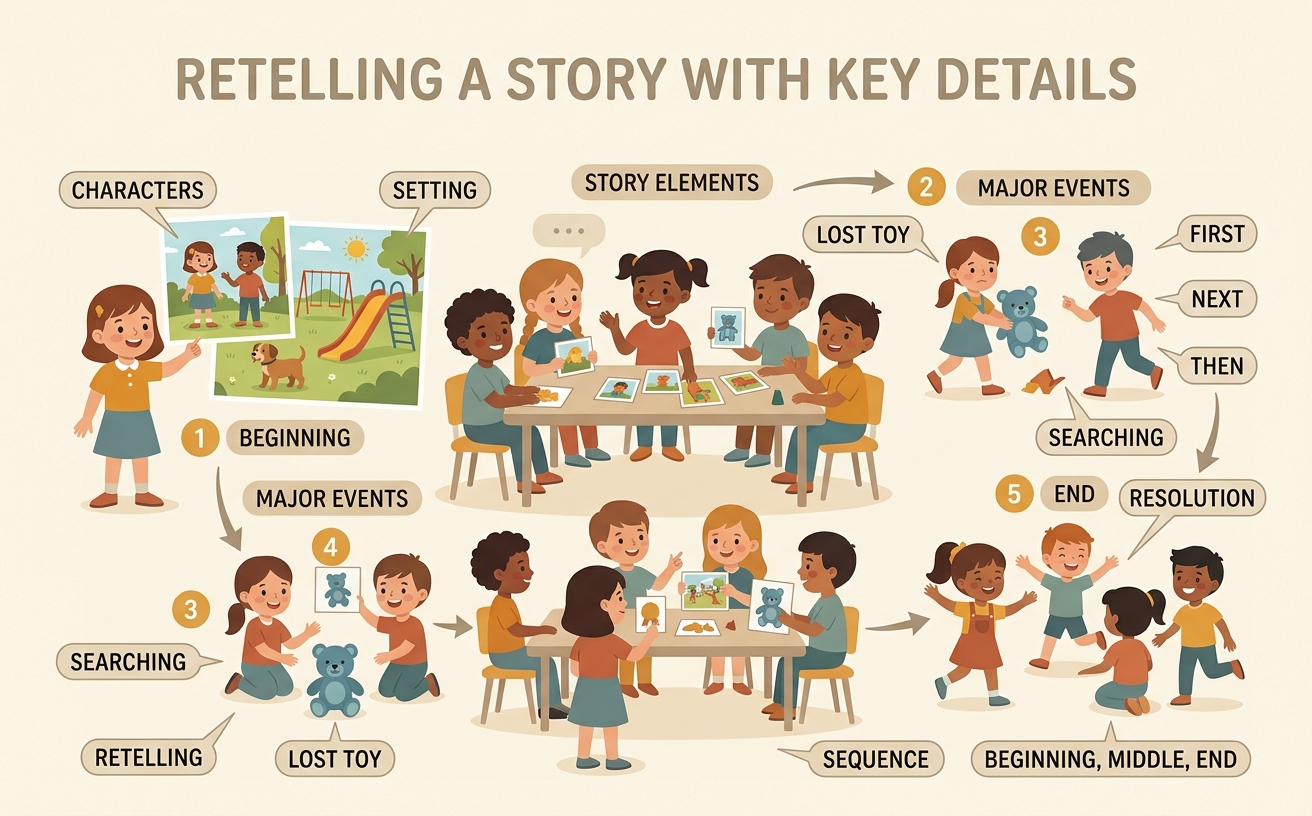
Illustrations are auto-generated and may be placeholders. They can be refreshed to match the narration.
Story Preview
Before we hear a story, we can preview its title and picture. Today’s story is called “Maya and the Sunflower.” Imagine that the cover shows a girl kneeling beside a bent sunflower in a garden. An older man stands nearby with a wooden stick and a piece of cloth. What do you notice? What might happen? You might predict, “Maya will try to help the plant stand up.” A prediction is a smart guess based on clues. It does not have to be correct. As you listen, think about who is in the story, where it happens, and what problem the characters face. Be ready to change your prediction when you learn new details.

Teacher Read-Aloud
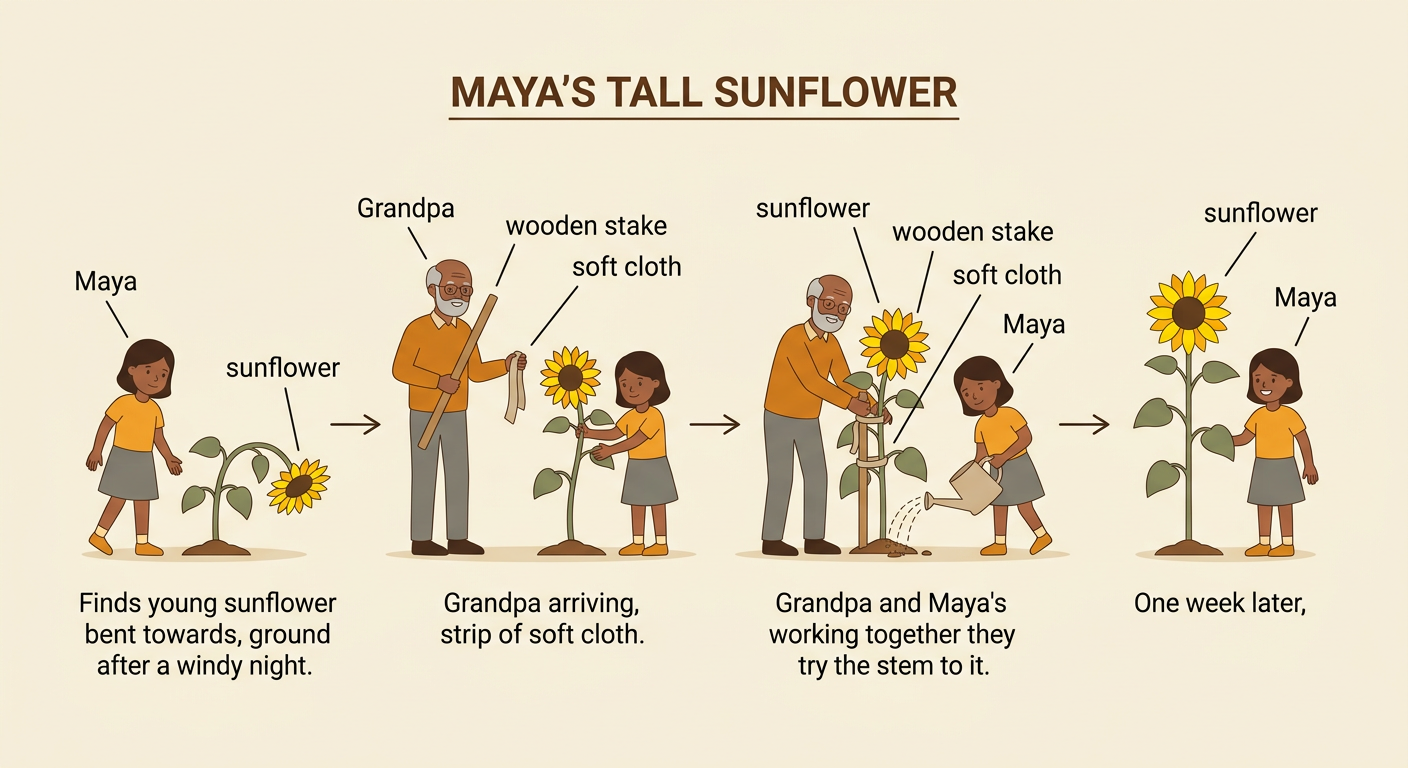
Listen for important details as your teacher reads. “On Saturday morning, Maya visited Grandpa’s garden. She saw a young sunflower bent toward the ground after a windy night. ‘Can we help it?’ Maya asked. Grandpa brought a wooden stake and a strip of soft cloth. Maya gently lifted the stem. Grandpa pushed the stake into the soil, and they loosely tied the stem to it. Maya watered the dry soil. Each day, she checked the plant and gave it water when the soil felt dry. One week later, the sunflower stood tall, and a bright yellow flower opened. Maya smiled. ‘A little care each day made a big difference,’ she said.” After listening, name details you remember instead of trying to repeat every word.
Characters and Setting
Characters are the people or animals who take part in a story. The main characters in this story are Maya and Grandpa. Maya notices the bent sunflower, asks for help, lifts the stem, waters the soil, and checks the plant each day. Grandpa brings useful materials and helps support the stem. The setting tells where and when the story happens. This story takes place in Grandpa’s garden. It begins on a Saturday morning after a windy night and continues over the next week. A strong retelling names the characters and setting. For example, you could begin, “On Saturday morning in Grandpa’s garden, Maya and Grandpa found a sunflower bent toward the ground.”

Beginning, Middle, and End
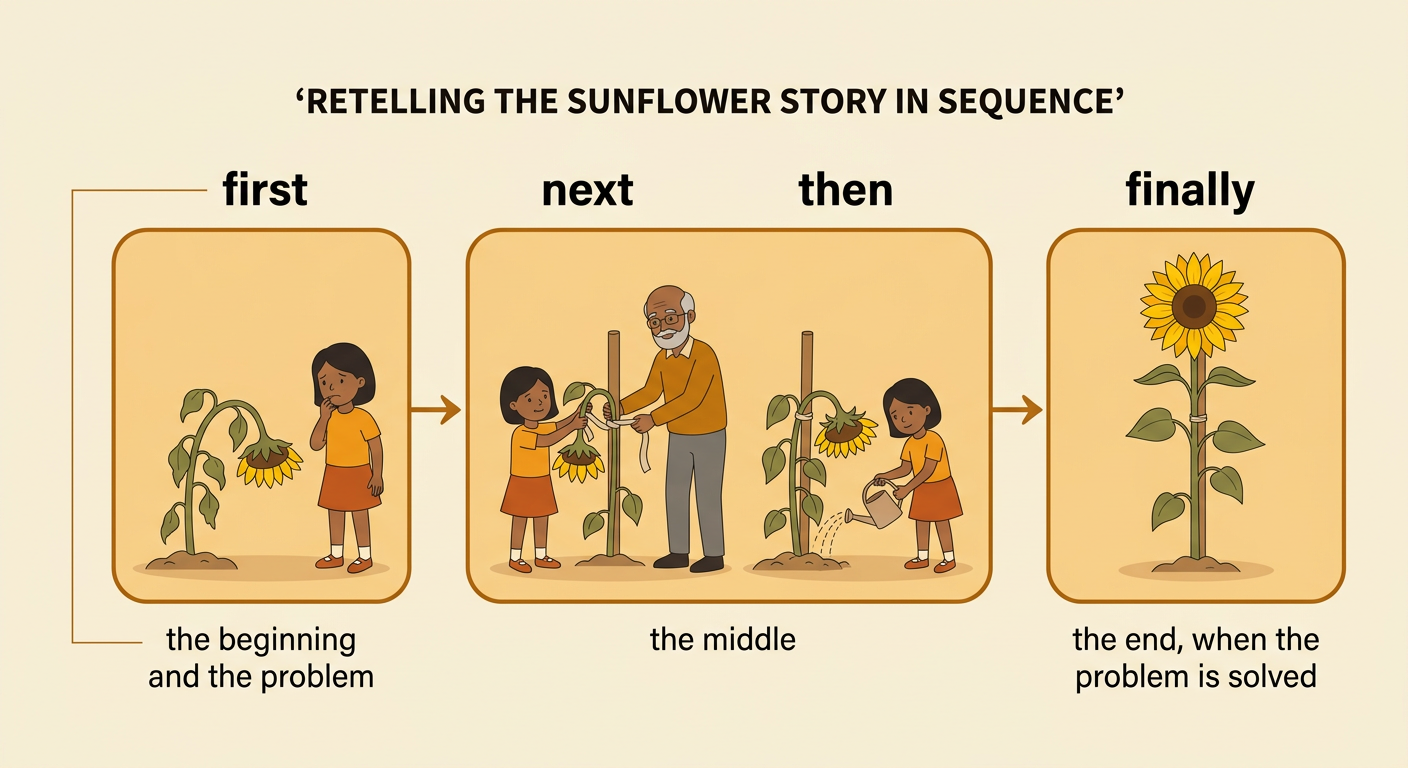
A retelling puts the major events in sequence. The beginning tells who, where, and what problem starts the story. Maya visits Grandpa’s garden and finds a sunflower bent after a windy night. The middle tells what the characters do about the problem. Maya and Grandpa support the stem with a stake and cloth. Maya waters the soil and checks the plant each day. The end tells how the problem is solved. One week later, the sunflower stands tall and blooms. Use sequence words to keep the order clear: first, next, then, and finally. For example: “First, Maya found the bent plant. Next, she and Grandpa supported it. Then, Maya cared for it each day. Finally, the sunflower bloomed.”
Partner Retelling
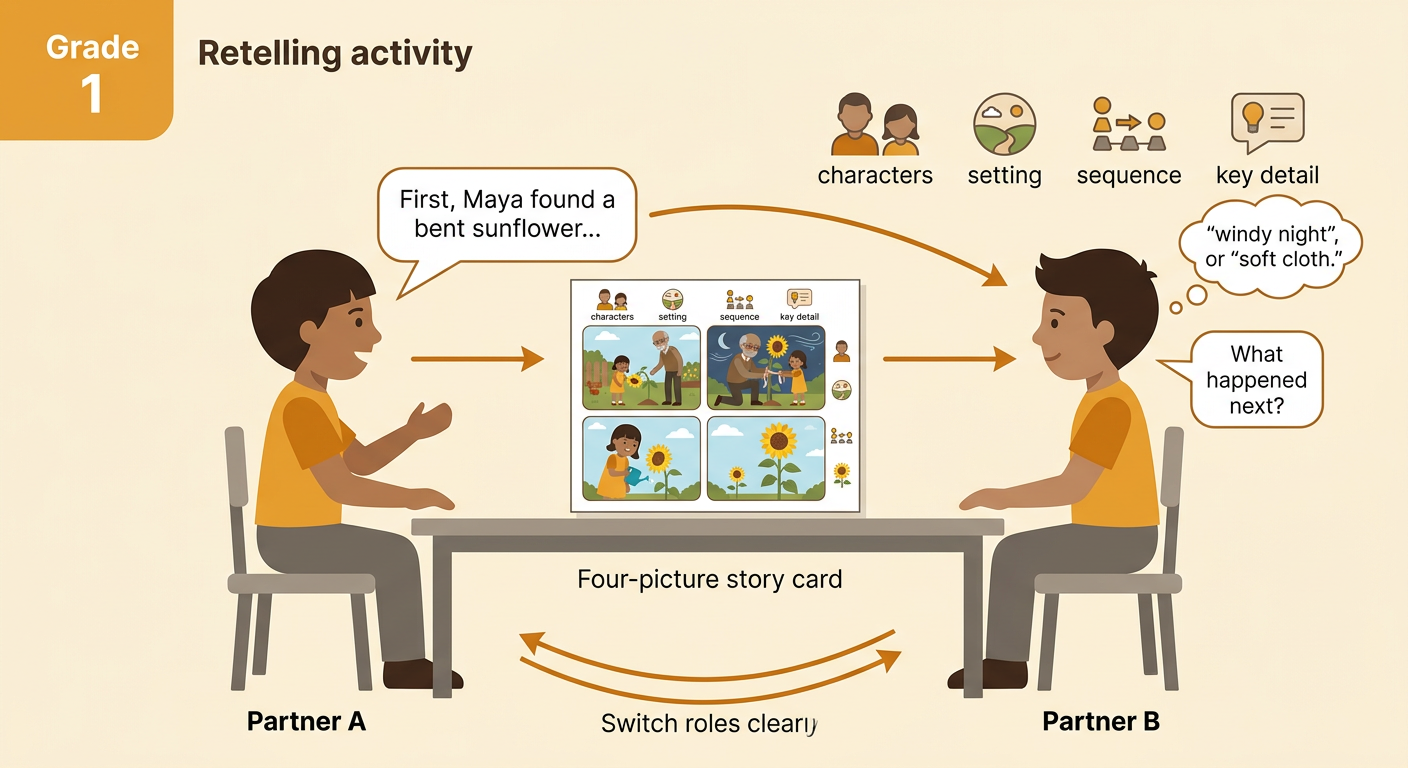
Take turns retelling the story with a partner. Partner A tells the story first while Partner B listens. Start by naming the characters and setting. Then tell the major events in order. Include key details, such as the windy night, the stake and soft cloth, and Maya’s daily care. You might say, “First, Maya found a bent sunflower in Grandpa’s garden. Next, Maya and Grandpa tied it loosely to a stake. Then, Maya checked it and watered it when the soil was dry. Finally, the sunflower stood tall and bloomed.” Partner B can ask, “What happened next?” or add one missing detail. Then switch jobs. You do not need every tiny detail, but your retelling should make sense from start to finish.
Central Message Check
The central message is the big idea or lesson a story teaches. Ask, “What did Maya learn?” She learned that steady care can make a difference. The story gives evidence for this message. Maya did not help the sunflower only once. She checked it each day and watered it when the soil was dry. After one week, the supported plant stood tall and bloomed. A good central message is “Care and patience can help something grow.” Another clear way to say it is “Small helpful actions can make a big difference.” Explain the message using a story detail. For example: “The story teaches us to be caring and patient because Maya helped the plant a little each day until it bloomed.”
