
Retelling a Story with Key Details
Students listen to a short story, identify important events, and retell the story in order while explaining its central message or lesson.
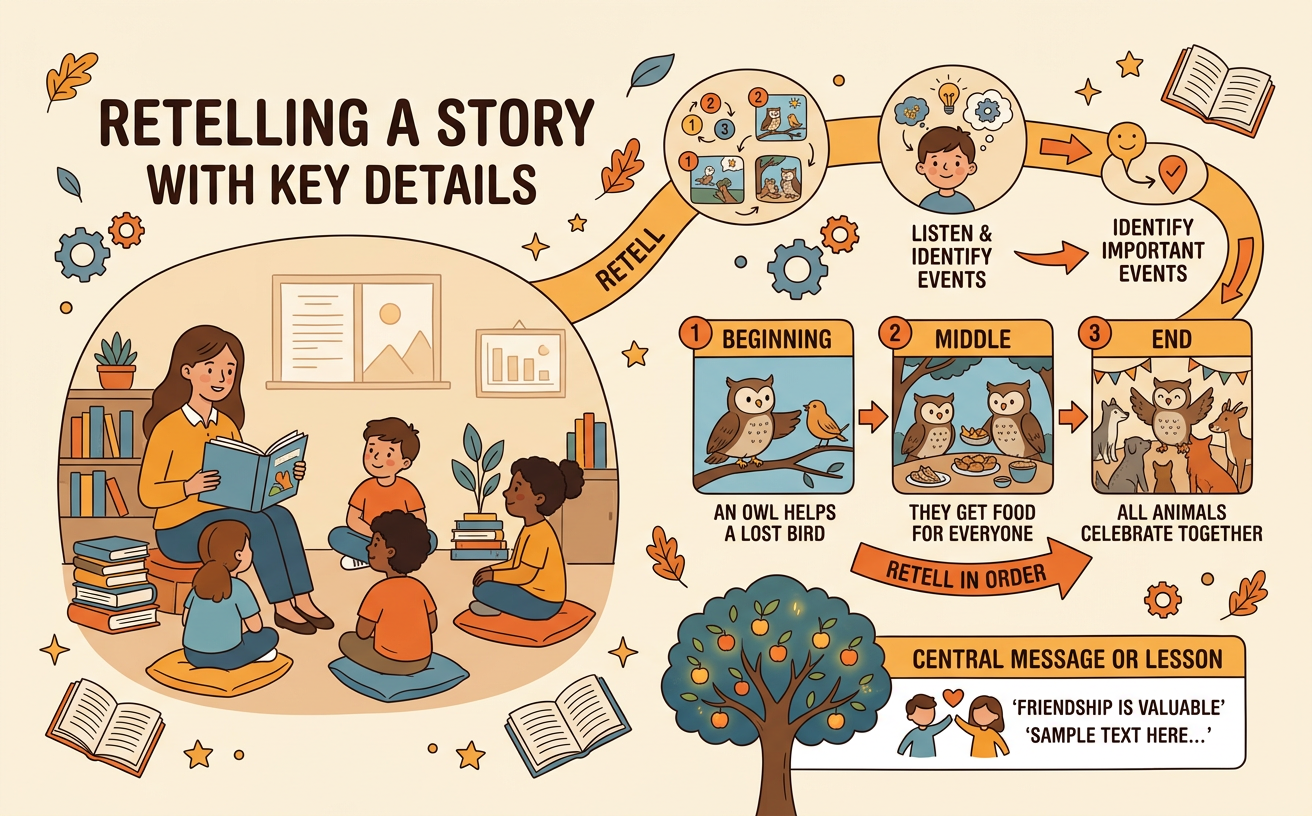
Illustrations are auto-generated and may be placeholders. They can be refreshed to match the narration.
Introduce Retelling
Retelling means telling a story again in your own words. A good retelling names the characters, tells where the story happens, and includes the most important events in order. It does not include every tiny detail. As you listen, think about what happens first, next, and last. For example, imagine a story about a girl who loses a mitten at the park. An important detail might be that her friend helps her look for it. The color of a nearby bench may not be important. Pay attention to what the characters do, how a problem is solved, and what they learn. These key details will help you retell the whole story clearly.

Read the Story Aloud
Listen to this story and picture each event. Mia wore her red mitten to the snowy park. While she built a snow rabbit, one mitten slipped from her pocket. On the walk home, Mia noticed that it was missing. She felt worried and hurried back to the park. Her friend Ben saw her looking under the swings. Mia told him about the lost mitten. Ben stopped playing and helped her search. They followed Mia’s footprints through the snow. Near the snow rabbit, Ben spotted something red. It was Mia’s mitten! Mia thanked Ben for helping her. Then they walked home together. As you listen again, notice the problem, the important actions, and the way the problem is solved.

Identify Key Details
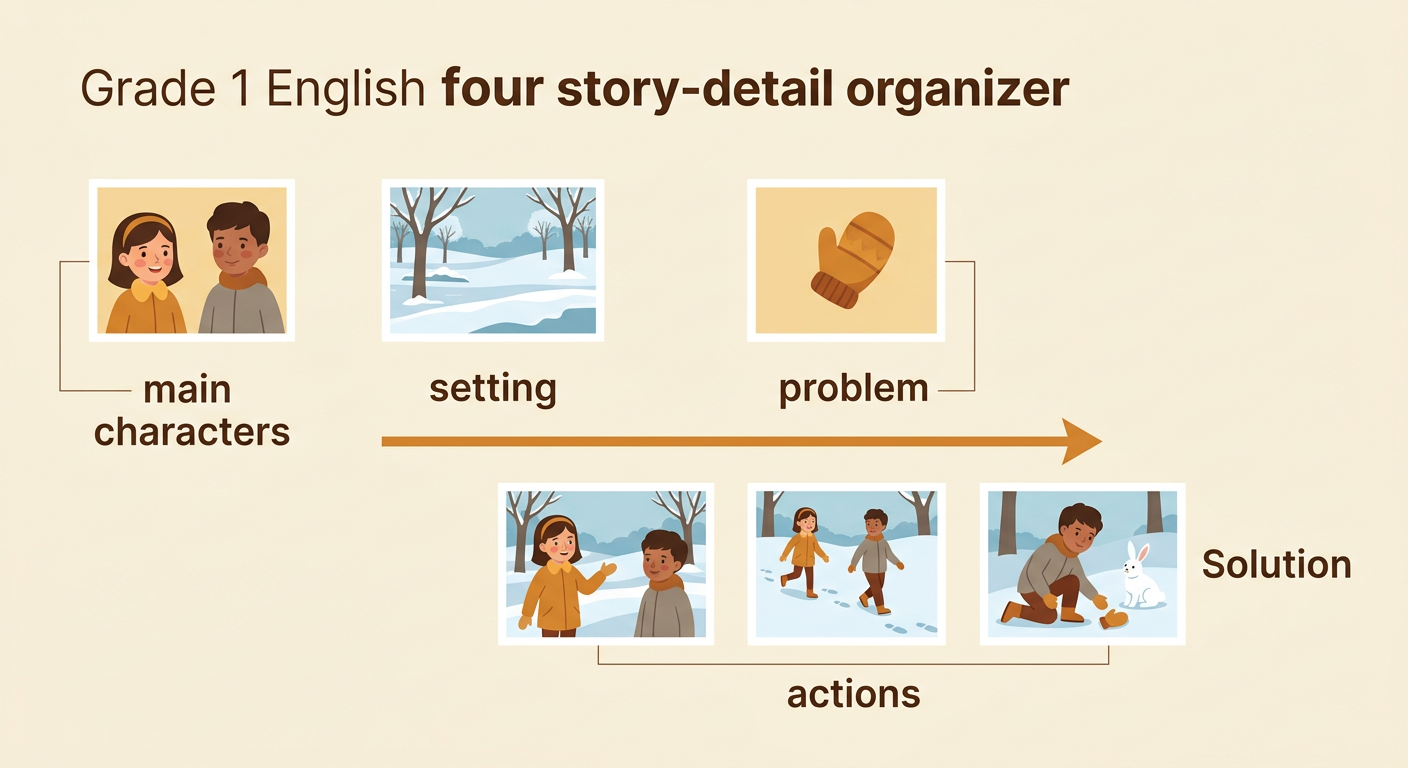
Key details are the parts we need to understand the story. Ask: Who is in the story? Where does it happen? What is the problem? What actions help solve the problem? In this story, Mia and Ben are the main characters, and the snowy park is the setting. Mia’s problem is that she loses her mitten. She returns to the park, tells Ben what happened, and follows her footprints with him. Ben finds the mitten near the snow rabbit. These actions are important because they lead to the solution. A detail such as the mitten being red can help us picture the story, but the search for the mitten is more important to the retelling.
Sequence Beginning, Middle, and End
Sequence means putting events in the order they happened. At the beginning, introduce the characters and setting and tell how the problem starts. Mia plays at the snowy park and loses her mitten. In the middle, tell the important actions the characters take. Mia returns to the park, asks Ben for help, and follows her footprints with him. At the end, explain how the problem is solved. Ben spots the mitten near the snow rabbit, and Mia thanks him. Use order words such as first, next, then, and finally. You can say, “First, Mia lost her mitten. Next, Mia and Ben searched. Finally, they found it.” Keeping events in order helps a listener understand the story.

Retell and Share the Lesson
Now retell the story in your own words. Name the characters and setting, explain the problem, and share the key events in order. You might say, “Mia lost her mitten at a snowy park. She went back and told Ben. Ben helped her follow her footprints. They found the mitten near the snow rabbit, and Mia thanked him.” Then explain the central message, or lesson. The lesson is an idea the story teaches. This story shows that helping a friend can make a hard problem easier to solve. Ben gave up some playtime to help Mia, and together they succeeded. When you share your retelling, speak clearly and check that you included the beginning, middle, end, and lesson.
