Roots, Stems, and Leaves: A Plant Survival System
Students use observations, a short informational text, and measurement data to explain how plant structures work together to support growth and survival.

Illustrations are auto-generated and may be placeholders. They can be refreshed to match the narration.
Observe a Plant
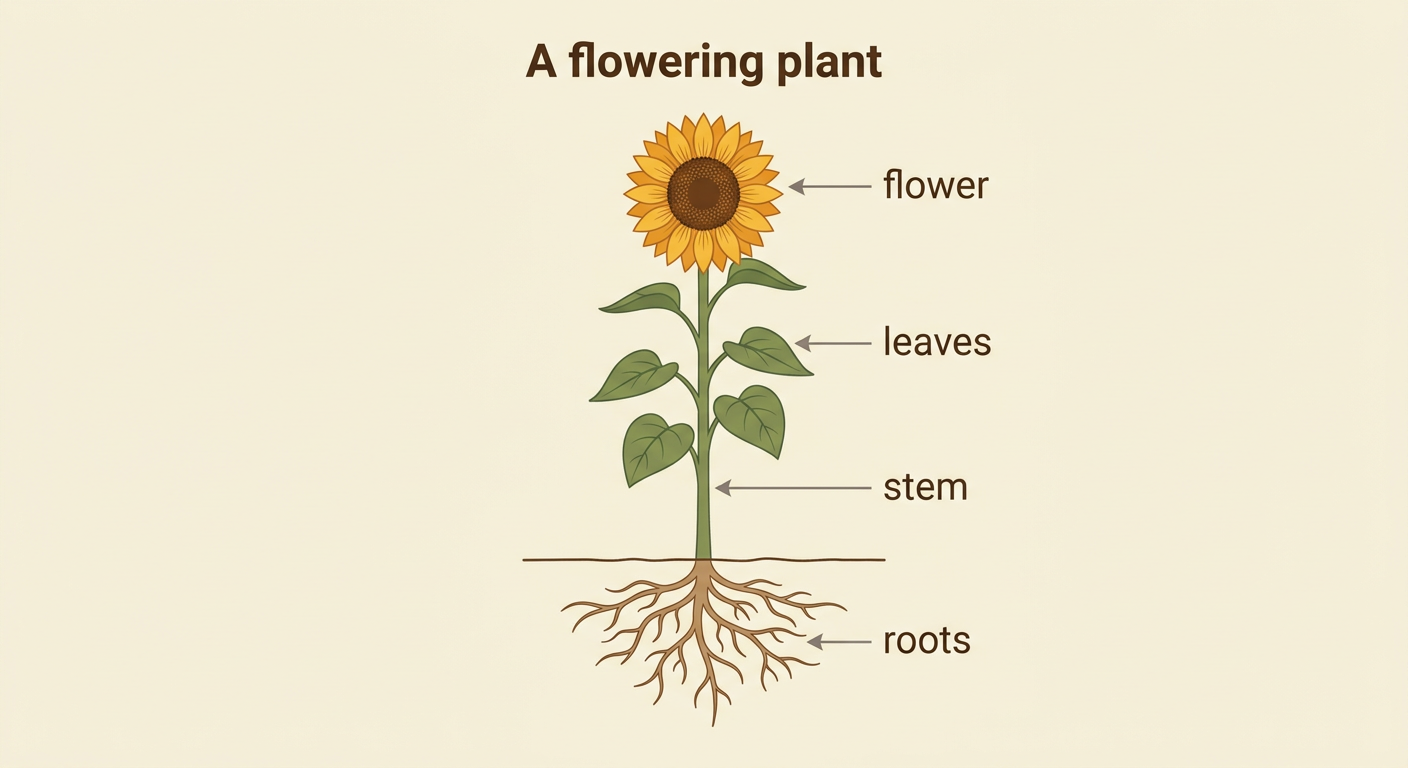
Look closely at a whole plant. Its visible, external structures include roots, a stem, leaves, and sometimes flowers or fruit. Each structure has a job, but the structures also work as one system. Roots take in water and minerals from the soil. The stem holds leaves toward the light and carries materials through the plant. Leaves use light, air, and water to make sugars that support growth. Flowers can help the plant reproduce by forming seeds. For example, a sunflower’s wide root system holds it in the ground while its tall stem lifts many leaves into sunlight. When you observe a plant, record details such as color, size, shape, texture, and location. These observations provide evidence for explaining how structures help the plant survive and grow.
Roots Absorb and Anchor
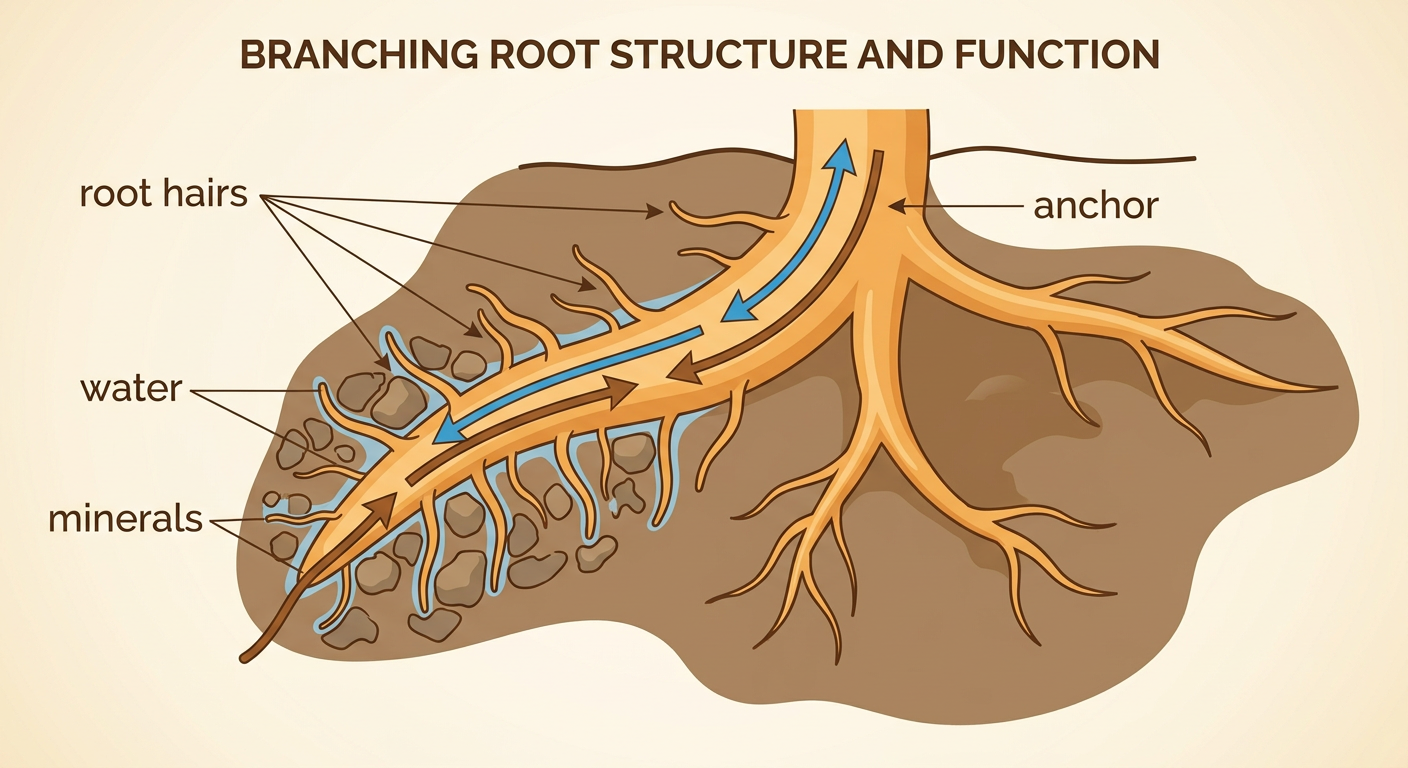
Roots usually grow through soil, where they perform two important jobs. First, roots anchor the plant so wind, rain, or an animal brushing past does not easily knock it over. Second, tiny root hairs absorb water and dissolved minerals from spaces between soil particles. The water then enters tubes inside the root and begins moving upward. Minerals such as nitrogen help the plant build new tissues, but soil does not provide the plant’s sugars. For example, a bean seedling with healthy roots can stay upright and take in water even as its shoot grows taller. A seedling with damaged roots may wilt because it cannot absorb enough water. Branching roots also reach into a larger area of soil, increasing the plant’s access to needed resources.
Stems Support and Transport
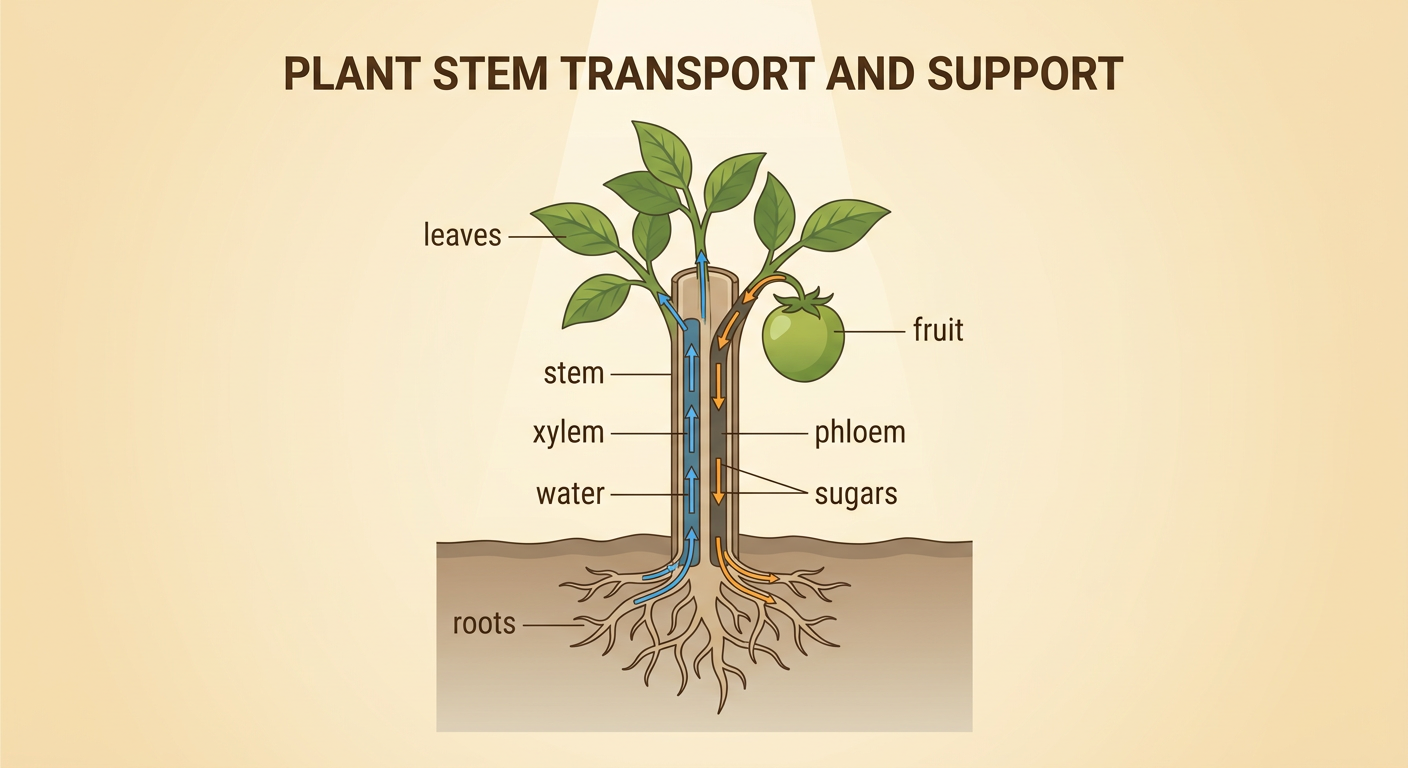
A stem connects roots to leaves and supports the parts above the ground. Inside the stem are transport tubes. Xylem tubes carry water and minerals upward from the roots. Phloem tubes carry dissolved sugars from leaves to growing or storage parts, including roots, flowers, and fruits. This movement allows distant structures to share resources. For example, water absorbed by a tomato plant’s roots moves through xylem to its leaves. The leaves make sugars, and phloem carries some of those sugars to developing tomatoes. The stem also positions leaves where they can receive light instead of being shaded near the soil. If a stem is badly crushed, transport may be interrupted and parts of the plant may wilt or stop growing. Thus, support and transport both help a plant survive, grow, and reproduce.
Leaves Capture Light
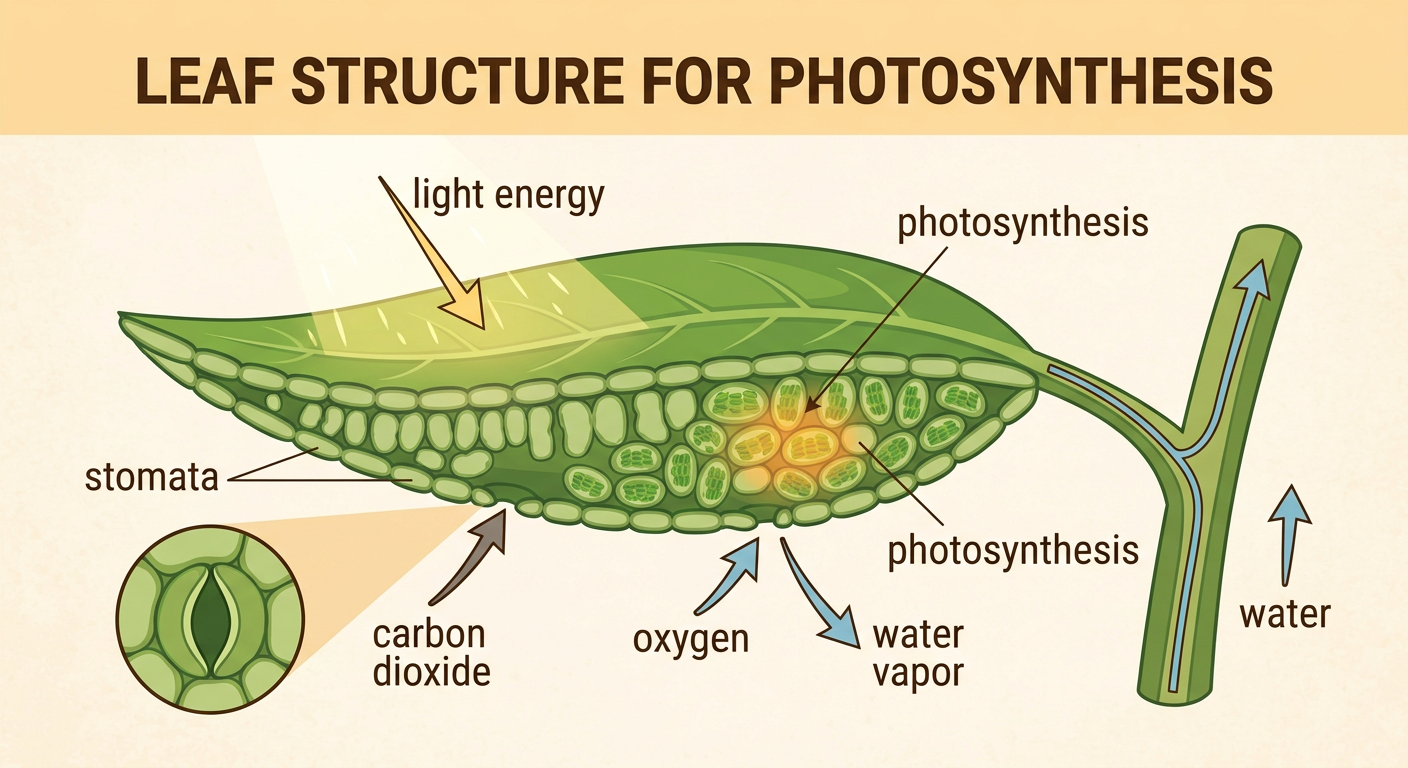
Leaves are shaped and arranged to capture light. Most leaves have a broad, flat blade that exposes many cells to sunlight. Tiny openings called stomata allow carbon dioxide from the air to enter the leaf. Using light energy, carbon dioxide, and water, leaf cells make sugars in a process called photosynthesis. Oxygen is released, and some water also exits through the stomata as water vapor. The sugars provide material and energy for growth and repair. For example, a young oak tree spreads many leaves across its branches so they can receive light. A leaf kept in deep shade may make less sugar than a leaf receiving enough light. Roots supply the water, the stem transports it, and leaves use it during photosynthesis, showing how all three structures depend on one another.
Analyze Water-Use Data
Measurement data can show how much water plants use. Suppose three identical bean plants receive water for four days. Plant A receives 20 milliliters each day, Plant B receives 15 milliliters each day, and Plant C receives 10 milliliters each day. Multiply to find each total: Plant A receives 20 × 4 = 80 milliliters, Plant B receives 15 × 4 = 60 milliliters, and Plant C receives 10 × 4 = 40 milliliters. Together, they receive 80 + 60 + 40 = 180 milliliters. Plant A receives 80 − 40 = 40 milliliters more than Plant C. If Plant A remains firm while Plant C wilts, the observations suggest that Plant C may not have received enough water. However, a fair conclusion also requires the same soil, light, container size, and plant type.

Connect Plants to Community Resources
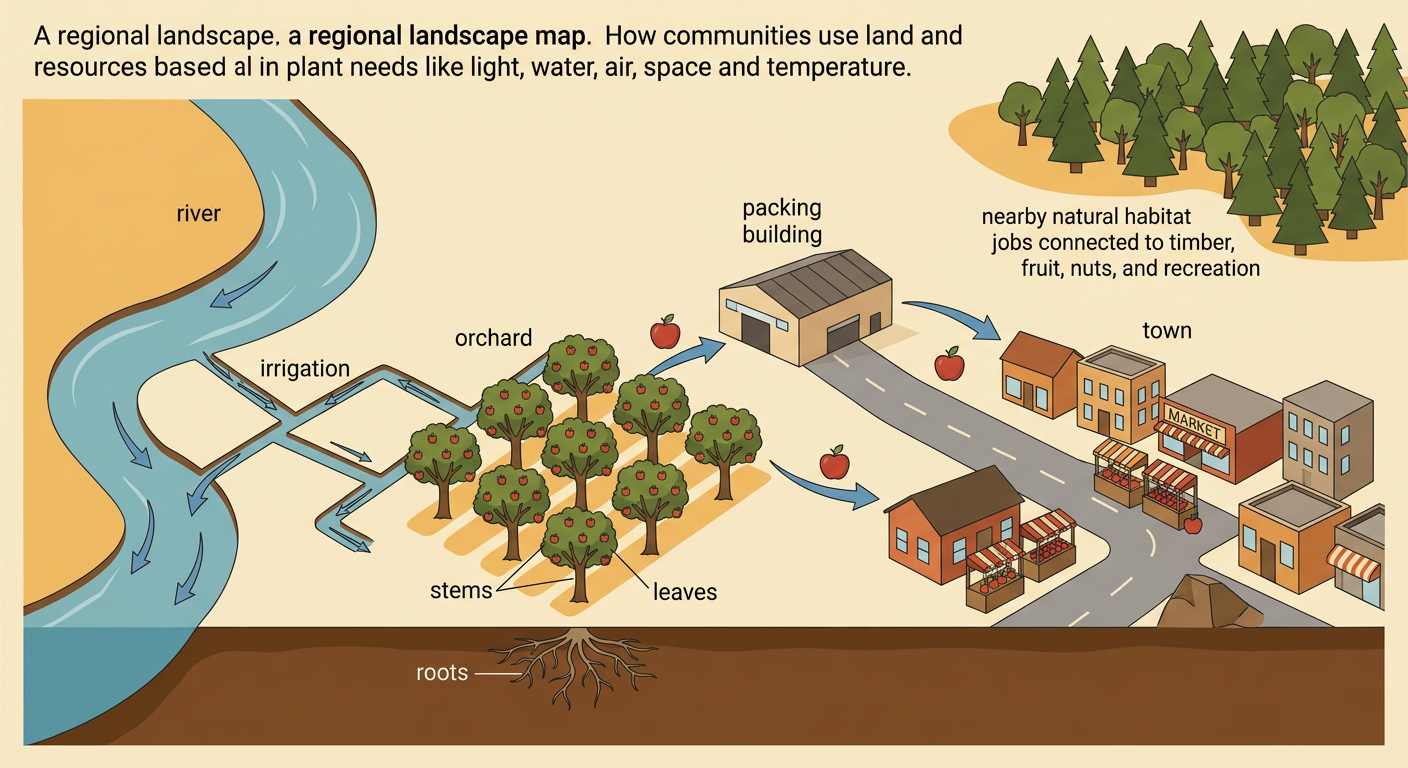
Where plants grow affects how people use land and resources. Plants need suitable light, water, air, space, and temperature. Communities often develop farms where soil and water are available, while forests may support jobs involving timber, fruit, nuts, or recreation. For example, a town near an apple-growing region may have orchards, packing buildings, markets, and roads that carry apples to other places. People may use irrigation to move water to roots when rainfall is limited. This can help grow food, but communities must also protect water supplies for homes, wildlife, and future crops. Plant structures explain these choices: roots require water and soil space, stems transport resources, and leaves require light. A strong community plan balances human needs with the conditions plants need to survive, grow, and reproduce.