
Roots, Stems, and Leaves at Work
Students investigate how roots, stems, and leaves help plants survive, then create a simple tool inspired by one plant part.
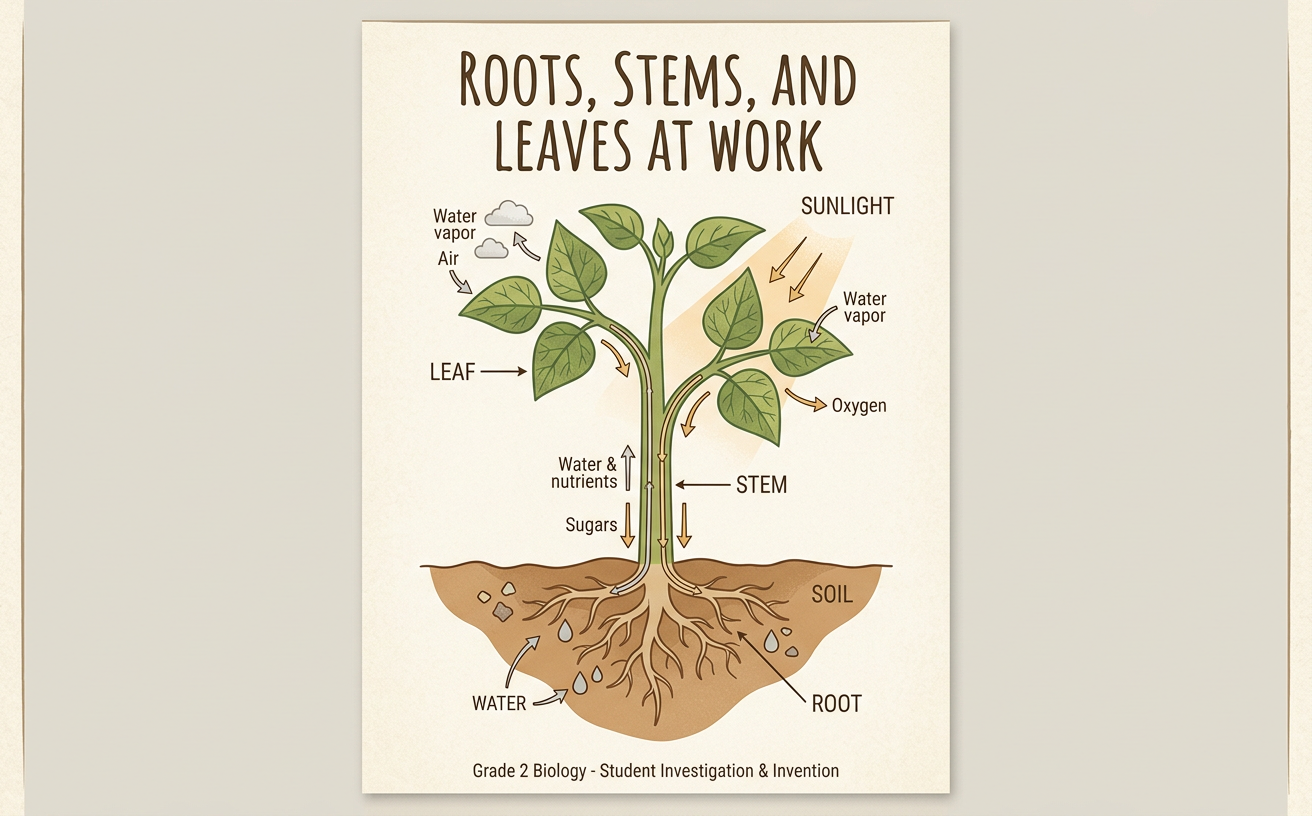
Illustrations are auto-generated and may be placeholders. They can be refreshed to match the narration.
Meet the Main Plant Parts
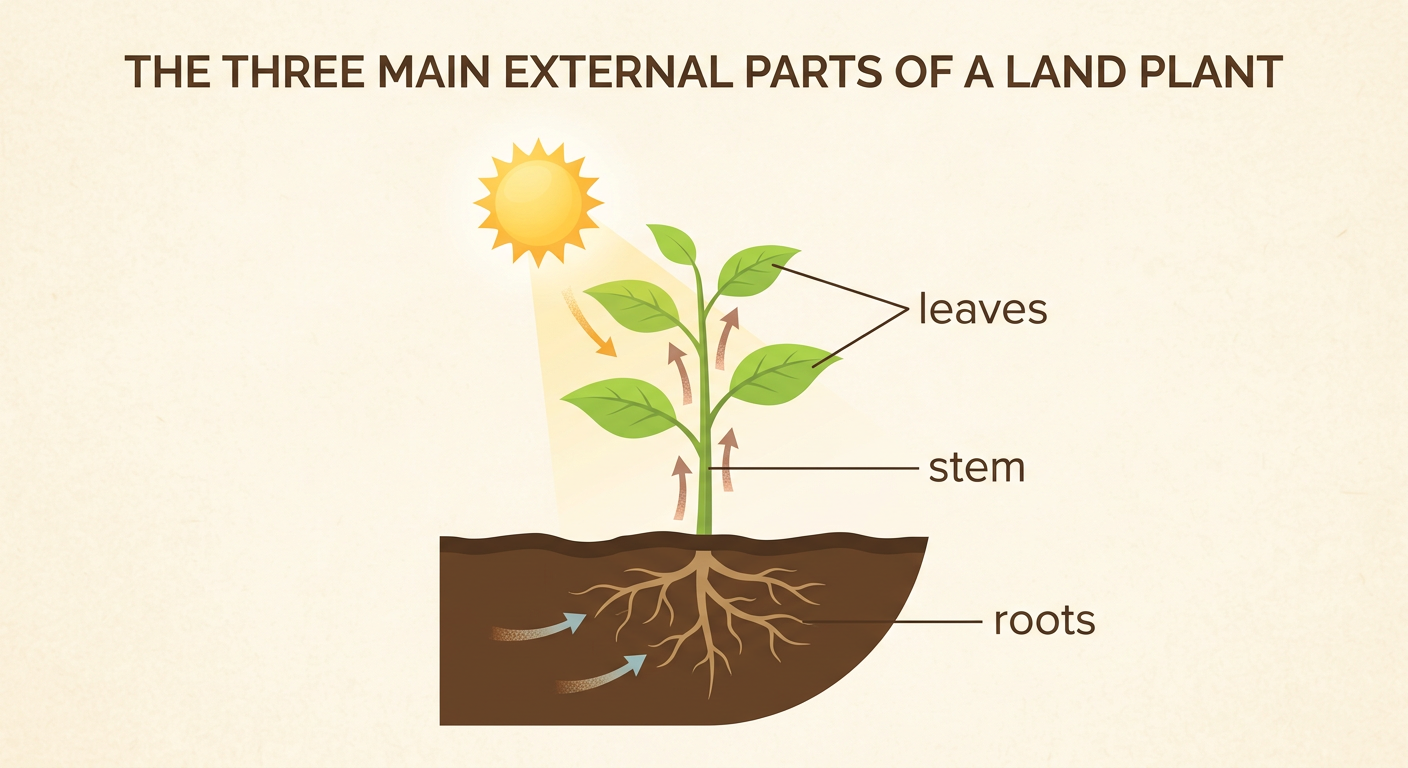
Most familiar land plants have three main external parts: roots, stems, and leaves. These parts work together to help the plant survive and grow. Roots usually spread through soil, where they hold the plant and take in water and dissolved minerals. The stem lifts leaves and moves materials between the roots and leaves. Leaves capture light and help make sugar that the plant uses to live and grow. Think about a sunflower. Its roots keep it from falling over, its tall stem raises its leaves, and its broad leaves receive sunlight. One part cannot do every job alone. Water taken in by the roots travels through the stem to the leaves. The sugar made in the leaves can then move to other plant parts.
Roots Hold and Absorb
Roots have two important jobs. They anchor a plant in place, and they absorb water and dissolved minerals from the soil. Many roots branch into smaller roots, allowing them to reach through a large area of soil. Tiny root hairs add even more surface for absorbing water. Imagine a bean plant during a windy rainstorm. Its spreading roots help keep it from being pulled out of the ground. At the same time, water enters its root hairs and moves into the plant. You can observe root growth by placing a damp paper towel and a bean seed inside a clear bag. After several days, a young root may appear and grow along the towel. Handle the seedling gently because new roots and root hairs can break easily.

Stems Support and Transport
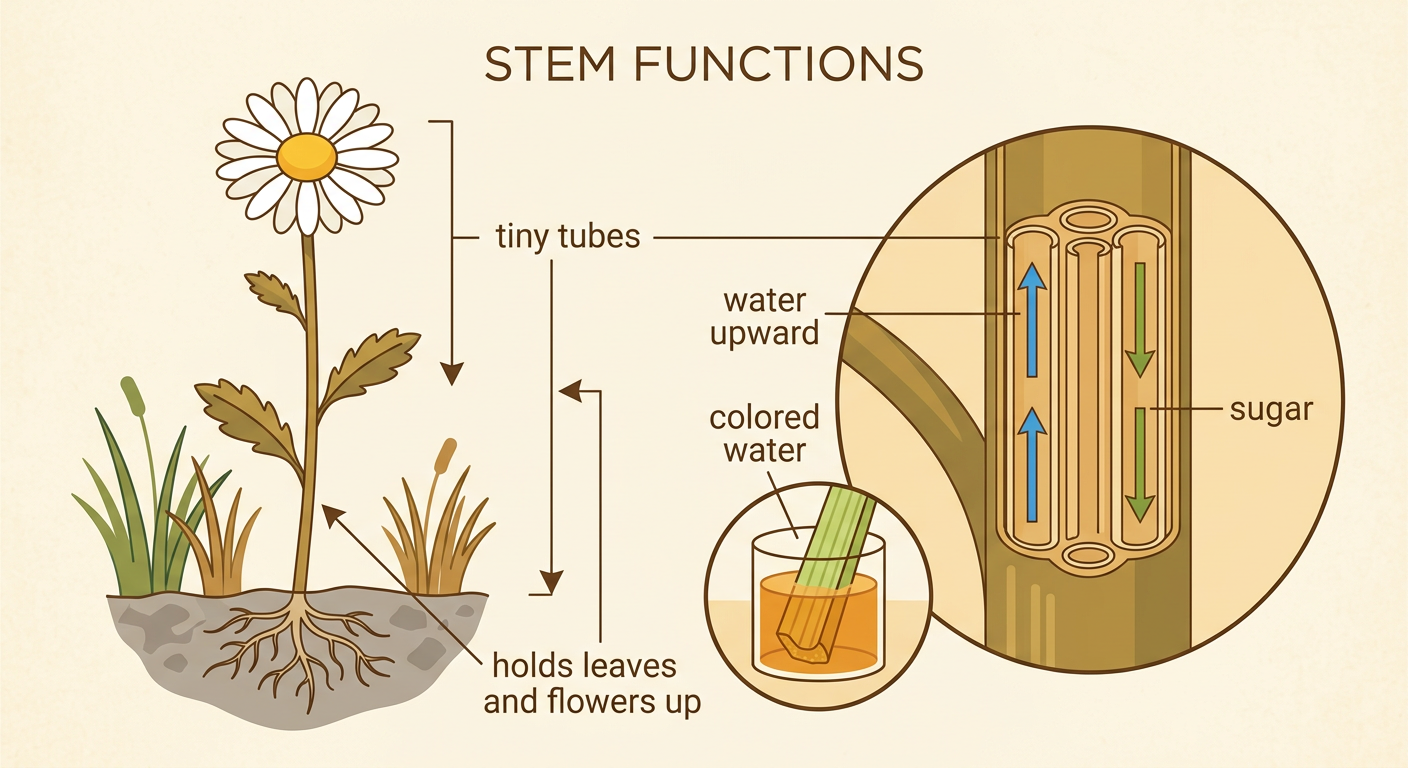
A stem supports a plant and acts like a transport pathway. It holds leaves where they can receive light. Inside the stem are tiny tubes. Some tubes carry water and dissolved minerals upward from the roots. Other tubes move sugars made in the leaves to growing or storing parts of the plant. A celery stalk can help you observe transport. Place the cut end of a celery stalk in water colored with food coloring, with adult supervision. After several hours, colored lines may appear in the stalk and leaves. The color shows where water traveled through tubes in the stem. A strong stem also keeps the plant upright. For example, a daisy’s stem holds its leaves and flower above nearby grass, helping them reach open air and light.
Leaves Capture Light
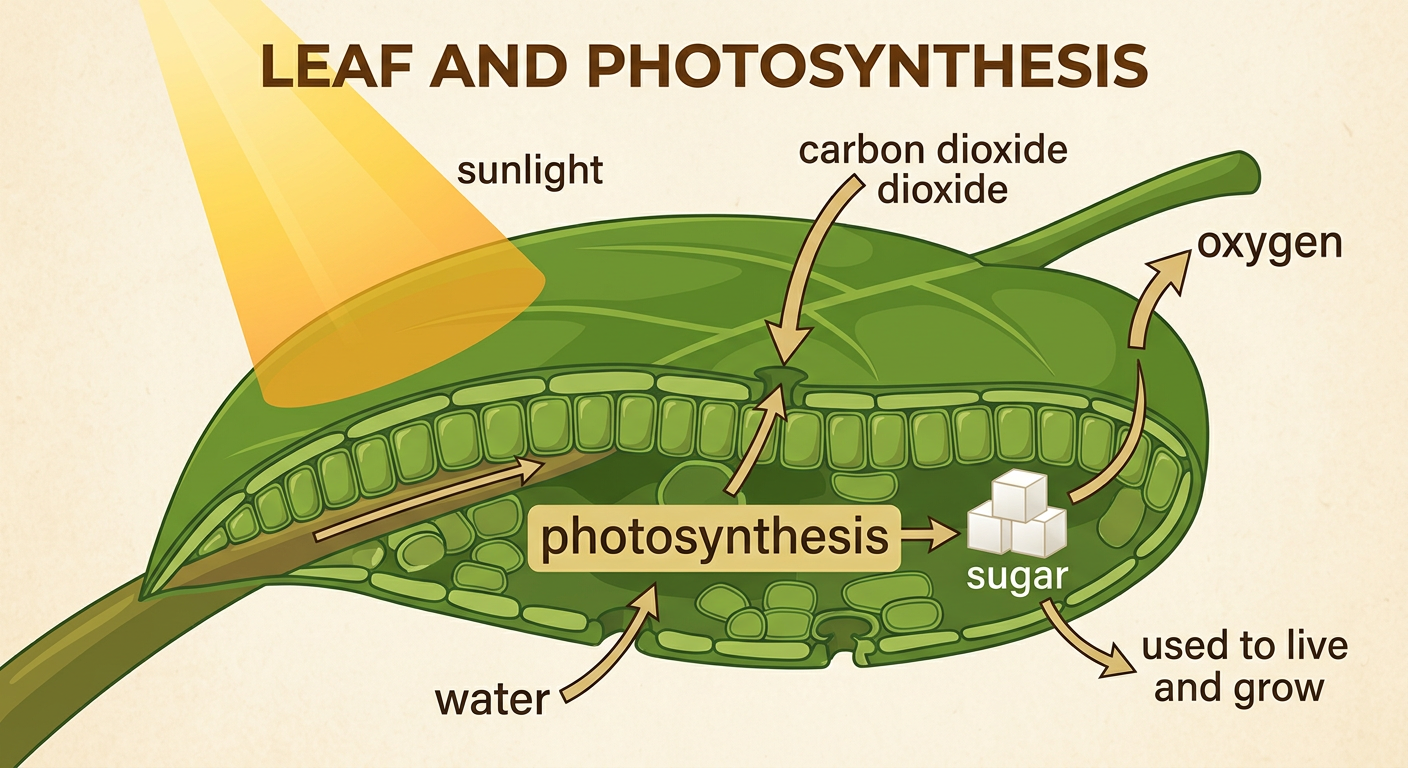
Leaves are shaped and arranged to capture light. Many leaves are broad and flat, giving them a large surface that sunlight can reach. In the leaves, the plant uses light energy, water, and carbon dioxide from the air to make sugars. This process is called photosynthesis. The plant uses the sugars for growth and releases oxygen into the air. For example, a young plant near a sunny window often bends so that its leaves face the light. A plant kept in very dim light may become pale and weak because it cannot capture enough light to make the sugar it needs. However, different plants need different amounts of light. Forest plants may have leaves that work well in shade, while desert plants may have small leaves that reduce water loss.
Design Like a Plant
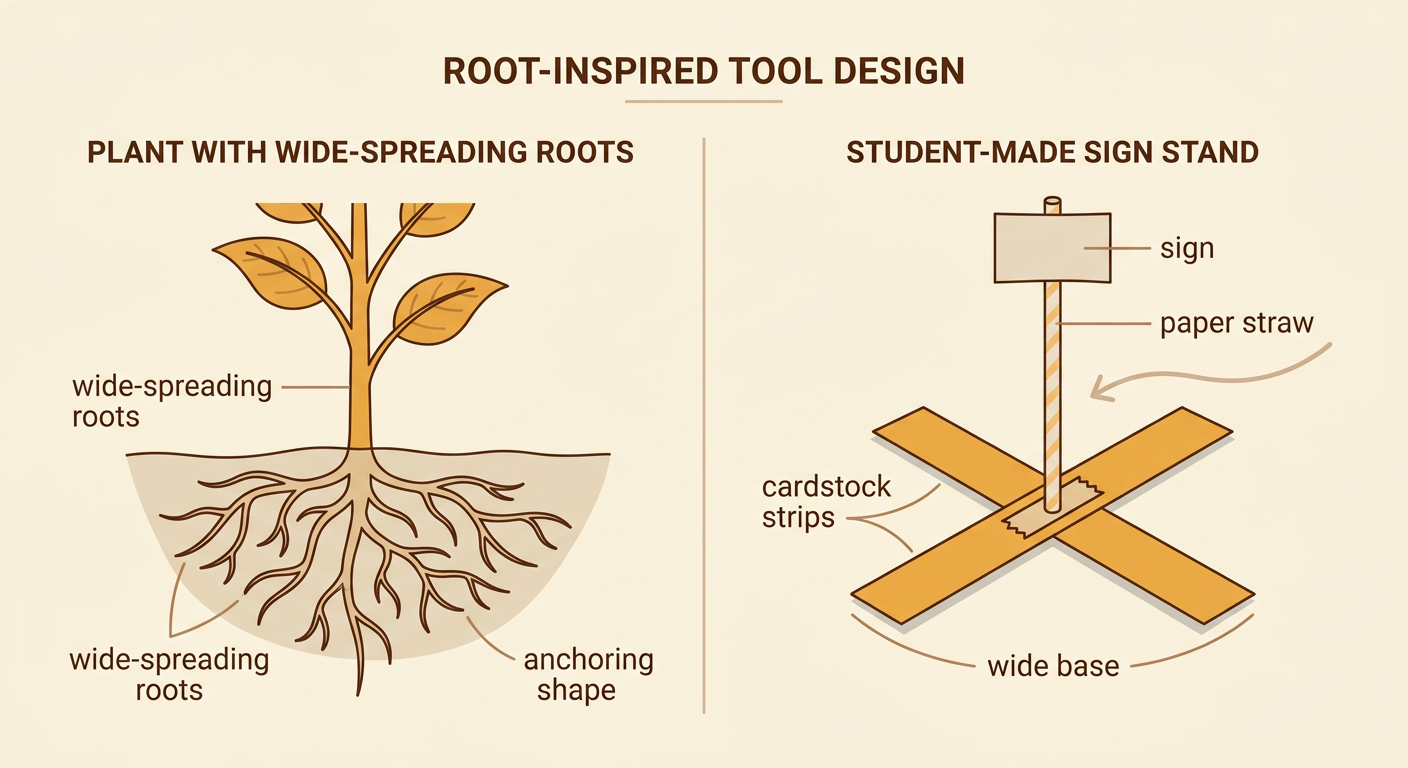
Plants can inspire tools that solve human problems. Your challenge is to make a small sign stand that does not tip easily. Study how roots spread out and anchor a plant. Then make a root-inspired base from four or more strips of cardstock. Cross the strips at the center and tape them together so they spread in different directions. Attach a paper straw upright at the center and add a small paper sign at the top. Test the stand by blowing gently from the side or using a fan with an adult. If it tips, change the width, number, or arrangement of the base strips and test again. A wide base may work better in a windy place. The cardstock strips do not absorb water like roots, but they mimic the way spreading roots help anchor a plant.
Explain the Plant-Part Connection
A good explanation tells how the plant part inspired the tool and uses evidence from a test. Begin with the plant: roots spread through soil and help anchor a plant. Next, describe the copied feature: the sign stand has strips that spread in several directions. Then explain the result: the wide base helped the sign remain upright during the airflow test. You might say, “My tool mimics spreading roots because its base reaches outward and keeps the sign from tipping.” Include evidence, such as how many gentle blows the first and improved designs withstood. Also connect the design to place. People living in a windy area may need wider, stronger bases for signs or other outdoor objects. In a calmer area, a smaller base might work. Environmental conditions can change what people need and how they design solutions.
