
Safe Science: Assessing Risk and Responding to Lab Hazards
Students interpret hazard information, select appropriate protective measures, follow multistep procedures, and evaluate laboratory rules through realistic Grade 8 safety scenarios.

Illustrations are auto-generated and may be placeholders. They can be refreshed to match the narration.
Recognizing Hazards and Safety Symbols
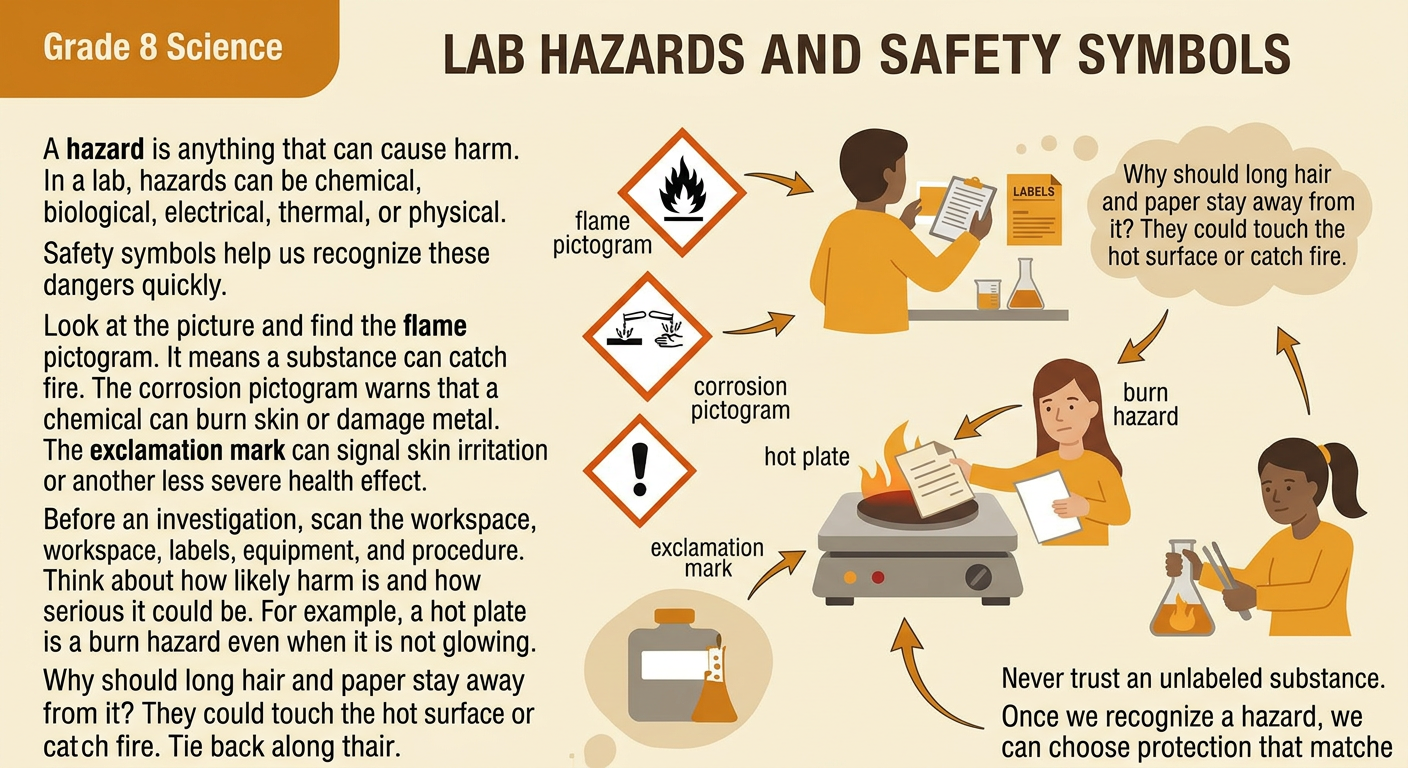
A hazard is anything that can cause harm. Laboratory hazards may be chemical, biological, electrical, thermal, or physical. Safety symbols quickly communicate the type of danger. For example, the flame pictogram warns that a substance can catch fire, while the corrosion pictogram warns that a chemical can burn skin or damage metals. The exclamation mark often signals skin irritation or other less severe health effects. Before beginning an investigation, scan the workspace, labels, equipment, and written procedure for hazards. Then consider both the likelihood of harm and how serious that harm could be. A hot plate creates a burn hazard even when it does not glow. If a beaker must be heated, keep flammable materials away, tie back long hair, and use proper tools to handle hot glassware. Never assume an unlabeled substance is harmless.
Matching Personal Protective Equipment to Risk
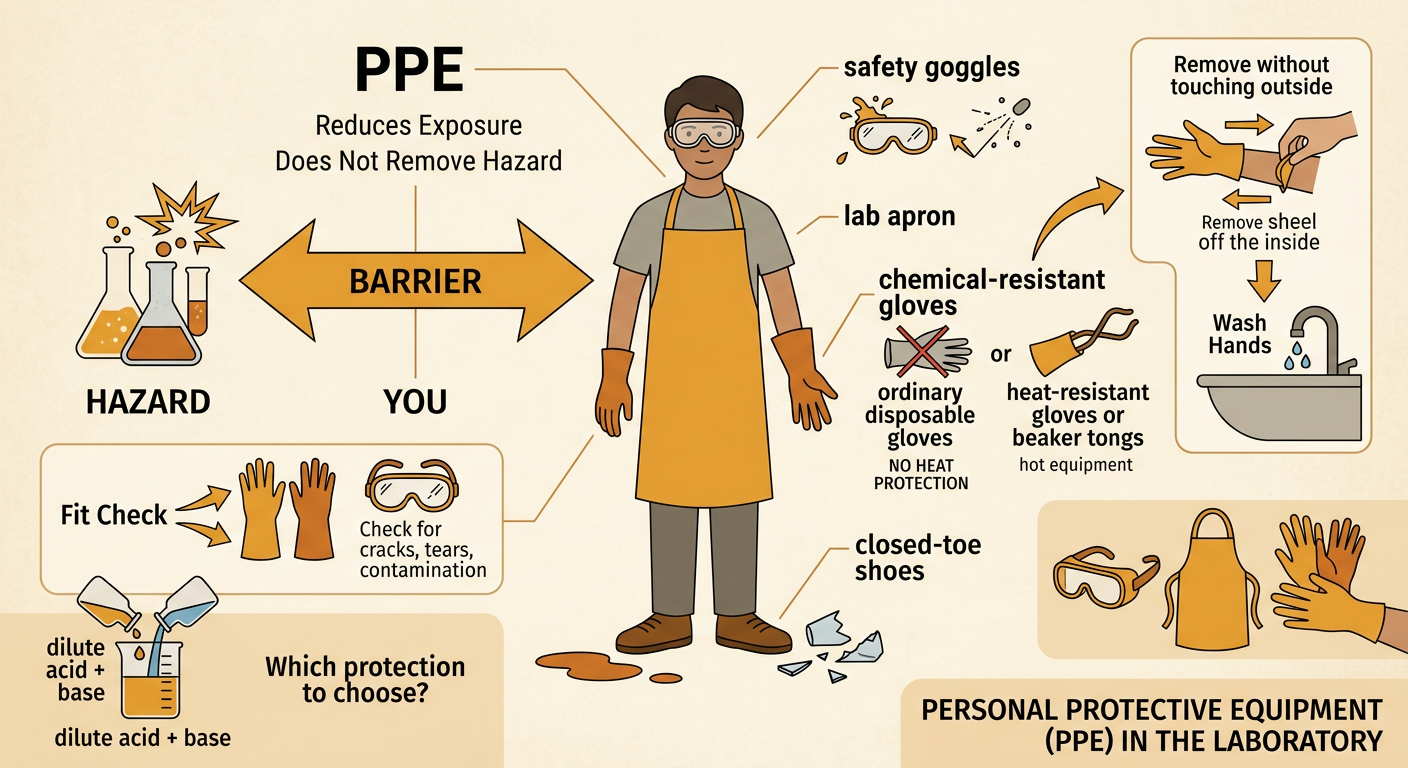
Personal protective equipment, or PPE, reduces exposure to hazards but does not remove the hazard itself. Choose PPE by examining the material, equipment, and task. Safety goggles protect the eyes from chemical splashes and flying particles. A lab apron helps protect skin and clothing, and chemical-resistant gloves may be required for certain substances. Heat-resistant gloves or beaker tongs are used for hot equipment; ordinary disposable gloves may melt or provide poor heat protection. Closed-toe shoes protect feet from spills and broken glass. For example, when mixing a dilute acid with a base, students should wear splash goggles, an apron, and any gloves specified by the teacher. PPE must fit properly and be inspected for cracks, tears, or contamination. Remove contaminated gloves without touching their outer surfaces, and wash your hands after the investigation.
Reading Labels and Safety Data
Read every chemical label before using, moving, or disposing of a substance. A complete workplace label typically identifies the product, hazard pictograms, a signal word such as Danger or Warning, hazard statements, and precautionary statements. Never use a chemical from an unlabeled container. More detailed information appears in a Safety Data Sheet, or SDS. Its standardized sections explain hazards, first-aid measures, safe handling and storage, required exposure controls, spill response, and disposal considerations. For example, before using isopropyl alcohol, a student should notice its flammability warning and keep it away from flames, sparks, and hot surfaces. The student should also check the assigned PPE and disposal directions. Labels and an SDS support safe decisions, but students must still follow teacher instructions. If information is unclear or two directions appear to conflict, stop and ask the teacher before proceeding.
Preventing Accidents Through Procedures
A multistep procedure is a safety system as well as a set of directions. Read the entire procedure before starting so you understand the sequence, materials, measurements, and stopping points. Complete steps in order unless the teacher authorizes a change. Use the stated quantities and equipment because substitutions can create new risks or make results unreliable. Keep the workspace organized, point test tubes away from people, and never leave heating equipment unattended. For example, a procedure may direct students to put on goggles, measure 20 milliliters of water, add one tablet, observe for two minutes, and record the temperature. Adding the tablet before measuring the initial temperature would produce incomplete data. Skipping goggles would increase the risk of eye injury. If a step cannot be completed exactly, pause the investigation, secure the materials, and ask the teacher rather than improvising.
Responding to Spills, Injuries, and Emergencies
During an emergency, stay calm, stop work, and alert the teacher immediately. Do not hide an accident or clean an unknown spill yourself. Keep others away from the area and follow the teacher’s directions. For a chemical splash in the eyes, use the eyewash station at once and flush continuously for at least 15 minutes while an adult obtains further help. For a chemical spill on skin or clothing, use the safety shower or running water as directed and remove contaminated clothing when appropriate. Small cuts, burns, inhalation exposures, fires, and broken glass must all be reported. Never pick up broken glass with bare hands or place it in regular trash. Know the locations of exits, eyewash stations, safety showers, fire blankets, and fire extinguishers. Evacuate when instructed, and do not reenter until authorized.
Evaluating Lab Safety Scenarios
Laboratory rules should be evaluated by how well they reduce risk while allowing accurate work. Use a systematic process: identify the hazard, establish criteria and constraints, compare possible actions, and support the best choice with evidence. Criteria may include preventing injury, limiting exposure, and protecting equipment. Constraints may include time, available PPE, classroom space, and teacher supervision. Suppose one group proposes allowing drinks at lab tables if containers have lids, while another proposes keeping all food and drinks outside the laboratory. The second rule better prevents accidental ingestion and chemical contamination, even though it is less convenient. A strong rule should be clear, practical, enforceable, and matched to the seriousness of the risk. If a rule creates confusion or fails to address a hazard, propose a specific improvement. Consistent safety rules protect individuals and the entire classroom community.