Seeds on the Move
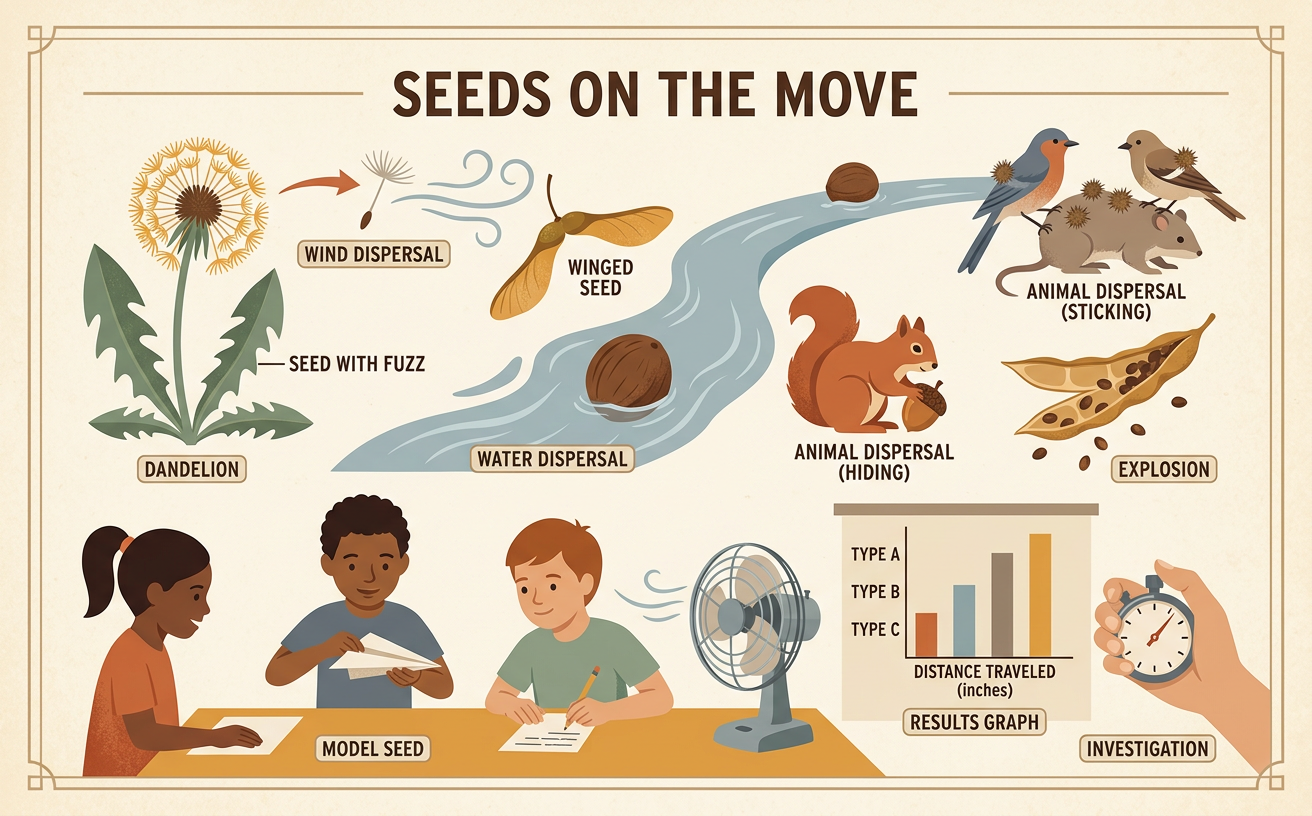
Students investigate how wind, water, and animals disperse seeds, test a simple seed model, and graph the results.
Illustrations are auto-generated and may be placeholders. They can be refreshed to match the narration.
Why Seeds Need to Move
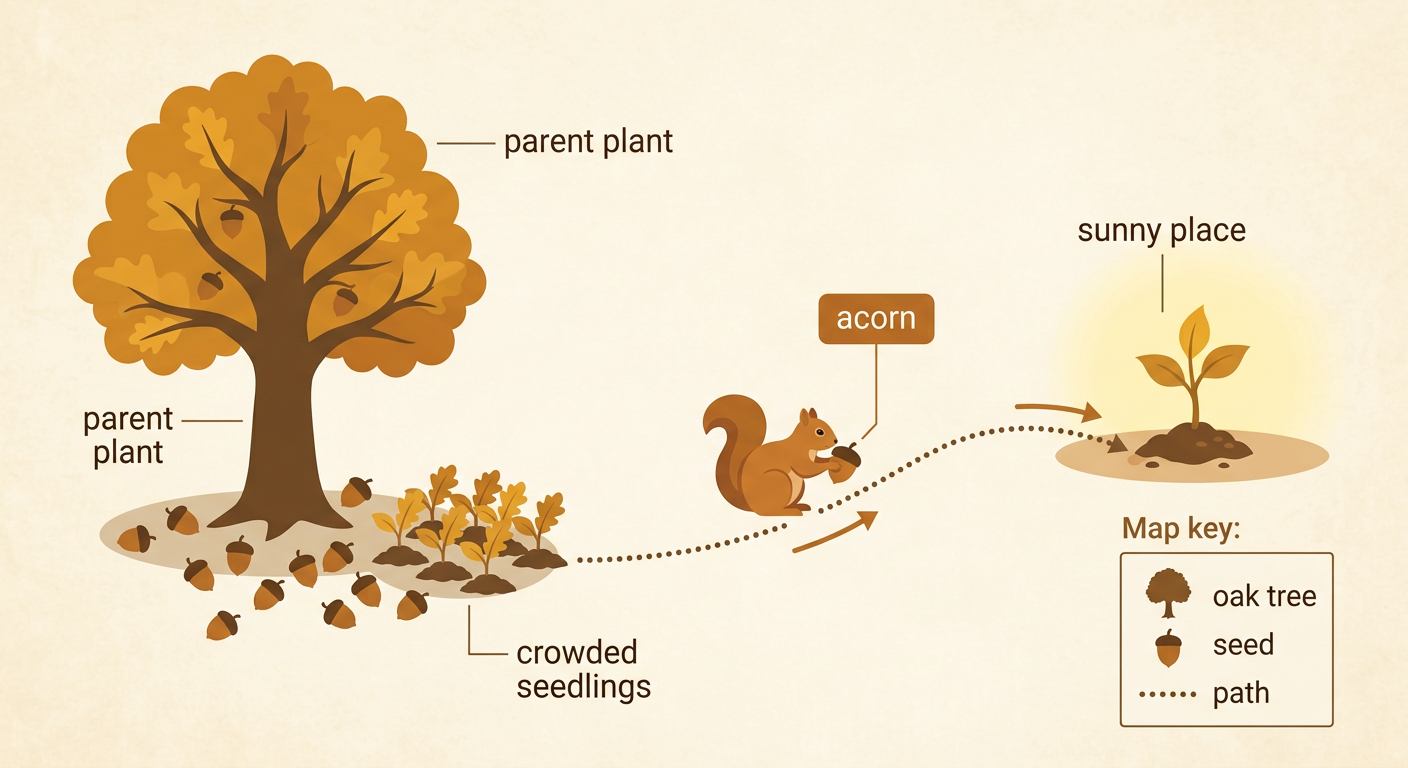
A seed can grow into a new plant, but it needs a suitable place. If every seed dropped beside its parent plant, the seedlings would be crowded. They might compete for sunlight, water, soil space, and nutrients. Moving away gives some seeds a better chance to find what they need. For example, an acorn carried across a park by a squirrel may be buried in a sunny place. If the squirrel does not return, the acorn may sprout there. Seed movement also helps plants spread to new places. On a map, we can draw a line from the parent plant to the place where a seed lands. This shows how plants, animals, and places are connected.
Wind, Water, and Animal Dispersal
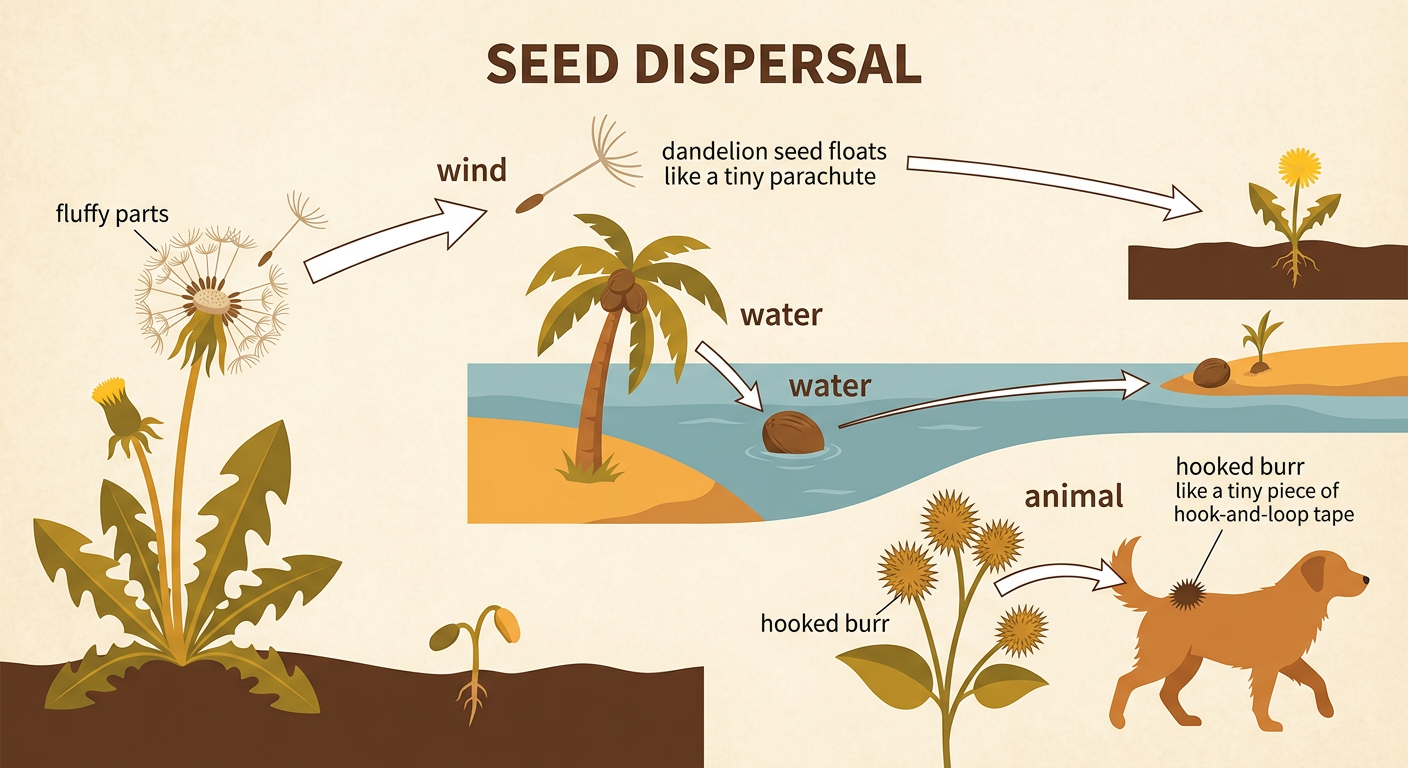
Seed dispersal means moving seeds away from a parent plant. Wind carries light seeds that have wings or fluffy parts. A dandelion seed can float through the air like a tiny parachute. Water moves seeds that can float. A coconut can travel across water and wash onto land. Animals move seeds in different ways. A hooked burr can cling to fur and later fall off. A bird may eat a berry, fly to another place, and leave the seed in its waste. First, a seed leaves the parent plant. Next, wind, water, or an animal carries it. Finally, it lands in a new place. The seed will grow only if the new place has the conditions it needs.
Build a Traveling Seed Model
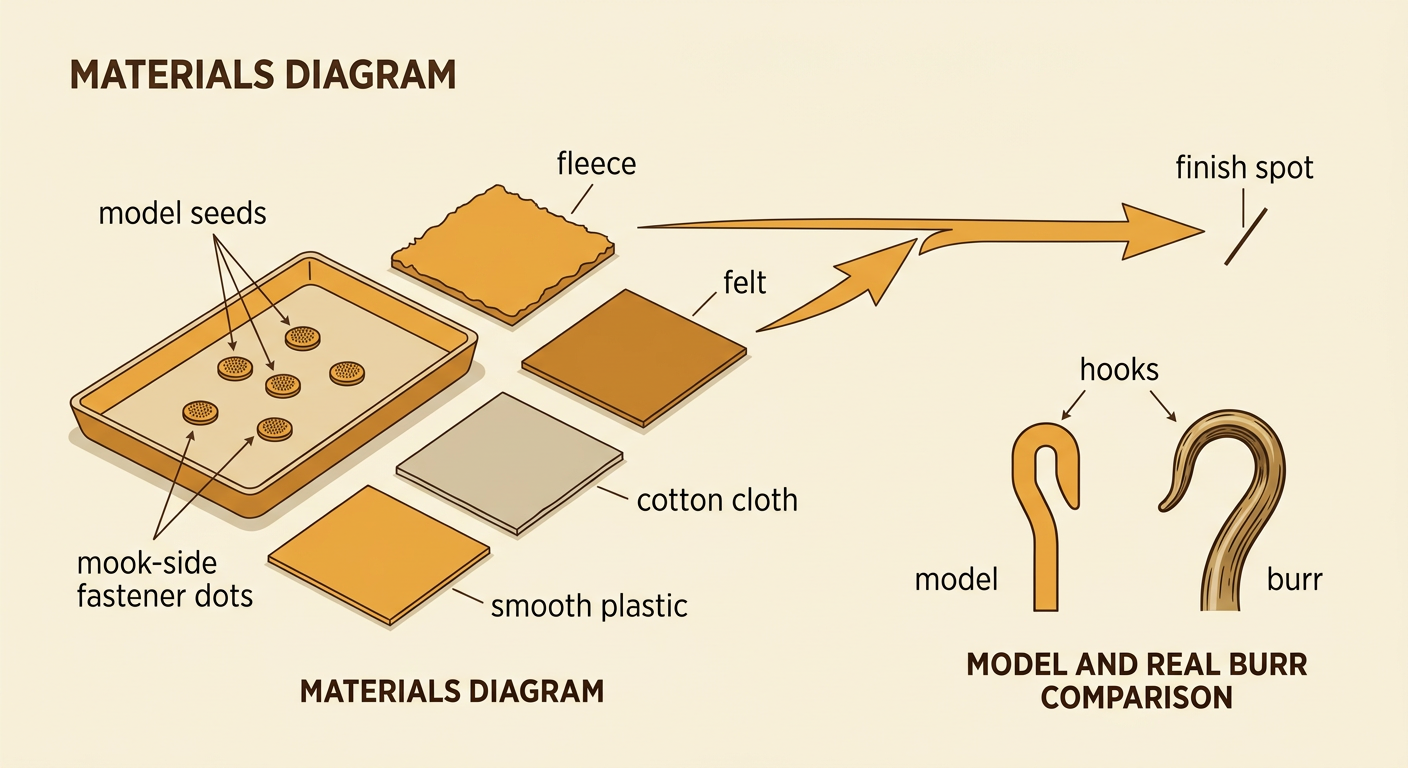
Build a model that shows how an animal can carry hooked seeds. A model is a simple object that represents how something works. Use five small hook-and-loop fastener dots as model burr seeds. Place them hook-side up in a shallow tray. Cut equal-size pieces of fleece, felt, cotton cloth, and smooth plastic. Each material will represent a different kind of animal covering. Press one material gently onto the five model seeds, lift it, and carry it to a marked finish spot. Do not press harder for one material than another. The tiny hooks represent the hooks on a real burr. The cloth represents fur or feathers that a seed might catch on. Use only classroom craft materials, not sharp or prickly real burrs.
Test and Record Results
Test each material in the same way. Begin with five model seeds in the tray. Press the first material onto them once, lift it, and move it to the finish spot. Count how many seeds stayed attached for the whole trip. Record that number in a data table. Return all five seeds to the tray. Repeat the test with fleece, felt, cotton cloth, and smooth plastic. You can test each material three times and record every result. Keep the number of seeds, travel distance, pressing time, and pressing force the same. These are fair-test rules. For example, if fleece carries four seeds and plastic carries one seed, write those numbers in the correct rows. Careful records help the class use evidence instead of guesses.

Graph and Compare the Data
Use the test results to make a bar graph. Write the four materials along the bottom: fleece, felt, cotton cloth, and smooth plastic. Write the number of seeds from zero to five along the side. Draw one bar for each material using the result chosen by your teacher, such as the first trial or the total from several trials. Make the height of each bar match the data. Then compare the bars. Which material carried the most seeds? Which carried the fewest? How many more seeds did fleece carry than plastic? For example, if the fleece bar reaches four and the plastic bar reaches one, fleece carried three more seeds. The graph is a representation that makes patterns and differences easy to see.

Explain How the Model Works
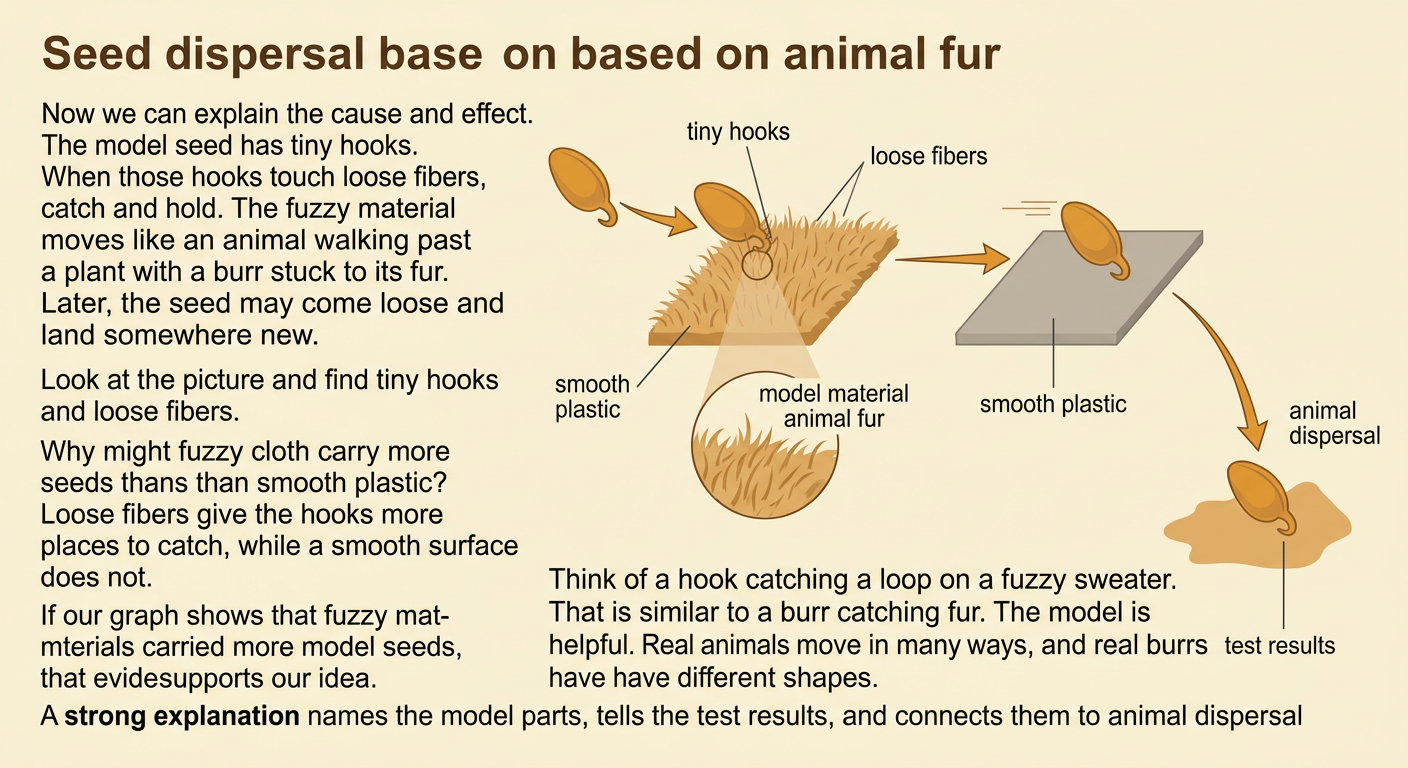
Use the model and graph to explain the cause-and-effect connection. The model seed has tiny hooks. When the hooks touch a material with loose fibers, they catch and hold. The moving material acts like an animal walking past a plant and carrying a burr on its fur. Later, the seed can come loose and land in a different place. If fuzzy materials carried more model seeds than smooth plastic, the evidence supports the idea that hook-like seeds attach better to fur-like surfaces. The model is helpful, but it is not exactly like nature. Real animals move in many ways, and real burrs have different shapes. A strong explanation names the model parts, describes the test results, and tells how an animal can disperse seeds.