Sexual and Asexual Reproduction
Students compare sexual and asexual reproduction and use simple models to explain how each affects genetic similarity and variation in offspring.
Illustrations are auto-generated and may be placeholders. They can be refreshed to match the narration.
Meaning and Purpose of Reproduction
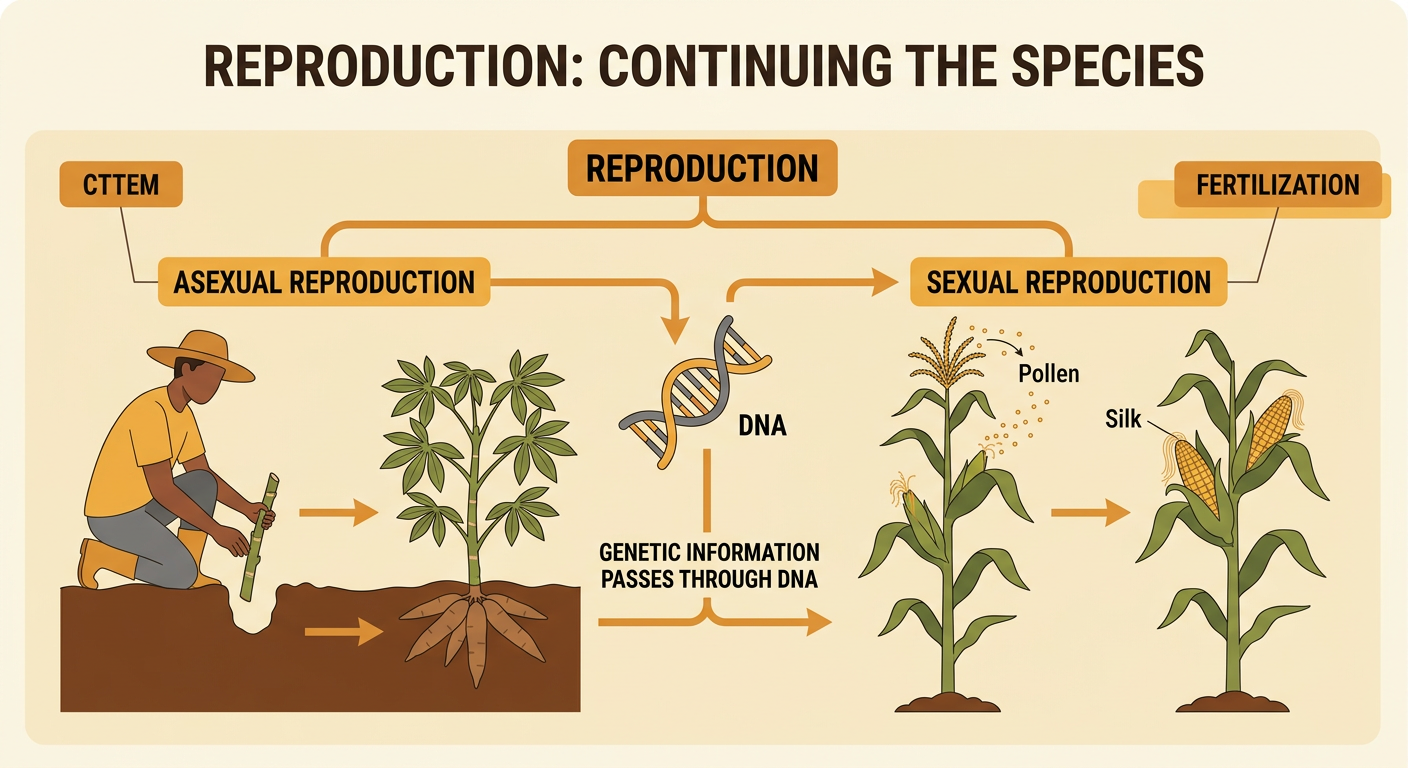
Reproduction is the biological process by which living things produce new individuals of the same species. It allows a species to continue when older organisms die. Reproduction does not keep an individual organism alive, but it helps maintain its population over generations. There are two main types: asexual and sexual reproduction. Asexual reproduction involves one parent and usually produces genetically identical offspring. Sexual reproduction usually involves genetic information from two parents and produces varied offspring. For example, a cassava farmer can grow a new cassava plant from a stem cutting, which is asexual reproduction. Maize plants reproduce sexually when pollen fertilizes egg cells and seeds form. In both cases, genetic information is passed from parent organisms to offspring through DNA.
How Asexual Reproduction Occurs
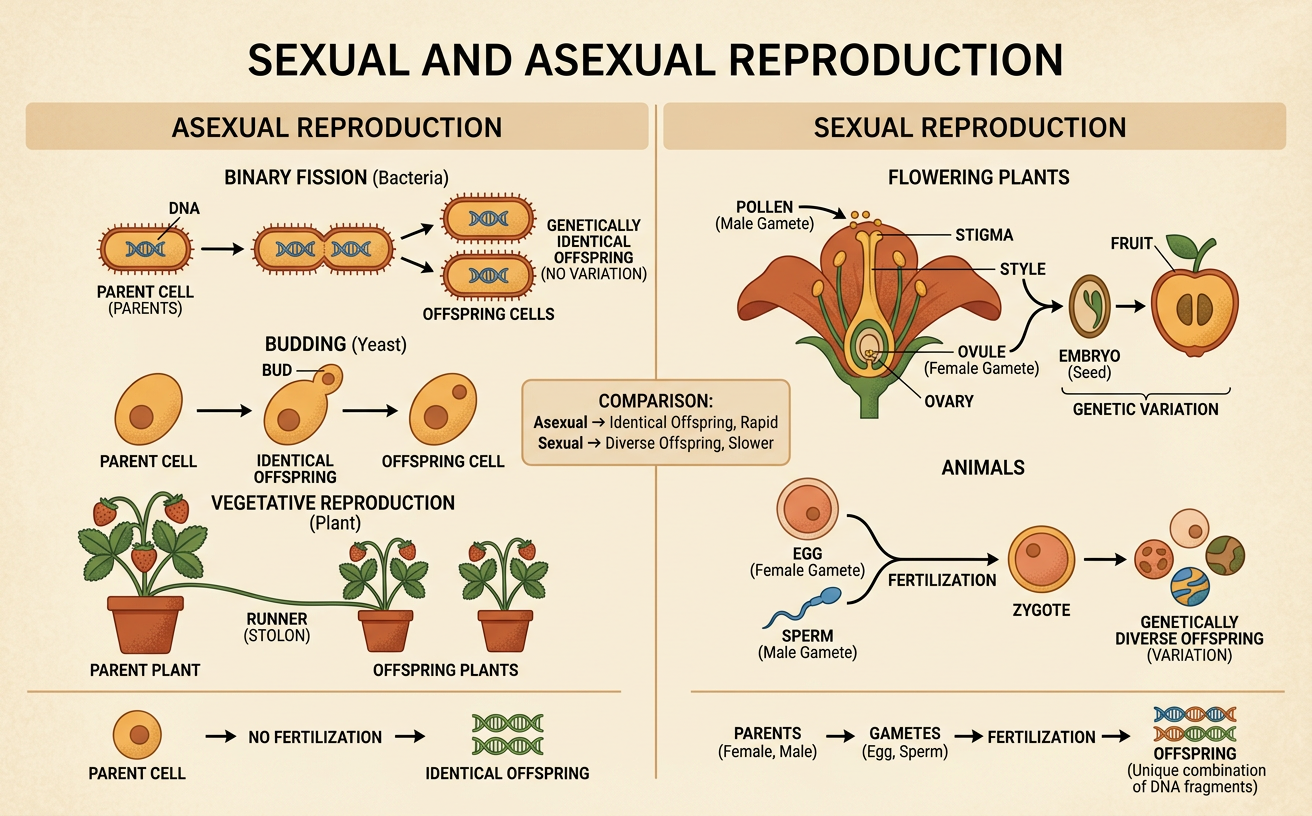
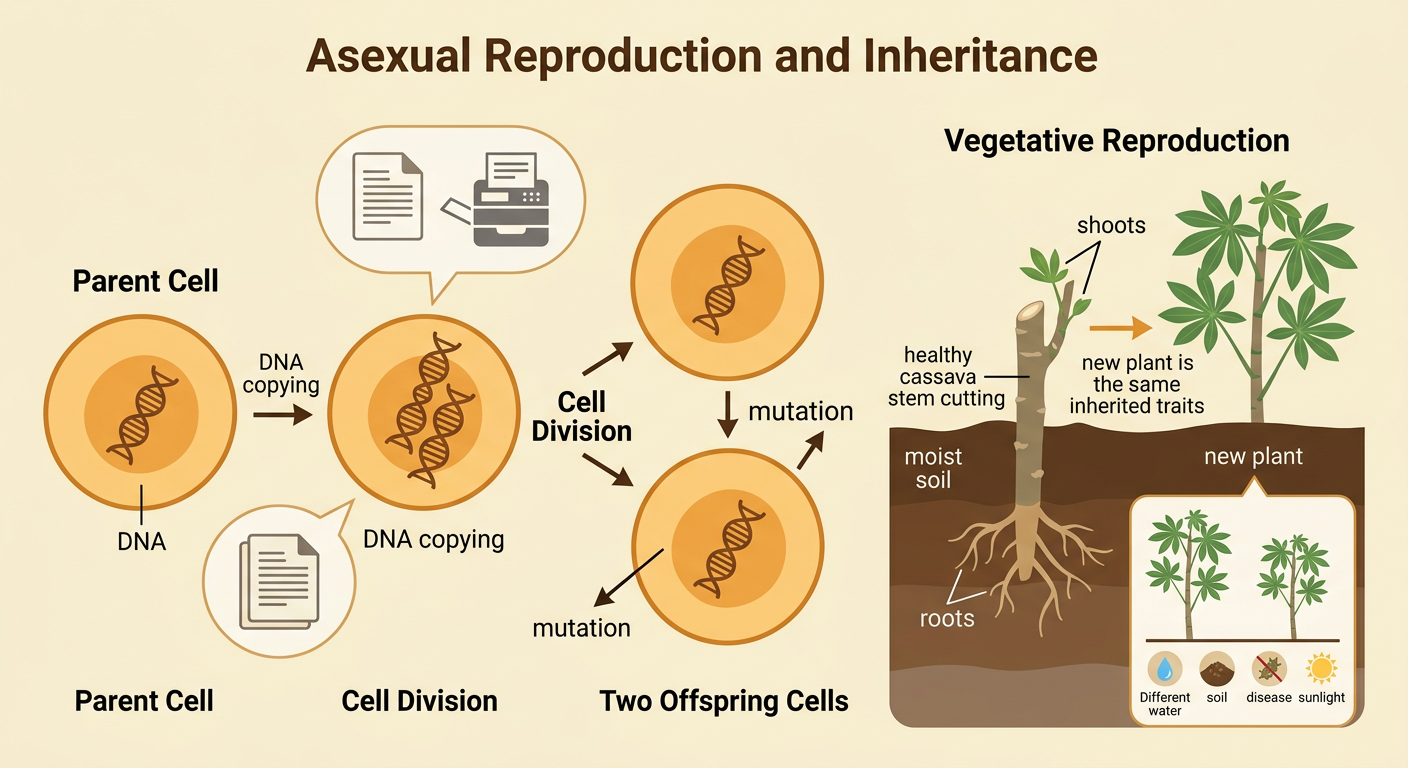
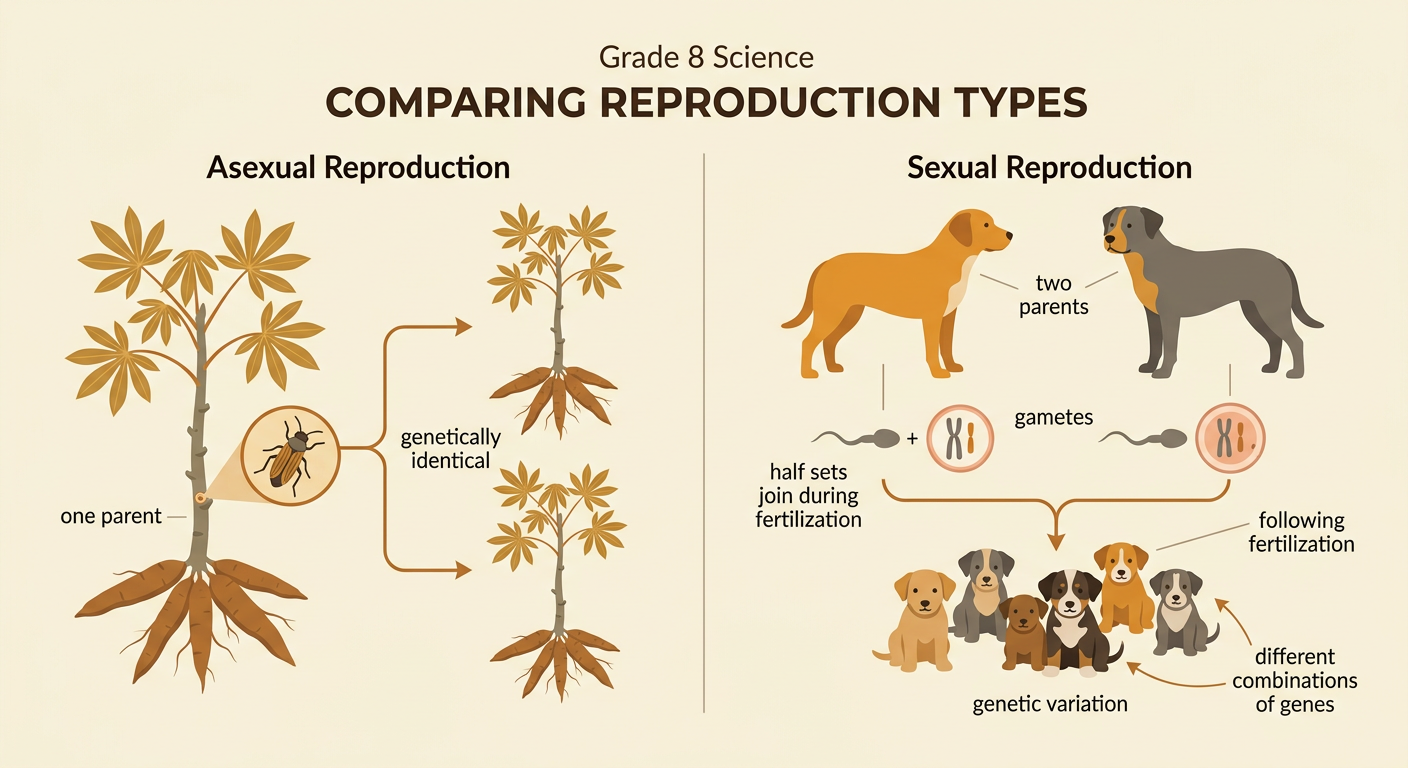
Asexual reproduction occurs when one parent produces offspring without the joining of sperm and egg cells. Before a cell divides, its DNA is copied. The copied genetic information is passed into the new cell or organism. Because the DNA comes from one parent, the offspring are genetically identical to the parent and to one another, except when a rare mutation occurs. Common methods include binary fission in bacteria, budding in yeast and hydra, spore formation in some fungi, and vegetative reproduction in plants. For example, a farmer may place a healthy cassava stem cutting in moist soil. Roots and shoots develop, producing a new plant with the same inherited traits as the parent plant. Differences in height or health may still result from water, soil, disease, or sunlight.
How Sexual Reproduction Occurs
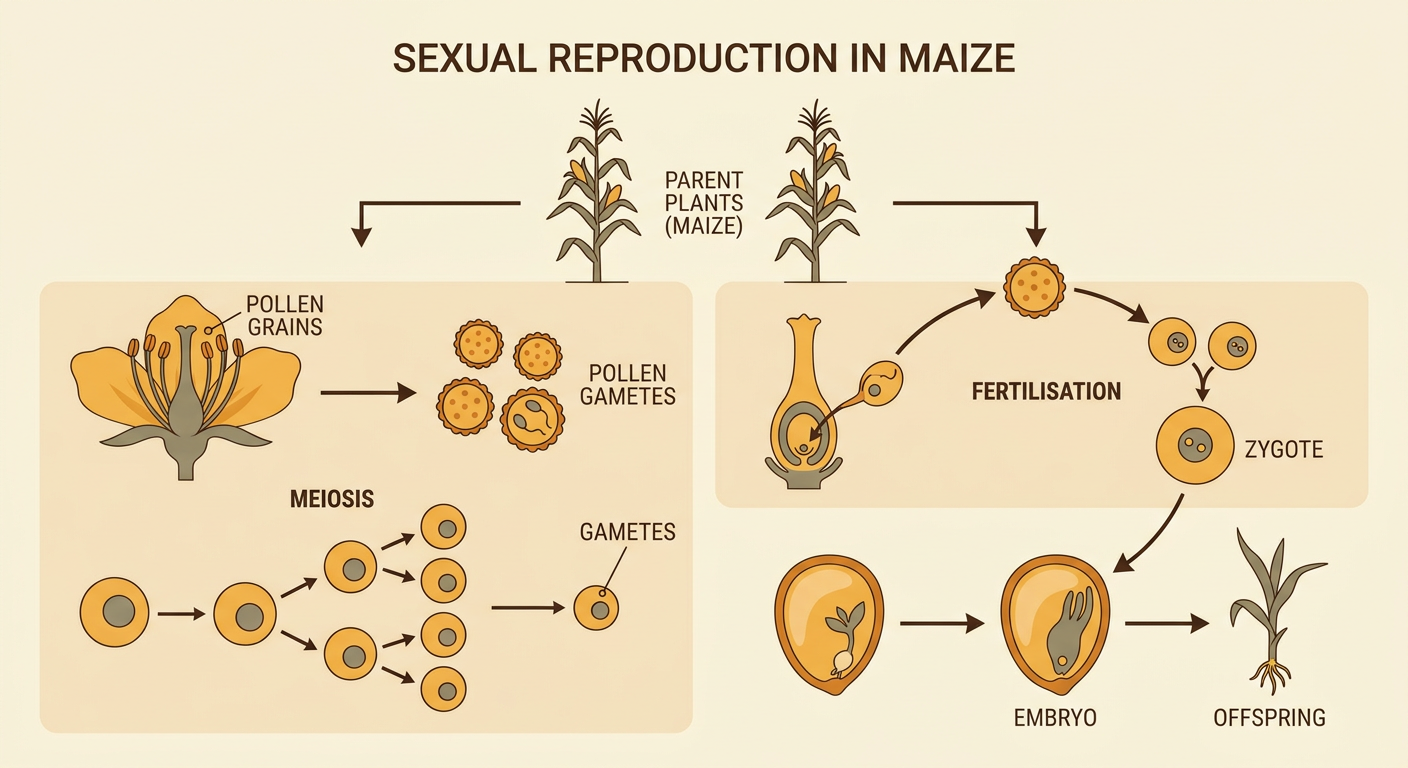
Sexual reproduction combines genetic information from two parents. Each parent produces special reproductive cells called gametes. Male gametes are sperm cells in animals and are carried in pollen in flowering plants. Female gametes are egg cells. Gametes contain half the usual number of chromosomes because they are formed by meiosis. During fertilization, a male gamete joins a female gamete to form a zygote with a complete set of chromosomes. The zygote divides and develops into an embryo and then an offspring. For example, pollen from a maize plant may reach the female part of another maize plant. A male gamete fertilizes an egg cell, and a maize seed forms. The seed receives genetic information from both parent plants, so the new plant is not genetically identical to either parent.
Comparing Parents, Gametes, and Offspring
Asexual and sexual reproduction differ in the number of parents, the role of gametes, and the genetic information of the offspring. Asexual reproduction requires one parent and does not involve fertilization or the joining of gametes. The parent’s DNA is copied, so its offspring are usually genetically identical. Sexual reproduction combines gametes, usually from two parents. Each gamete carries half a chromosome set, and fertilization restores the complete set in the offspring. The offspring receives a different combination of genes and therefore shows genetic variation. For example, cassava plants grown from one stem may share inherited features such as leaf shape. By contrast, puppies from the same two dogs can differ in coat color or markings because each puppy receives a different combination of genetic information. Environmental conditions can also affect how inherited traits appear.
Modeling Genetic Similarity and Variation
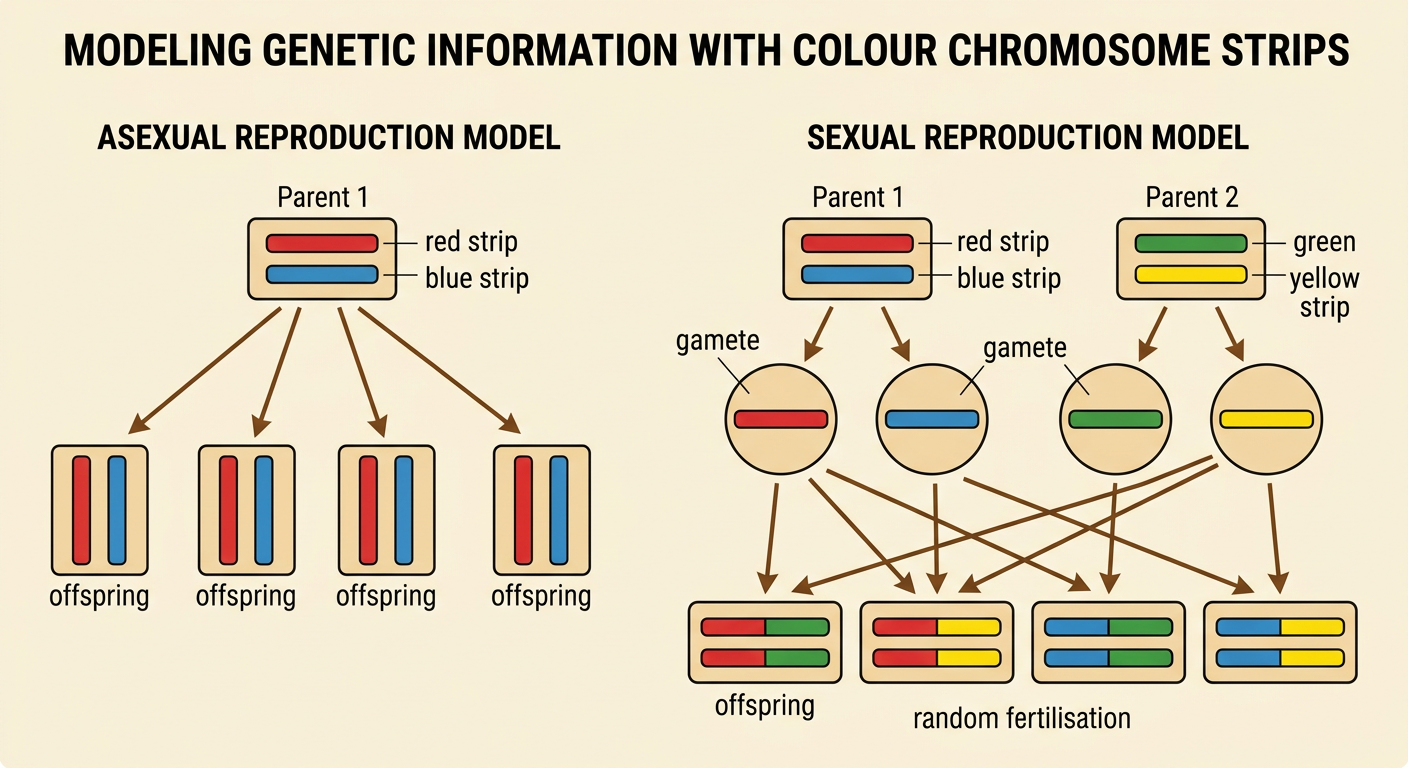
A simple model can use colored chromosome strips to represent genetic information. Suppose a parent plant has one red strip and one blue strip. In an asexual model, copy both strips and place the copies in each offspring. Every offspring receives the same red-and-blue set, showing identical genetic information. In a sexual model, Parent 1 has red and blue strips, while Parent 2 has green and yellow strips. During gamete formation, each gamete receives one strip from each represented chromosome pair. At fertilization, one gamete from each parent is selected and combined. Different selections can produce red-green, red-yellow, blue-green, or blue-yellow combinations. The strips are only symbols; real chromosomes contain many genes. The model shows that DNA copying maintains similarity in asexual reproduction, while gamete formation and random fertilization create variation in sexual reproduction.
Review and Quick Assessment
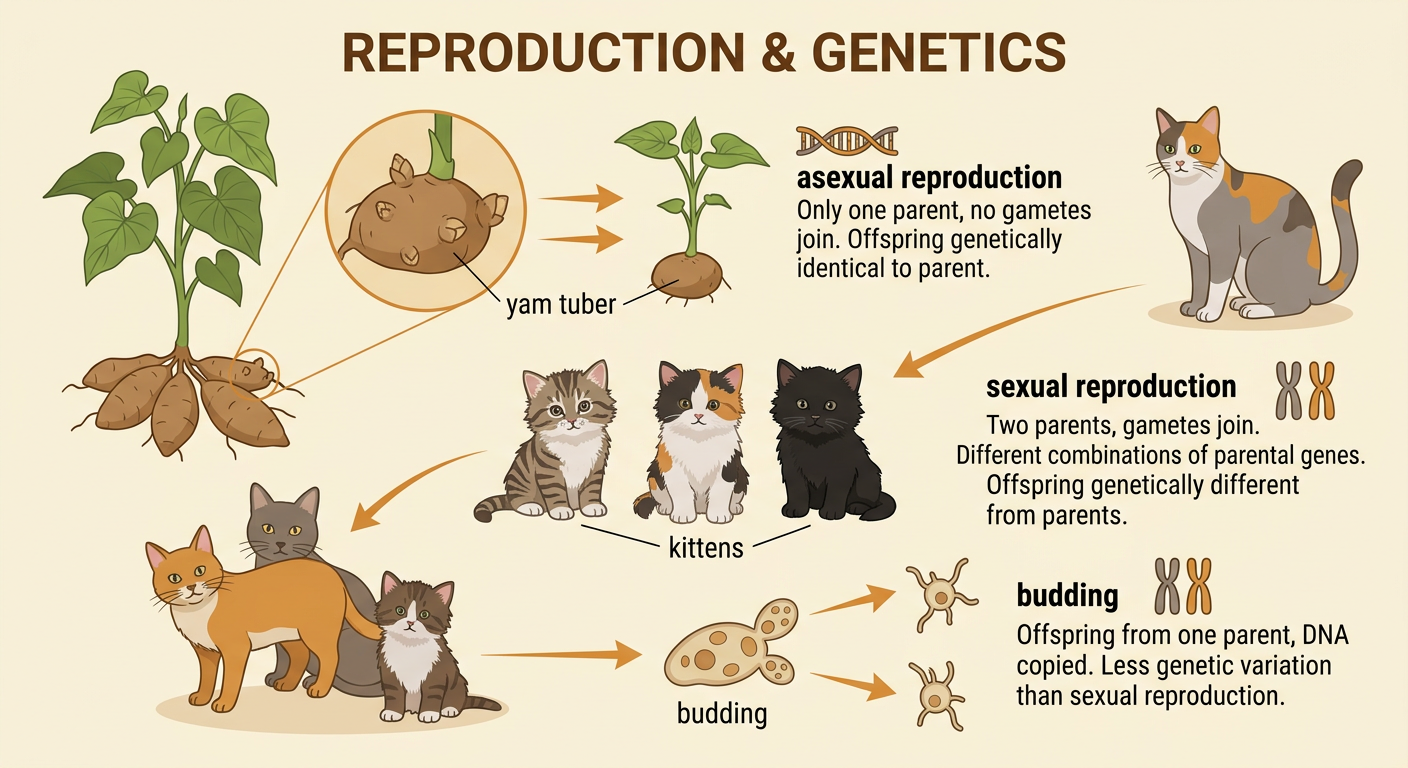
Reproduction produces new members of a species and transfers DNA to the next generation. In asexual reproduction, one parent copies its genetic information, so the offspring are usually genetically identical to the parent. In sexual reproduction, gametes formed by meiosis carry half sets of chromosomes. Fertilization combines two gametes, producing offspring with new genetic combinations. Test your understanding: First, identify the type of reproduction when a yam tuber produces a new plant. Second, explain why kittens from the same parents may have different coat patterns. Third, predict whether offspring produced by budding will have more or less genetic variation than offspring produced sexually. The answers are asexual reproduction, different combinations of parental genes, and less genetic variation. Remember that environmental factors can cause visible differences even among organisms with identical inherited genetic information.