Showing Addition and Subtraction Within 10
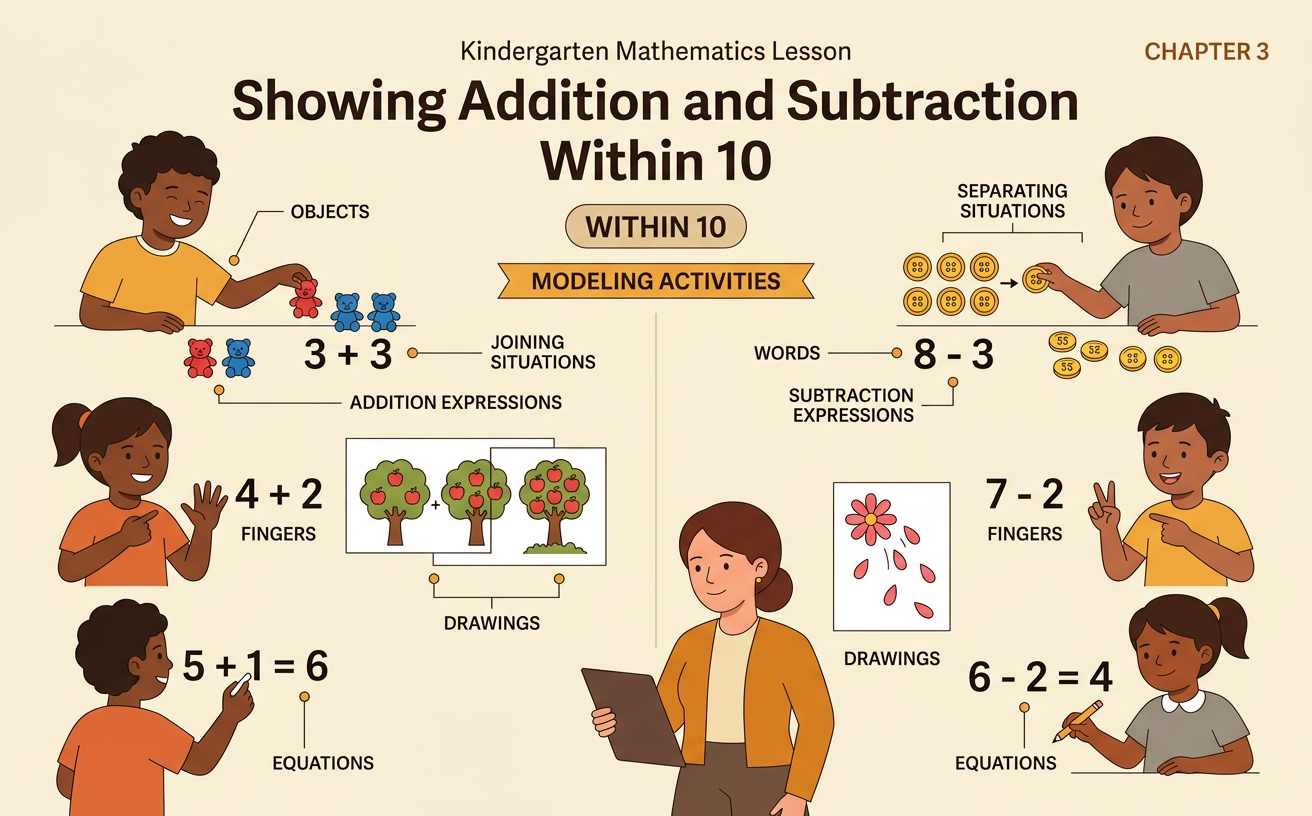
Students model joining and separating situations with objects, fingers, drawings, words, expressions, and equations within 10.
Illustrations are auto-generated and may be placeholders. They can be refreshed to match the narration.
Addition Means Joining
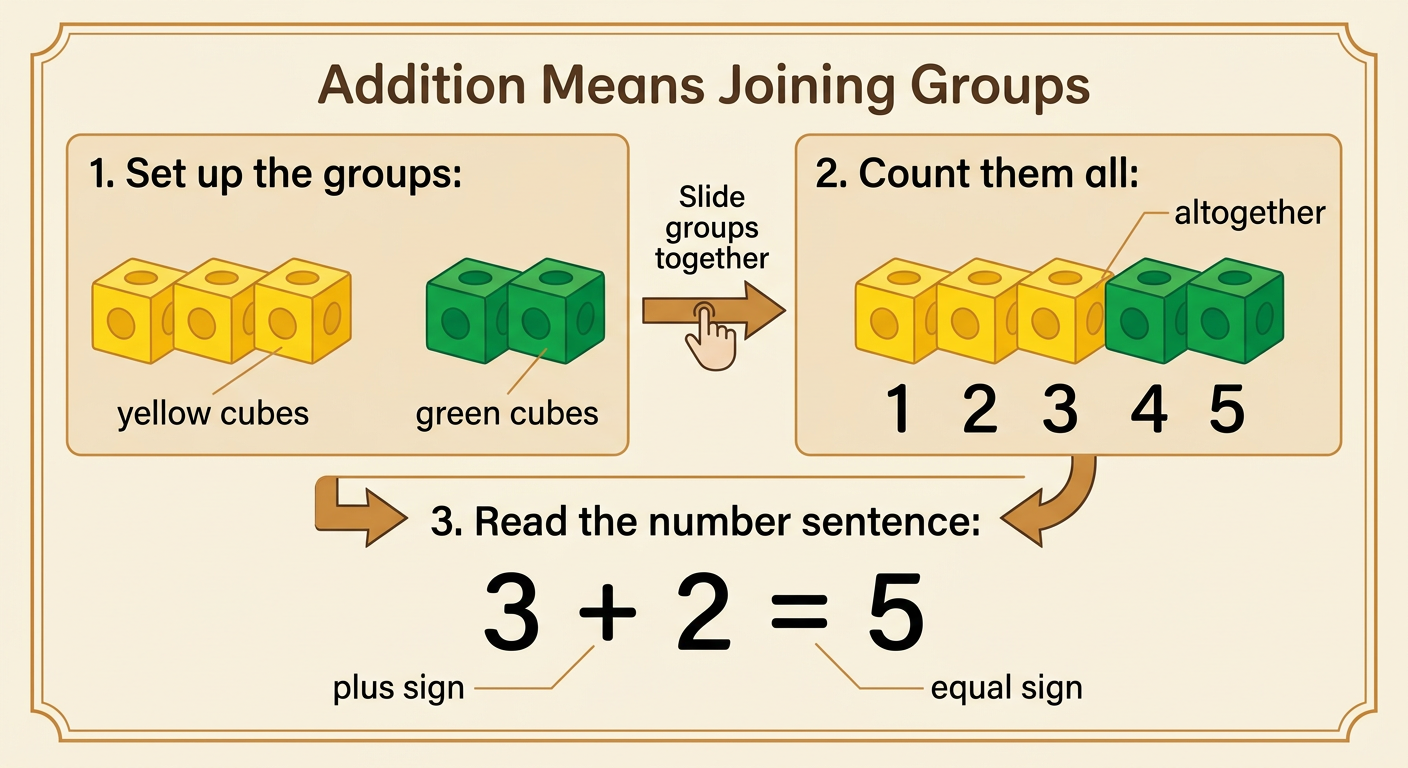
Addition can describe putting groups together. Start with three yellow cubes and place two green cubes beside them. Slide the groups together and count all the cubes: one, two, three, four, five. There are five cubes altogether. We can say, “Three and two make five.” We can also write 3 + 2 = 5. The plus sign means that amounts are being joined, and the equal sign means that both sides show the same total. Act out another example with students. Have four students stand, then invite one more student to join. Count the group to find five. Addition stories often use words such as join, added, more, in all, and altogether.
Subtraction Means Taking Away
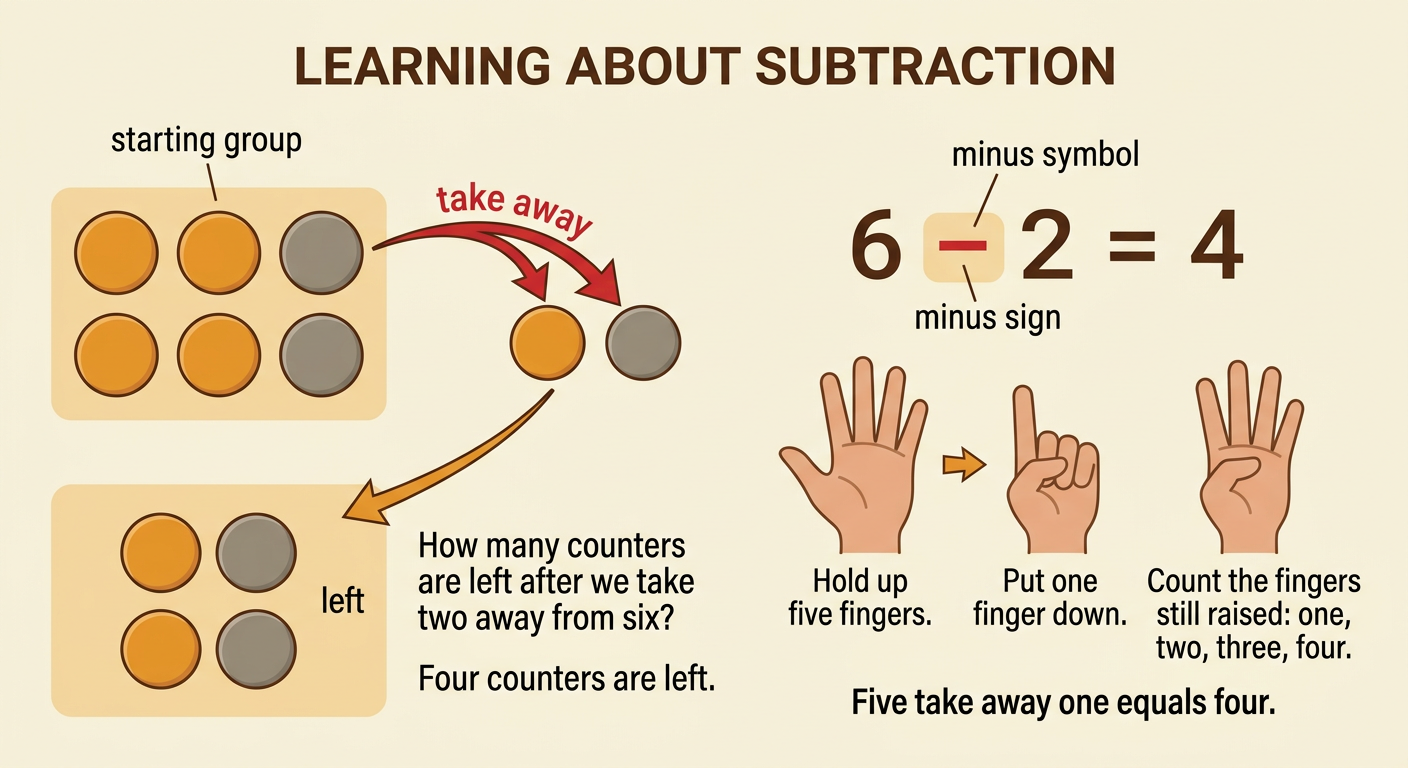
Subtraction can describe taking objects away from a group. Place six counters on a mat. Remove two counters and count the ones that remain. Four counters are left, so six take away two equals four. We can write 6 − 2 = 4. The minus sign tells us that part of the starting group is being removed. Try another example with five fingers held up. Put one finger down and count the four fingers still raised. A subtraction story begins with a total, removes some of it, and asks how many remain. Words such as take away, leave, fewer, and left can signal subtraction. Use objects to show exactly what changes in the story.
Drawing Addition and Subtraction
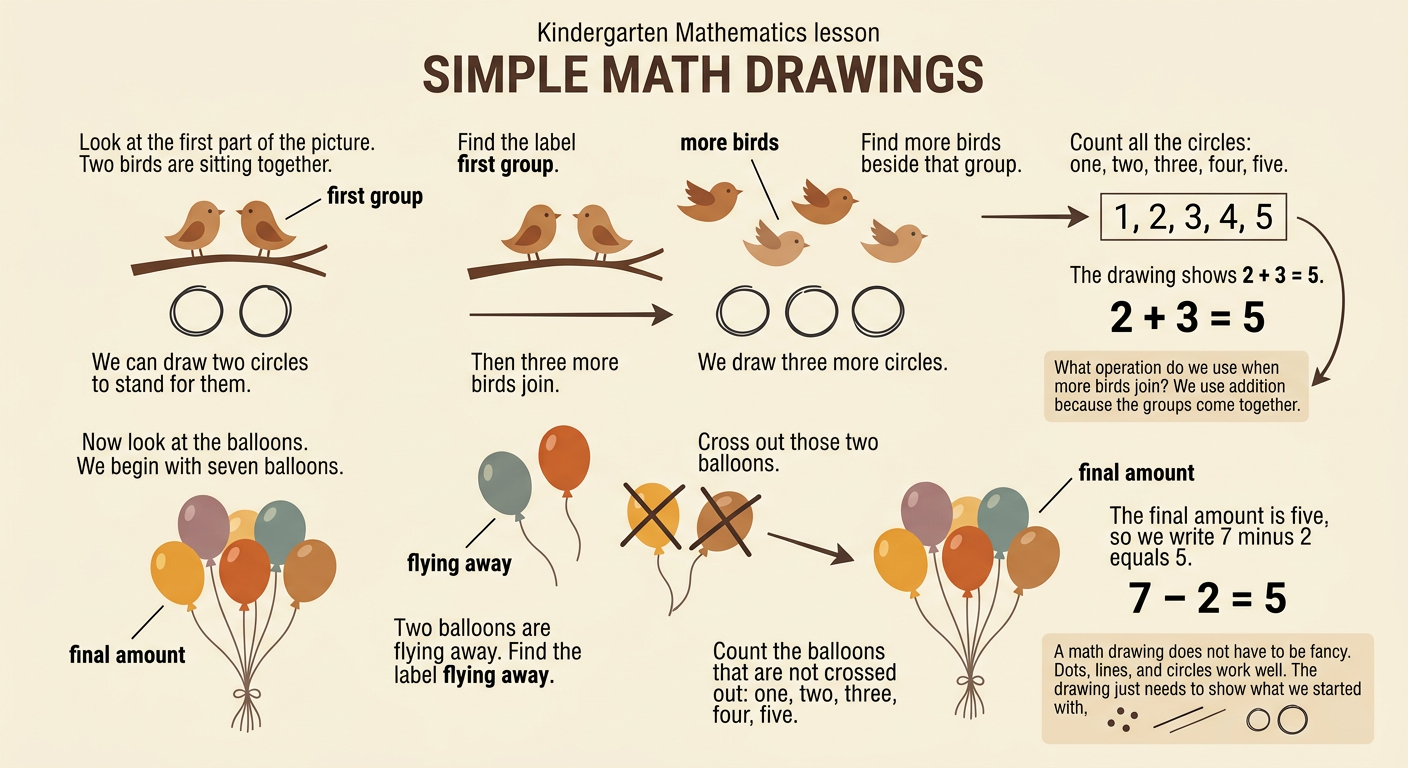
Pictures can represent addition and subtraction when objects are not available. To show two birds joined by three more birds, draw two circles for the first group and three circles for the second group. Count all five circles and write 2 + 3 = 5. To show seven balloons with two flying away, draw seven balloons and cross out two. Count the five balloons that are not crossed out and write 7 − 2 = 5. A drawing does not need to be detailed artwork. Simple dots, lines, or circles can stand for the objects. The important part is showing the starting amount, what was added or removed, and the final amount.
Explaining an Equation
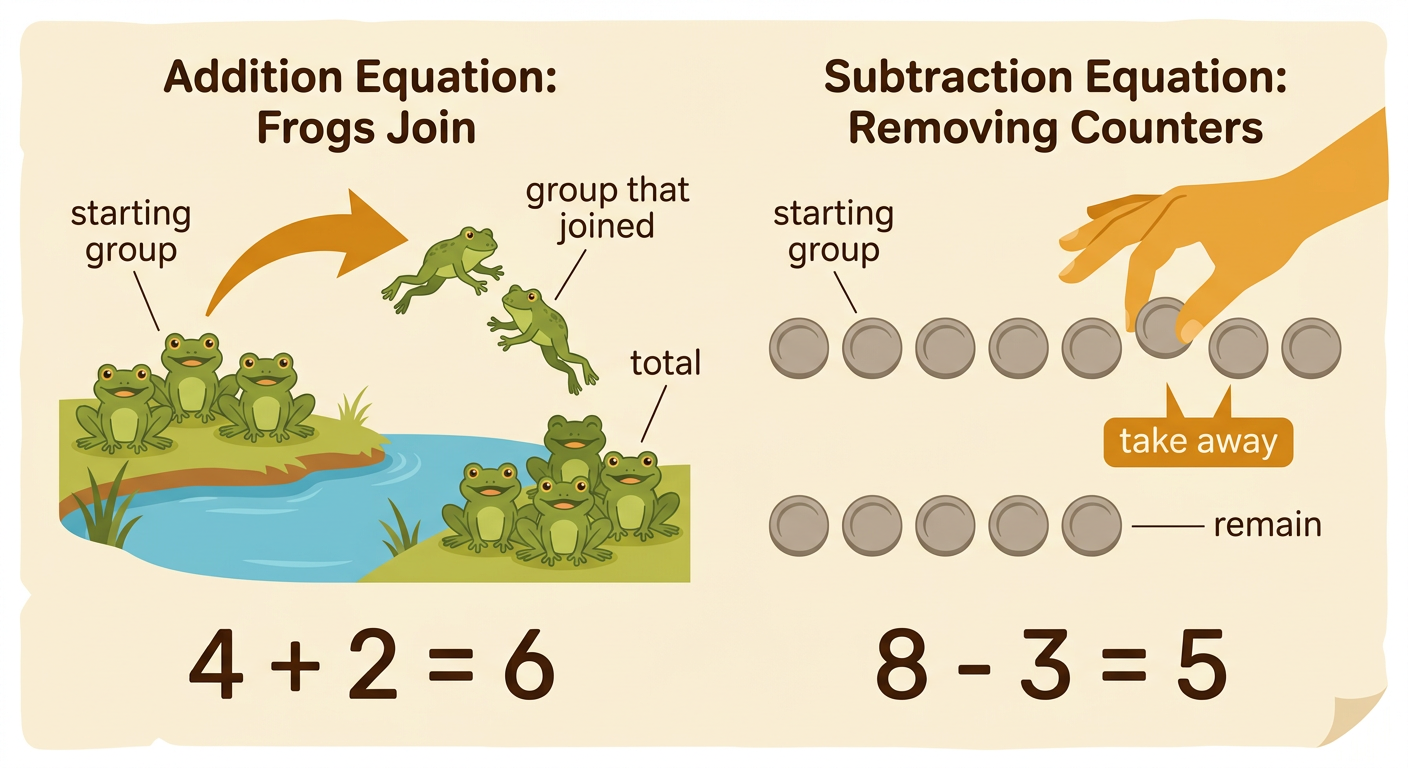
An equation is a number sentence that shows a complete math idea. Each number and symbol should match a story or model. Consider the story, “Four frogs sat by a pond. Two more frogs joined them.” Use four counters for the first frogs and add two counters. Count six counters altogether, then write 4 + 2 = 6. Explain that four is the starting group, two is the group that joined, and six is the total. For subtraction, begin with eight counters and take away three. Five remain, so write 8 − 3 = 5. After solving, tell how the objects, numbers, and symbols connect. Explaining the model helps show why the answer makes sense.