
Sort It for Recycling!
Students observe color, texture, hardness, and flexibility to classify common objects by material and explain how sorting helps a community recycle.

Illustrations are auto-generated and may be placeholders. They can be refreshed to match the narration.
Observe the Objects
Look closely at a group of clean, safe objects. You might see a cardboard box, a plastic bottle, a metal can, and a glass jar. Use your eyes and hands to notice each object. What color is it? Does its surface look smooth or rough? Does it feel hard or soft? Can it bend easily, or does it stay stiff? Observe gently. Do not bend glass or touch sharp edges. One object can have many properties. For example, a clean plastic bottle may be clear, smooth, hard, and a little flexible. Careful observations give us information that we can use to describe and sort objects.
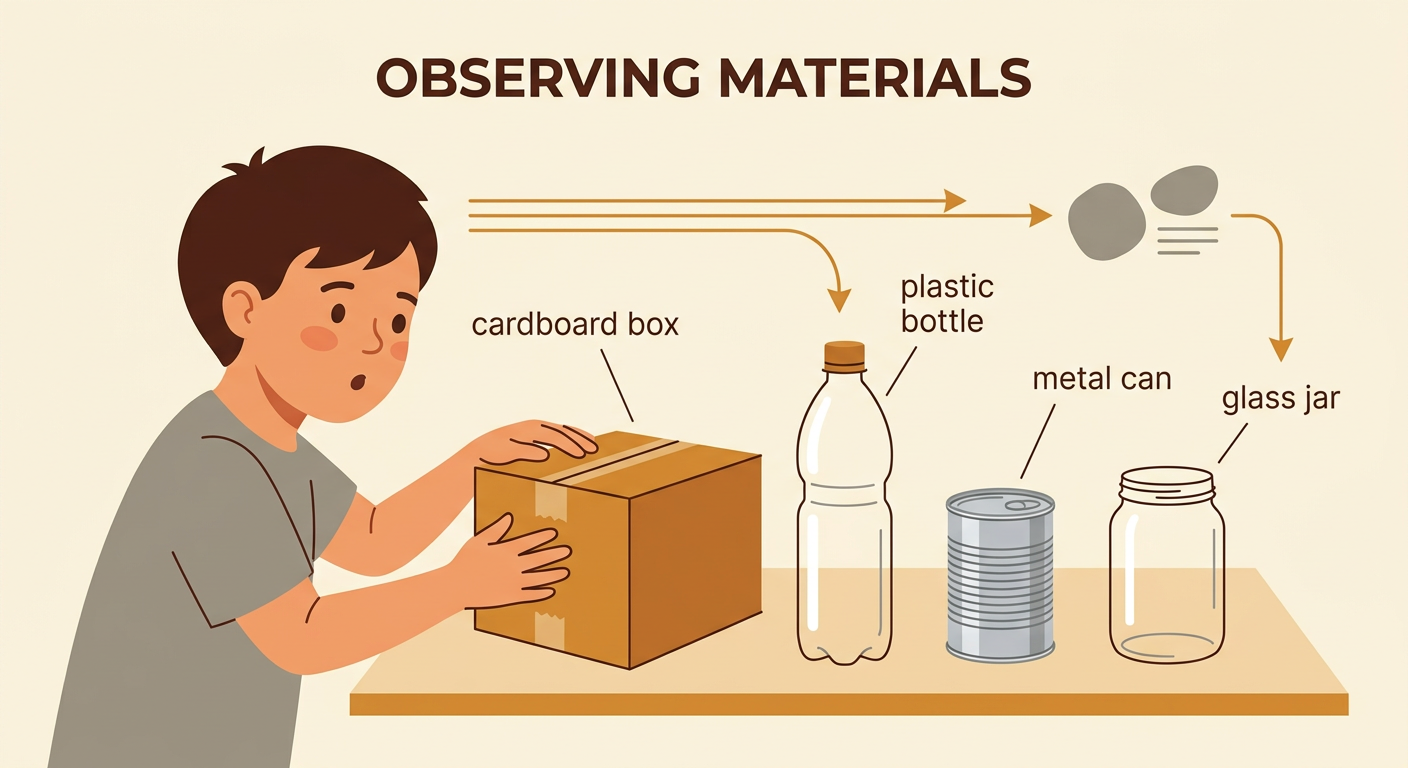
Name Material Properties
A property is something we can observe about an object. Color tells what color we see, such as brown, clear, or silver. Texture tells how a surface feels, such as smooth or rough. Hardness describes whether a material is hard or soft. Flexibility tells whether it bends easily or stays stiff. A metal can is usually hard, smooth, and stiff. A piece of fabric may be soft, flexible, and a little rough. Objects made from the same material can have different colors or shapes, so use more than one property when describing them. Say, “The cardboard is brown, rough, hard, and a little flexible.”
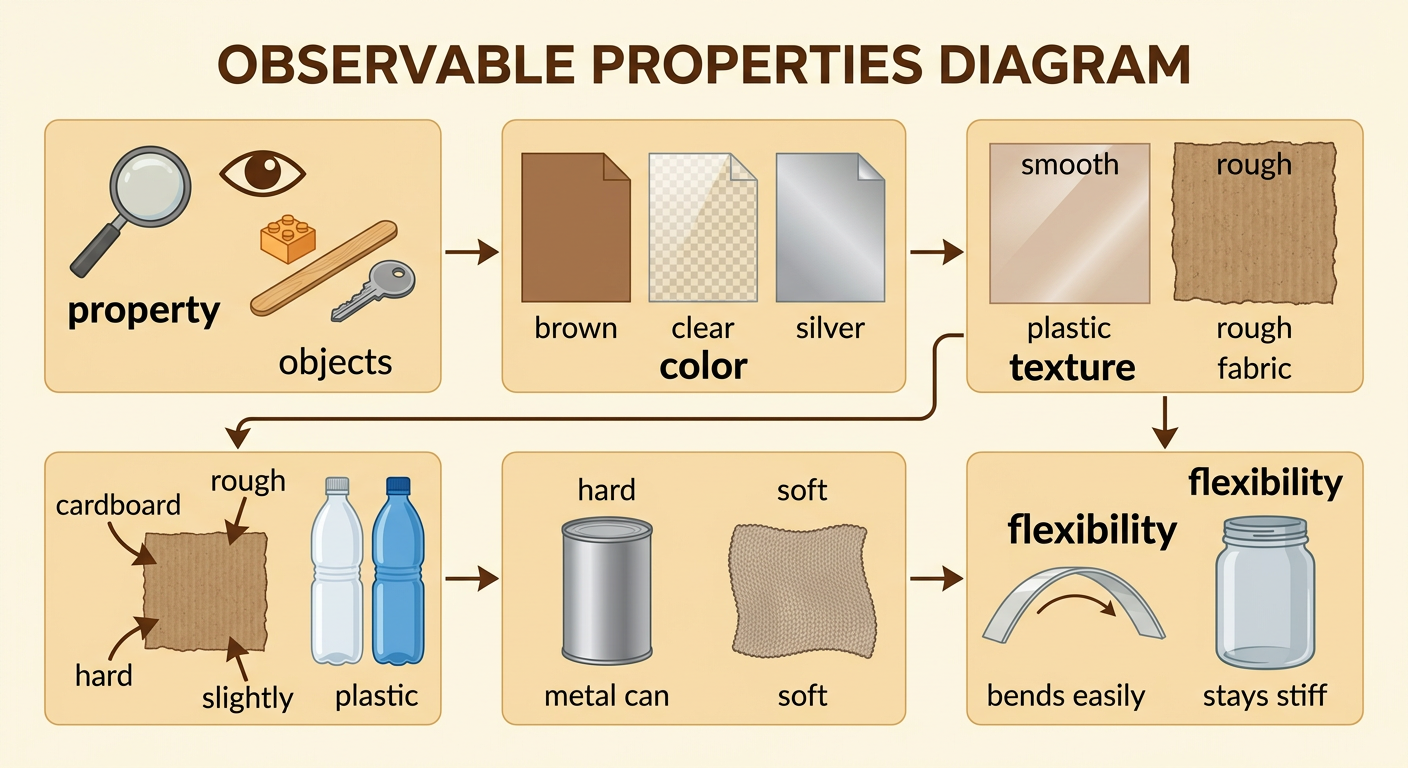
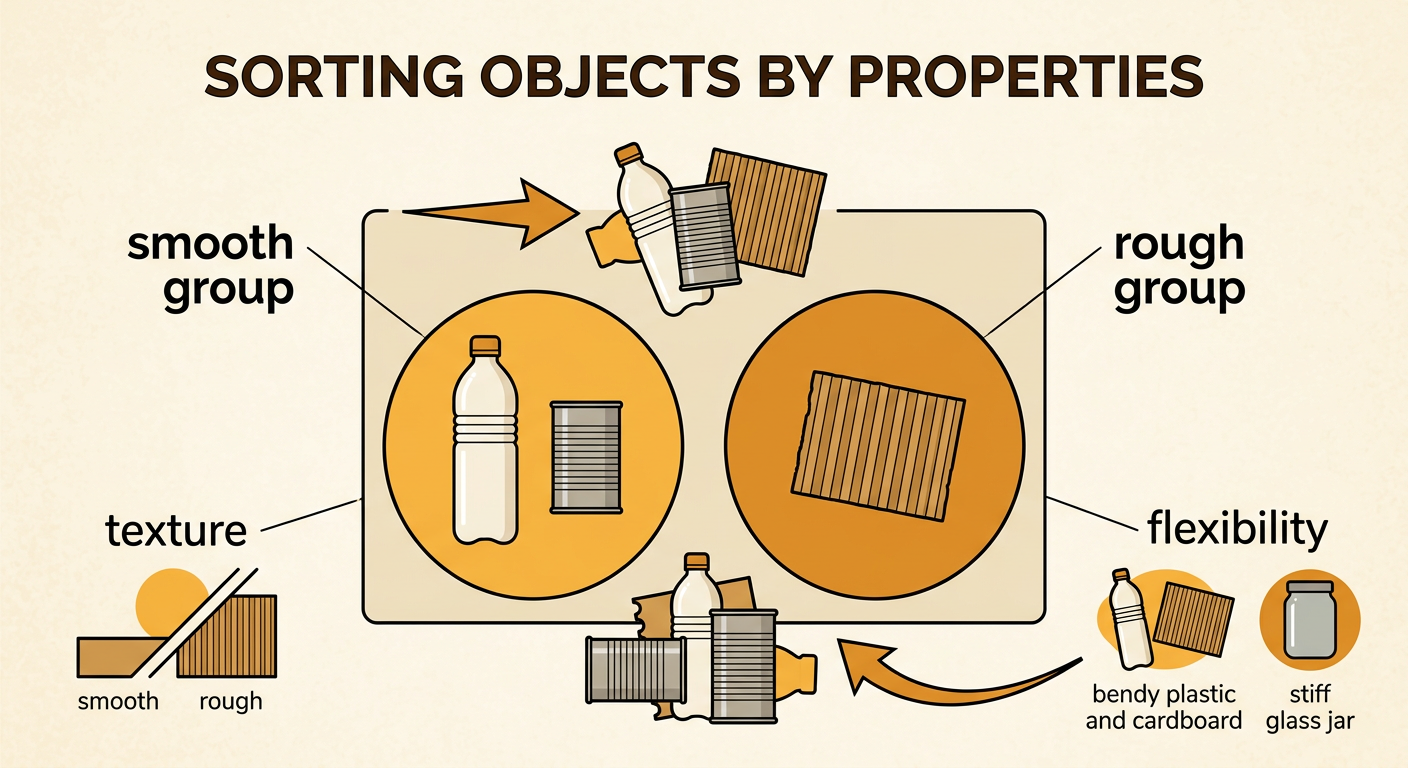
Sort by One Property
To sort means to put objects into groups. First, choose one property for your sorting rule. You could sort by texture and make a smooth group and a rough group. Place a plastic bottle and metal can in the smooth group. Place a cardboard piece in the rough group. Check every object using the same rule. Do not switch to color or shape while you are sorting by texture. When you finish, explain your rule to a partner: “I sorted these objects by texture.” A different rule can make different groups. If you sort the same objects by flexibility, the flexible plastic and cardboard may be together, while the stiff glass jar is in another group.
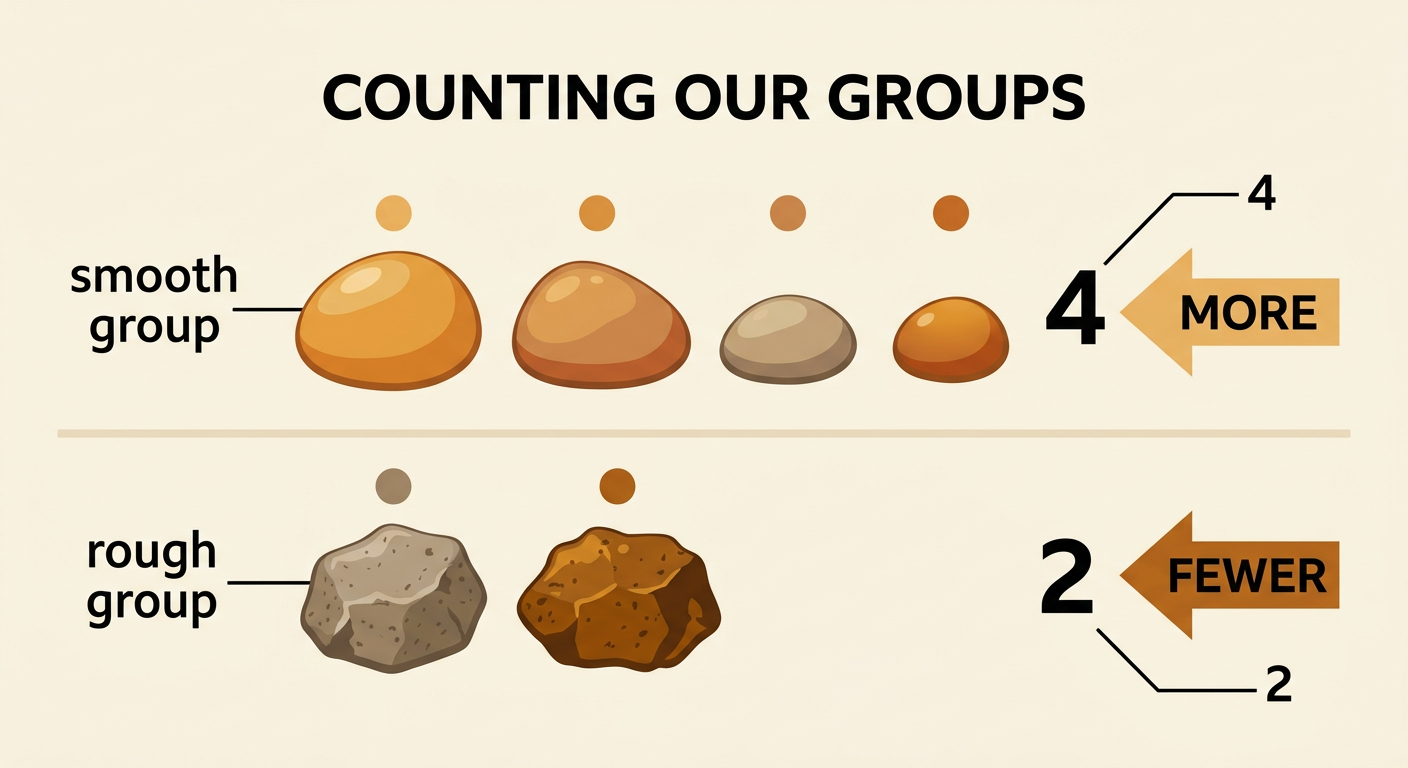
Count and Compare Groups
After sorting, count the objects in each group. Touch or point to each object one time as you say the numbers. Suppose the smooth group has four objects and the rough group has two objects. Write or show the number 4 for the smooth group and the number 2 for the rough group. Now compare the groups. The smooth group has more objects. The rough group has fewer objects. If two groups have the same number, they are equal. Work with a partner to check the count. One person can point while the other counts. Then switch jobs. Counting and comparing tell us how many objects are in each category.
Connect Sorting to Recycling
Communities work together to handle used materials. At home or school, people may sort clean paper, cardboard, metal, glass, and certain plastics into separate bins. Sorting helps recycling workers gather similar materials so they can be processed and made into new things. For example, used metal cans can become material for new metal products. Recycling rules are not the same everywhere. An adult should check the local labels and directions before an item goes into a recycling bin. Items that are dirty, dangerous, or not accepted should not be mixed with recyclables. You can help by noticing an object’s material, following the bin labels, and asking an adult when you are unsure. Working together keeps the sorting system useful and safe.
