
Sorting Materials by Their Properties
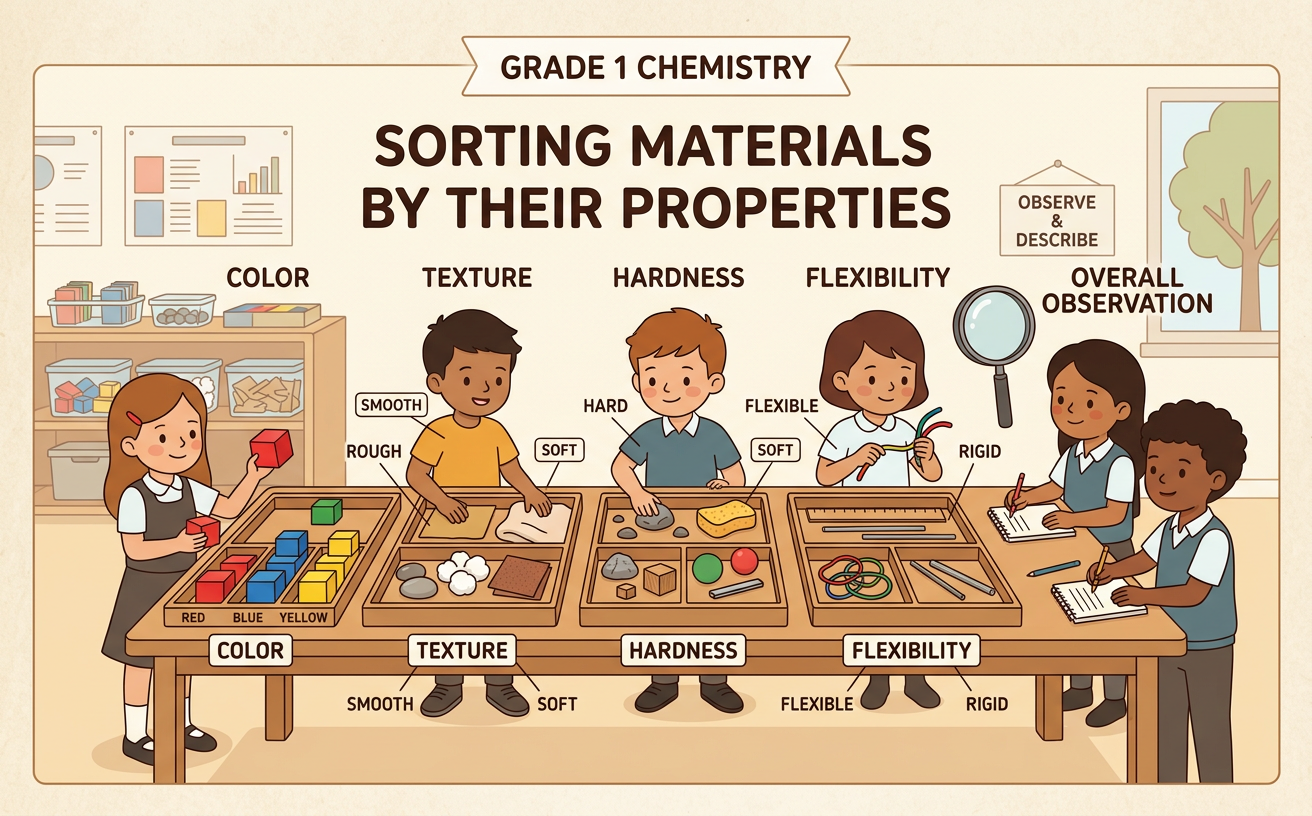
Students observe, describe, and sort everyday solid materials by properties such as color, texture, hardness, and flexibility.
Illustrations are auto-generated and may be placeholders. They can be refreshed to match the narration.
What Is a Material?
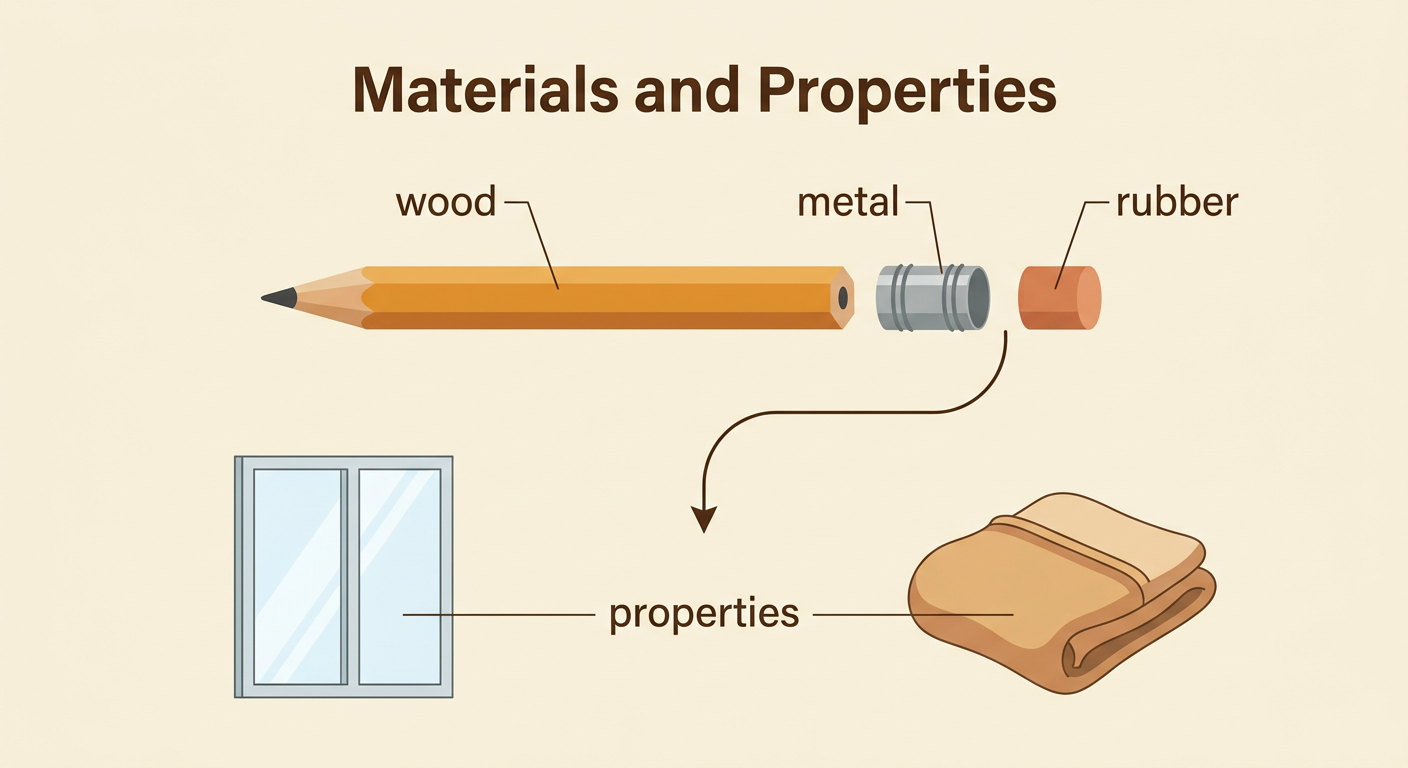
A material is what an object is made from. Wood, metal, plastic, glass, fabric, rubber, and paper are materials. One object can be made from more than one material. For example, a pencil may have a wooden body, a rubber eraser, and a metal band. Different materials have different properties, or traits we can observe. These properties help people choose materials for objects. A window is often made from clear glass because light can pass through it. A warm blanket is often made from soft fabric. Look around the classroom. Can you name an object and the material used to make it? Observe with your eyes and hands, but do not taste materials.
Observe Everyday Objects
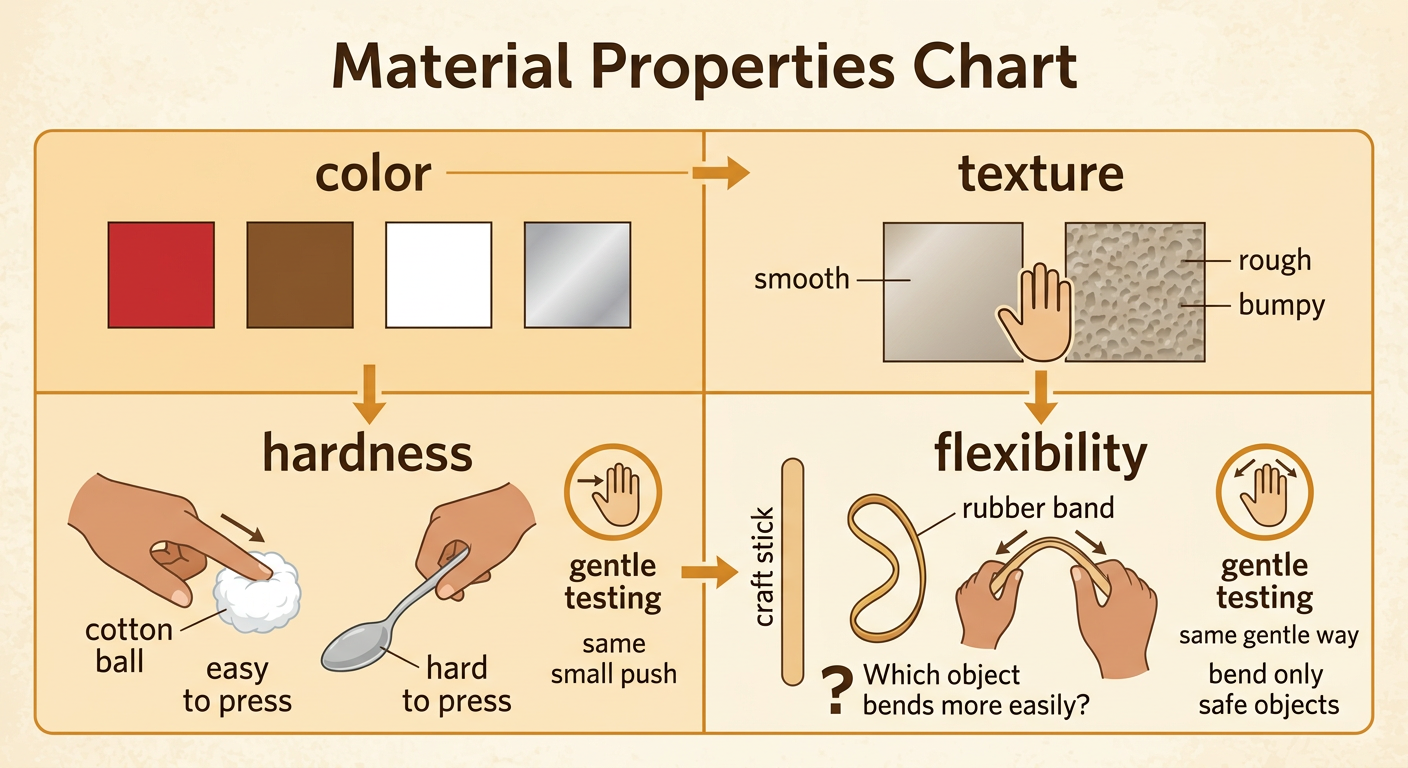
Scientists begin by observing carefully. To observe means to gather information with your senses. You can look at an object to notice its color and shape. You can gently touch it to notice whether it feels smooth, rough, hard, or soft. Ask an adult before bending, pressing, or scratching anything. Never smell or taste an unknown material. Imagine that your group has a wooden craft stick, a metal spoon, a cotton ball, and a rubber band. Look at each object one at a time. Touch it safely and describe what you notice. The spoon looks silver and feels smooth. The cotton ball looks white and feels soft. Record each observation with a word, picture, or tally mark.

Describe Material Properties
A property is something you can observe about a material. Color tells what a material looks like, such as red, brown, or silver. Texture tells how a surface feels, such as smooth, rough, or bumpy. Hardness describes whether a material is hard to press or easy to press. Flexibility tells whether it can bend without breaking. A metal spoon is usually hard and not very flexible. A rubber band is smooth and flexible. A cotton ball is soft and easy to press. Use fair tests when you compare objects. Press each object gently in the same way. Bend only objects that your teacher says are safe to bend. Describe what you observe instead of guessing.
Sort and Count the Materials
Sorting means placing objects into groups by a rule. First, choose one property for your sorting rule. You might make a flexible group and a not flexible group. Test each classroom sample safely, then place it in the matching group. A rubber band and a piece of fabric may go in the flexible group. A metal spoon and a wooden block may go in the not flexible group. Next, count the objects in each group. Record the totals with tally marks or a picture graph. Compare the groups by asking, “Which group has more?” or “Which group has fewer?” The same objects can be sorted again by a different rule, such as color, texture, or hardness.

Share Sorting Rules and Uses
After sorting, tell your classmates the rule your group used. Take turns speaking, listen carefully, and ask kind questions. You might say, “We sorted by texture. These materials are smooth, and those materials are rough.” Another group may sort the same objects by flexibility, so its groups can look different. Both sorts can be correct when each group follows its rule. Material properties also help workers make useful goods. A toy maker may choose flexible rubber for a bouncing ball. A carpenter uses hard wood to make a sturdy table. A clothing maker chooses soft, flexible fabric for a shirt. Discuss which properties make each material useful. Then use your observations and group counts as evidence for your ideas.
