Sound Comes from Vibrations
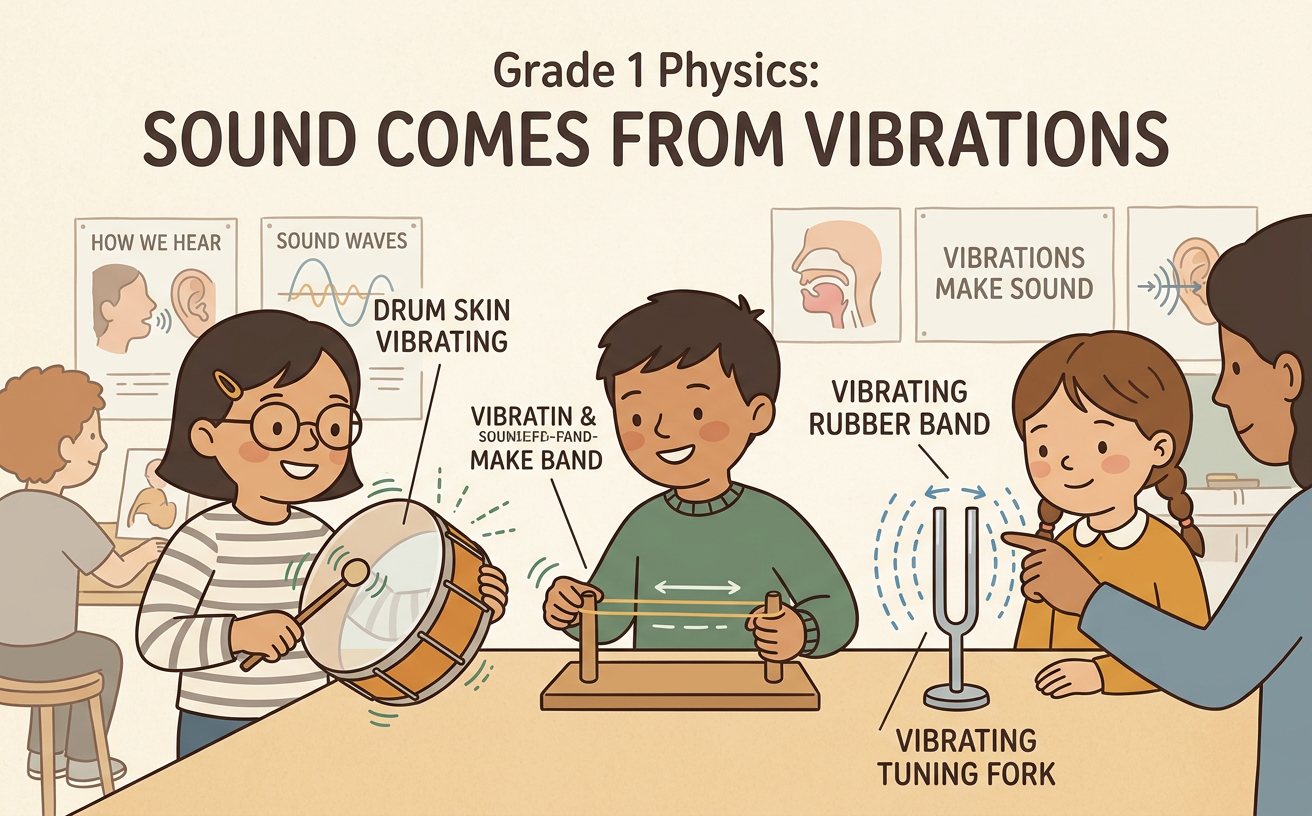
Students observe and compare vibrating objects to discover that sound is produced when materials vibrate and can be used to communicate with others.
Illustrations are auto-generated and may be placeholders. They can be refreshed to match the narration.
Listen for Everyday Sounds
Sound is all around us. Sit quietly and listen for one minute. You might hear a clock ticking, a pencil tapping, a chair moving, or a person speaking. Name each sound and point toward where it began. The object or person where a sound begins is called the sound source. For example, when someone speaks, parts inside the throat vibrate, or move quickly back and forth. Those vibrations make sound that travels through the air to your ears. Some vibrations are easy to see, but others are too small or too fast to notice. Take turns sharing what you hear. Listen carefully when classmates speak, compare your observations, and ask questions such as, “Did anyone else hear the clock?”

Observe a Vibrating Rubber Band
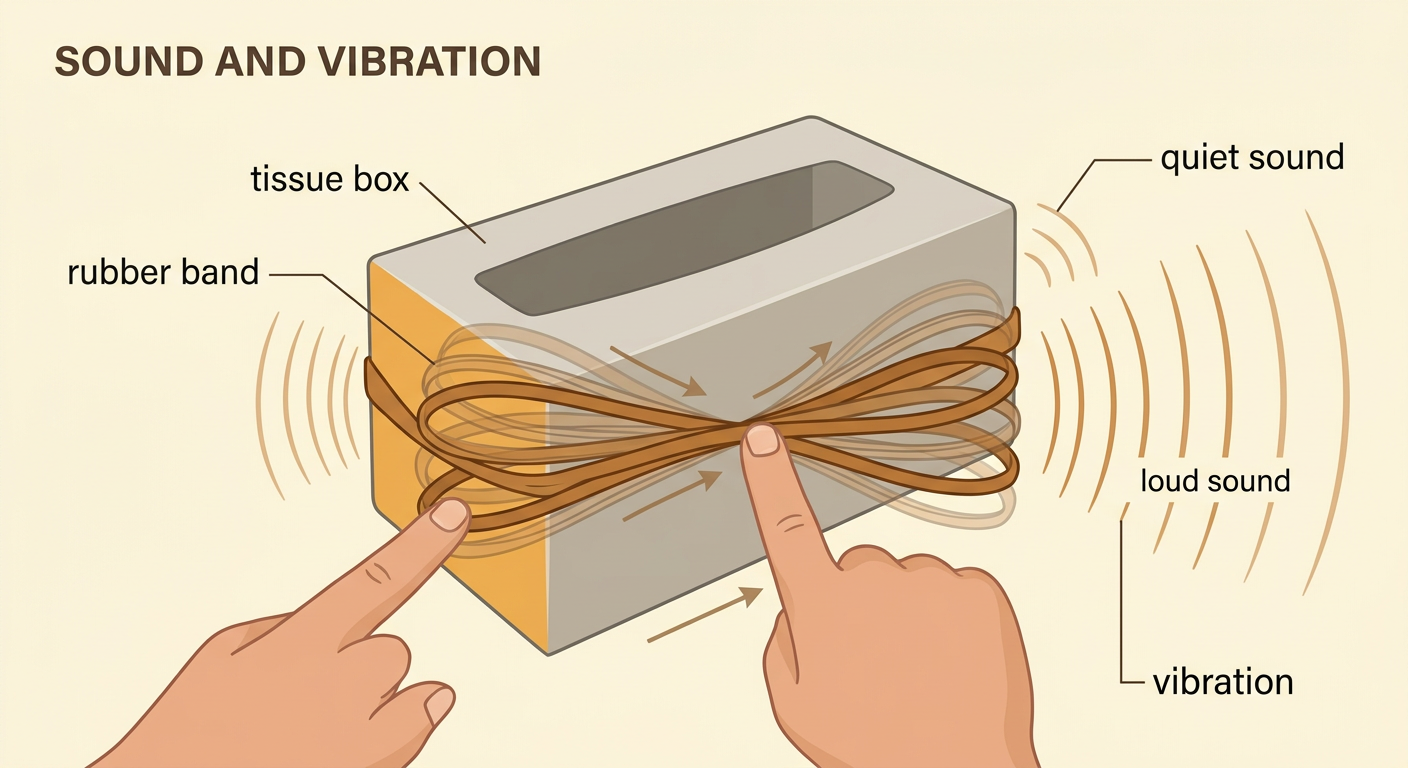
Stretch a rubber band securely around an empty tissue box with an adult’s help. Pull the rubber band gently and let it go. Watch closely. The band moves quickly back and forth, and you hear a sound. This fast back-and-forth movement is called vibration. Pluck the band again, then gently touch it after you hear the sound. You may feel it moving. Wait until it stops. When the vibration stops, the sound stops too. Try a gentle pluck and then a slightly stronger pluck. A stronger pluck usually makes a louder sound because the band moves farther back and forth. Keep the band pointed away from faces and do not stretch it too far. Tell a partner what you saw, heard, and felt.
Test Objects That Make Sound
Plan a simple investigation with your group. Test safe objects such as a rubber band, a ruler extending over a desk edge, a small drum, and two wooden blocks. Decide how to make each object move: pluck, tap, or strike it gently. For every test, look for movement, listen for sound, and carefully feel vibration when it is safe. Repeat each test so your observation is dependable. You can also observe sound making something else vibrate. An adult can place a few grains of rice on plastic wrap stretched tightly over a bowl and play a nearby speaker at a safe volume. The speaker vibrates and makes sound. That sound travels through the air and can make the plastic wrap vibrate, causing the rice to move. Never place small objects in your mouth or ears.

Record and Compare Results
Scientists record what happens so they can compare evidence. Make a class chart with one row for each tested object. Add categories for “sound heard” and “vibration observed.” Place a tally mark in the matching category after each test. For example, suppose the class tests four objects. Sound is heard from the rubber band, ruler, and drum, but not from a cotton ball that is only set on the table. The class records three objects in the sound category and one in the no-sound category. Count the tally marks and compare the groups. Which category has more? You may notice that every object that made sound also vibrated, even if the motion was hard to see. Use the chart to explain what the class evidence shows.

Explore Sound as a Community Signal
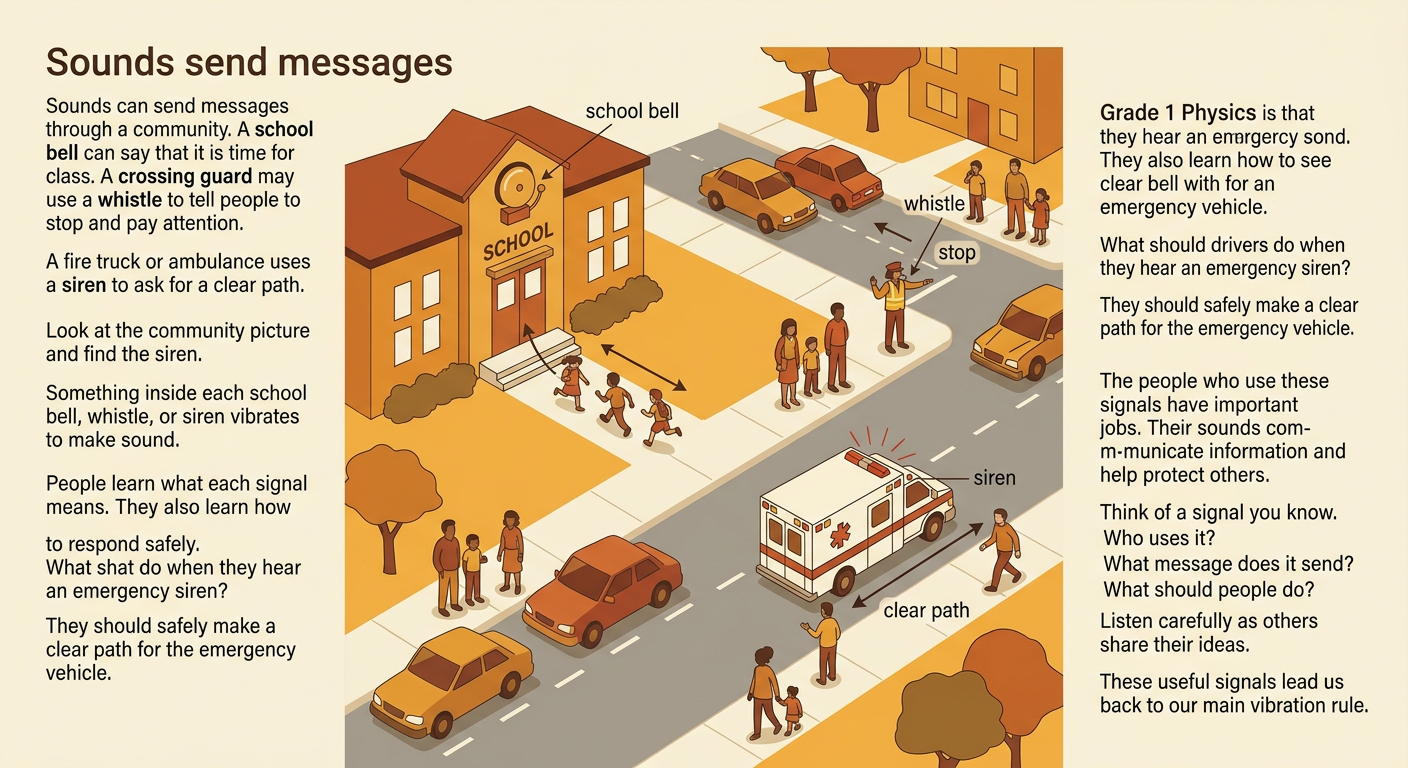
People use sounds to send information through a community. A school bell may signal that it is time to begin class. A crossing guard may blow a whistle to warn people to stop and pay attention. Firefighters and ambulance workers use sirens to tell drivers and walkers that an emergency vehicle needs a clear path. Each signal begins with something vibrating inside the bell, whistle, or siren. Community members learn what the sounds mean and how to respond safely. The people who operate these signals have important jobs because they communicate information and help protect others. Talk with your group about a sound signal you know. Name who uses it, what message it sends, and what people should do when they hear it. Listen respectfully to each person’s idea.
Share the Vibration Rule
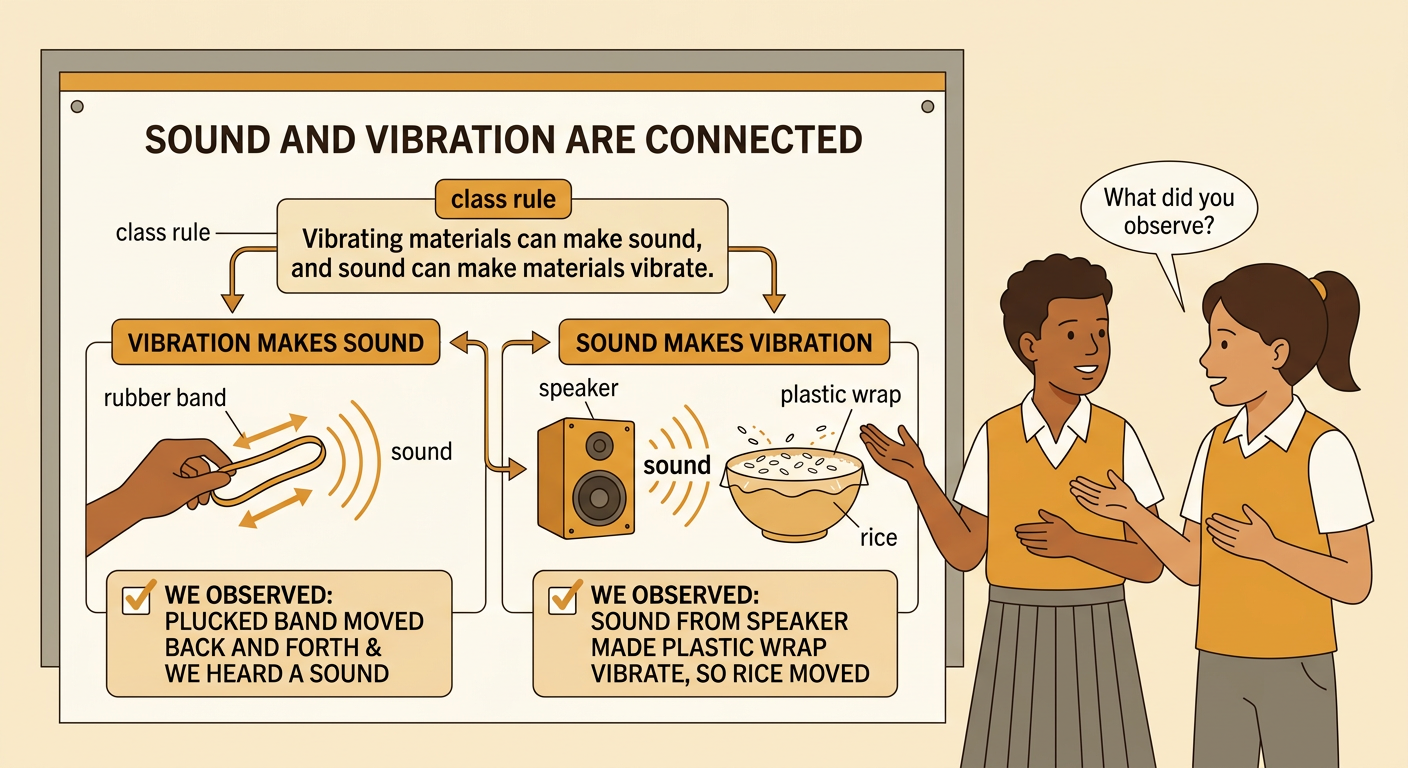
Use the investigation evidence to state a class rule: Vibrating materials can make sound, and sound can make materials vibrate. Support the rule with a concrete example. You might say, “When I plucked the rubber band, I saw it move back and forth and heard a sound.” You could also explain, “Sound from the speaker made the plastic wrap and rice move.” Share your example with a partner. Take turns speaking and listening. Ask a helpful question, such as, “What did you observe?” Then work together to create one class explanation. Remember that vibrations may be easy to see, like a moving rubber band, or difficult to see, like vibrations inside a speaker. The results from many tests support the same important idea about sound.