Sound Energy Comes from Vibrations
Students investigate how vibrating objects produce sound and use observations and measurements to explain changes in pitch.
Illustrations are auto-generated and may be placeholders. They can be refreshed to match the narration.
What Makes a Sound?
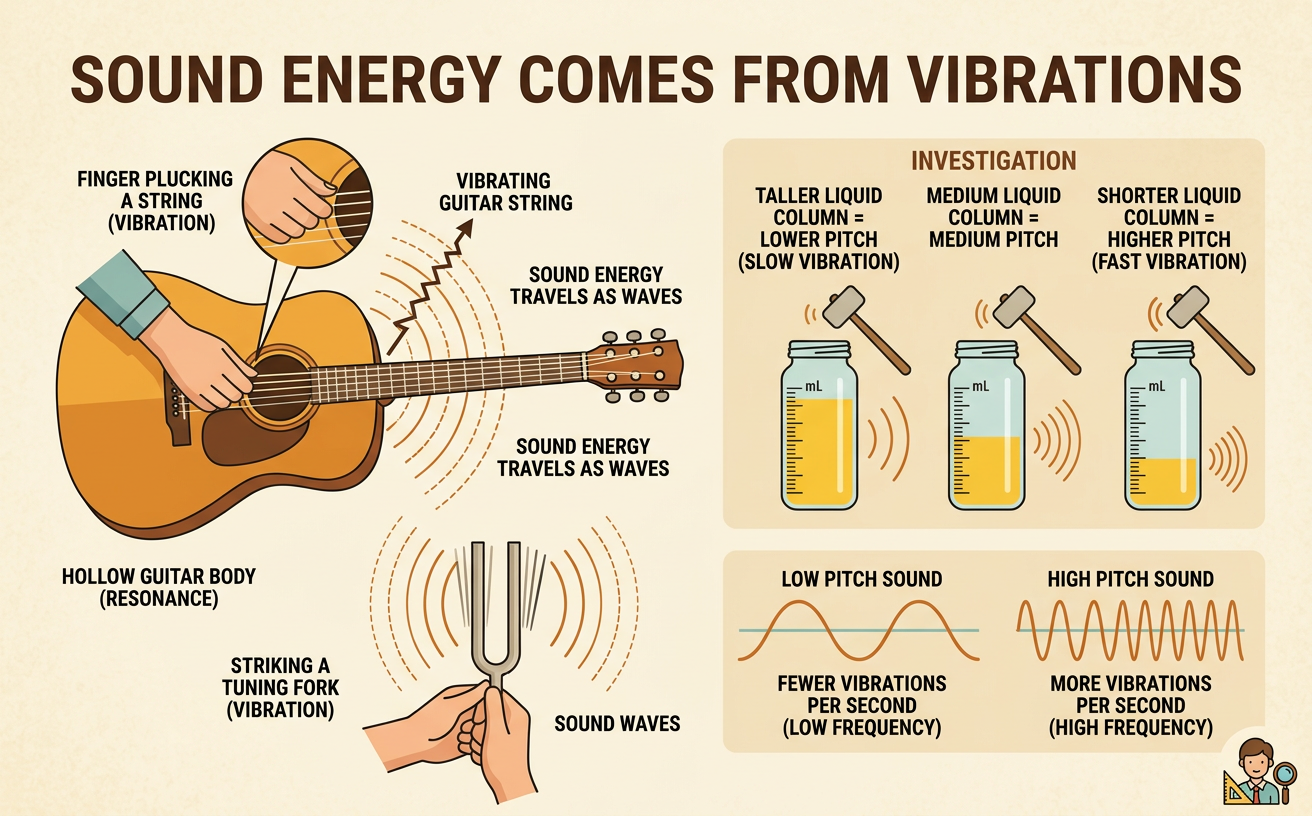
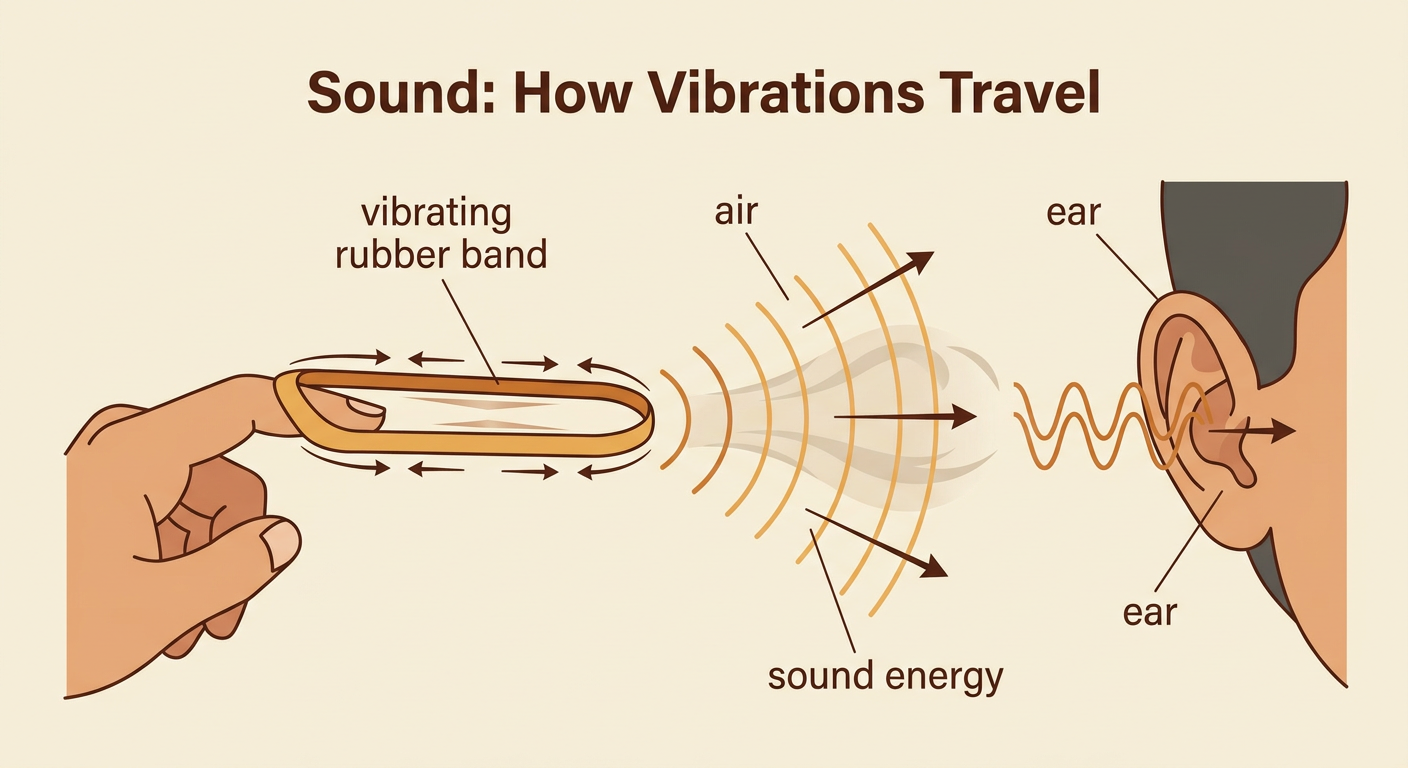
Sound begins when an object vibrates, or moves quickly back and forth. The vibrating object pushes and pulls on nearby matter, such as air. This creates a pattern of vibrations that travels outward as sound energy. When the pattern reaches your ear, parts inside your ear vibrate, and your brain recognizes a sound. For example, plucking a stretched rubber band makes the band vibrate. The moving band causes the surrounding air to vibrate, so you hear a twang. If you gently touch the band, its vibrations become smaller and quickly stop. The sound also becomes quieter and stops. Sound cannot travel through empty space because it needs matter, such as air, water, or a solid, to carry its energy.
Observe Vibrating Objects
Vibrations can be seen, felt, or detected by their effects. Stretch plastic wrap tightly across a bowl and place a few grains of rice on top. Hold a ringing tuning fork close to the plastic without touching it. The vibrating tuning fork makes the nearby air vibrate. That moving air causes the plastic wrap to vibrate, making the rice grains jump. You can also tap the tuning fork and briefly touch its base while holding it correctly. You may feel a buzzing motion. Record what you see, hear, and feel. Never strike a tuning fork near another person’s ear. The moving rice is evidence that sound energy traveled from the tuning fork through the air and caused another material to move.

Test Ruler Length and Pitch
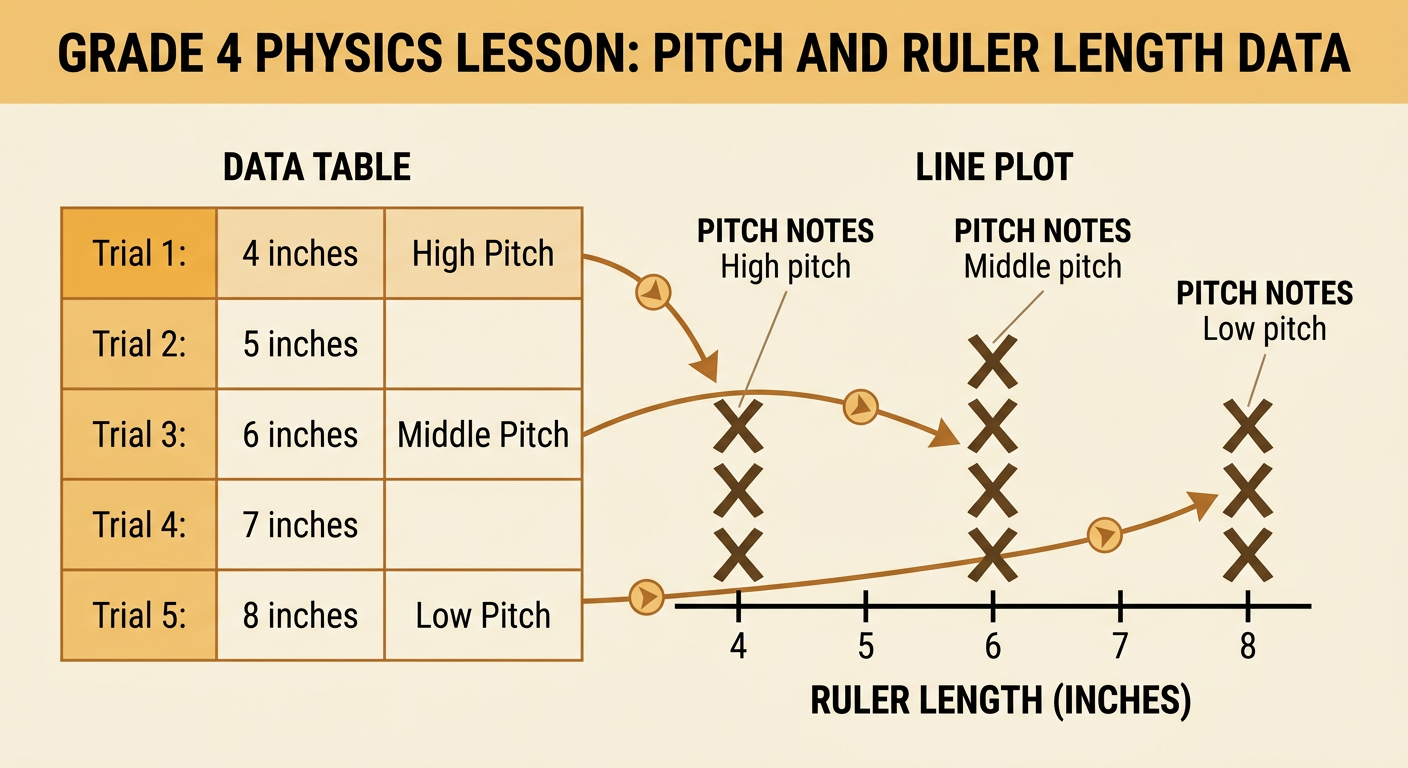
Pitch describes how high or low a sound seems. Place a plastic ruler on a desk with part of it extending past the edge. Hold the ruler firmly against the desk and gently pluck the free end. First test an exposed length of 8 inches. Then test 6 inches and 4 inches, using about the same plucking force each time. The longer free section usually vibrates more slowly and produces a lower pitch. The shorter free section usually vibrates faster and produces a higher pitch. Change only the exposed length so the test is fair. Keep the same ruler, desk, holding position, and plucking method. Do not bend the ruler too far. Repeat each length three times and compare the sounds before making a claim.

Record and Compare Measurements
A data table helps you organize each ruler trial. Record the exposed ruler length in inches and describe the pitch as low, middle, or high. For example, three trials at 8 inches may all sound low, three trials at 6 inches may sound middle, and three trials at 4 inches may sound high. You can also combine the measured lengths from several groups on a line plot. Write ruler lengths along the horizontal number line and place one X above a length for every test at that measurement. A stack of four X marks above 6 inches means four tests used that length. Add pitch notes beside the stacks. Use the table and plot to look for a pattern, compare repeated results, and notice any result that does not match the others.
Explain Sound Energy
A strong explanation includes a claim, evidence, and reasoning. One claim could be: A vibrating ruler transfers energy through sound, and changing its free length changes the pitch. Evidence from the investigation might state that the 8-inch ruler section produced a low pitch, while the 4-inch section produced a high pitch in all three trials. The reasoning explains why the evidence supports the claim. The shorter section vibrated faster, creating faster vibrations in the surrounding air and a higher pitch. The sound then traveled through the air to the listener. Sound energy can also cause another object to vibrate, as shown when sound from a tuning fork makes plastic wrap and rice move. Use complete sentences, accurate facts, measurement details, and linking words such as because, for example, and therefore.

Sound-Making Tools Then and Now
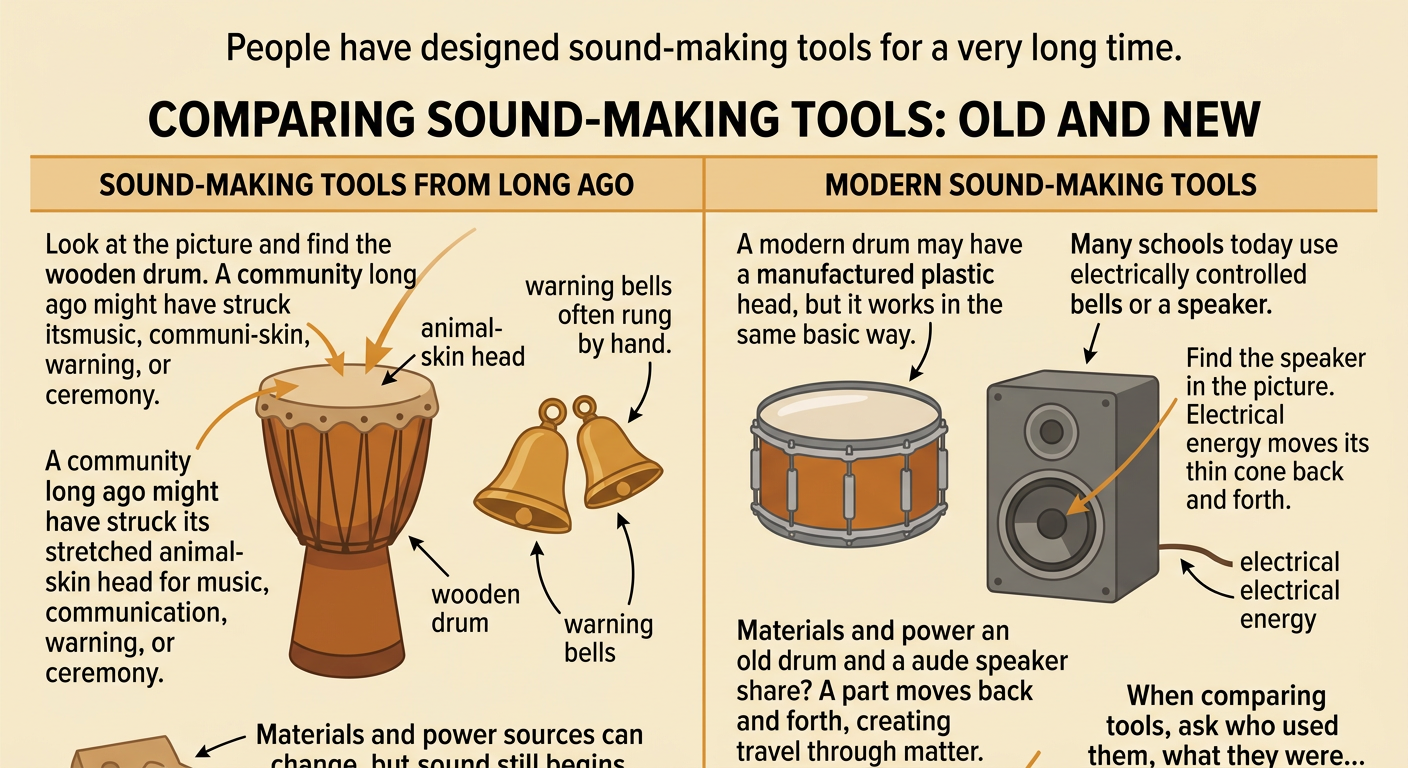
People in different historical periods have designed tools that use vibrations to make sound. A wooden drum used by a community long ago produced sound when someone struck its stretched animal-skin head. Many modern drums use manufactured plastic heads, but the basic action is the same: the drumhead vibrates and transfers energy to the surrounding air. Early warning bells were rung by hand, while many present-day schools use electrically controlled bells or speakers. A speaker uses electrical energy to move a thin cone back and forth, producing sound. Materials, power sources, and purposes may change over time, but sound still begins with vibration. When comparing tools, consider who used them, what they were made from, how they were powered, and whether they were used for music, communication, warning, or ceremony.