
Sound Makes Things Vibrate
Students observe, create, and compare sounds to discover that vibrating materials make sound and that sounds can communicate messages in a community.

Illustrations are auto-generated and may be placeholders. They can be refreshed to match the narration.
Listen for Everyday Sounds
Close your eyes for a quiet listening moment. What sounds do you notice? You might hear a clock ticking, shoes tapping, a bird chirping, or air moving through a vent. Each sound begins when something moves back and forth very quickly. This movement is called a vibration. The vibration makes the air around it vibrate, and the sound travels through the air to your ears. Work with a partner to name the sounds you hear. Take turns speaking and listening. Describe each sound with words such as loud, soft, high, or low. For example, a large drum may make a low, loud sound, while a small bell may make a high, soft sound. Careful listening helps you begin an investigation of sound.

Observe Vibrations
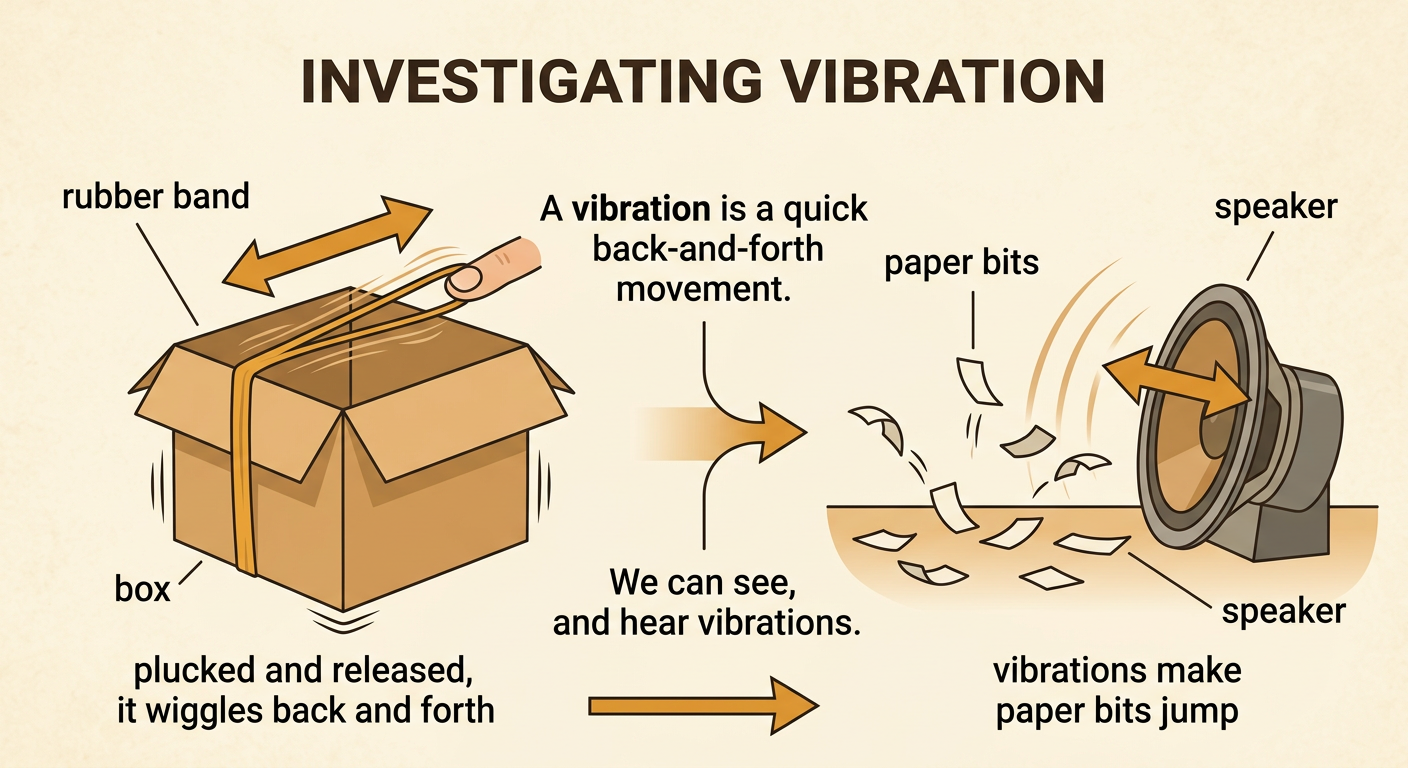
A vibration is a quick back-and-forth movement. You can sometimes see it, feel it, or hear the sound it makes. Stretch a rubber band around an open box. Gently pull the band and let it go. Watch closely as the band moves back and forth. You will hear a sound at the same time. Touch the box gently and notice whether you can feel movement. Next, place a few paper bits near a speaker and play a safe, low-volume sound. The speaker vibrates and may make the light paper bits move. Observe without touching the speaker. Tell a partner what you saw, heard, and felt. This evidence shows two connected ideas: vibrating materials make sound, and sound can make other materials vibrate.
Make Sounds with Materials
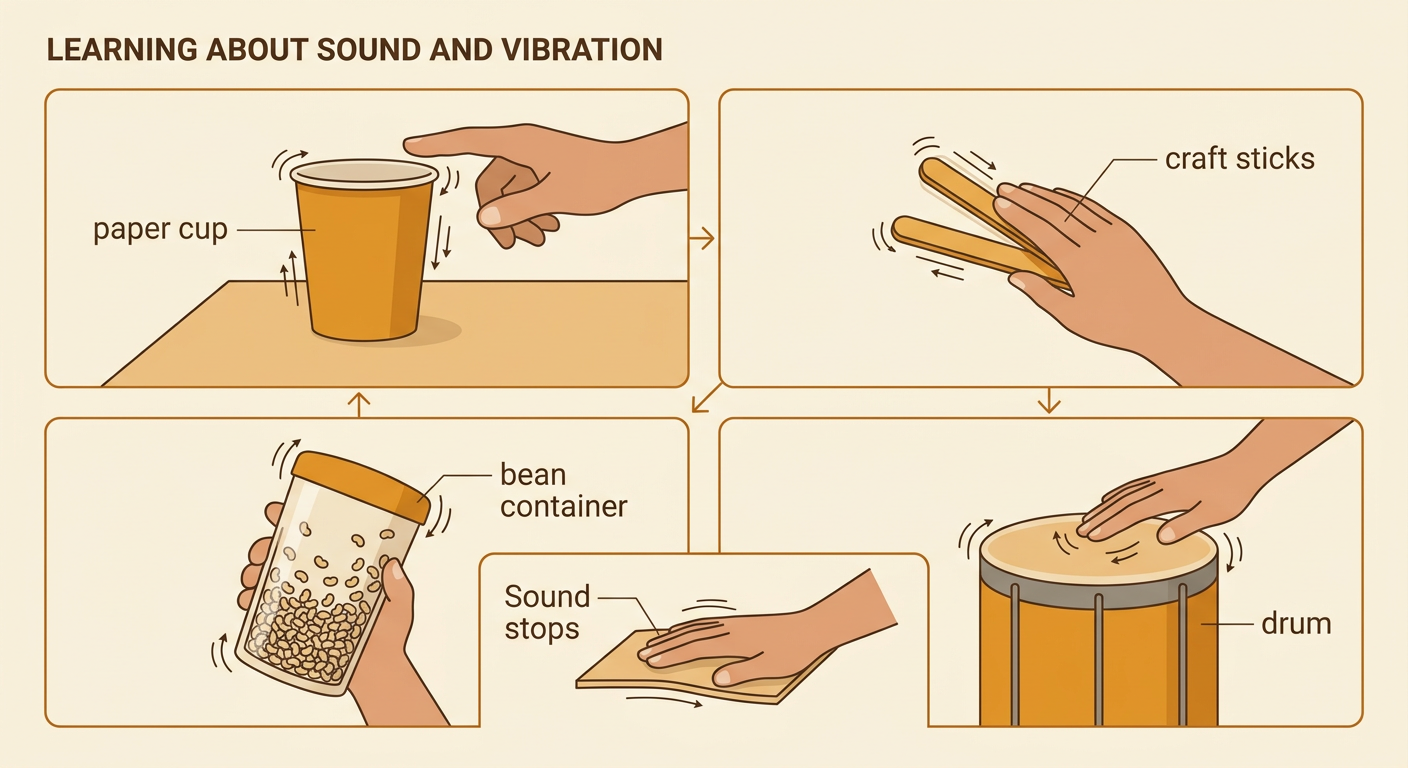
You can investigate how different materials make sound. Gather safe objects such as a paper cup, craft sticks, a sealed container of dry beans, and a small drum. Predict what will happen before you test each object. Tap the cup, rub two craft sticks, shake the bean container, and gently strike the drum. Use the same gentle force when you can so the comparison is fair. After each test, stop the object with your hand. Notice that the sound stops when the vibration stops. For example, when you shake the bean container, the beans hit the container and make it vibrate. Work in a small group. One student tests, one listens, and one records. Change jobs so everyone helps with the shared investigation.
Sort Sound Observations
Scientists organize observations to find patterns. Make a class chart with categories for how each sound was made: tap, rub, shake, or strike. Draw or write the name of each tested object in the correct category. Then count the objects in every group and record the totals. You can use tally marks, pictures, or numbers. For example, if the class tapped a cup, a block, and a desk, the tap category has three objects. Compare the categories. Which has more objects? Which has fewer? Do any have the same number? You may also add a column for whether the sound was loud or soft. The chart does not say which sound is best. It helps the class describe evidence and see how different actions made materials vibrate.

Connect Sounds to Community Signals
People use sounds to send messages and complete shared tasks. A fire alarm warns people to leave a building safely. A school bell may tell students that it is time to change activities. A crossing guard may blow a whistle to get attention, and an ambulance siren asks drivers to move aside. The object making each signal vibrates and produces a sound people can recognize. Communities agree on what important signals mean and practice how to respond. For example, when a school fire alarm sounds, students listen to their teacher, walk quietly, and follow the safety plan. Discuss each signal with your group. Take turns explaining who uses it, what message it sends, and how people should respond. Sound signals help community members work together and stay safe.

Share the Evidence
Use your observations to explain what you discovered. Make a claim: vibrating materials make sound. Then give evidence from the investigation. For example, you might say, “The rubber band moved back and forth and made a sound. When I stopped the band, the sound stopped.” You can also explain that sound can make materials vibrate by describing how paper bits moved near the speaker. Show your class chart and name one pattern, such as the class tested more tapped objects than shaken objects. Listen while classmates share, ask a question, and build on an idea politely. End by connecting the science to community life. You might explain that a vibrating alarm makes a warning sound, and people cooperate by following the safety plan. Clear evidence helps others understand your thinking.
