Sound Signals in Our Community
Students investigate how different patterns of sound can communicate warnings, directions, and other information.
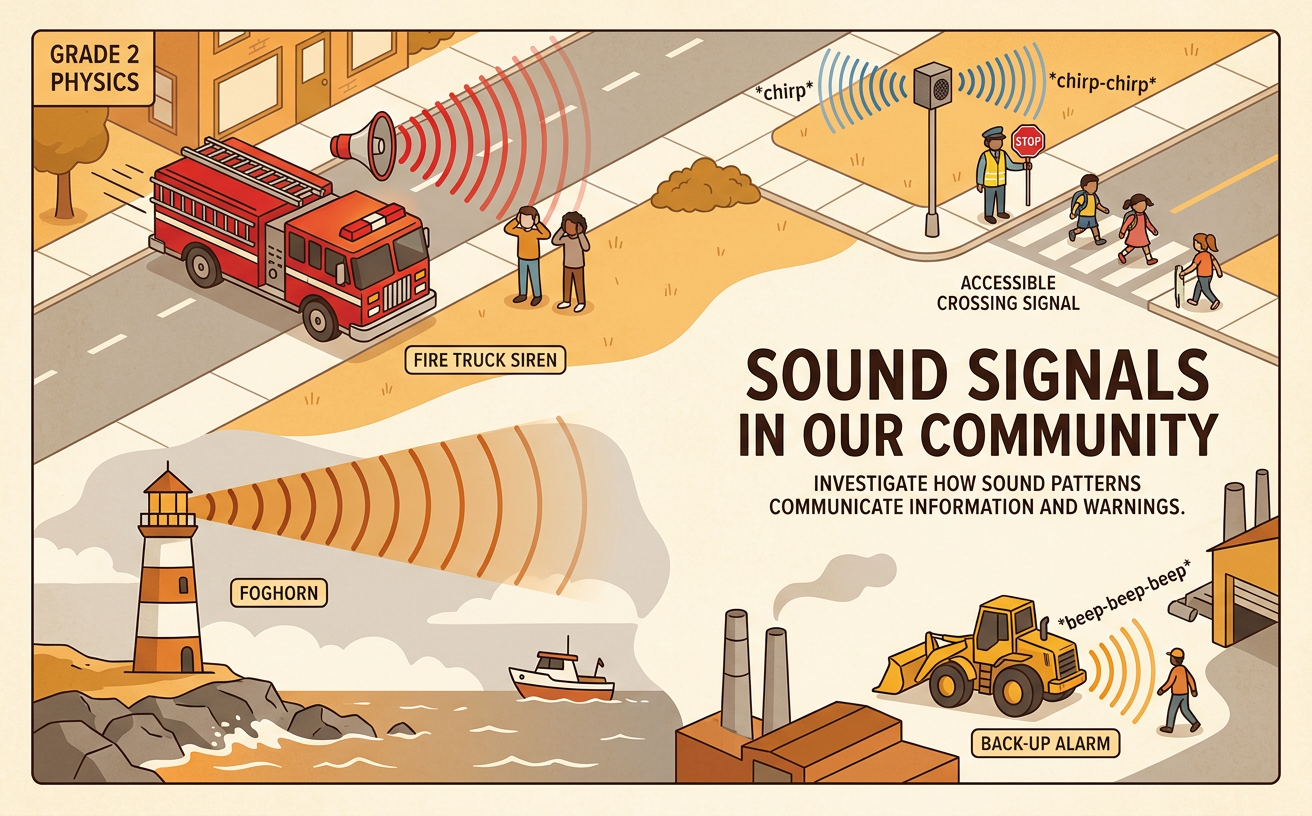
Illustrations are auto-generated and may be placeholders. They can be refreshed to match the narration.
Listen to Familiar Sound Signals
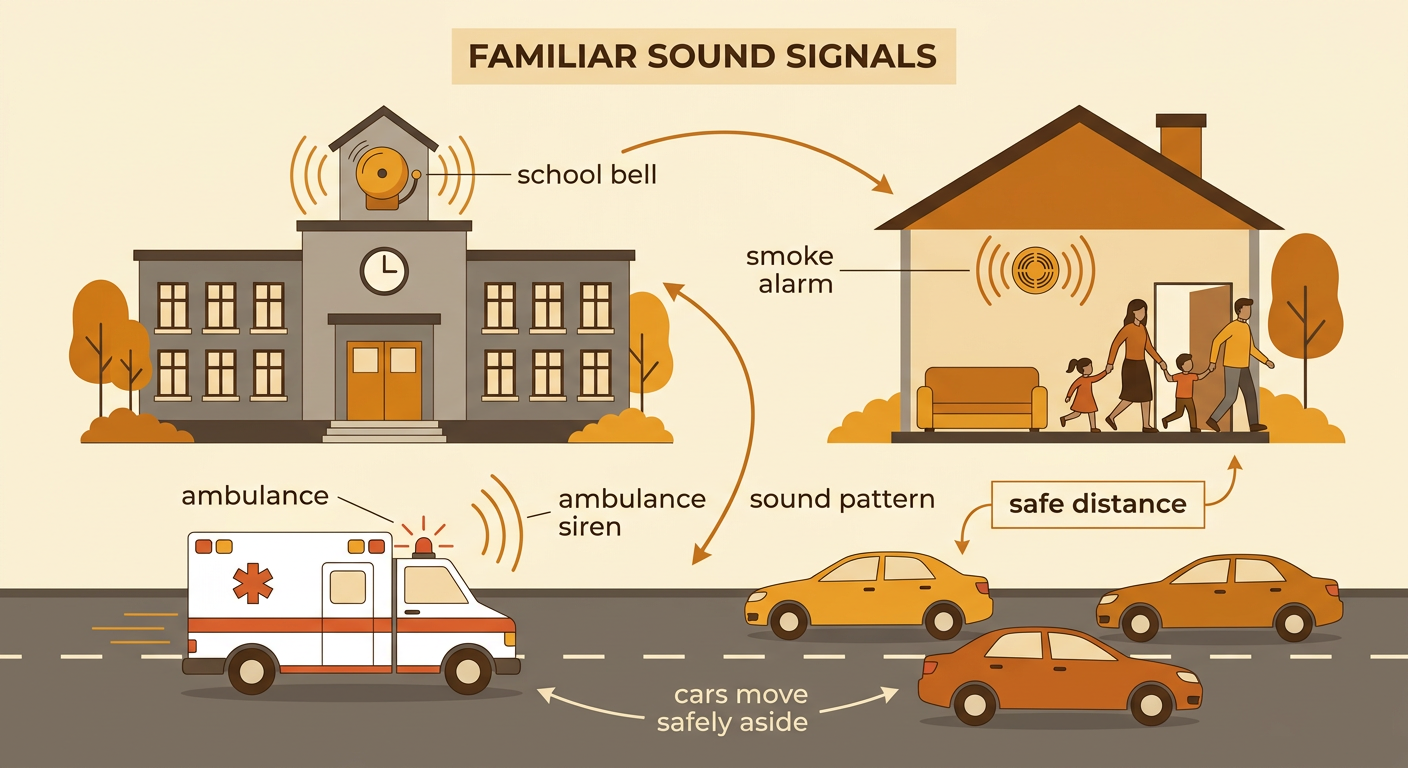
A sound signal is a sound that carries a message. People in a community learn what familiar signals mean so they can act safely and quickly. A school bell may tell students that class is starting. A smoke alarm warns people to leave a building and find a safe adult. An ambulance siren asks drivers to move aside so the ambulance can pass. Listen for each signal’s pattern, length, and volume. Is it one long sound, several short sounds, or a repeated sound? Talk with classmates about where you have heard each signal. Take turns speaking, listen without interrupting, and respond to what others say. Remember that warning sounds can be loud, so never play a sound close to someone’s ears.
Match Sounds to Messages
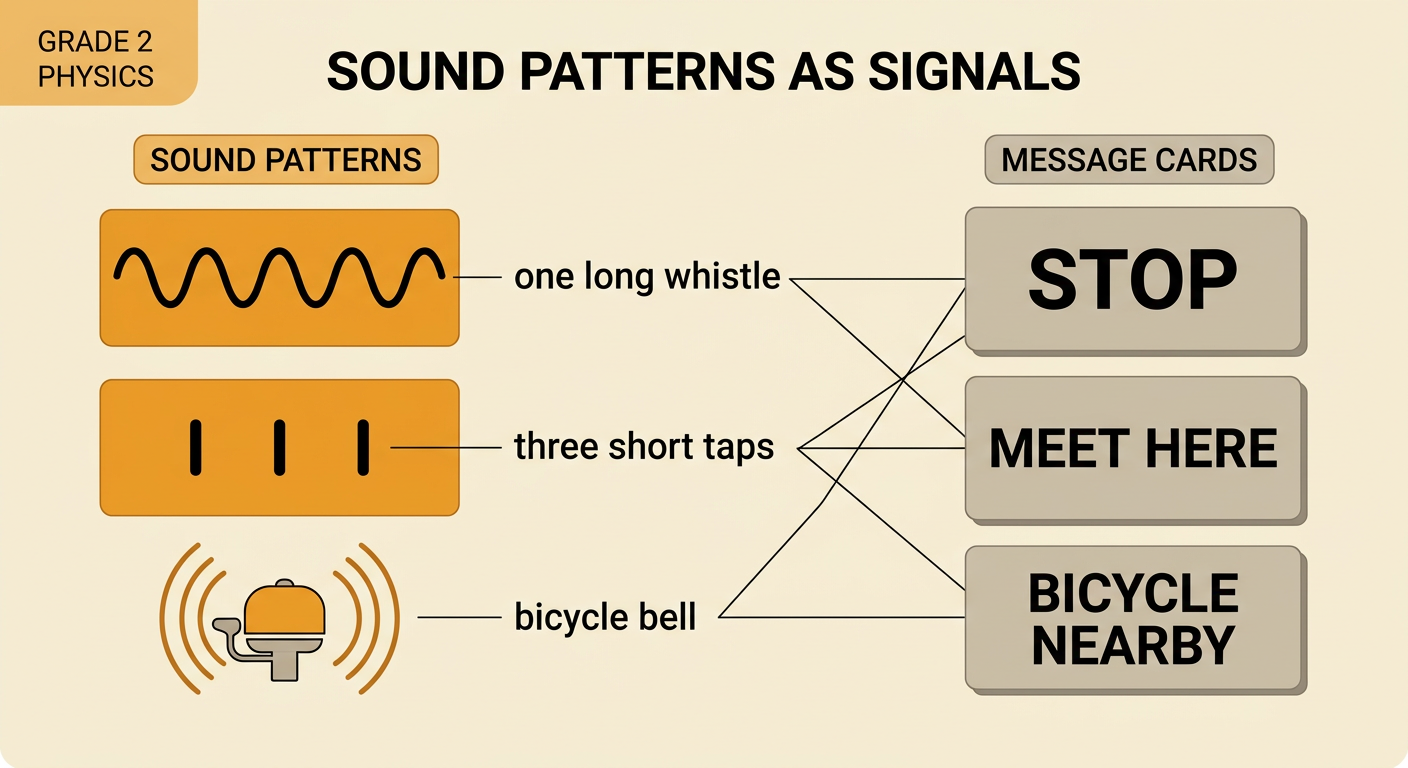
A sound becomes a signal when people agree on its meaning. Listen carefully to a sound card or a teacher-made sound, and match it to the message it could send. For example, one long whistle might mean “stop,” while three short taps might mean “come to the meeting place.” The pattern must be easy to recognize and different from other patterns. Context also matters. A bell at school may mean it is time to change activities, but a bell on a bicycle warns people that the bicycle is nearby. Work with a partner to explain each match. One partner can describe the sound, and the other can state the message. Then switch roles. Use agreed-upon discussion rules: take turns, look toward the speaker, listen attentively, and ask a helpful question if the meaning is unclear.
Explore Sound Patterns
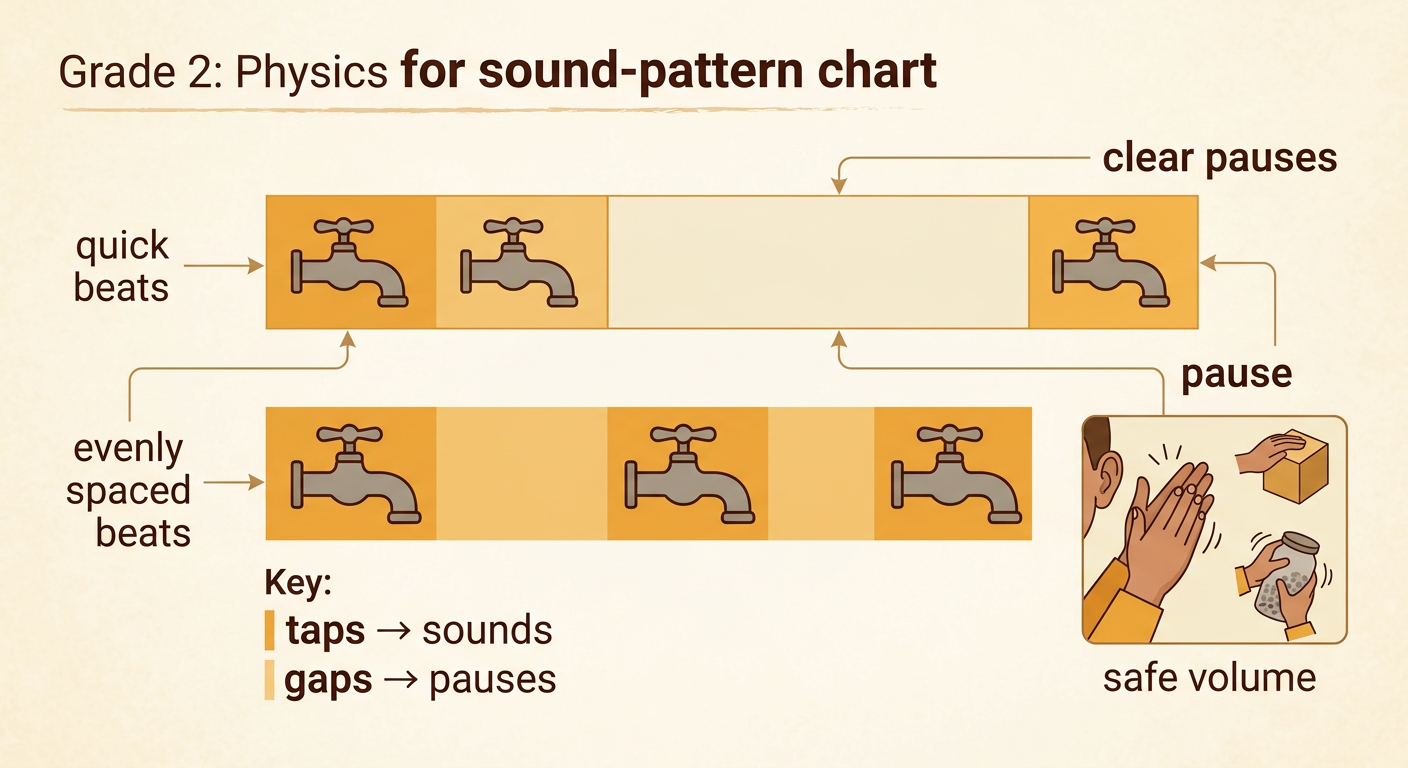
A sound pattern is an arrangement of sounds and pauses. You can change the number, length, speed, or volume of sounds to make different signals. Tap two quick beats, pause, and then tap one beat. Compare that pattern with three evenly spaced beats. Even though both patterns have three sounds, they carry different rhythms and can represent different messages. Try making patterns by clapping, tapping a box, or shaking a sealed container. Keep sounds at a safe volume and away from everyone’s ears. Ask a partner to copy each pattern. If the partner copies it correctly, the pattern is probably easy to notice. Discuss which features helped: short or long sounds, quick or slow timing, and clear pauses. Listen until your partner finishes before sharing your idea.
Create a Sound-Signal Device
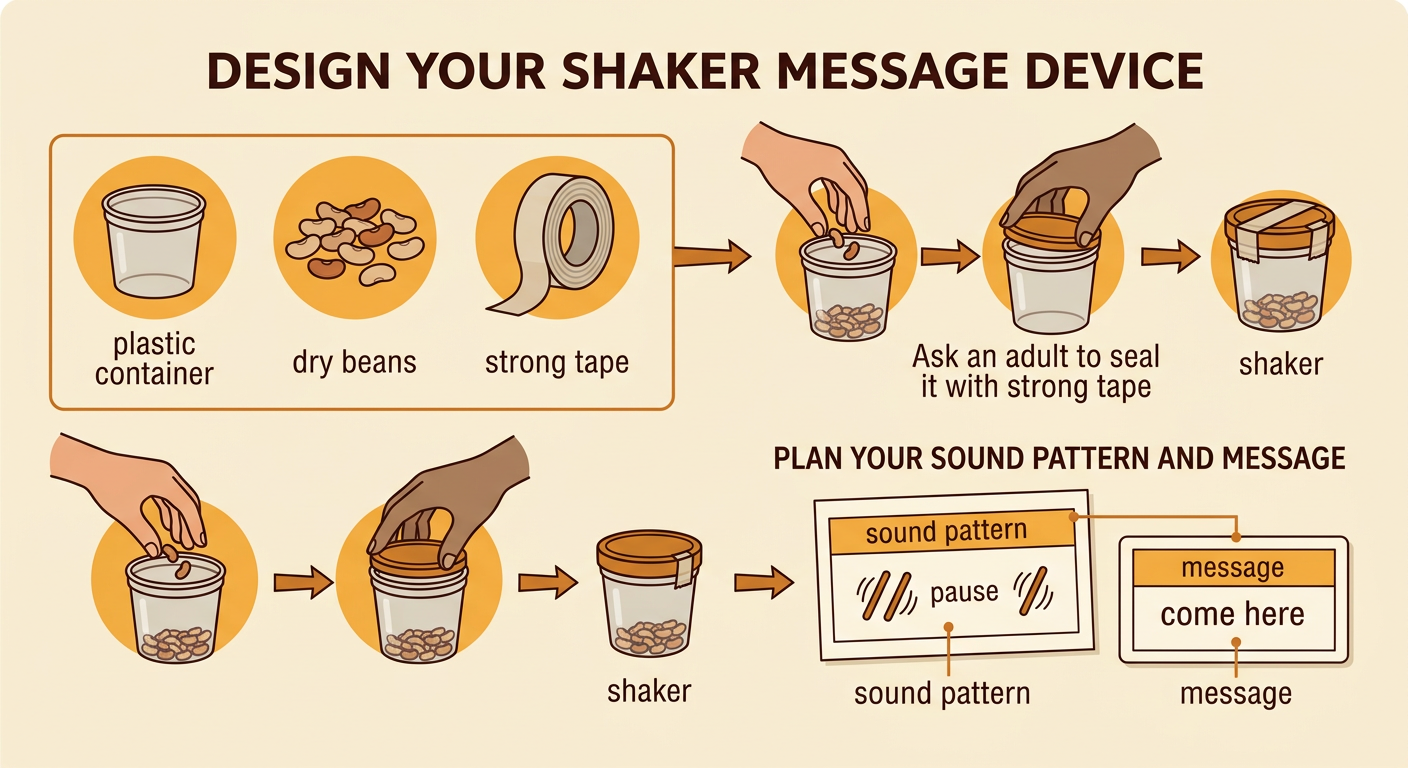
Now design a device that uses sound to send a message across the classroom. First, choose a message such as “come here,” “stop,” or “cleanup time.” Then choose a clear sound pattern for it. You might make a shaker from a small plastic container, dry beans, and strong tape. Put a few beans inside, close the lid, and ask an adult to tape it securely. Shake it twice, pause, and shake it once to send your message. You could also tap two craft sticks together or tap a cardboard box with a pencil eraser. Draw your plan before building. Label the materials, the sound pattern, and the message. Work with your group to share tools, take turns, and consider each person’s idea. Test sounds gently, and never shake or tap the device near anyone’s ears.
Test and Explain the Message
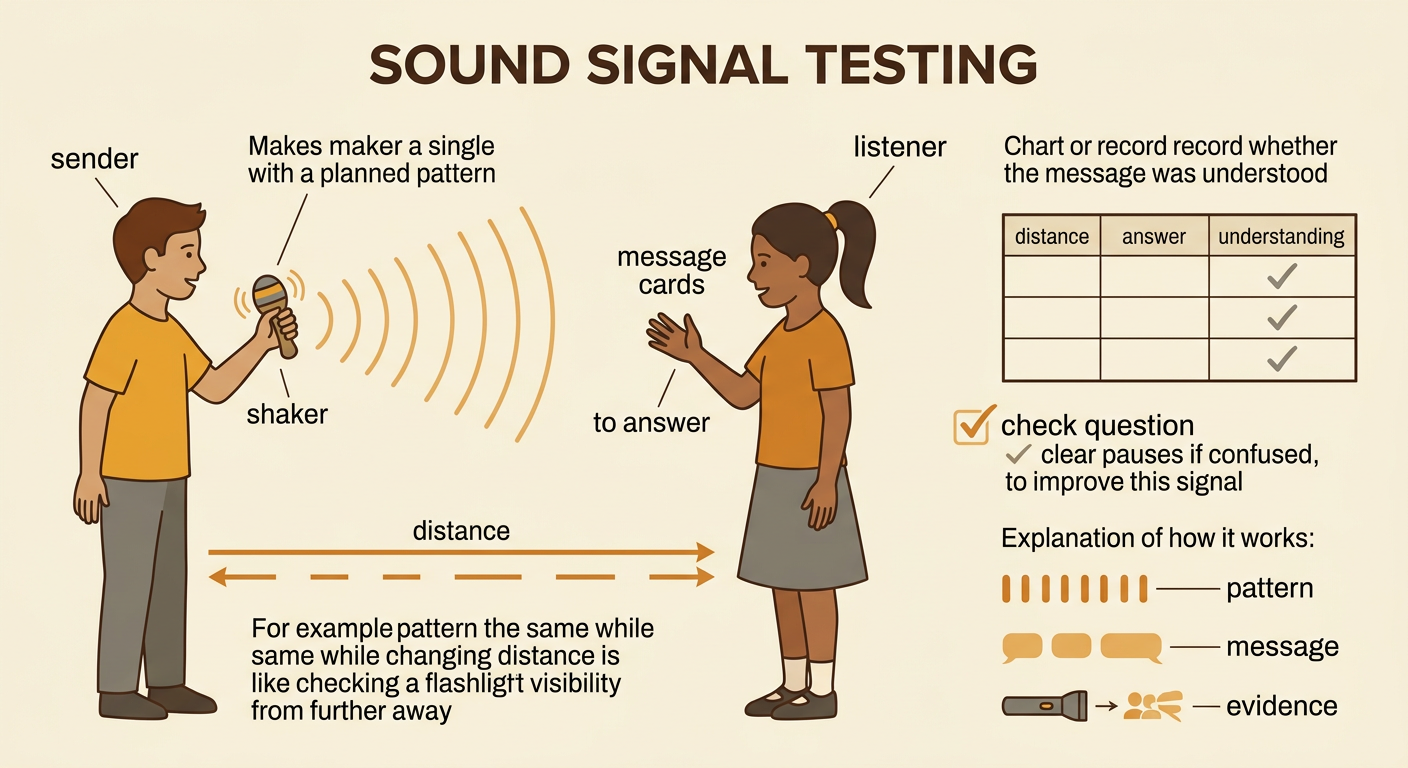
Test whether your device communicates its message over a distance. Place the sender and listener several steps apart in a quiet classroom. The sender makes the planned sound pattern once. The listener names the message or chooses it from message cards. Record whether the message was understood. Repeat the test with different classmates and from a slightly greater distance. Change only one thing at a time, such as the pattern or distance, so you can tell what helped. If listeners are confused, improve the device or make the pauses clearer. After testing, explain how your device works. State the message, demonstrate the pattern, and describe your evidence. During group sharing, wait for your turn, listen closely, and respond kindly. A successful signal is safe, easy to hear, and easy to recognize.