Speed and Energy in Moving Objects
Students investigate how changing an object's speed changes its energy by observing and comparing rolling balls.

Illustrations are auto-generated and may be placeholders. They can be refreshed to match the narration.
What Is Energy of Motion?
Energy is the ability to cause change. A moving object has energy of motion, also called kinetic energy. Its motion can push, bend, roll, or knock over another object. Imagine two identical balls rolling toward two identical blocks. One ball rolls slowly, while the other rolls quickly. The faster ball can usually move its block farther because it has more energy of motion. The balls must have the same mass for this comparison to focus only on speed. A ball sitting still does not have energy of motion, although it may have stored energy because of its position. Scientists observe what moving objects do to find evidence of their energy.

Predicting Ball Speed
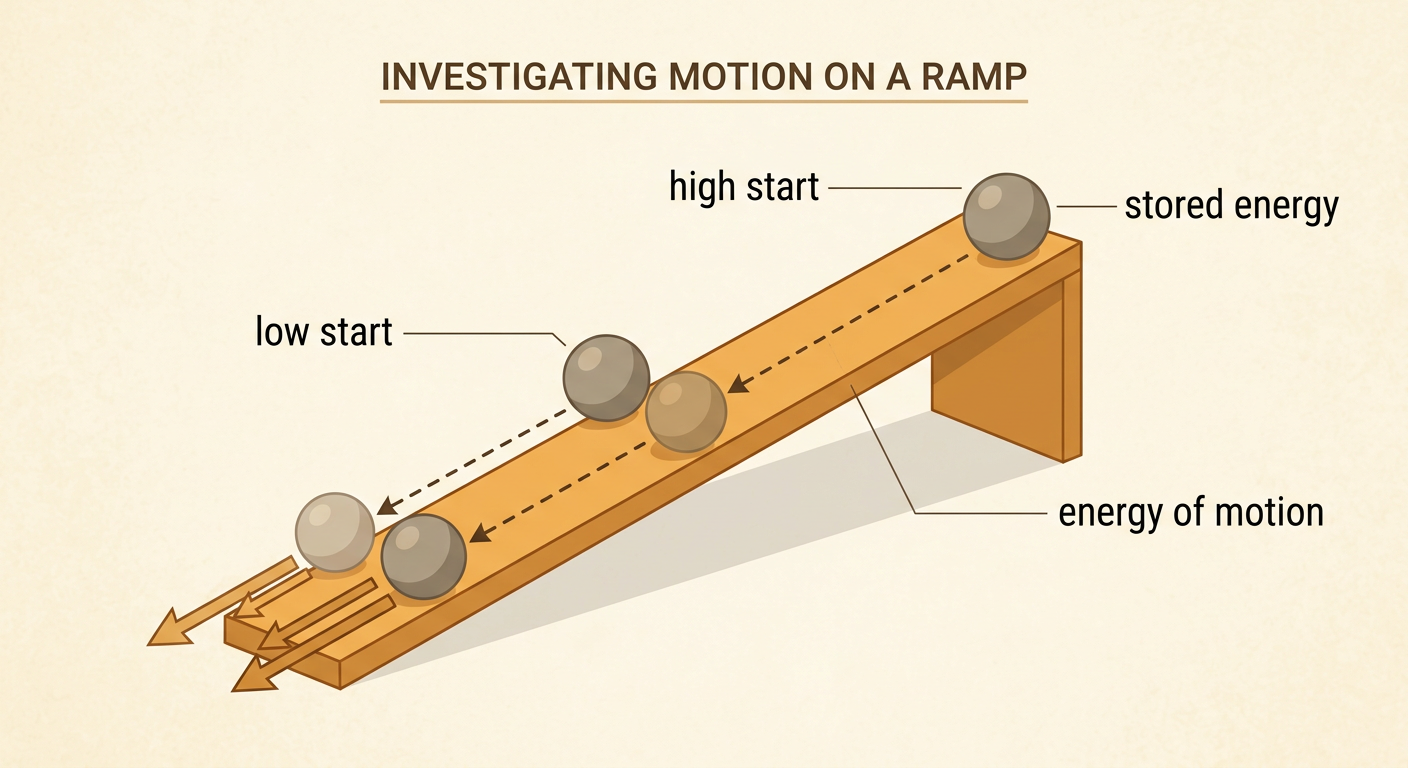
Before an investigation, scientists make a prediction based on what they know. Picture the same ball released from two places on a ramp. One release point is low, and the other is high. The ball released from the higher point has more stored energy because of its position. As it rolls down, more of that stored energy changes into energy of motion. Predict which release point will make the ball move faster at the bottom. You might write, “If the ball starts higher on the ramp, then it will roll faster because it has more stored energy to change into motion.” This prediction identifies what will change, what will be observed, and the scientific reason for the expected result.
Rolling-Ball Investigation
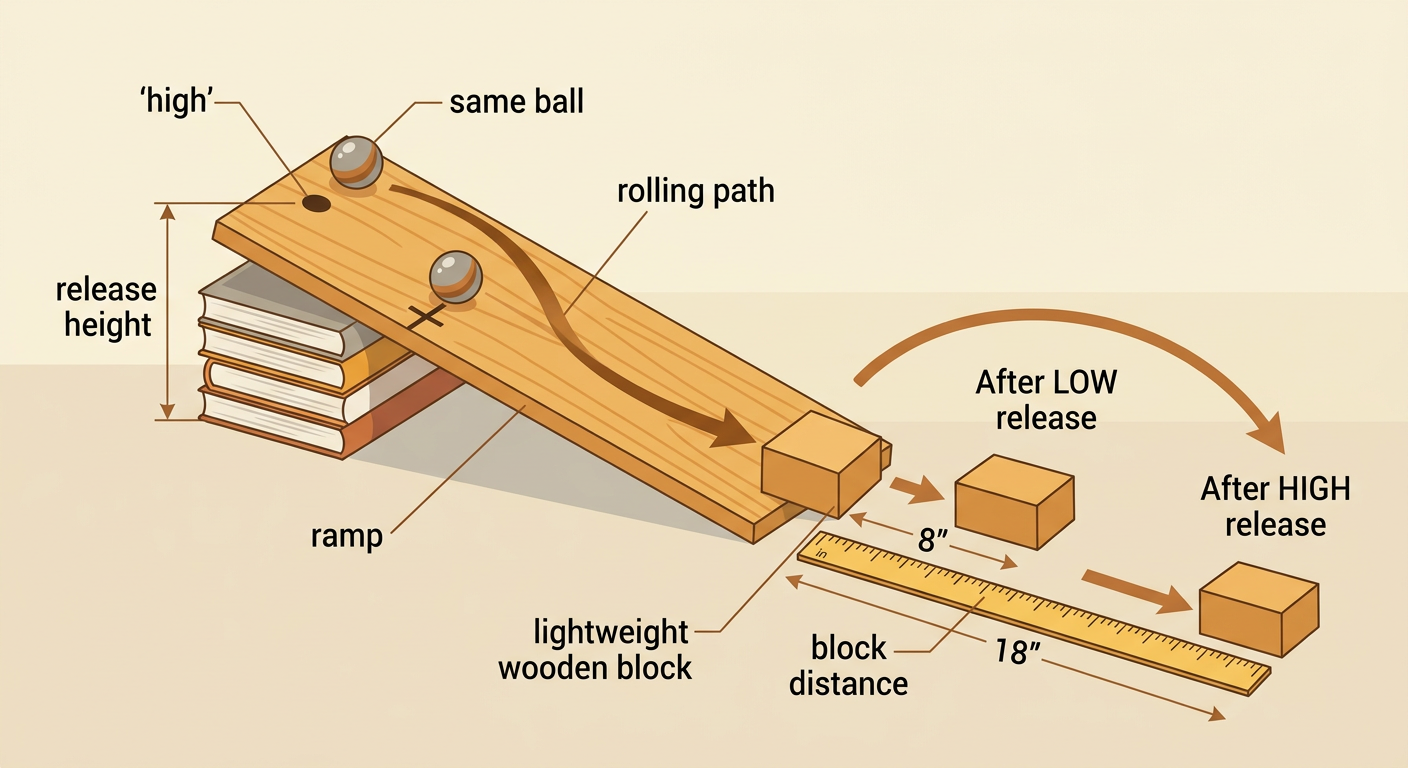
Build a ramp by resting one end of a board on books. Mark a low starting point and a high starting point. Place a lightweight block a short distance beyond the bottom. Release the same ball without pushing it, and measure how far the block moves after the collision. Complete at least three trials from each starting point. Keep the ball, ramp, block, surface, and release method the same so the test is fair. Only the release height should change. Work in a clear area, keep hands away from the rolling path, and stop the ball before it reaches anyone. For example, a ball released from the low mark might move the block 8 inches, while a ball released from the high mark might move it 18 inches.
Recording and Comparing Evidence
Record each trial in a table instead of relying on memory. Include the starting height and the distance the block moved. Suppose the low-start trials move the block 7, 8, and 9 inches. Their typical result is about 8 inches. Suppose the high-start trials move it 17, 18, and 19 inches. Their typical result is about 18 inches. Comparing numbers helps you reason quantitatively: 18 inches is 10 inches farther than 8 inches. A bar graph can make the pattern easy to see. The taller bar for the high start represents greater block movement. Repeated trials strengthen the evidence because one unusual result is less likely to control the conclusion. Record observations honestly, even when a result differs from your prediction.

Explaining Speed and Energy
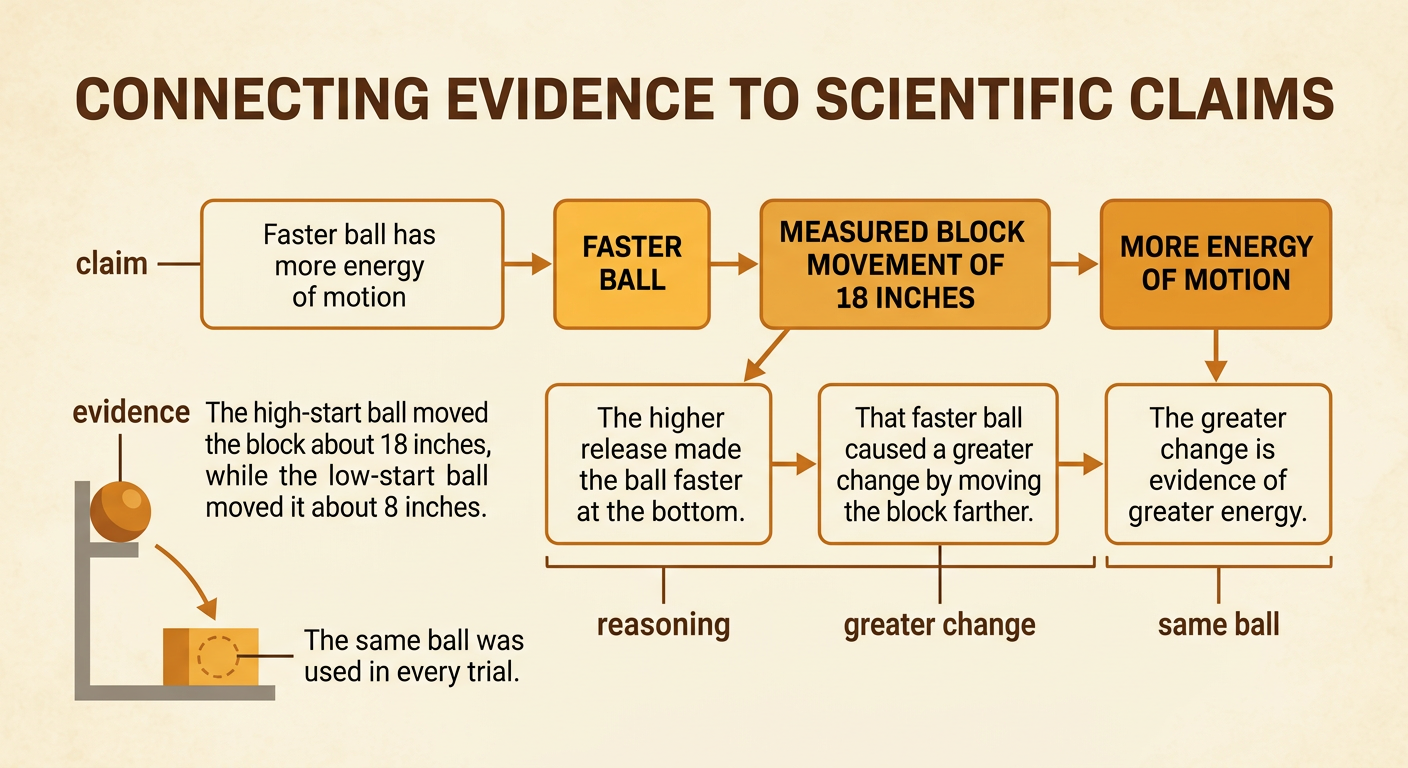
Use evidence to explain the relationship between speed and energy. Begin with a claim: when the same ball moves faster, it has more energy of motion. Next, cite details from the investigation. For example, the ball released from the high point moved the block about 18 inches, while the ball released from the low point moved it about 8 inches. Then add reasoning. The higher release made the ball faster at the bottom, and the faster ball caused a greater change by moving the block farther. This greater change is evidence of greater energy. Do not claim that speed is the only factor in every situation. Mass also matters, so the investigation used the same ball each time. The evidence supports a speed-and-energy relationship because other important conditions were kept constant.
Connecting Energy to Everyday Choices
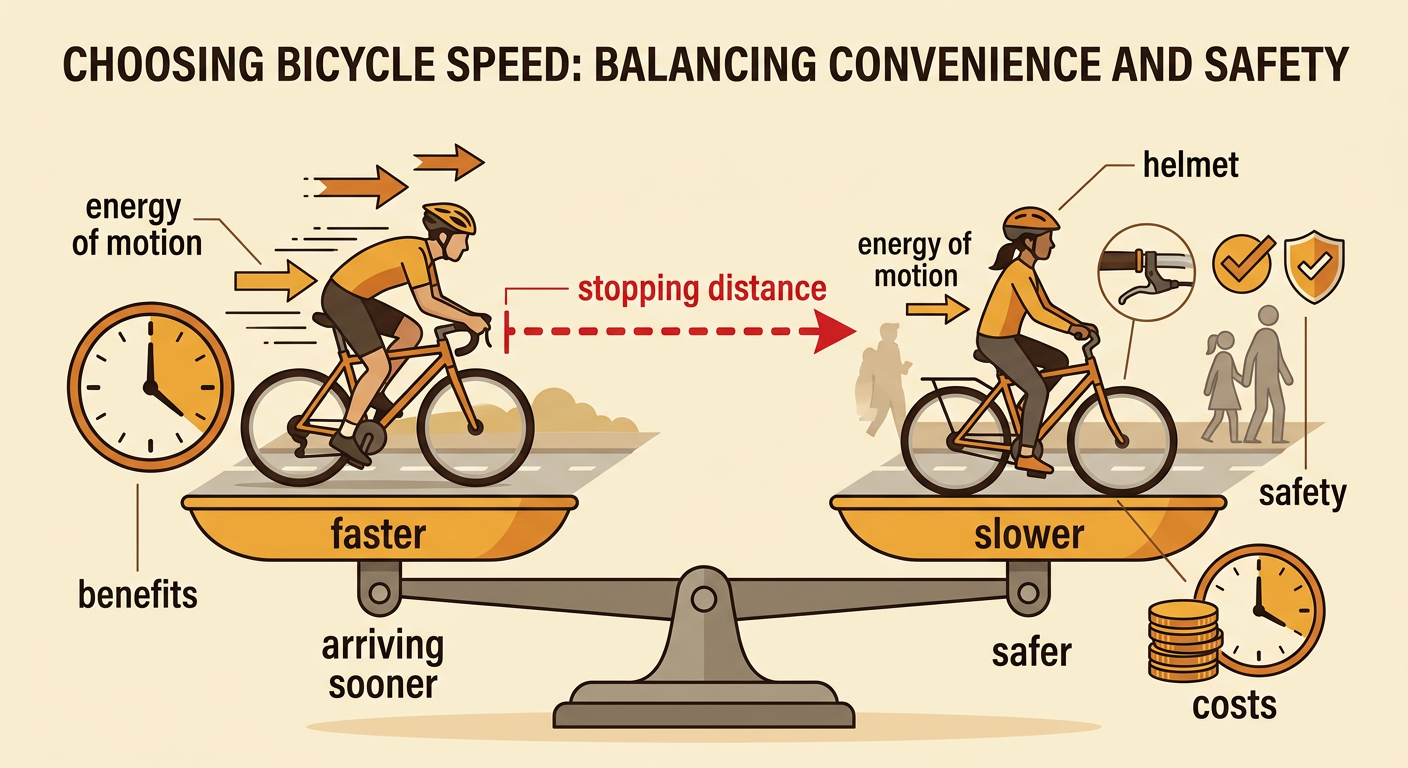
Understanding speed and energy helps people compare the benefits and costs of choices. Riding a bicycle faster may help a rider arrive sooner, which is a benefit. However, greater speed gives the moving bicycle and rider more energy of motion. Stopping requires more distance, and a collision can cause a greater change or more damage. Slowing down near people, wearing a helmet, and checking brakes have costs, such as taking extra time or buying safety equipment. Their benefits include reducing risk and protecting people and property. Similar choices apply to cars, scooters, and rolling carts. Before choosing a speed, ask: What do I gain, what might it cost, and who could be affected? A responsible choice balances convenience with safety.