Static Electricity: Pushes and Pulls Without Touching
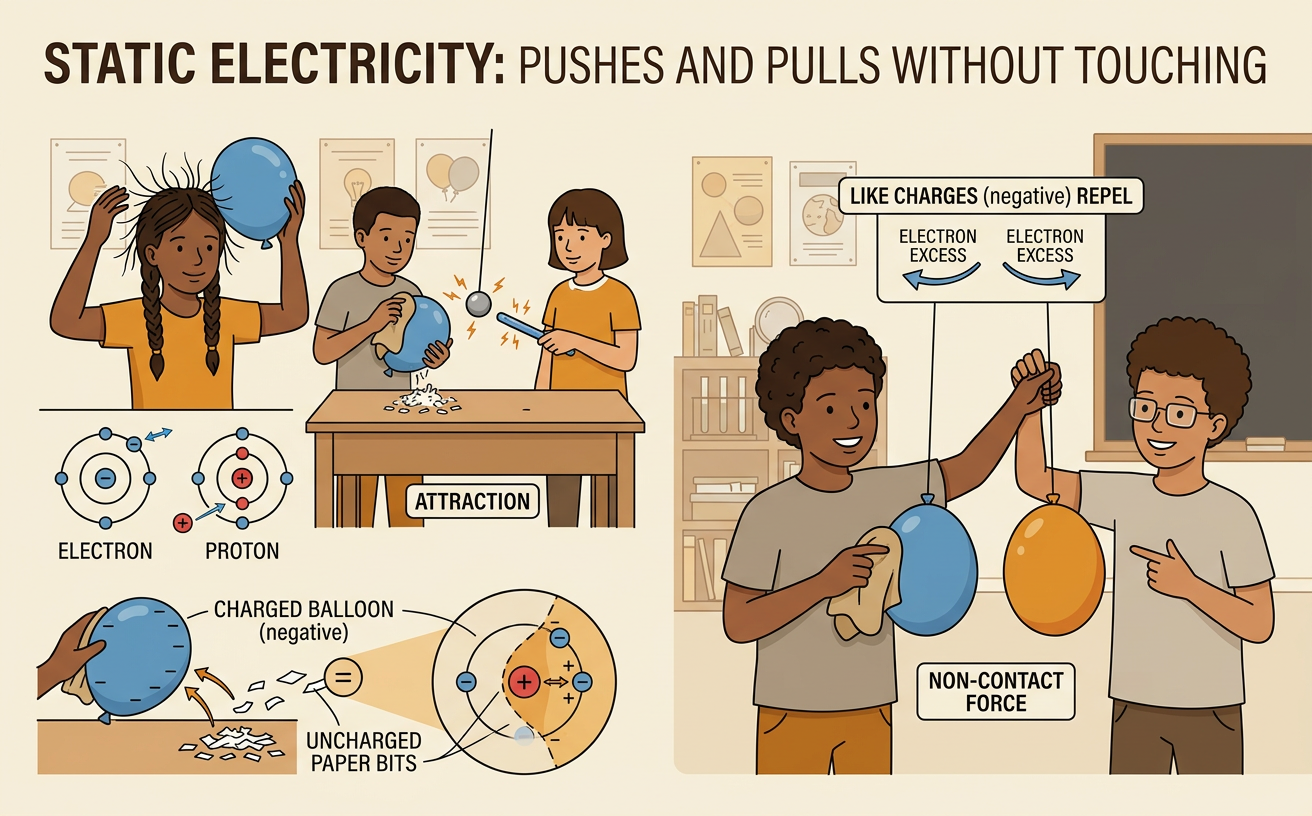
Students investigate how electrically charged objects can attract or repel other objects without touching them.
Illustrations are auto-generated and may be placeholders. They can be refreshed to match the narration.
Observe a Static Electricity Demonstration
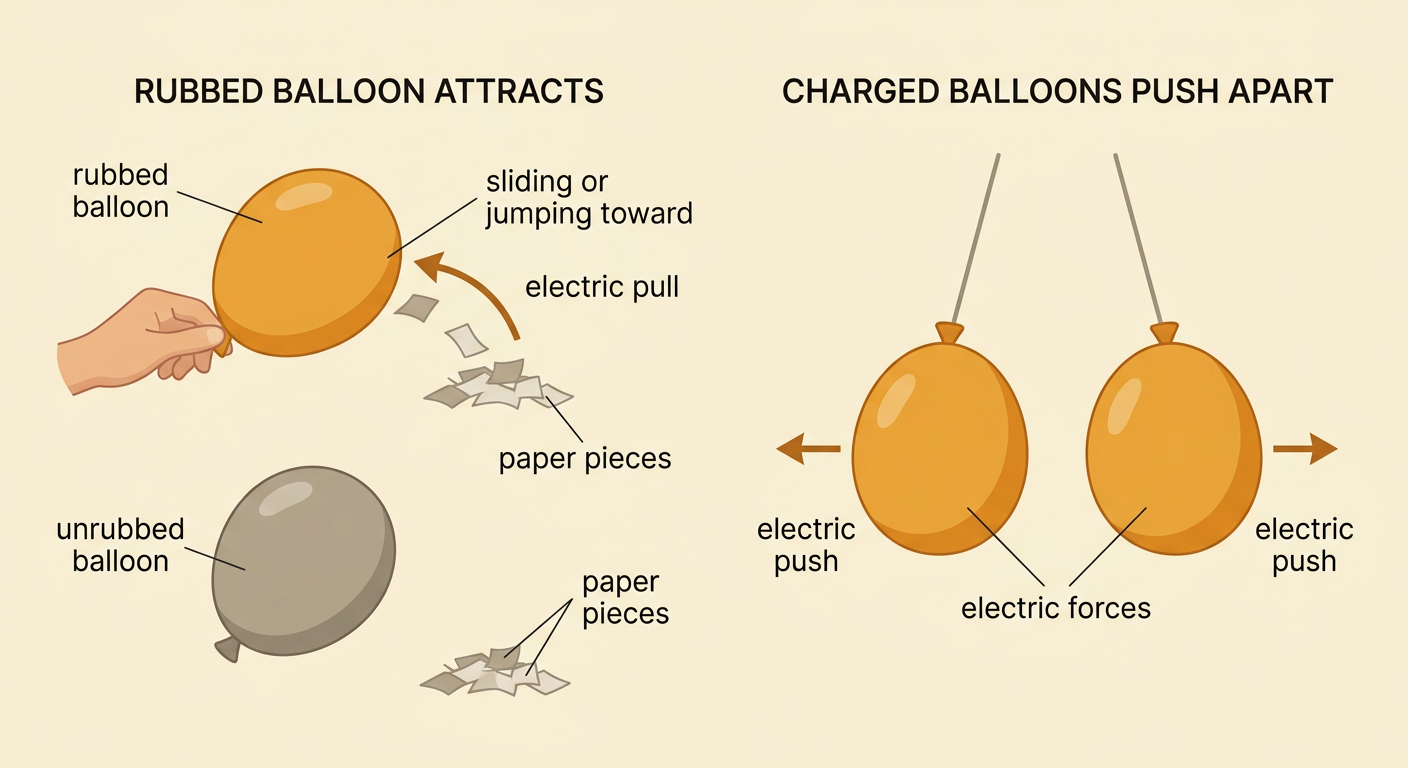
Watch as the teacher rubs an inflated balloon with a piece of wool and then holds it near small paper pieces. Before the balloon touches them, some pieces jump toward it. This motion is evidence of an electric pull acting across the space between the objects. Next, observe two rubbed balloons hanging from strings. They may push apart without touching. Ask questions such as, “What caused the paper to move?” and “Does the distance between the objects change the effect?” Compare the demonstration with an unrubbed balloon held near the same paper. Record only what you see, not what you expect. For example, you might observe that paper moves toward the rubbed balloon but stays still near the unrubbed balloon.
Charge an Object by Rubbing
Rubbing certain materials together can give an object a static electric charge. Rub a plastic ruler or an inflated balloon with wool for the same amount of time, such as 10 seconds. Rubbing can move tiny particles called electrons from one material to another. This creates an uneven electric charge that may remain for a short time. Hold the object by one end and keep it away from water, outlets, and electronic devices. Test an identical object that was not rubbed so you can make a fair comparison. For example, rub one balloon with wool 10 times but leave a second balloon unrubbed. If only the rubbed balloon affects nearby paper, rubbing is likely the cause of the change.

Test Attraction Without Contact
Place several tiny paper pieces on a dry table. Slowly bring the charged balloon or plastic ruler toward them without touching them. Stop when a paper piece begins to slide, turn, or jump. The charged object creates an electric force that pulls the paper across the gap. Test an unrubbed object in the same way and compare the results. You can also hang two balloons from strings, rub both with the same material, and bring them close together. If they move apart, you have observed an electric push called repulsion. Change only one factor at a time, such as whether the object was rubbed. Repeat each test at least three times. A repeated result is stronger evidence than one result.

Measure and Record the Distance
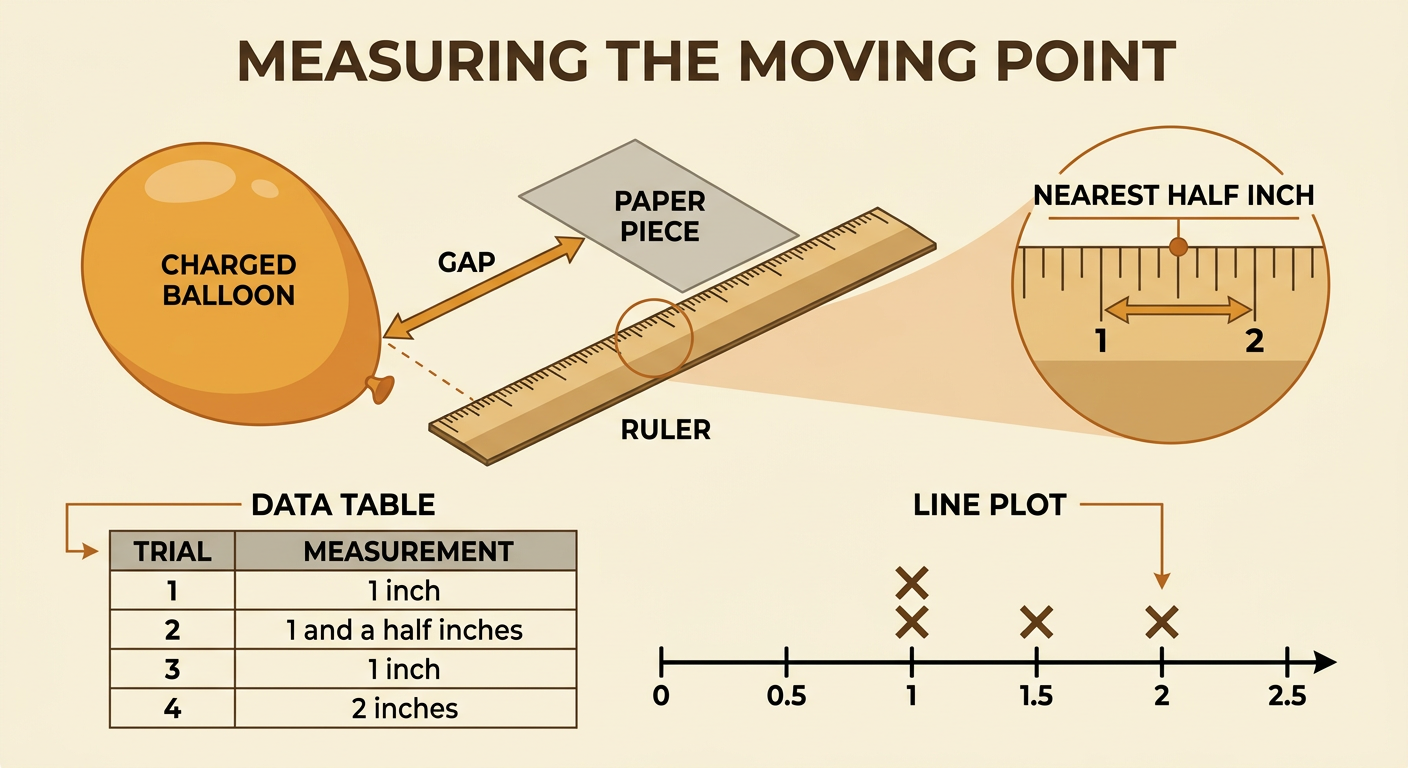
Use a ruler to measure the greatest distance at which the paper begins to move toward the charged object. Measure the empty gap from the closest edge of the charged object to the closest edge of the paper. Record the distance to the nearest half inch. Repeat the test several times using the same materials and rubbing method. For example, one group might measure 1 inch, 1½ inches, 1 inch, and 2 inches. Make a table and then create a line plot. Write the distances along a number line and place one X above the matching distance for each trial. The plot helps the class see common results and unusual results. Keep the ruler still while measuring so it does not change the interaction.
Discuss Evidence and Explain the Force
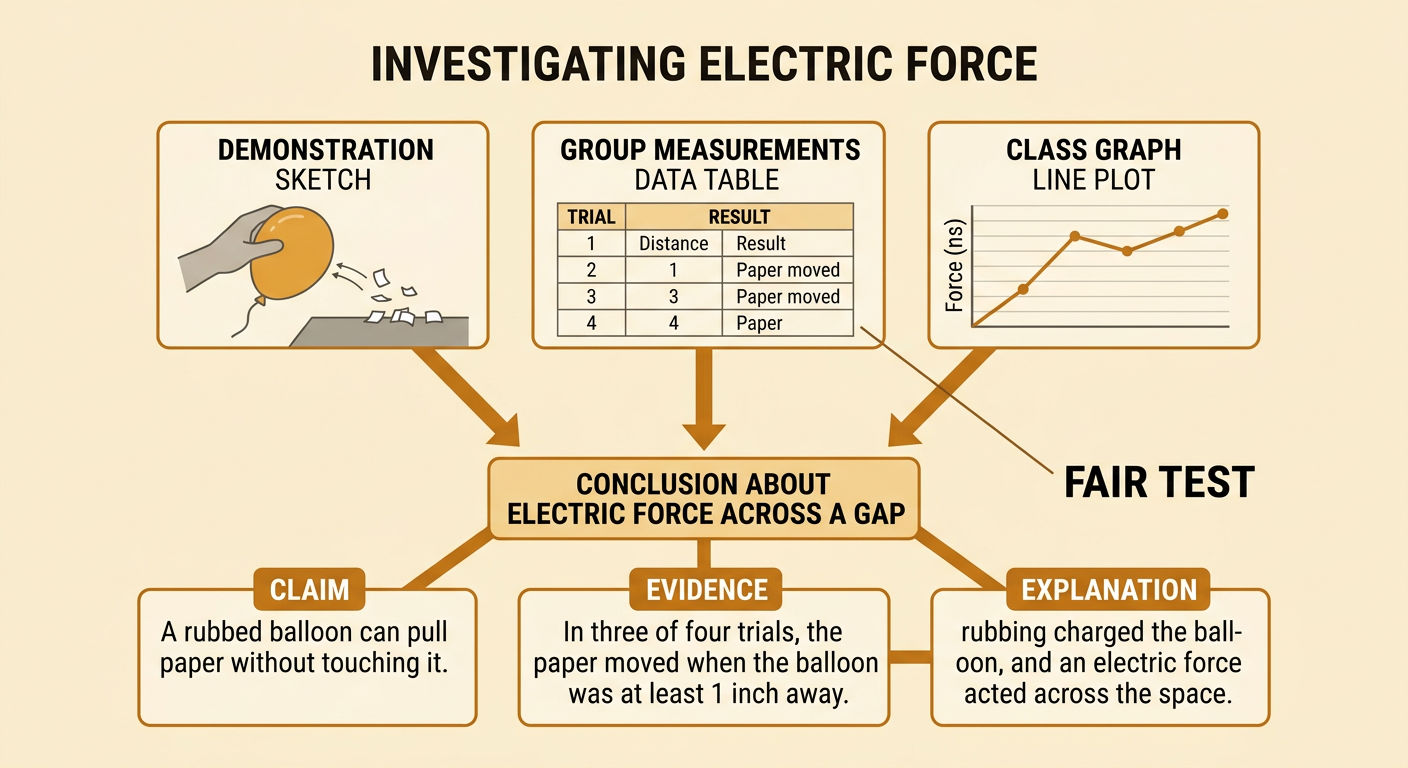
Share results with your group and take turns speaking, listening, and asking questions. Use evidence from more than one source, such as the teacher demonstration, your group’s data table, and the class line plot. Make a claim that answers the investigation question. For example, “A rubbed balloon can pull paper without touching it.” Support the claim with measured evidence: “In three of four trials, the paper moved when the balloon was at least 1 inch away.” Then explain that rubbing charged the balloon and the electric force acted across the gap. Compare results from different groups. Differences may come from rubbing time, distance, materials, or humid air. Identify which evidence is most useful and suggest a new fair test to answer any remaining questions.