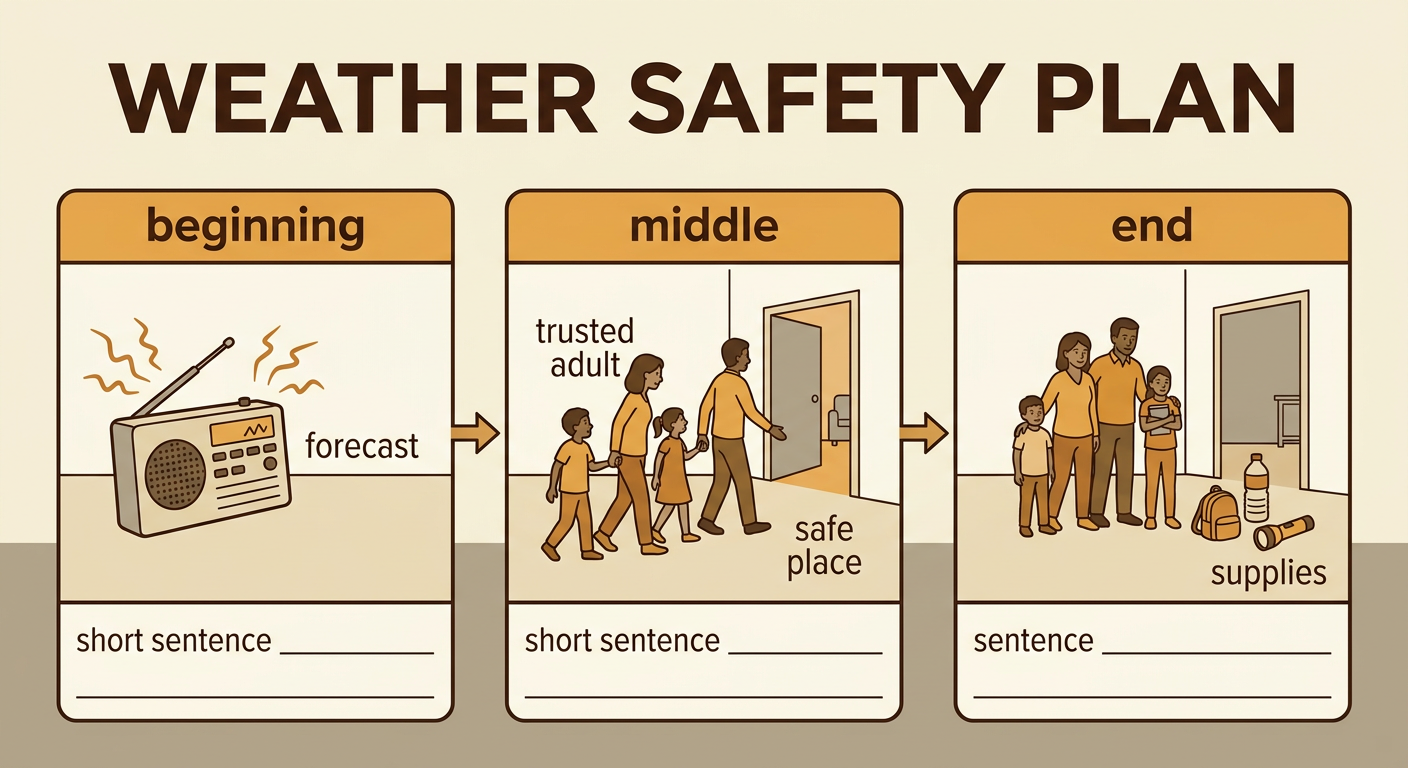
Staying Safe in Severe Weather
Students identify how severe weather can affect people and use pictures and simple materials to design a way to stay safe.
Illustrations are auto-generated and may be placeholders. They can be refreshed to match the narration.
Notice Signs of Severe Weather
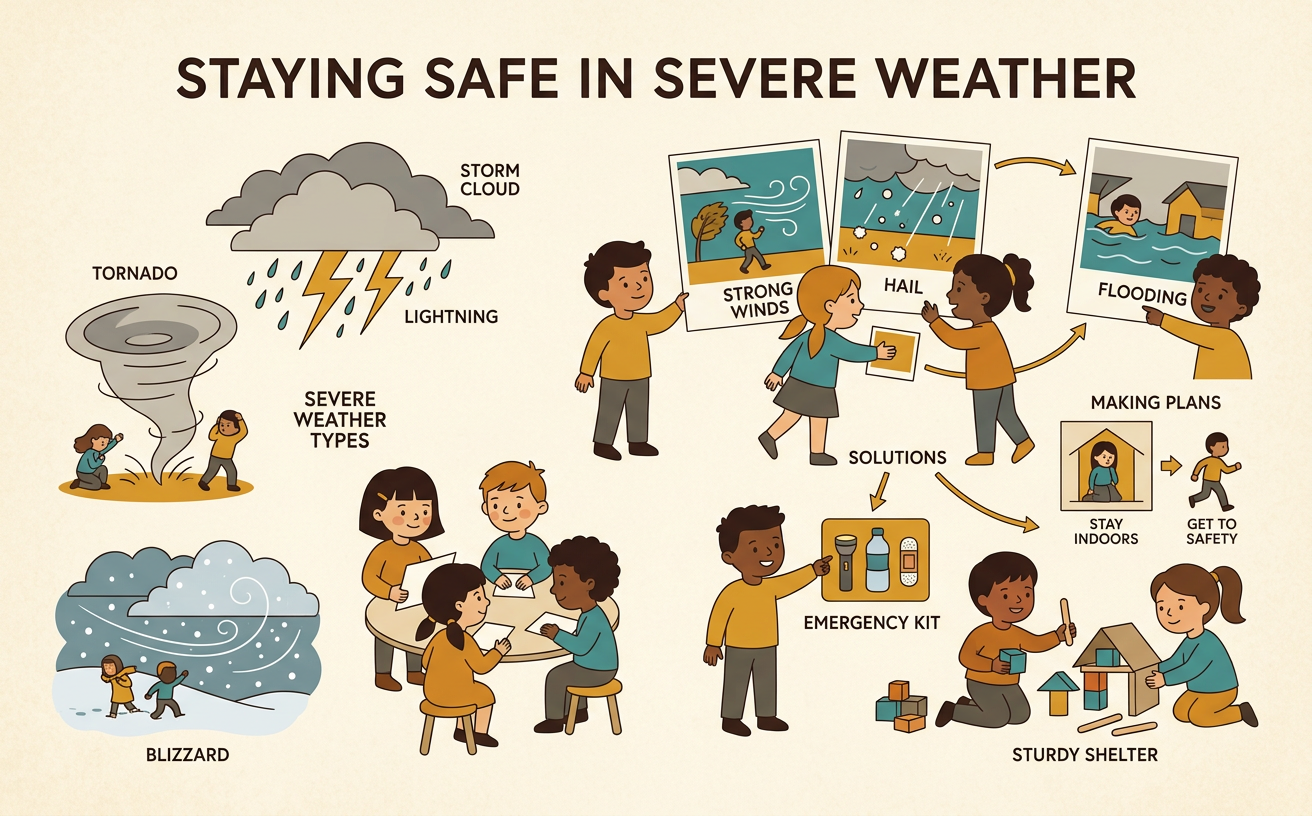
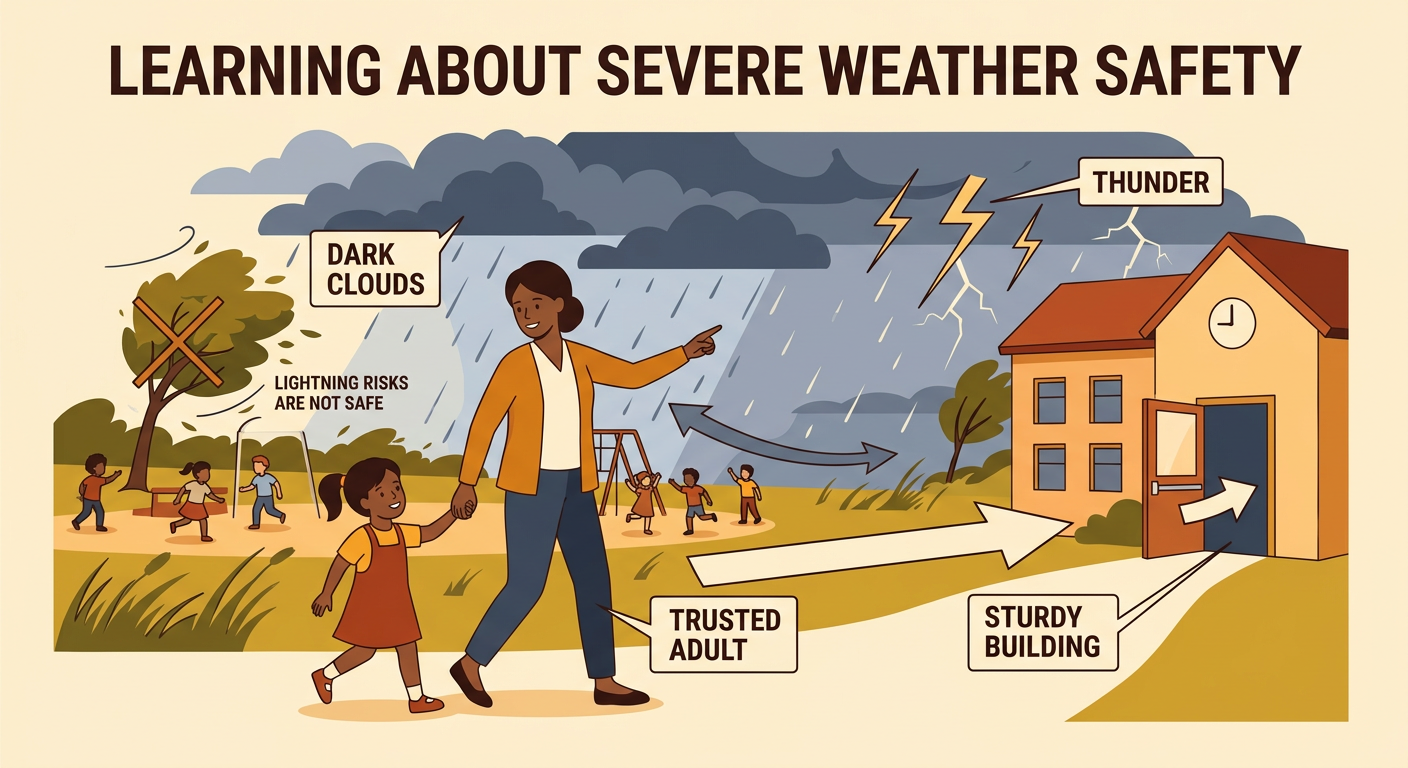
Weather can change. Severe weather is weather that may hurt people or damage places. Dark clouds, strong wind, thunder, lightning, heavy rain, or rising water can be warning signs. Some signs are easy to notice, but we cannot always tell how dangerous weather will become just by looking outside. We should listen to a trusted adult and check a weather forecast. For example, Maya sees dark clouds and hears thunder while playing at a park. She does not stand under a tree. She tells her teacher, and the class goes inside a sturdy building. Different places may have different severe weather. Coastal places may have hurricanes, while other places may have tornadoes, floods, or blizzards.
Learn How Forecasts Help Us
A weather forecast tells what weather may happen and when it may happen. Weather scientists use tools and information to make forecasts. A forecast may appear on a phone, radio, television, or weather radio. A watch means severe weather is possible, so people should get ready. A warning means dangerous weather is happening or may happen soon, so people should act right away. For example, a tornado warning tells a family to go with an adult to a basement or a small inside room on the lowest floor, away from windows. Forecasts give people time to prepare. They can charge a phone, bring pets inside, gather supplies, and move to a safer place before severe weather arrives.

Sort Safe and Unsafe Choices
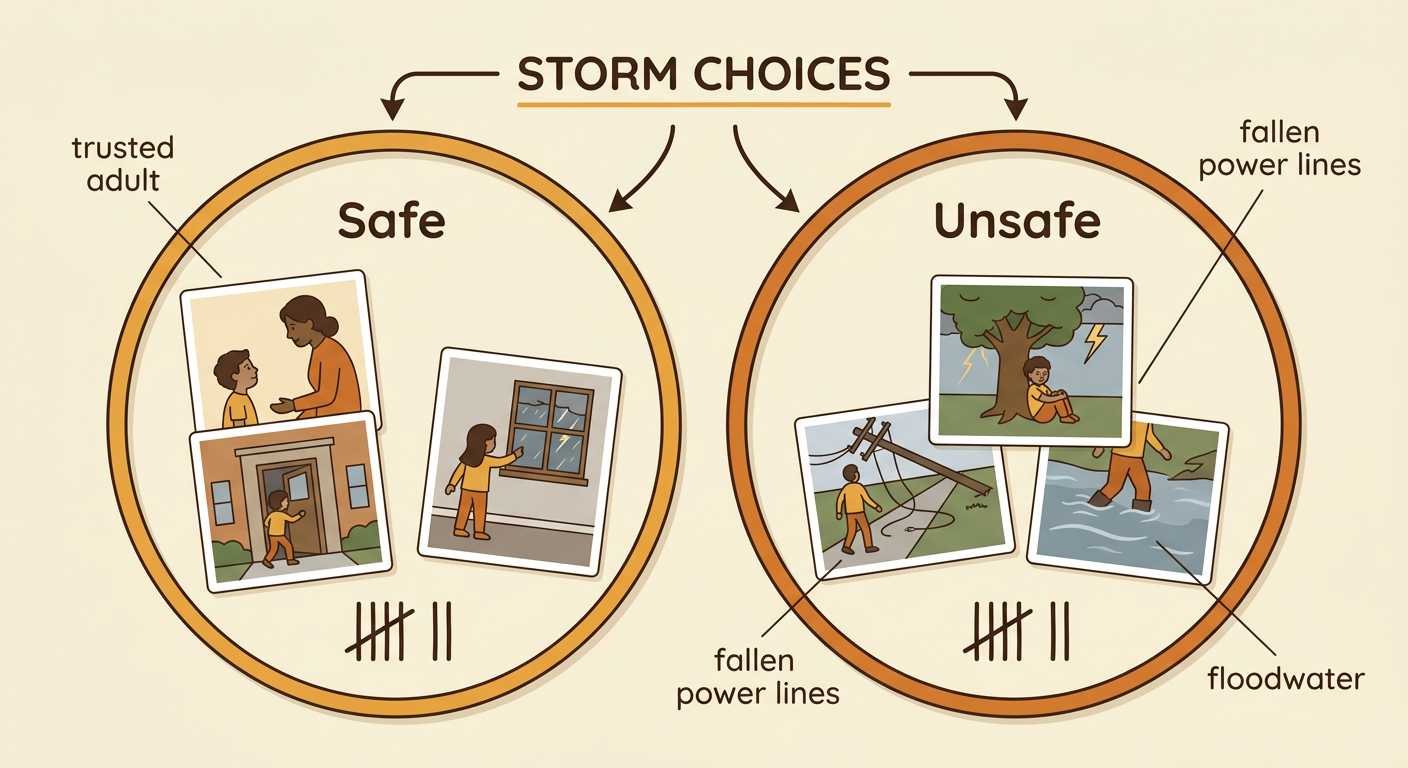
We can sort severe-weather choices into two groups: safe and unsafe. A safe choice helps protect people. An unsafe choice may put someone near wind, water, lightning, broken glass, or falling objects. Safe choices include listening to an adult, going inside during thunder, staying away from windows, and moving to higher ground when adults direct you during a flood. Unsafe choices include playing outside during lightning, touching fallen power lines, hiding under a tree, or walking through floodwater. For example, sort picture cards into two hoops labeled Safe and Unsafe. Count the cards in each group and tell which group has more. Always remember that a trusted adult should lead the safety plan, and children should never investigate storm damage alone.
Design a Safe Place
A safe place depends on the kind of severe weather and the place where people live. For a tornado, a basement or small inside room on the lowest floor is safer than a room with windows. During lightning, people should enter a sturdy building. During a flood, adults may direct everyone to higher ground. Use a small box, paper, craft sticks, and blocks to make a model of a tornado-safe room. Place the model room inside the building, away from windows. Add pretend supplies such as water, a flashlight, and a weather radio. Test the design by pointing to where people enter and sit. This is only a model for learning. In real severe weather, children must follow a trusted adult’s plan and use a real safe place.

Draw and Share the Safety Plan
A safety plan shows what to do before and during severe weather. Draw a picture with a beginning, middle, and end. First, show how the family or class receives a forecast. Next, show everyone listening to a trusted adult and moving to the correct safe place. Last, show people staying there until an adult says the danger has passed. Add labels or dictate sentences to a teacher. You might write, “The weather radio gives a warning. We go with an adult to the inside room. We stay away from windows.” Share the plan with a partner. Ask: What weather is coming? Where is the safe place? What supplies are ready? A clear plan helps people remember safe actions, but adults and official weather messages guide real decisions.