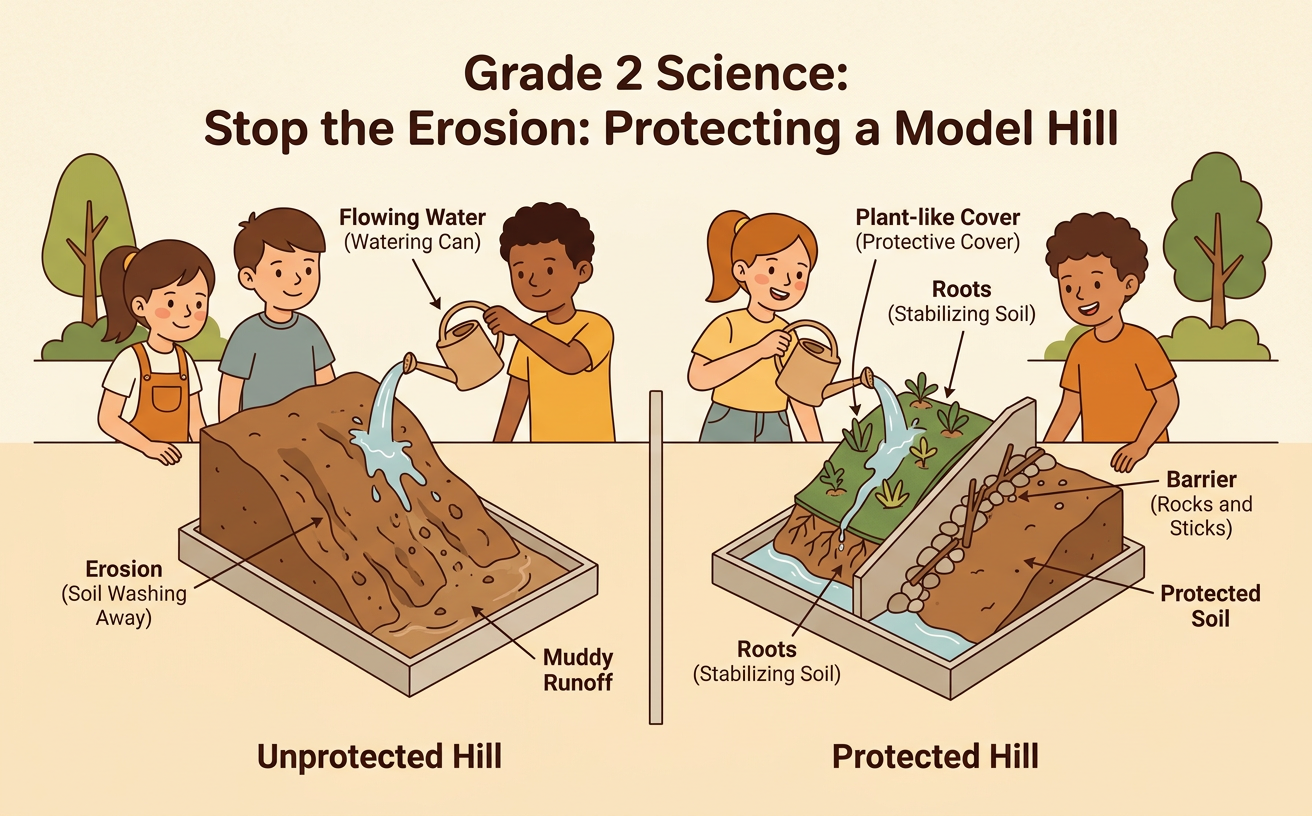
Stop the Erosion: Protecting a Model Hill
Students test barriers and plant-like coverings to compare how well different solutions prevent moving water from washing away soil.
Illustrations are auto-generated and may be placeholders. They can be refreshed to match the narration.
Notice How Water Moves Soil
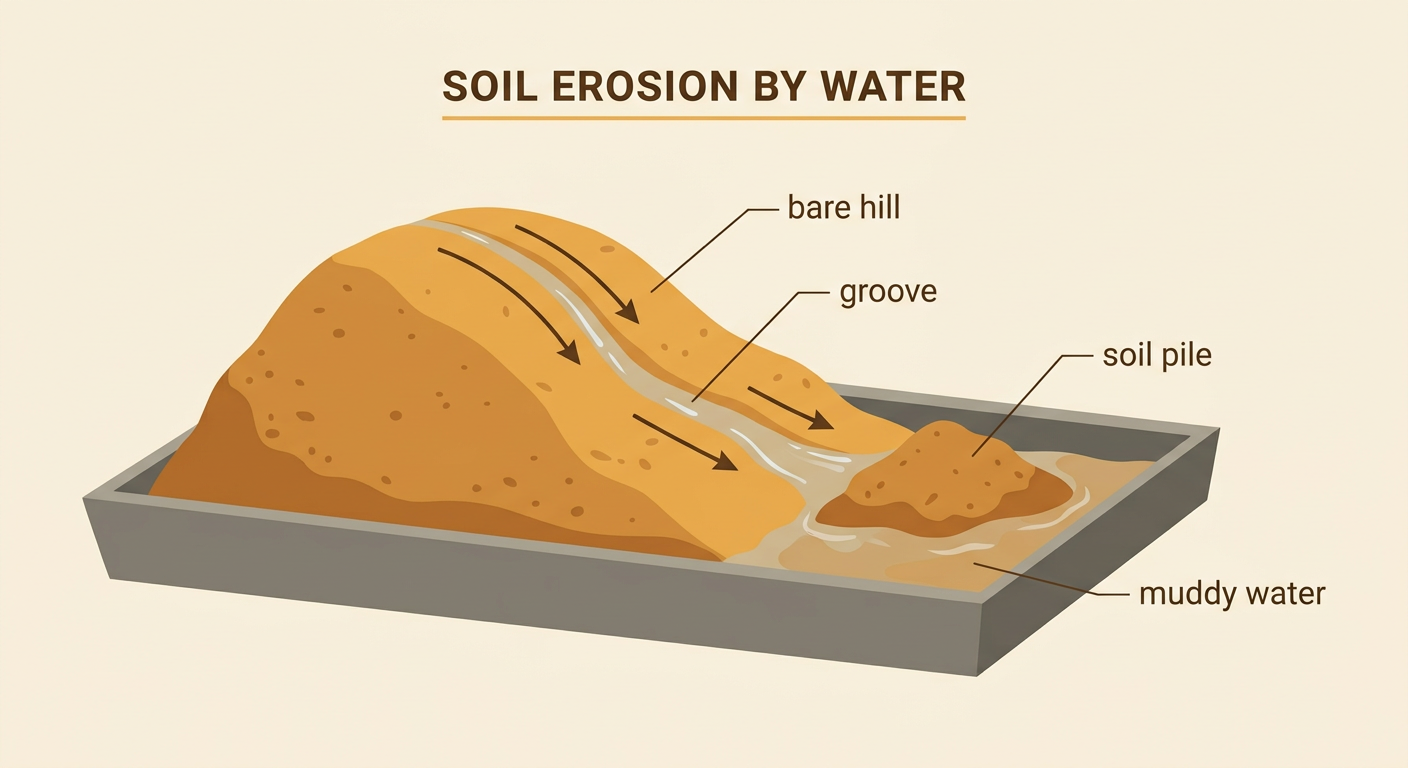
Erosion happens when water or wind moves soil and small pieces of rock from one place to another. Watch what happens when water flows down a bare hill. The moving water can pick up loose soil and carry it downhill. Small grooves may form where the water travels. Soil may collect in a pile at the bottom. For example, after heavy rain, muddy water may run from a bare garden bed onto a sidewalk. The water has changed the shape of the land by moving some soil away. Water moving faster or in a larger amount may carry more soil. As you observe, describe what you notice to your group. Listen to your classmates because they may notice a groove, a soil pile, or a change that you did not see.
Meet the Model Hill Challenge
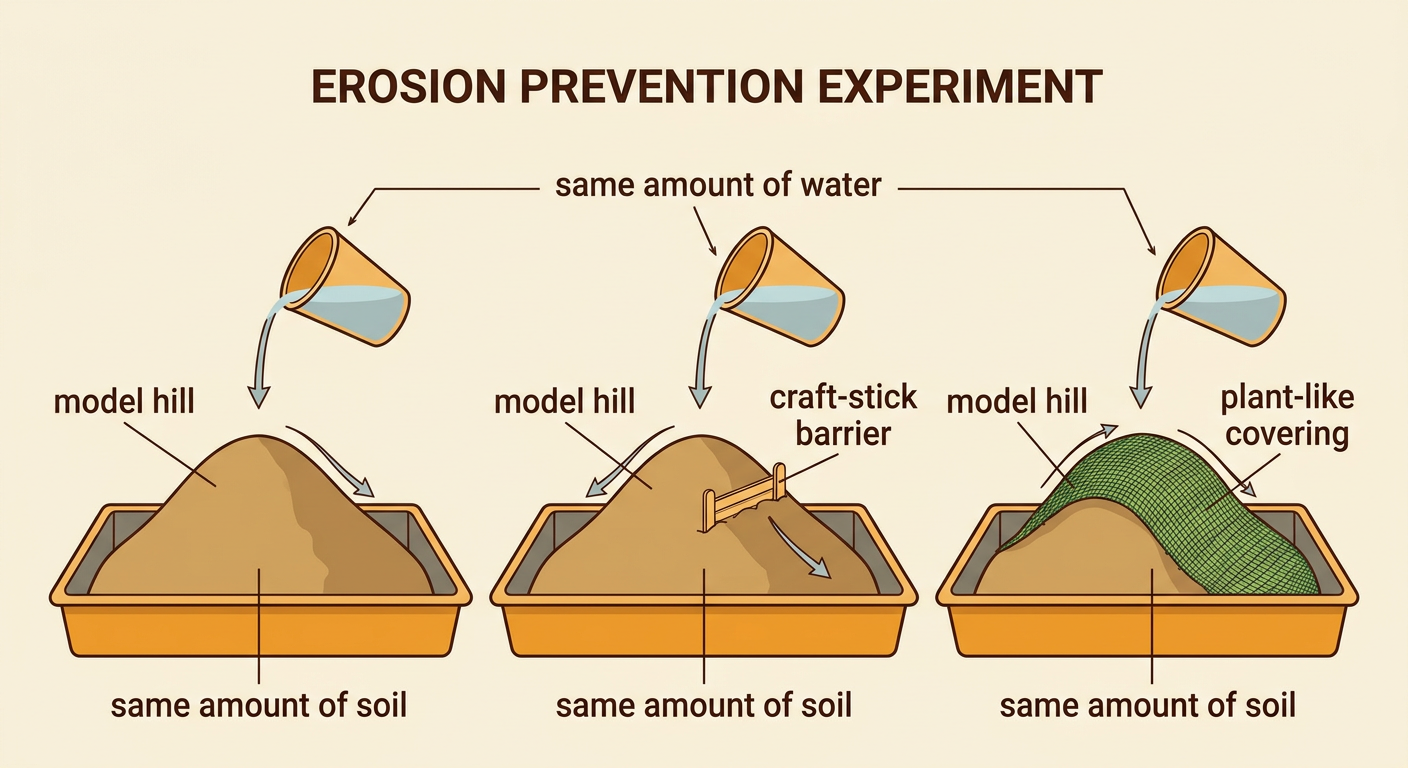
Your challenge is to protect a model hill from erosion. The hill represents real land near a road, home, park, or stream. You will compare solutions that slow the water or hold the soil in place. One solution might be a row of craft sticks that acts like a small wall. Another might be a plant-like covering made from grass, yarn, or mesh. Each group should use the same kind and amount of soil and make hills of about the same size. You should also pour the same amount of water from the same height during every test. These rules make the comparison fair. Before building, discuss which solution you think will work best and why. Record each group member’s idea, even when the ideas are different.
Build an Erosion Barrier
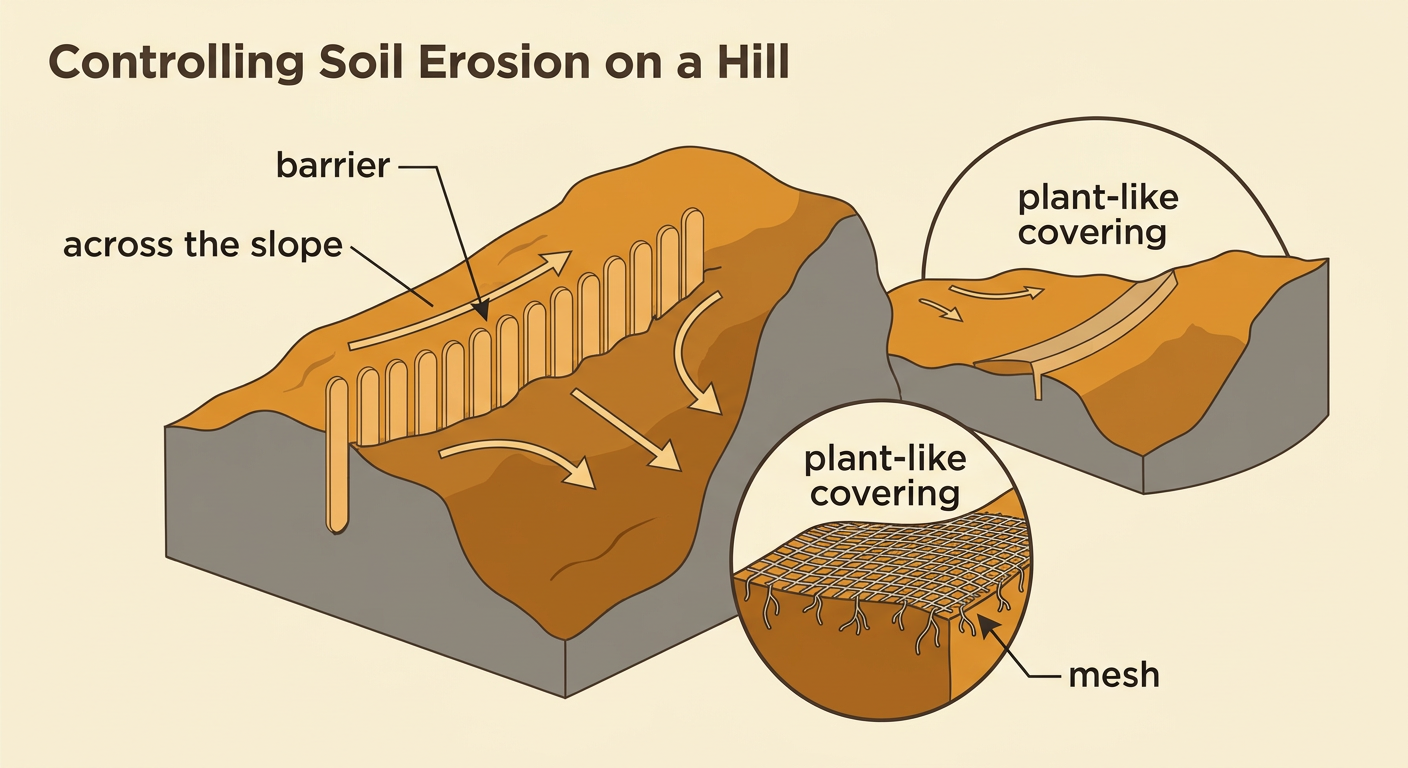
Build a solution that can slow water or help keep soil from moving. For a barrier, press a short row of craft sticks or small stones partway into the hill. Place the barrier across the slope, not straight down it. This position can slow the water and catch some moving soil. Do not make the barrier so tall that all the water stays trapped, because your goal is to slow erosion safely. You can also test a plant-like covering by laying yarn, grass clippings, or mesh over the soil. Real plant roots help hold soil together, while leaves and stems reduce the force of raindrops. For example, mesh pressed gently onto a model hill can act like a network of roots. Explain your design to your partners and make changes together.
Test with Flowing Water
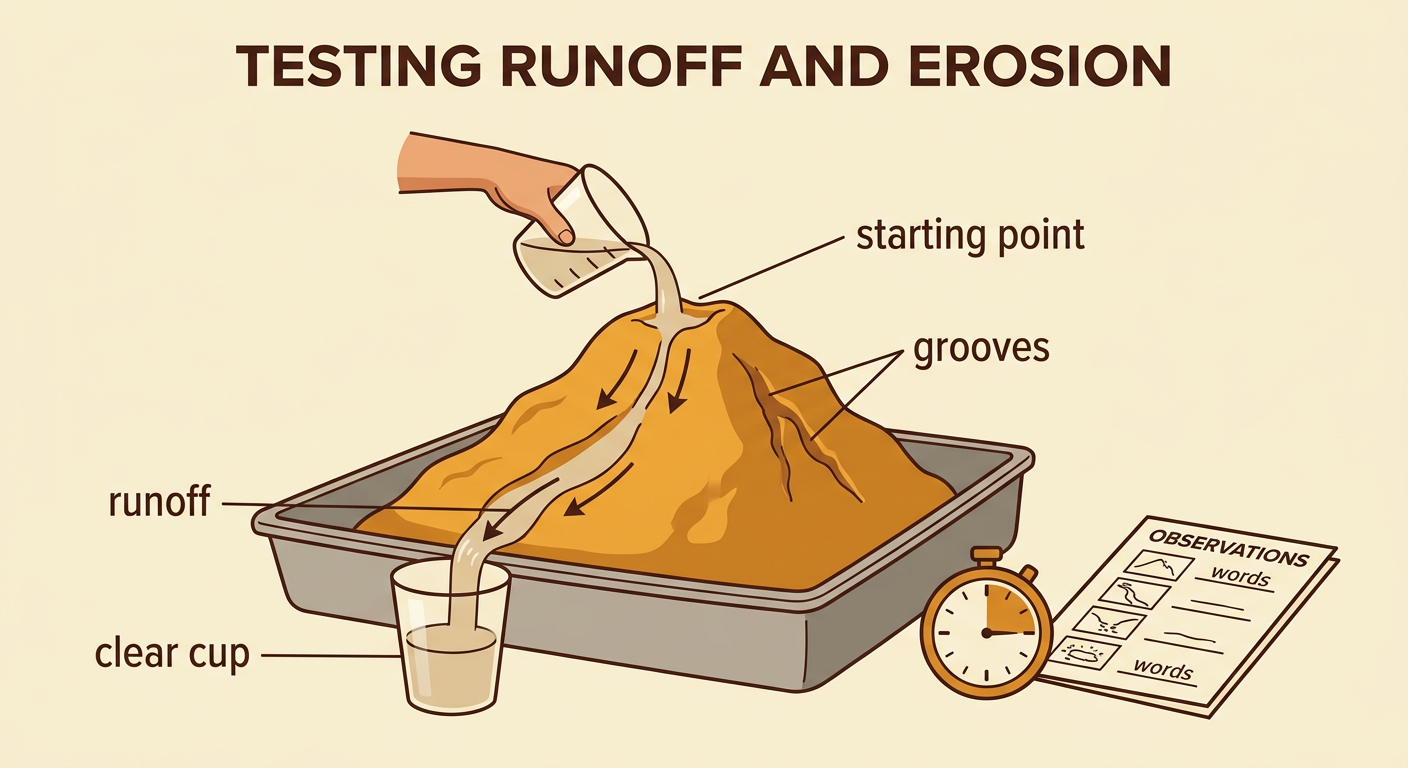
Place the model hill in a tray so water and soil cannot spill onto the floor. Measure the same amount of water for each test. Slowly pour it from the marked starting point at the top of each hill. Keep the cup at the same height and pour for the same amount of time. Watch the path of the water, but do not touch the hill during the test. Notice whether grooves form, whether the barrier moves, and how much muddy soil reaches the bottom. You might collect the runoff in a clear cup. Dark, muddy runoff often contains more soil than clearer runoff. Draw or write your observations after every test. For safety, wipe up spilled water right away and wash your hands after handling soil. Work together by taking turns pouring, timing, observing, and recording.
Compare the Solutions
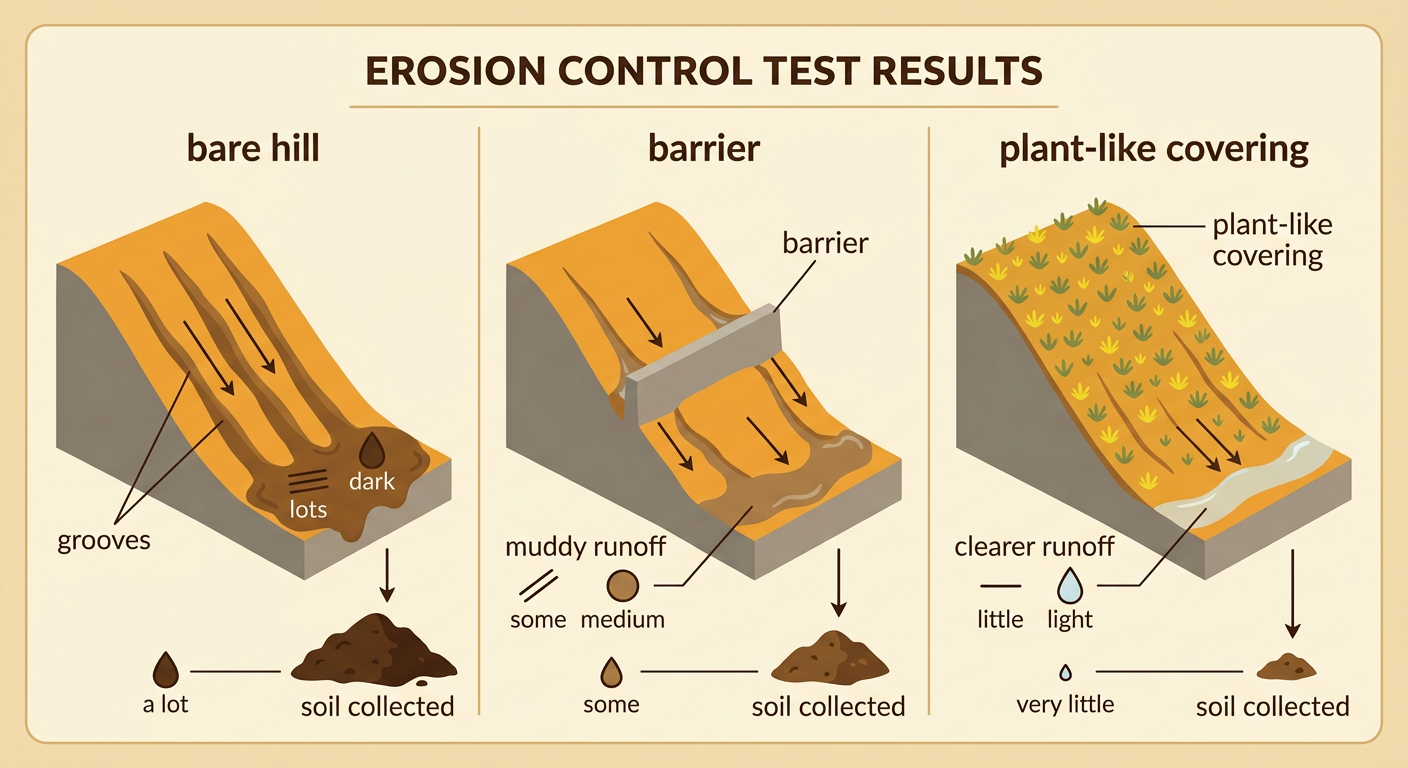
Use your observations to compare the bare hill, the barrier, and the plant-like covering. Look for evidence such as the number and size of grooves, the amount of soil at the bottom, and how muddy the runoff appears. A solution that leaves fewer grooves and less moved soil prevents erosion better in this model. For example, the bare hill might produce very muddy water, while the mesh-covered hill produces lighter water and keeps more soil in place. The craft-stick barrier might catch soil but also cause water to flow around its ends. Share your results with the class. One group may think the barrier worked best, while another may favor the covering. Ask what evidence supports each view. Differences may come from how the solutions were built, so compare both the designs and the test results.
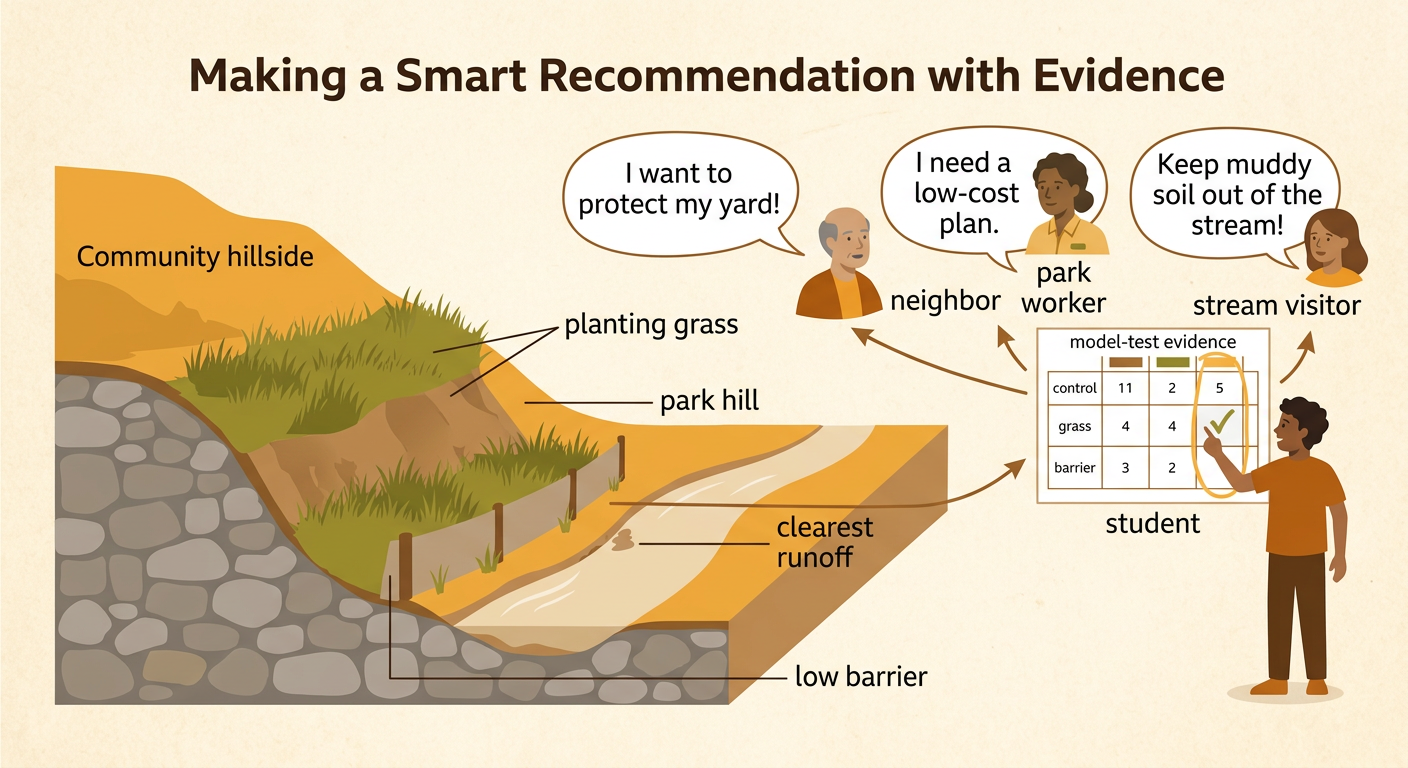
Recommend a Way to Protect Land
Use your test evidence to recommend a way to protect real land. State which solution you would choose, describe how it works, and give observations that support your choice. For example, you might say, “I recommend planting grass on the park hill because our plant-like covering kept the most soil in place and produced the clearest runoff.” Think about other people’s needs, too. A neighbor may want to protect a yard, a park worker may need an affordable solution, and people near a stream may want to keep muddy soil out of the water. Listen as classmates share different points of view. Compare their reasons with your own, and decide whether you want to revise your recommendation. Real communities may combine solutions, such as planting grass and adding a low barrier, to protect land more effectively.