
Sunlight Warms Earth's Surface
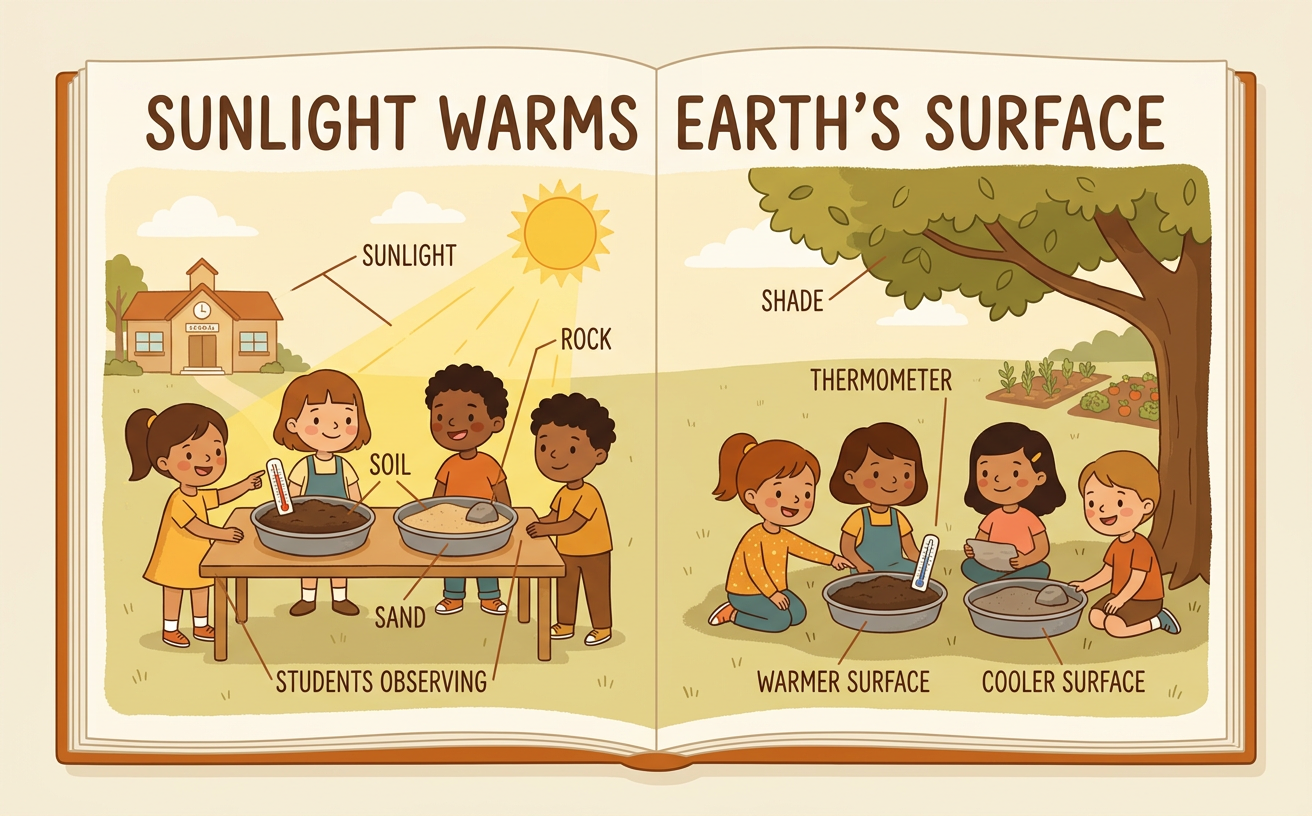
Students compare surfaces placed in sunlight and shade to observe that sunlight warms Earth's surface.
Illustrations are auto-generated and may be placeholders. They can be refreshed to match the narration.
Notice Sun and Shade
Go outside with your teacher and look for a sunny place and a shady place. Sunlight reaches the ground in the sunny place. A tree, roof, or other object blocks direct sunlight in the shady place. Do not look directly at the Sun because its bright light can hurt your eyes. Instead, look at the ground and notice where light and shadows fall. Observe the kinds of surfaces you see, such as grass, soil, concrete, or a wooden bench. For example, one part of a sidewalk may be in sunlight while another part is shaded by a tree. The two parts may look alike, but they may not feel the same. Sun and shade can affect how warm a place becomes.

Predict Which Surface Will Feel Warmer
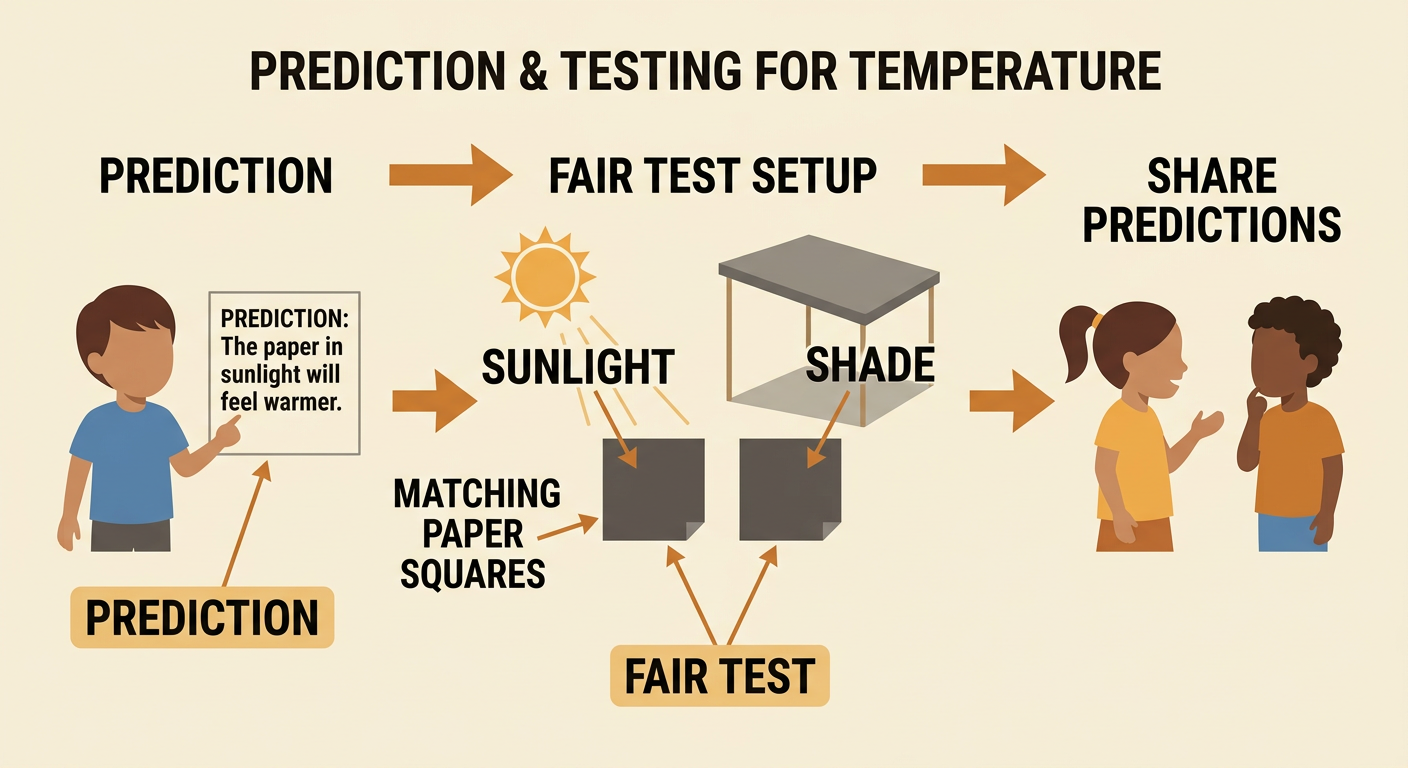
A prediction tells what you think will happen before you test it. Choose two matching surfaces or objects, such as two dark paper squares that are the same size and material. Put one square in sunlight and the other in shade. Ask, “Which paper square will feel warmer after several minutes?” Think about what you noticed in sunny and shady places. Then share your prediction with a partner. You might say, “I predict the paper in sunlight will feel warmer.” Your partner may agree or make a different prediction. Listen while each person speaks and explain your thinking. Using matching paper squares makes the comparison fair because sunlight or shade is the main difference between them.
Compare Surfaces Safely
Leave the matching surfaces in their places for several minutes. Your teacher will check them first to make sure they are safe to touch. Never touch a surface that may be very hot, and never look directly at the Sun. When your teacher says it is safe, gently touch each surface with one fingertip for a moment. You can also use a classroom thermometer if your teacher provides one. Compare the surfaces using words such as warmer, cooler, or about the same. For example, the paper square in sunlight may feel warmer than the matching square in shade. Take turns so everyone can observe. Tell your group what you notice, and listen carefully to the observations of others.

Record the Observations
Record what you observed so you can remember and compare the results. Make a simple chart with one row for the surface in sunlight and one row for the surface in shade. Draw a picture of each location. Then add a word or symbol to show how each surface felt. You might draw three wavy lines for warmer and one wavy line for cooler. If your class used a thermometer, your teacher can help you write the numbers. For example, the chart may show that the sunny paper was warmer and the shaded paper was cooler. Count how many groups observed the same result. Recording size, material, location, and warmth helps show that the matching surfaces differed mainly in the amount of sunlight they received.

Explain What Sunlight Does
Use the class observations to explain what happened. Sunlight warms Earth’s surface. A surface that receives direct sunlight often becomes warmer than a similar surface in shade. In the investigation, the paper in sunlight received more direct light, so it became warmer. The shade blocked direct sunlight from reaching the other paper, so that paper stayed cooler. This pattern also affects people’s choices. On a hot day, people may sit under a tree, walk beneath an awning, or play in a shaded area to stay cooler. On a cool day, they may choose a sunny place for warmth. Finish with a complete sentence such as, “Our evidence shows that sunlight warmed the sunny surface more than the shaded surface.”
