Sunlight Warms Earth's Surface
Students compare sunny and shaded surfaces to observe that sunlight warms Earth's materials.
Illustrations are auto-generated and may be placeholders. They can be refreshed to match the narration.
Notice Sun and Shade
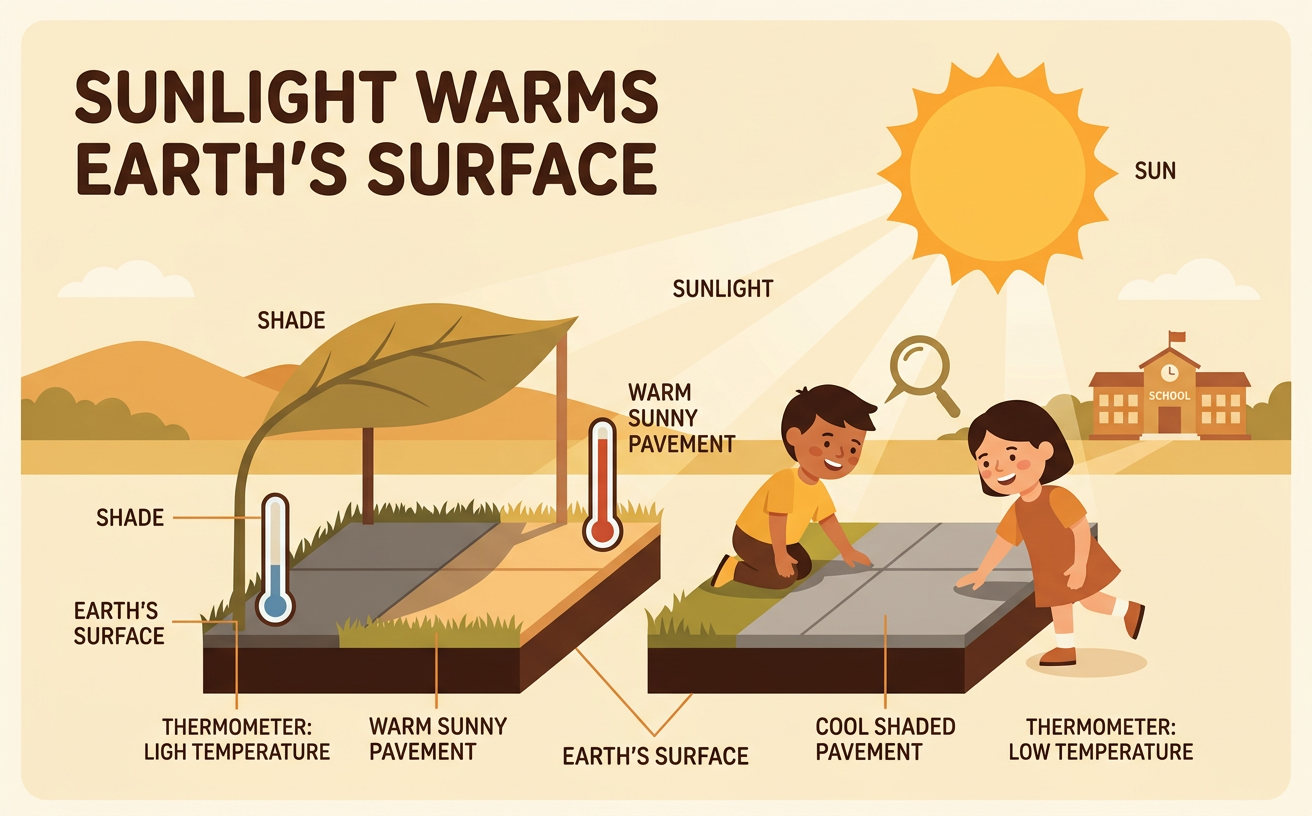
Go outside with your class and look around. Some places are bright because sunlight reaches them. These places are sunny. Other places are darker because a tree, building, or playground roof blocks the sunlight. These places are shaded. Look at one kind of surface that is found in both places, such as a sidewalk. One part of the sidewalk may be in the sun, while another part is under a tree. Notice how the two parts look and feel. Do not stare at the Sun because its bright light can hurt your eyes. People often use shade to stay cooler on a hot, sunny day. They may sit under a tree, open an umbrella, or wear a hat.

Predict Which Surface Is Warmer
Before testing the surfaces, make a prediction. A prediction tells what you think will happen. Think about a sunny patch of soil and a shaded patch of the same soil. Both patches have been outside at the same time, but only one has received direct sunlight. Which patch do you think will be warmer? You might say, “I predict the sunny soil will be warmer because sunlight shines on it.” Tell your prediction to a partner. Listen while your partner shares an idea, too. You may agree or have different predictions. Take turns speaking and ask a question if you need help understanding. A prediction does not have to be correct. Scientists make predictions and then gather observations to find out what happens.

Compare Sunny and Shaded Surfaces
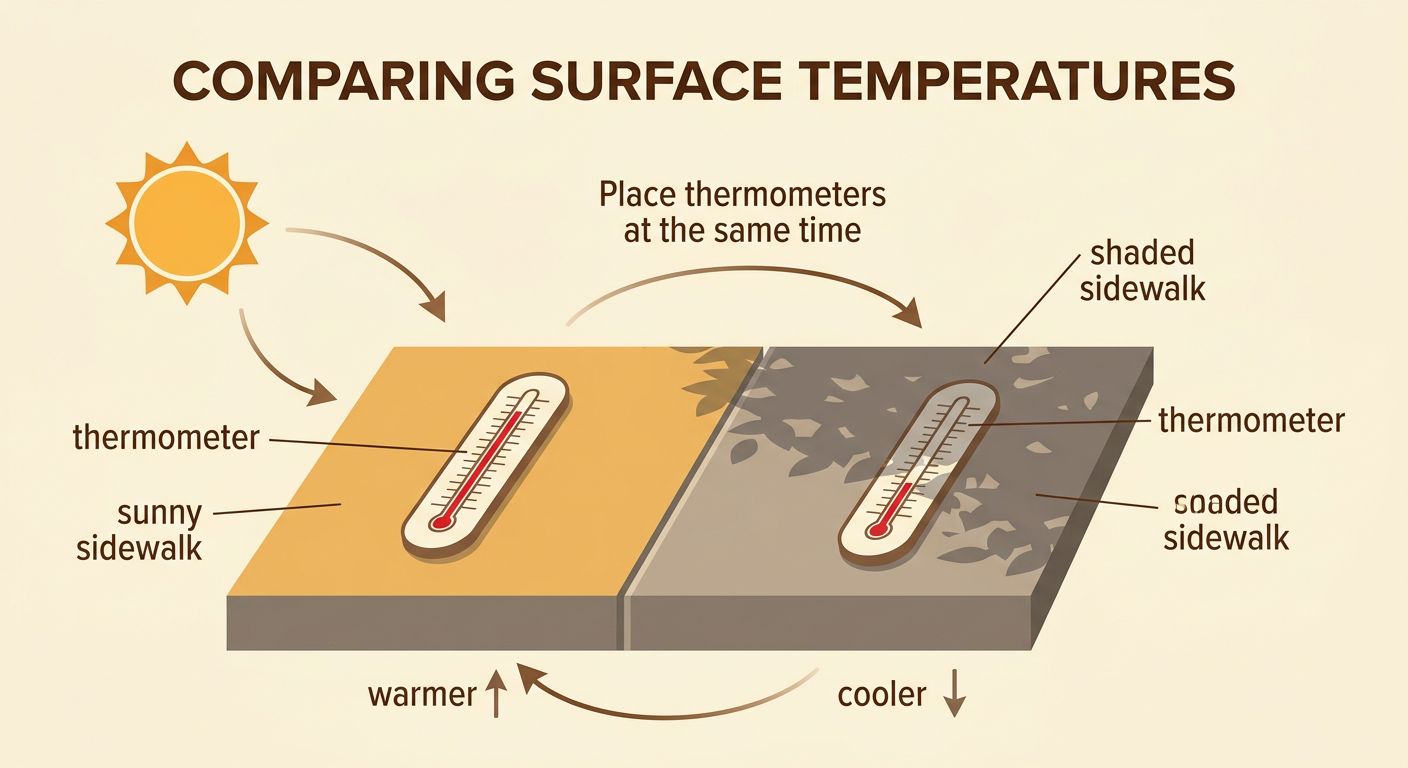
Now compare two surfaces made of the same material. An adult can place one thermometer on a sunny section of sidewalk and another on a shaded section. Wait the same amount of time for both thermometers. Then look at the temperatures with your class. The thermometer with the higher number shows the warmer surface. For example, the sunny sidewalk might be warmer than the shaded sidewalk. You can also carefully feel safe surfaces when an adult says it is okay. Use the back of your hand, and never touch very hot pavement or metal. Keep the test fair by comparing the same material at the same time. Sunlight is the main difference between the two places. Describe the surfaces with words such as warmer, cooler, or the same.
Record Our Observations
Scientists record what they observe so they can remember and compare results. Make a simple class chart with two columns: Sunny Surface and Shaded Surface. Draw or write what you noticed in each column. For example, you might record that the sunny sidewalk was warmer and the shaded sidewalk was cooler. If you used thermometers, your teacher can add the two temperature numbers. Compare the numbers directly. Point to the greater number and explain that it shows the warmer surface. You can also use picture symbols, such as a Sun for the sunny place and a tree for the shaded place. Share the chart with classmates. Say what you observed, listen to others, and decide whether the class results matched your predictions.

Explain What Sunlight Does
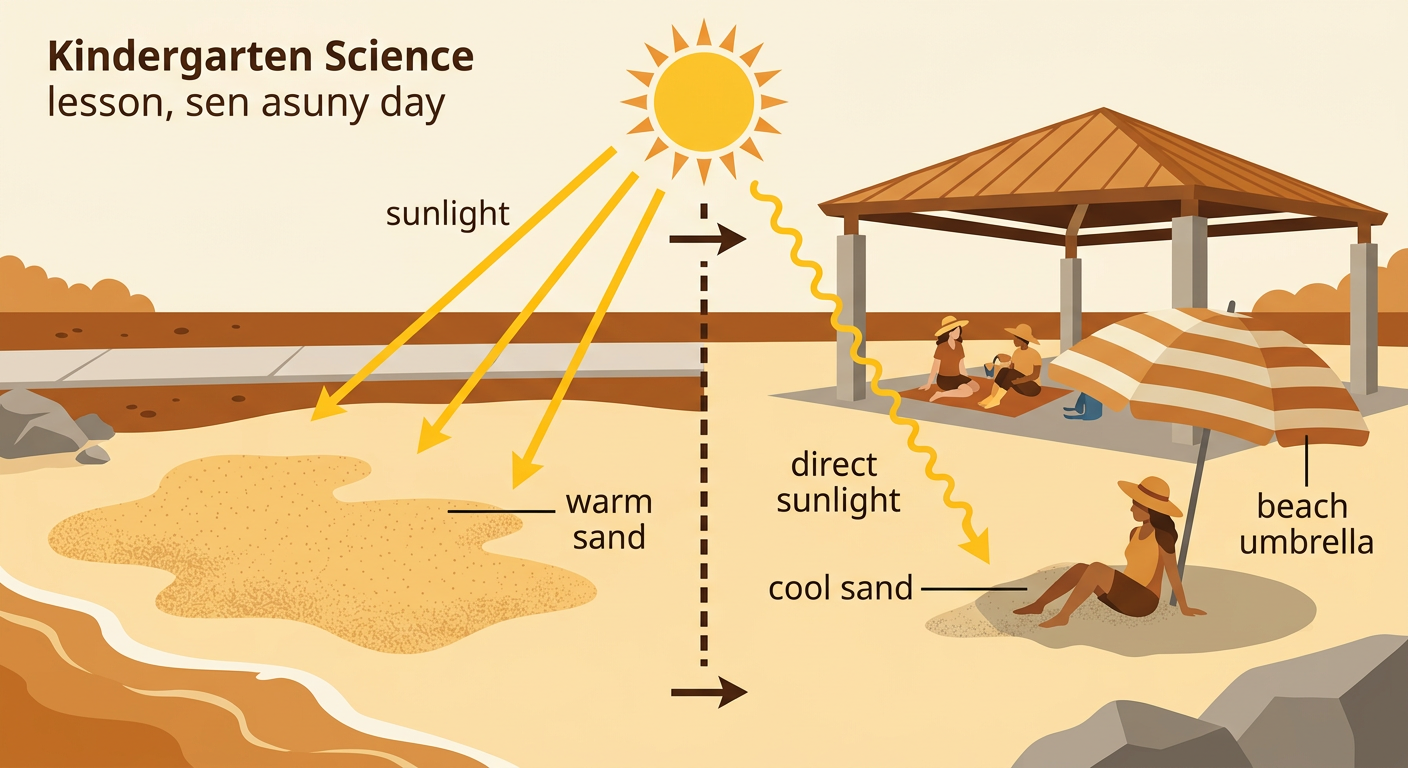
The observations give us evidence about sunlight. Sunlight warms Earth's surface. Soil, sand, rocks, water, and sidewalks can become warmer when sunlight shines on them. A shaded surface usually stays cooler because something blocks the direct sunlight. For example, beach sand in the Sun can feel warm, while sand under a large umbrella may feel cooler. This effect changes how people use a place. On a hot day, people may play under a shade roof, sit beneath a tree, or wear a hat. On a cool day, people may choose a sunny place to warm up. Finish this sentence with a partner: “Sunlight makes a surface warmer because...” Use an observation from the class test as evidence for your explanation.