Sunlight Warms Earth’s Surfaces
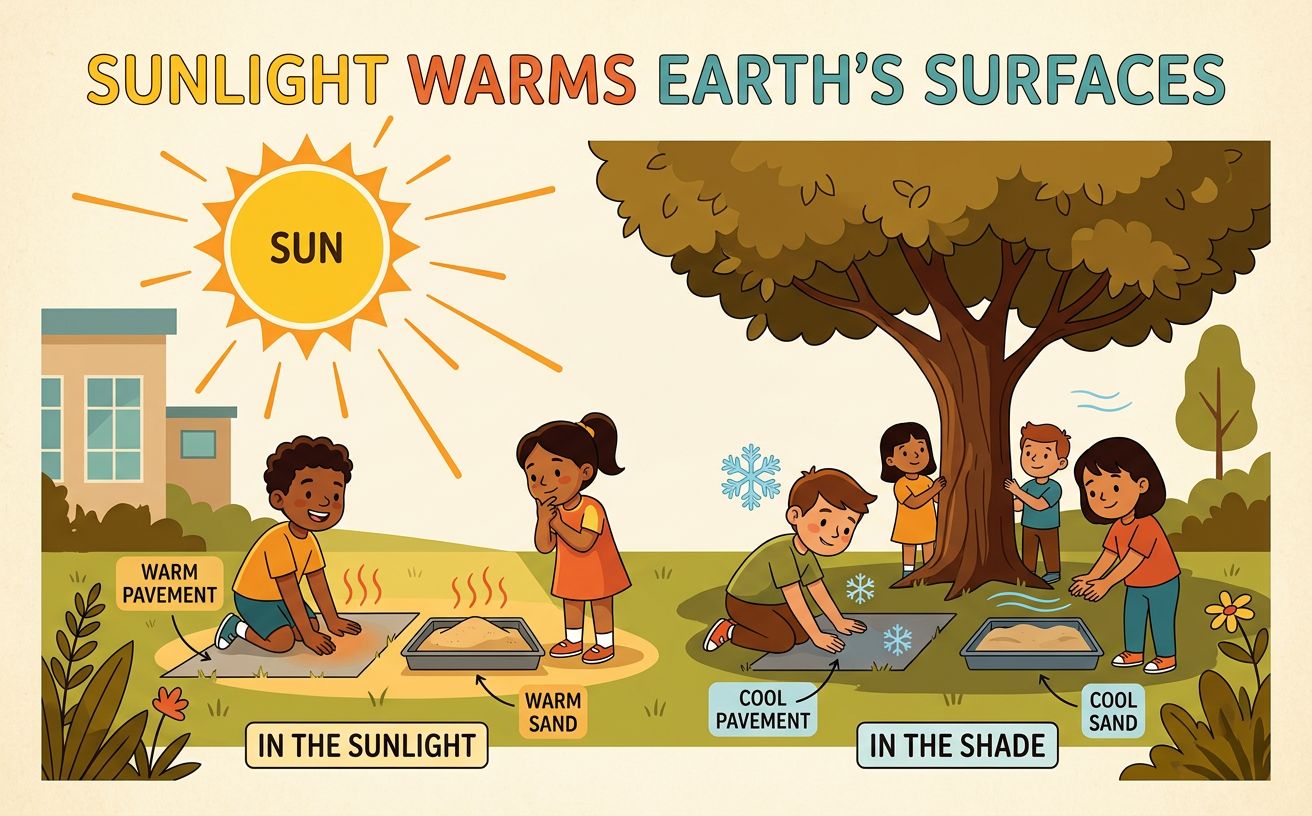
Students observe and compare surfaces placed in sunlight and shade to discover that sunlight warms Earth’s surface.
Illustrations are auto-generated and may be placeholders. They can be refreshed to match the narration.
What Does Sunlight Do?
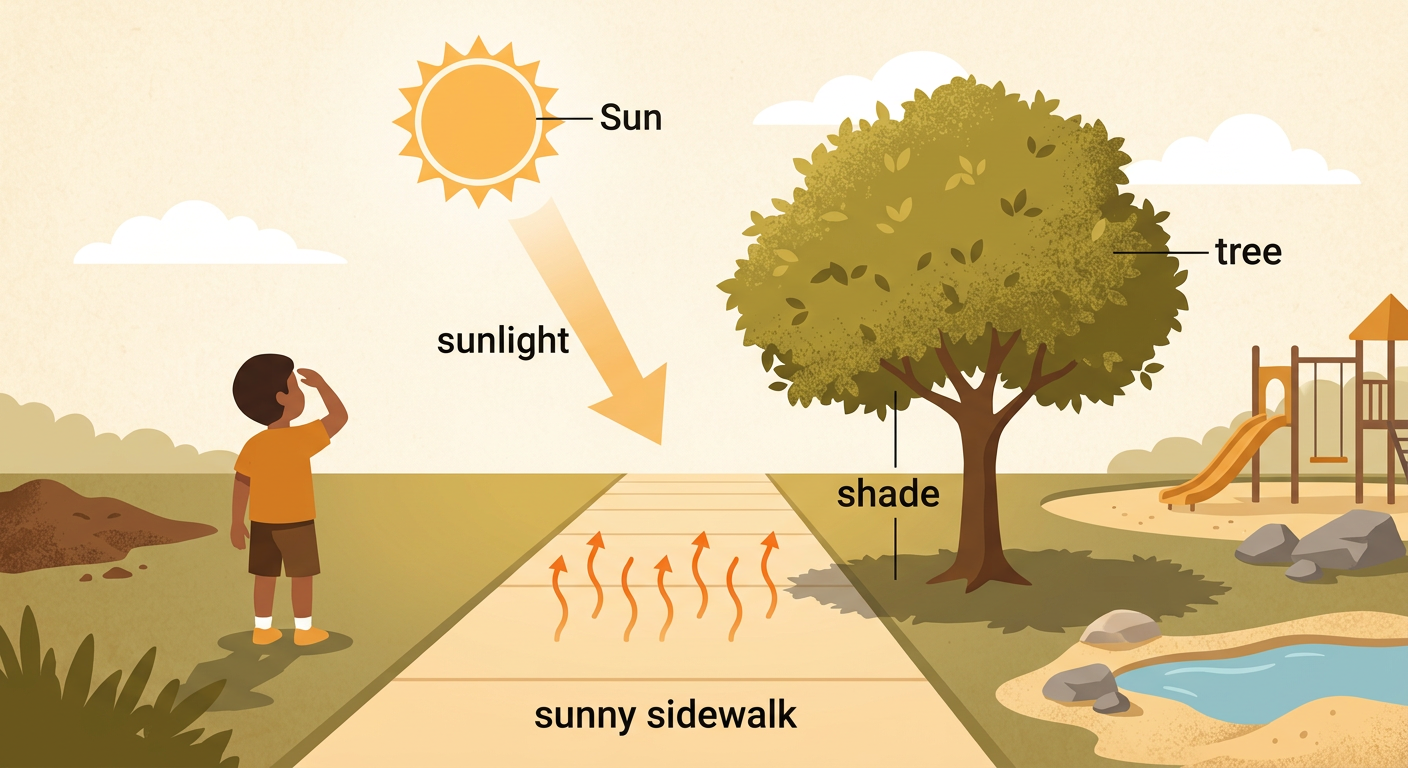
Sunlight brings light and energy from the Sun to Earth. When sunlight reaches the ground, some of its energy warms the surface. A sunny sidewalk may feel warmer than a sidewalk under a shady tree. Sunlight can warm soil, sand, rocks, water, playground equipment, and other surfaces. Different surfaces may warm by different amounts. Weather also matters. Clouds can block some sunlight, and wind can carry warmth away. People notice these changes when they choose clothes, places to play, or ways to stay comfortable. On a sunny day, a person might rest in the shade because it feels cooler. We can use careful observations to learn what sunlight does to Earth’s surfaces.
Predict Sun or Shade
A prediction tells what you think will happen before you observe. Imagine two matching pieces of dark paper placed outdoors. One piece will be in direct sunlight. The other will be in the shade under a cover. Both pieces should be outside for the same amount of time. Which one do you predict will become warmer? You might say, “I predict the paper in sunlight will be warmer because sunlight warms surfaces.” It is okay if a prediction is not correct. Scientists make predictions and then gather evidence. Ask questions to make the test clear: Are the papers the same? Will they stay outside for equal times? Is one fully shaded? A fair comparison changes the sunlight but keeps other important things the same.

Observe Two Surfaces
Now observe two matching surfaces with an adult or teacher. Place one surface in sunlight and one in shade. Start with both surfaces in the same place so they begin under similar conditions. Wait the same amount of time, such as five minutes. Do not look directly at the Sun, and do not touch metal, pavement, or any surface that might be hot. A teacher can use safe touch or a thermometer to check each surface. Look closely and ask questions: Is the sunny surface warmer? Is the shaded surface cooler? Record what you notice with a drawing, words, or temperature numbers. For example, draw a Sun beside the warmer paper and a tree beside the cooler paper. Observations are information gathered with senses or tools.

Compare Warmth
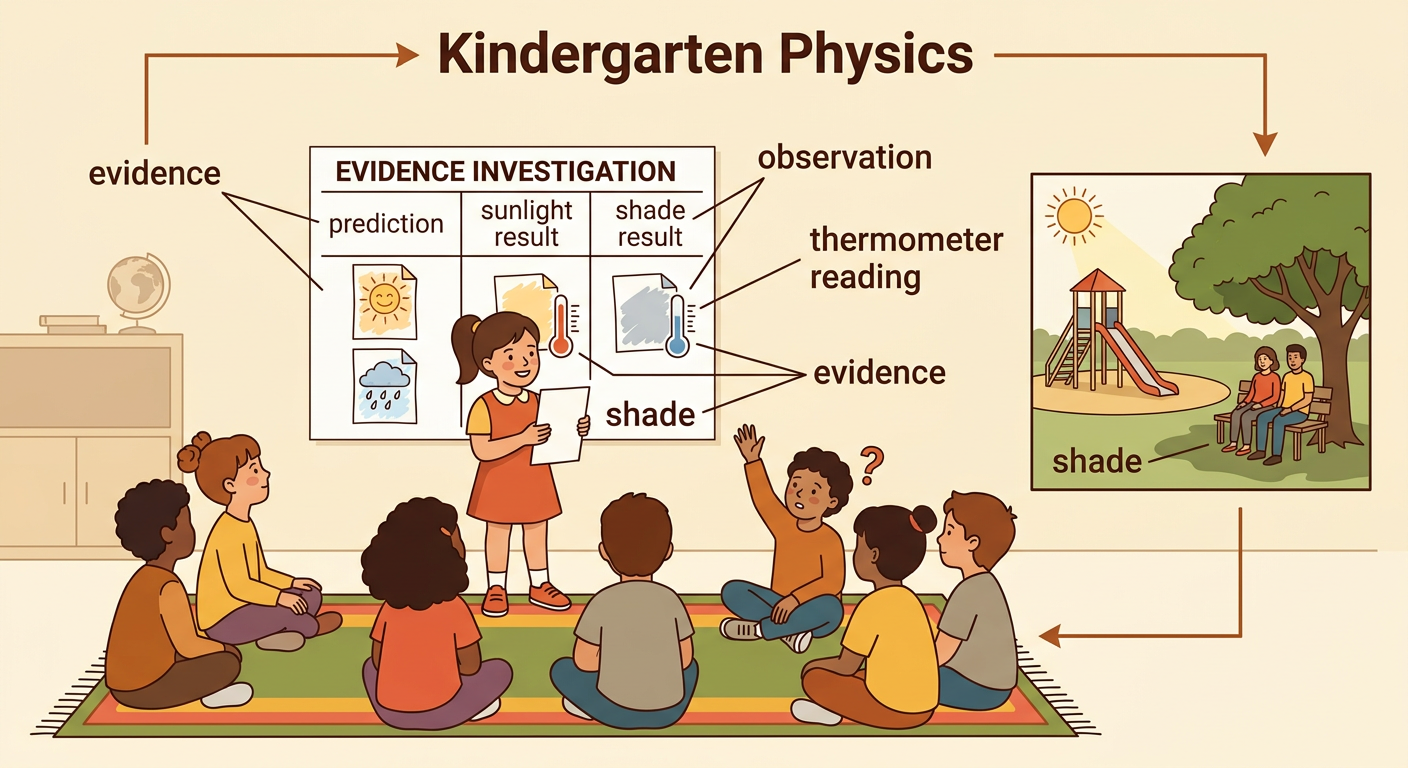
To compare means to tell how two things are alike or different. Warmth is the shared attribute we will compare. A teacher may use two thermometers, one for each surface. The higher temperature shows the warmer surface. For example, the paper in sunlight might measure 78 degrees Fahrenheit, while the paper in shade measures 72 degrees Fahrenheit. Because 78 is greater than 72, the sunny paper is warmer. You can also use comparison words such as warmer than, cooler than, or the same as. Say, “The surface in sunlight is warmer than the surface in shade.” One test does not mean every surface will have the same temperature. The kind of material, clouds, wind, season, and time of day can change how warm a surface becomes.

Share Our Evidence
Evidence is information that helps answer a question. Share what you predicted, what you observed, and what the comparison showed. You might say, “I predicted the sunny paper would be warmer. After five minutes, it was warmer than the shaded paper. My evidence is the thermometer reading.” Listen to classmates and ask questions such as, “How long did you wait?” or “Were the surfaces the same?” Answer with details from the observation. Then explain why the result matters to people. Sunlight can make sidewalks, cars, playground slides, and sandy beaches warmer. People may choose shade, wear a hat, use a sunshade, or wait for equipment to cool. Our evidence supports the idea that sunlight warms Earth’s surfaces and shade can help surfaces stay cooler.