
Sunlight, Water, and Plant Growth
Students compare observations and measurements from plants grown under different conditions to explain how the environment can affect plant traits such as height, color, and leaf size.
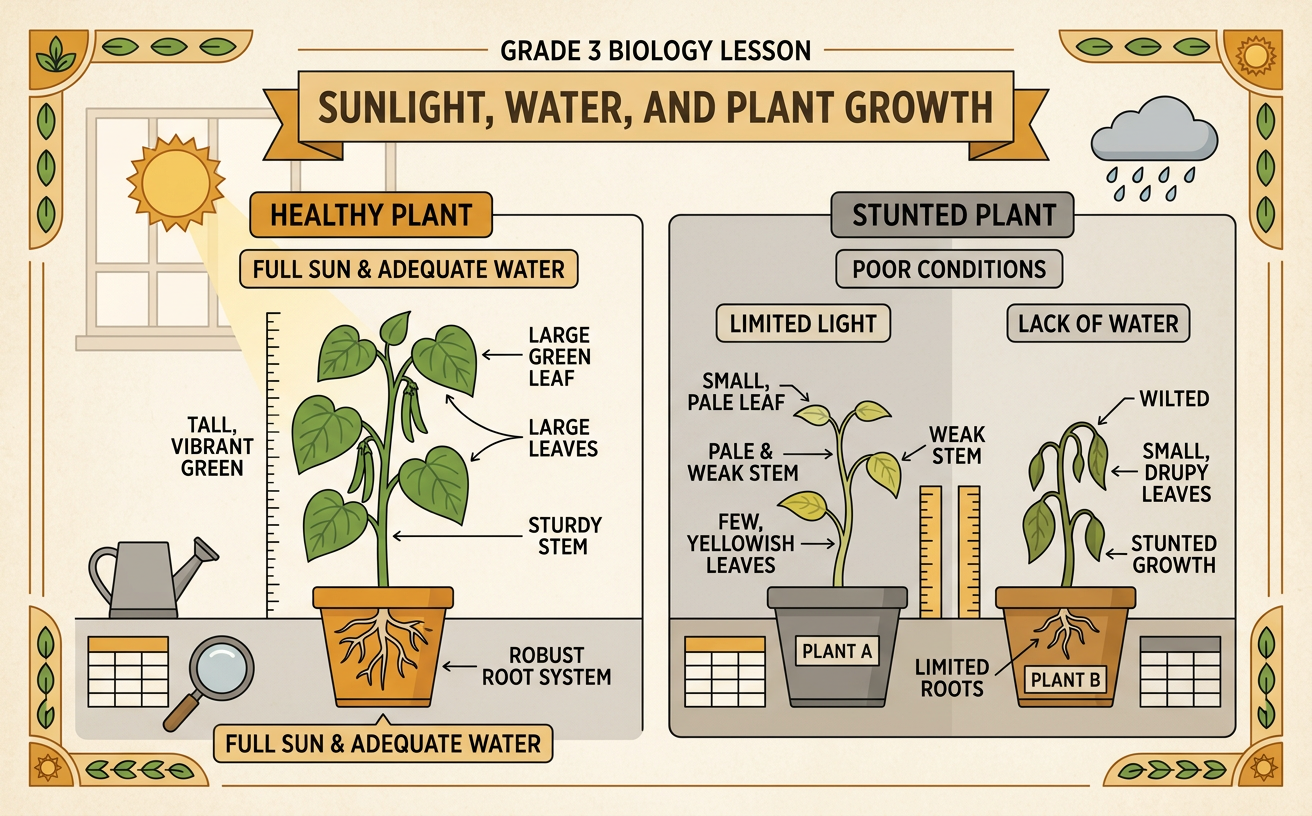
Illustrations are auto-generated and may be placeholders. They can be refreshed to match the narration.
Observe the Plants
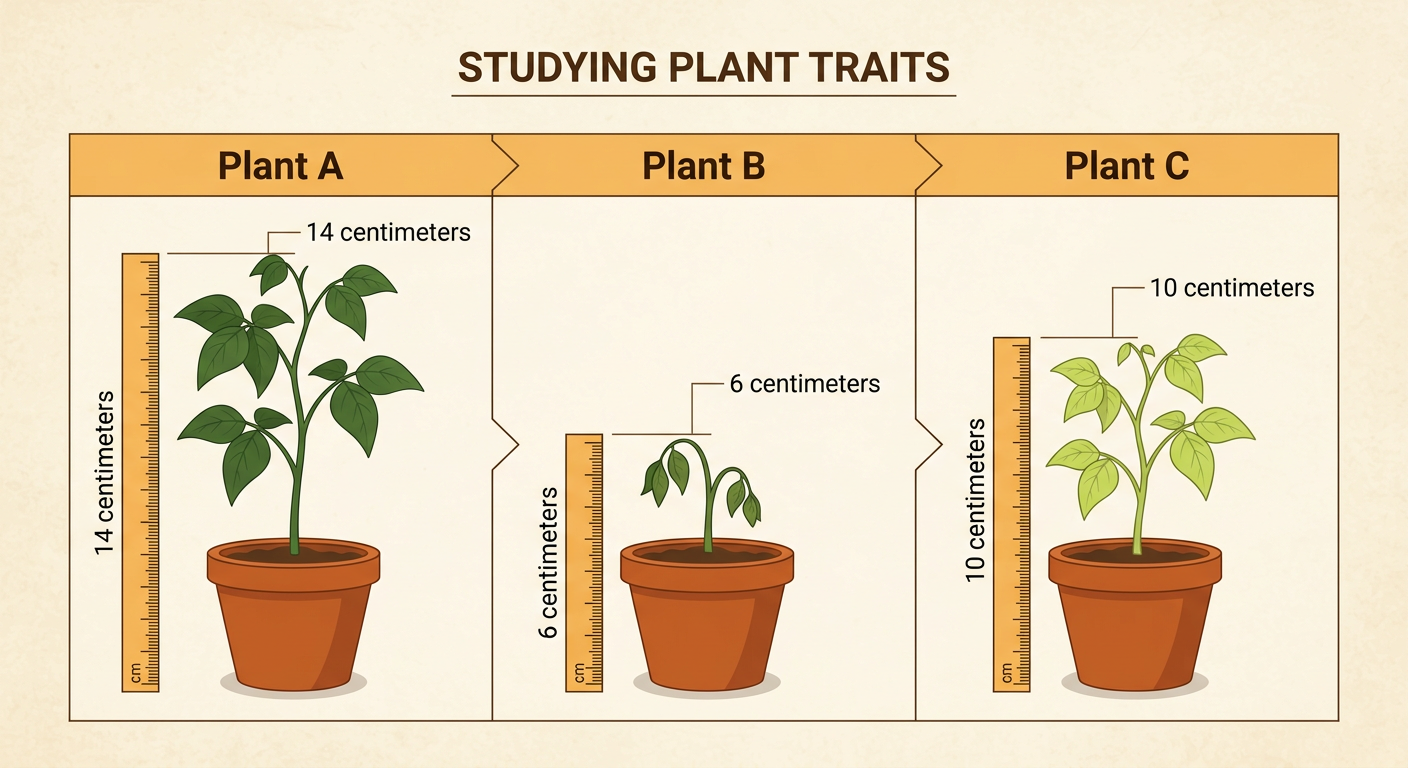
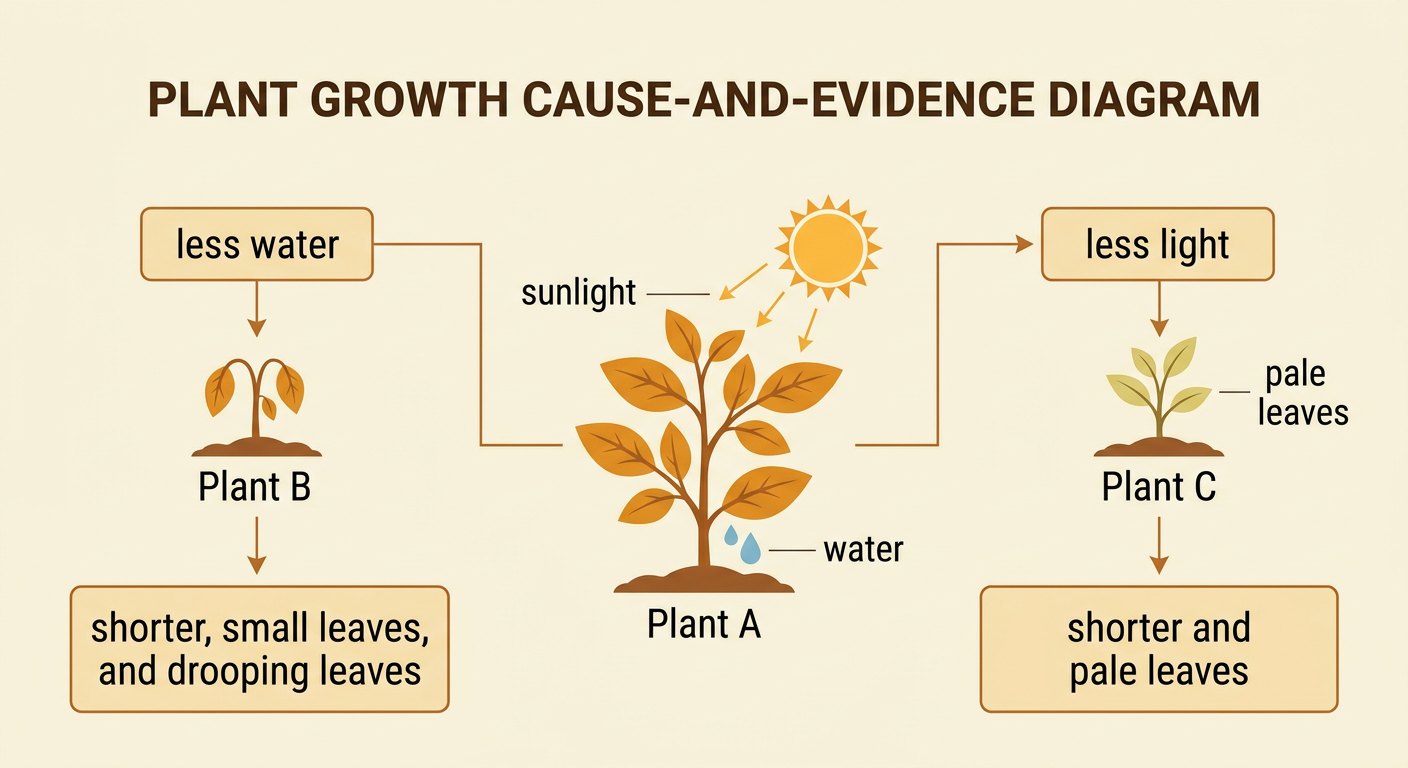
Scientists use careful observations and measurements to compare plants. An observation describes a feature, such as leaf color, leaf size, or whether a stem is straight or drooping. A measurement uses a number and a unit. For example, students might measure plant height in centimeters from the soil to the top of the stem. Imagine three bean plants that came from the same kind of seed. After two weeks, Plant A is 14 centimeters tall with dark green leaves. Plant B is 6 centimeters tall with small, drooping leaves. Plant C is 10 centimeters tall with pale green leaves. These differences are plant traits. Recording the plants on the same days and using the same measuring method makes the evidence easier to compare.
Compare Growing Conditions
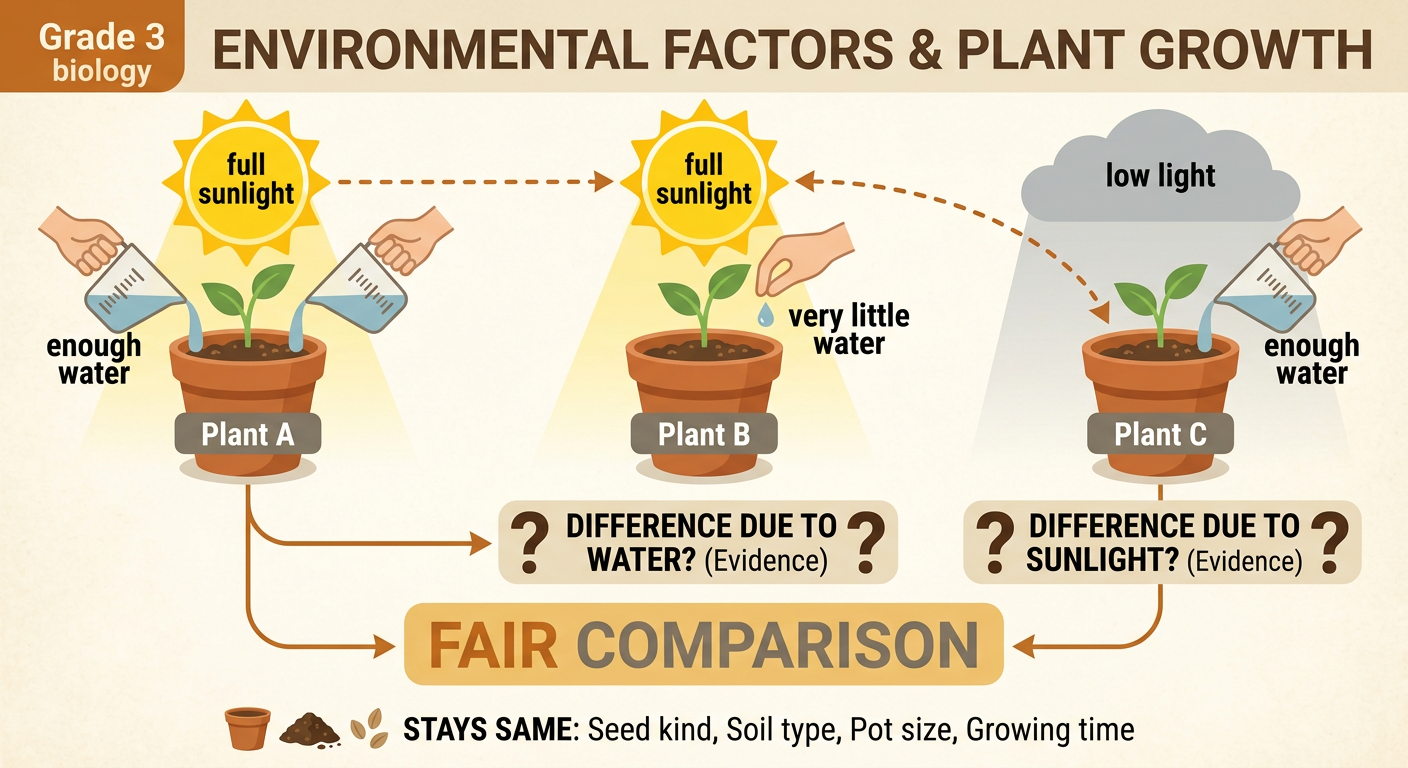
To learn how the environment affects plants, compare plants that grew under controlled conditions. Plant A received full sunlight and enough water. Plant B also received full sunlight, but it received very little water. Because sunlight stayed the same, the height and leaf differences between A and B provide evidence about the effect of water. Plant C received enough water like Plant A, but it grew in low light. Comparing A and C provides evidence about the effect of sunlight. Other conditions, including seed type, soil, pot size, and growing time, should stay the same. Changing only one condition at a time helps students make a fair comparison. In this example, water and sunlight are environmental factors that may influence how each plant grows.
Read the Growth Graph
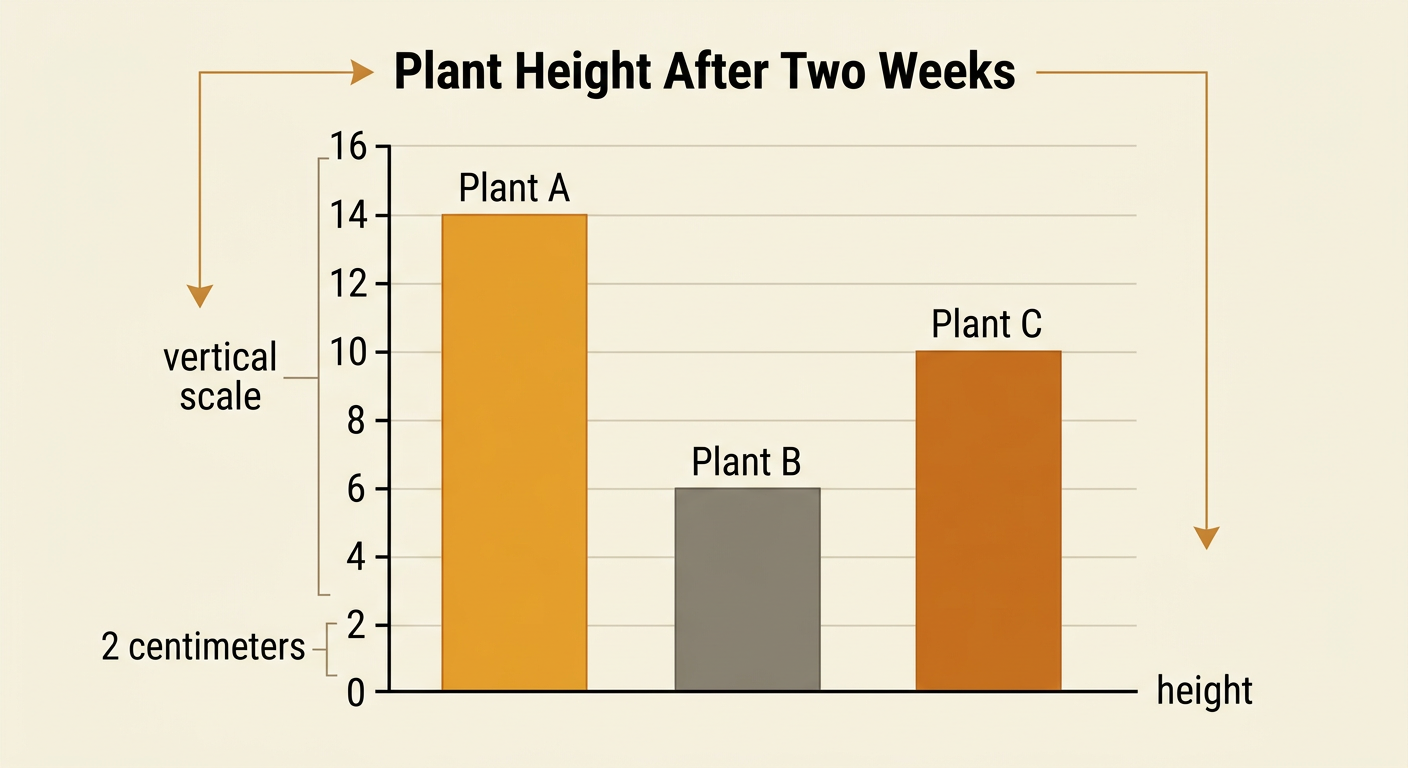
A scaled bar graph can organize plant measurements so they are easy to compare. Suppose the graph shows each plant's height after two weeks. Plant A reached 14 centimeters, Plant B reached 6 centimeters, and Plant C reached 10 centimeters. The vertical scale counts by twos, so each grid step represents 2 centimeters. To read a bar, begin at zero and follow the bar to its endpoint. Plant A is 8 centimeters taller than Plant B because 14 minus 6 equals 8. Plant A is 4 centimeters taller than Plant C. The tallest bar belongs to the plant with enough water and full sunlight. The graph shows height, but it does not show every trait. Students must also use written observations to compare color, leaf size, and drooping.
Identify Environmental Effects
The combined evidence supports the idea that the environment influenced the plants' traits. Plant B and Plant A received the same amount of sunlight, but Plant B received less water. Plant B was 8 centimeters shorter and had smaller, drooping leaves. This comparison supports the claim that too little water limited its growth. Plant C and Plant A received the same amount of water, but Plant C received less light. Plant C was shorter and had paler leaves. This supports the claim that light conditions influenced height and color. Sunlight provides energy that plants use to make food, and water is needed for plant processes and firm tissues. The evidence does not mean every plant will grow exactly the same way. It shows that environmental conditions can influence how traits develop.
Apply the Evidence to a Garden
People can use plant evidence when planning a garden. Imagine a school garden in a hot, dry place. Students want to grow bean plants that need plenty of sunlight and steady water. They can adapt by choosing a sunny garden location and planting during a season that is not extremely hot. They can also modify the garden environment by adding a drip hose, placing mulch on the soil, or using a shade cloth during unusually hot afternoons. Mulch slows water loss, while a drip hose delivers water near plant roots. Students should not give every plant the same treatment without checking its needs. They can measure height, observe leaf color, and change the plan if plants droop or become pale. In this way, scientific evidence helps people use water carefully and create suitable growing conditions.
