The Columbian Exchange and Its Unequal Consequences
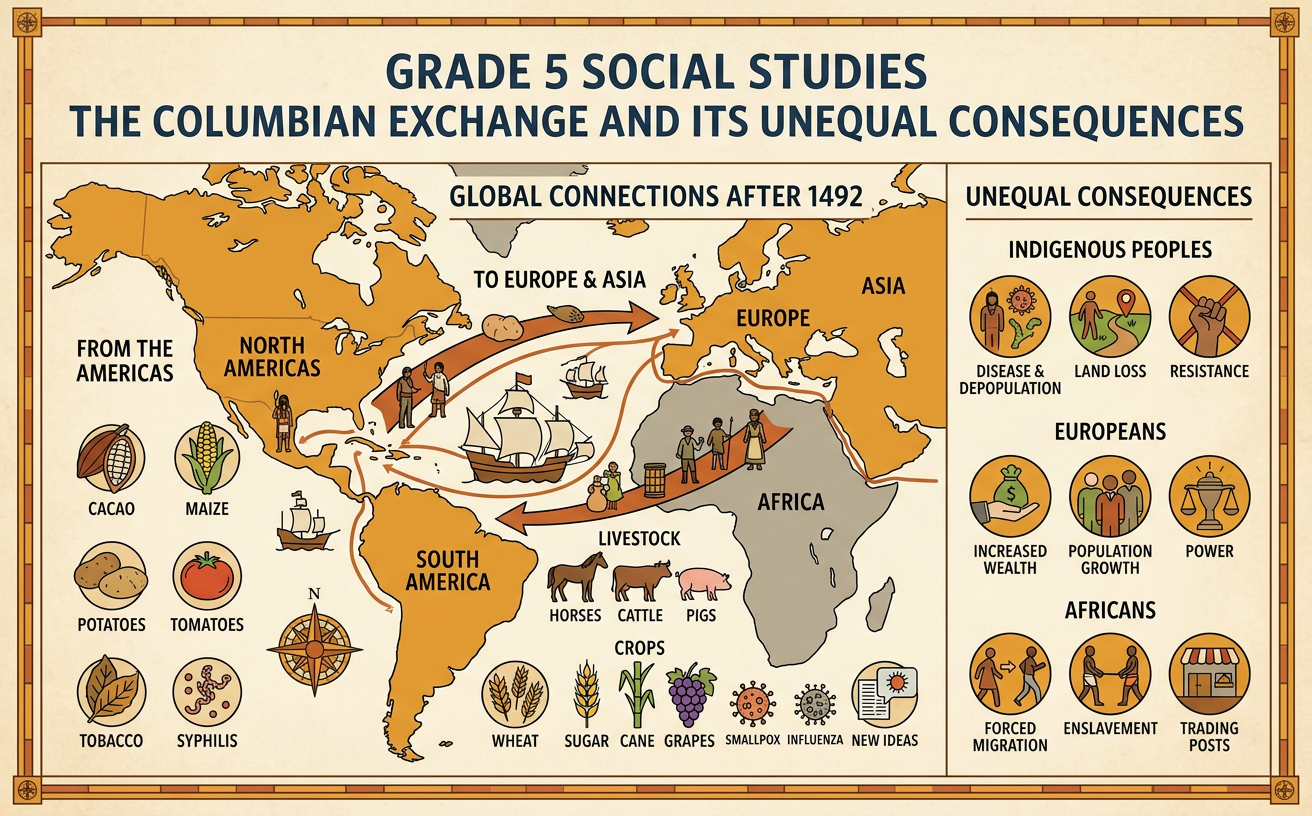
Students examine how the exchange of plants, animals, diseases, and ideas after 1492 transformed societies and ecosystems while producing unequal consequences for Indigenous peoples, Europeans, and Africans.
Illustrations are auto-generated and may be placeholders. They can be refreshed to match the narration.
Two Worlds Connect
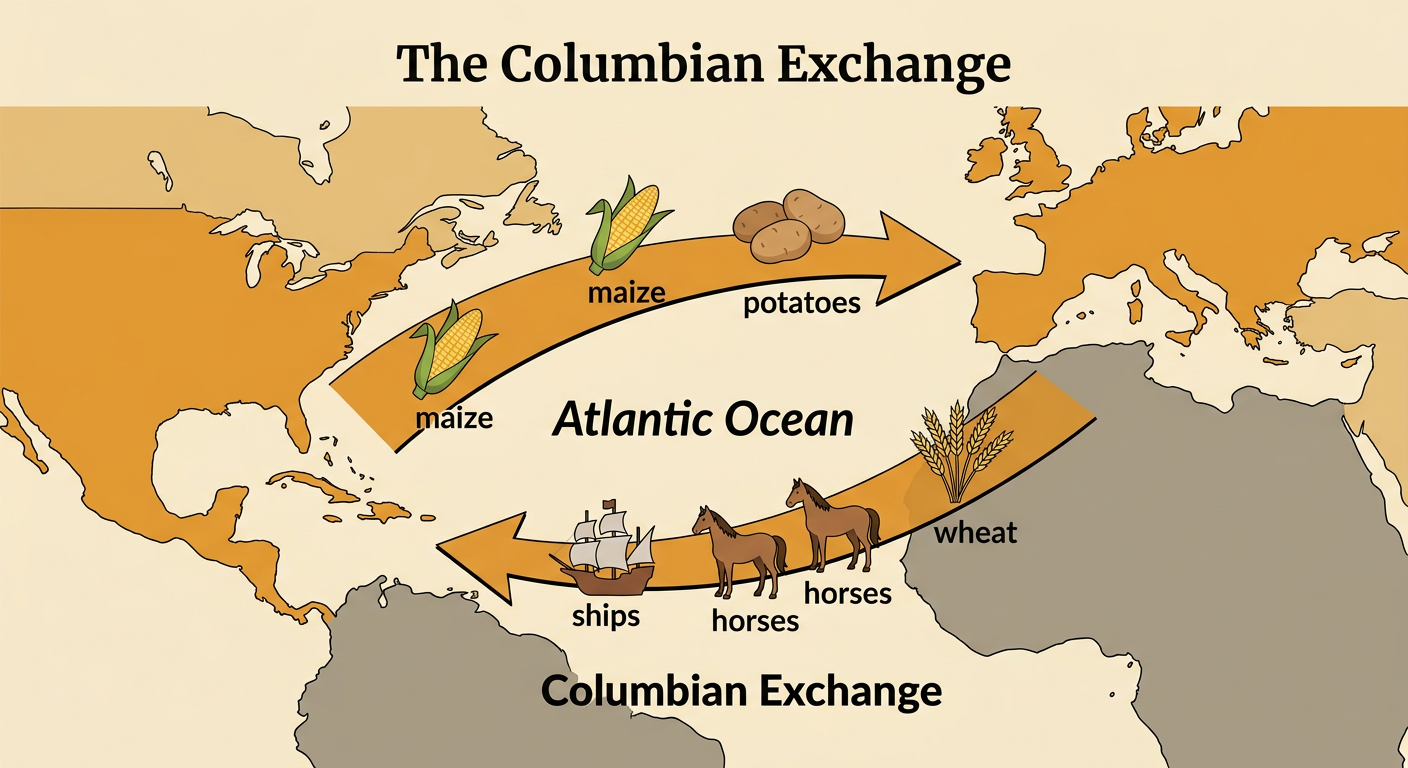
Before 1492, peoples in the Americas and peoples in Europe, Africa, and Asia had developed different crops, animals, technologies, and cultures. They were not empty or isolated lands; each region contained large communities and trade networks. Christopher Columbus’s 1492 voyage for Spain created lasting contact across the Atlantic Ocean. Afterward, ships repeatedly carried people, living things, goods, technologies, and beliefs between continents. Historians call these movements the Columbian Exchange. For example, Spanish sailors brought wheat and horses to the Caribbean, while they encountered maize and foods made from it. The exchange transformed diets, economies, ecosystems, and political power. However, it was not a balanced or peaceful sharing. Exploration was followed by conquest, colonization, forced labor, disease, and the seizure of Indigenous lands.
Plants and Foods Cross the Atlantic
Plants carried across the Atlantic changed what people grew and ate. Maize, potatoes, tomatoes, cacao, and several kinds of beans moved from the Americas to Europe and then to other regions. Potatoes produced many calories in cool climates, so they became an important food in parts of Europe. In the other direction, Europeans and Africans brought crops such as wheat, rice, bananas, coffee, and sugarcane to the Americas. Some crops supported people, but plantation crops also reshaped land and labor. For example, European colonists planted large fields of sugarcane in the Caribbean. Sugar grown there was shipped to Europe, where demand increased. Plants are matter, and the atoms in plant material move into people and animals when food is eaten. Thus, crop exchange changed both ecosystems and food webs.

Animals and Ecosystems Change
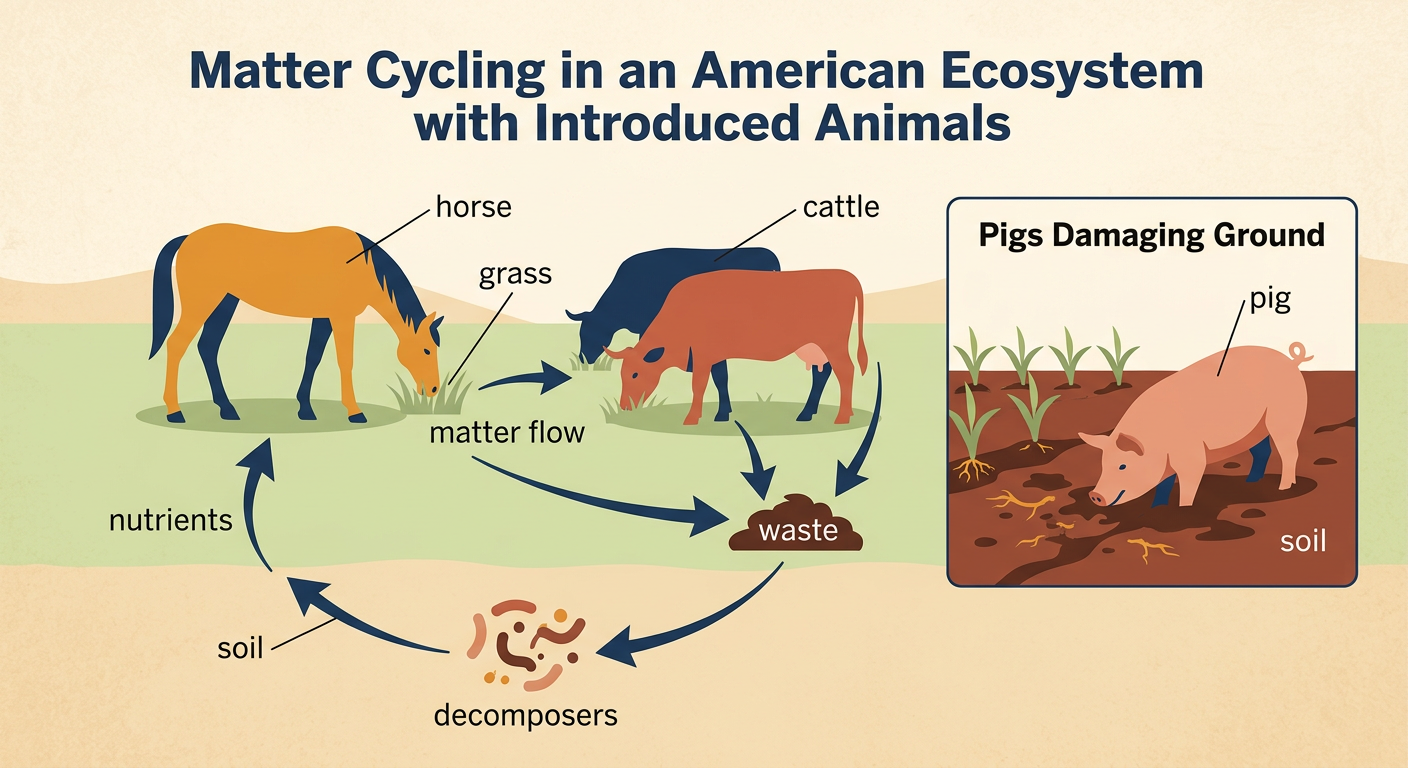
Europeans brought horses, cattle, pigs, sheep, and other animals to the Americas. These animals multiplied and changed ecosystems because they ate plants, disturbed soil, spread seeds, and competed with native species. Free-roaming pigs, for example, could eat roots and damage crops planted by Indigenous communities. Large herds of cattle and sheep also required grazing land, sometimes leading colonists to clear vegetation or occupy Indigenous land. Horses had complex effects. Spanish colonists first brought them, but some horses escaped or were traded. Over time, several Indigenous nations, especially on the Great Plains, developed horse-based ways of traveling, hunting, and trading. In an ecosystem model, grass matter enters a horse when it eats. Waste and decomposed remains later return matter to the soil, where plants can use nutrients again.
Disease and Indigenous Population Loss
Diseases carried across the Atlantic caused the most devastating part of the Columbian Exchange. Europeans and Africans brought smallpox, measles, influenza, and other illnesses to the Americas. Indigenous populations had not previously experienced many of these diseases, so communities had little existing immunity to them. Outbreaks spread quickly and caused enormous loss of life. During the Spanish attack on Tenochtitlan, a smallpox outbreak beginning in 1520 killed many people and weakened the city’s ability to resist. Disease was not the only cause of population decline. Warfare, forced labor, hunger, displacement, and disrupted farming made the effects worse. Europeans did not understand germs at the time, but their movements carried pathogens between communities. The resulting population losses weakened Indigenous societies and made conquest and land seizure easier for European colonizers.

Unequal Effects of the Exchange
The Columbian Exchange affected groups in sharply unequal ways. European empires gained land, valuable crops, metals, and profits from colonies. Many Indigenous peoples lost land, political independence, family members, and access to resources through disease, warfare, and forced labor. Indigenous communities still resisted, adapted, and preserved their cultures, but they faced powerful colonial systems. Africans experienced another devastating consequence. European colonists demanded labor for sugar and other plantation crops, helping expand the forced Atlantic slave trade. Millions of Africans were kidnapped or captured, transported under deadly conditions, and enslaved in the Americas. For example, plantation owners in the Caribbean profited from sugar grown by enslaved workers, while those workers had no freedom and endured violence. Some foods and technologies benefited people, but wealth and power were distributed unevenly. Exchange does not mean that everyone participated freely or benefited equally.

Cause-and-Effect Summary
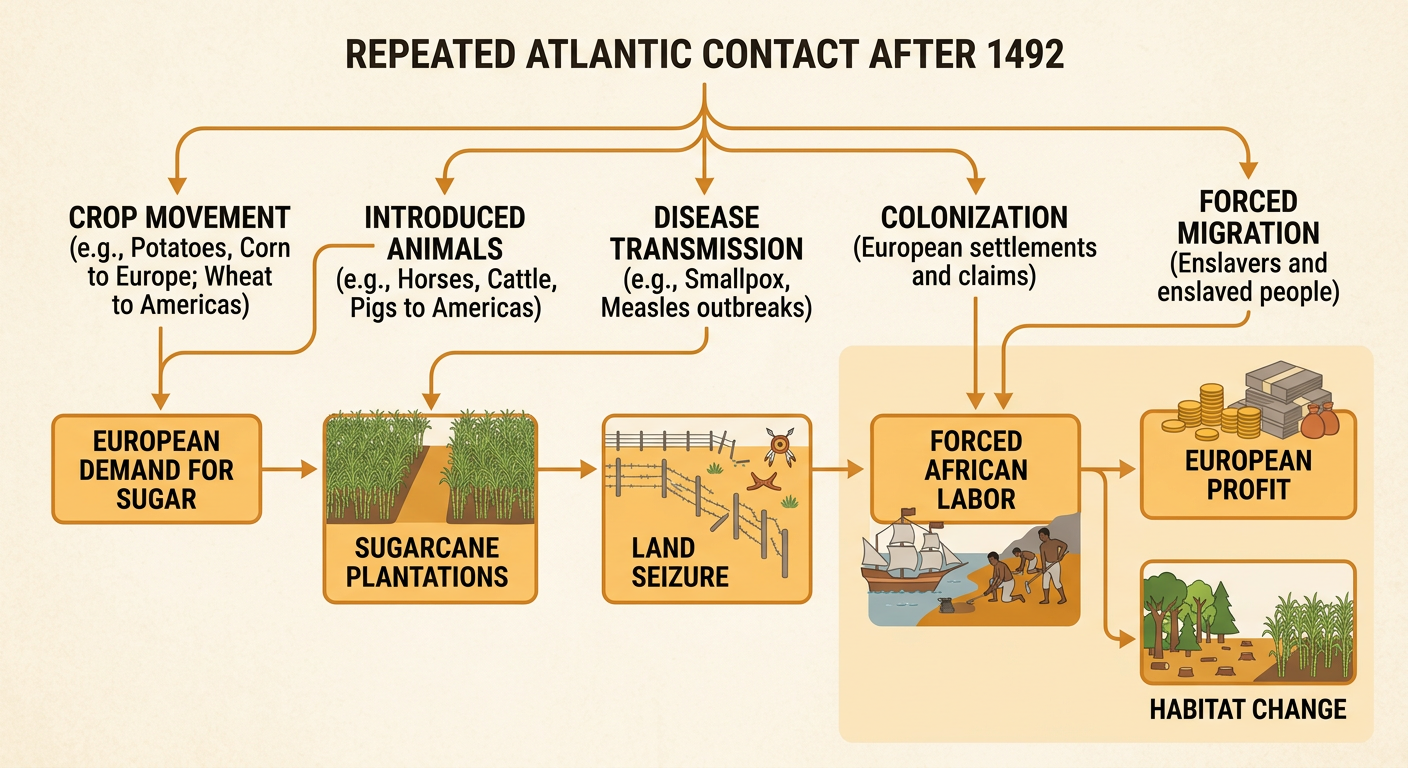
Historical events often have several connected causes and effects. After 1492, repeated voyages linked ecosystems and societies across the Atlantic. Ships moved crops, animals, pathogens, people, and ideas. These movements produced immediate effects, such as new foods, disease outbreaks, and changes in land use. They also produced long-term effects, including population growth in some regions, Indigenous population loss, European colonial wealth, ecological change, and the expansion of African slavery. One clear chain began with European demand for sugar. Colonists planted more sugarcane, seized more land, and demanded more labor. That demand helped expand the forced transportation and enslavement of Africans. At the same time, sugarcane replaced diverse habitats with plantations. This example shows that one cause can produce social, economic, and environmental effects. It also shows why the exchange’s consequences were deeply unequal.