
The Destruction of the Bison and Its Impact on Plains Nations
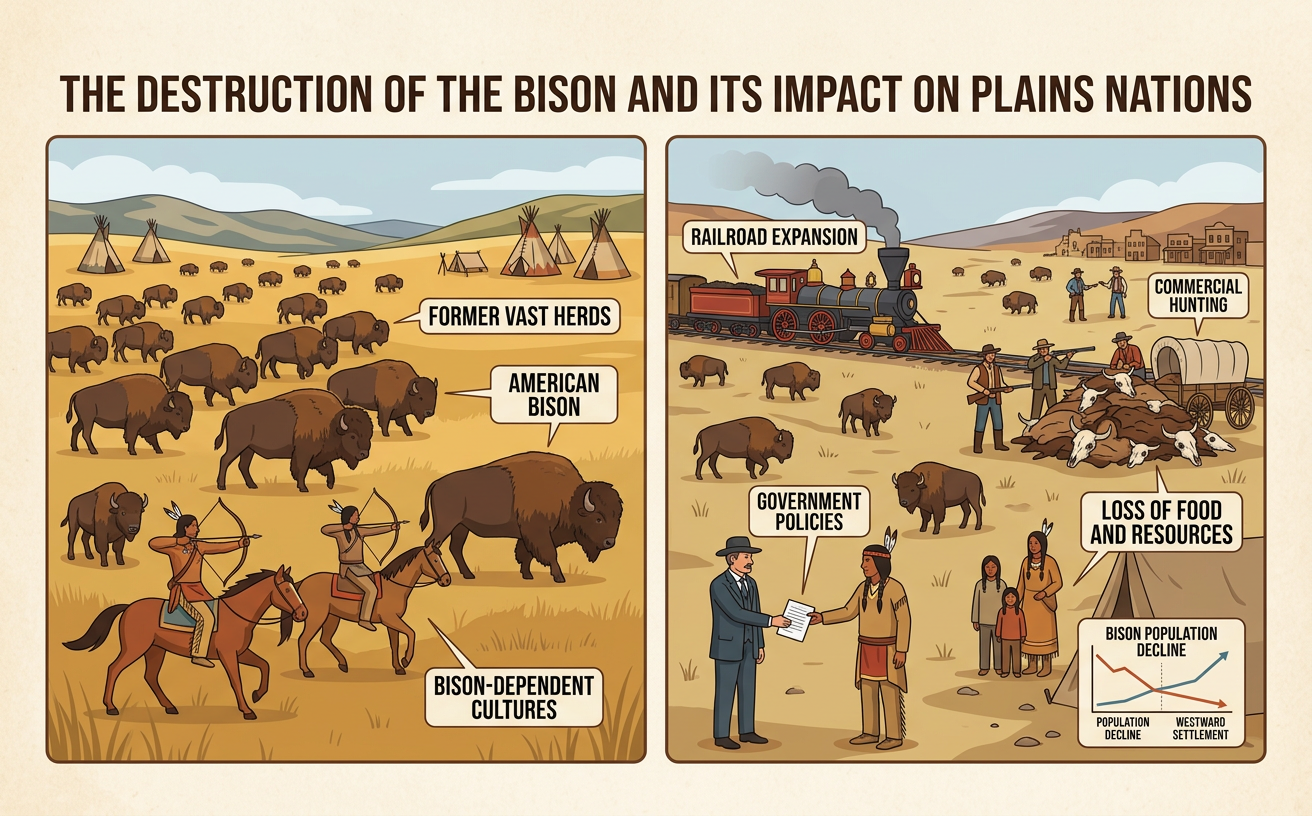
Students examine how westward settlement, commercial hunting, and government policies caused the near-destruction of bison herds and transformed the lives of Indigenous nations on the Great Plains.
Illustrations are auto-generated and may be placeholders. They can be refreshed to match the narration.
Bison and Life on the Great Plains
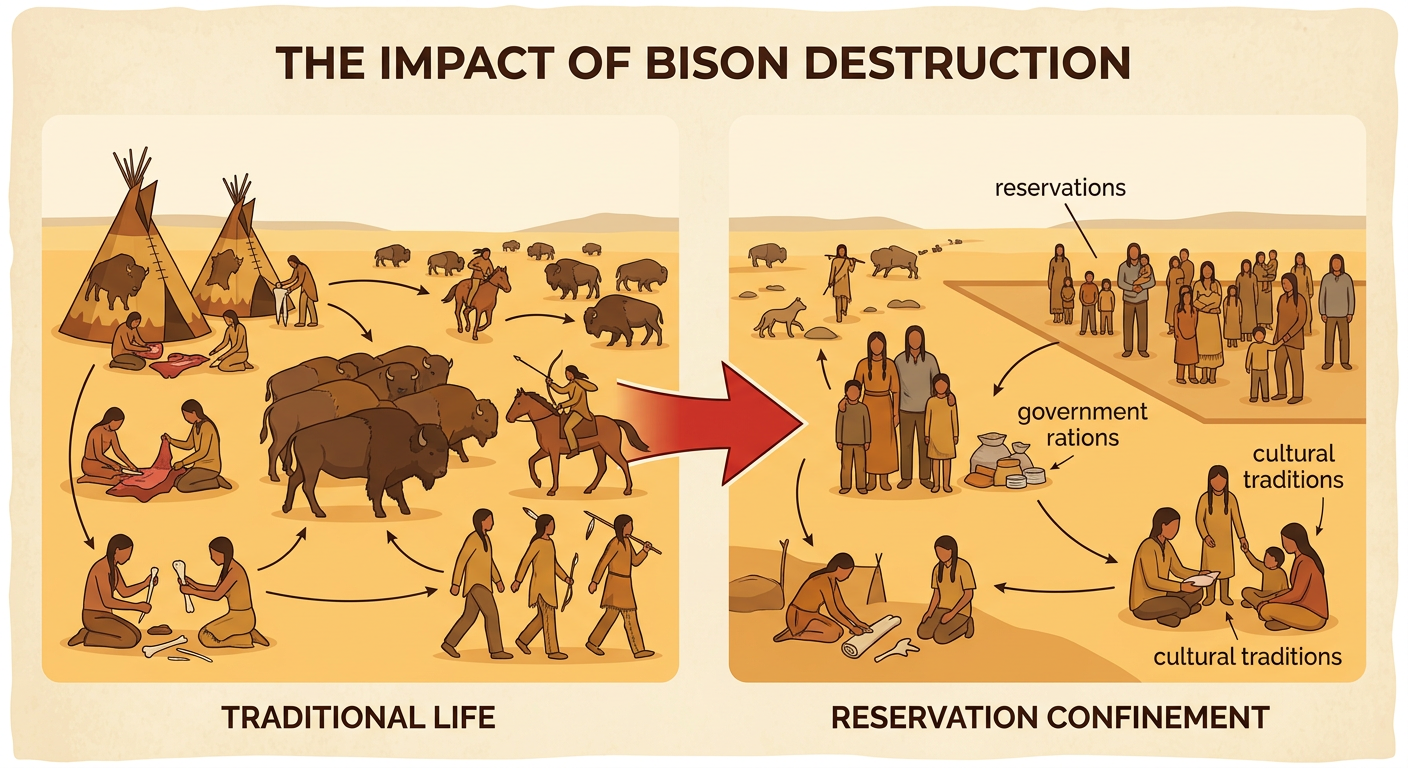
Before the late 1800s, millions of bison lived across the Great Plains. Many Plains Nations depended on the animals for food, clothing, shelter, tools, and trade. Bison meat could be eaten fresh or dried. Hides became robes, bedding, clothing, and coverings for tipis. Bones and horns were shaped into tools, utensils, and ornaments. Sinew was used as strong thread or bowstring. Bison were also important in ceremonies, stories, and community relationships. Different nations had distinct traditions, but many viewed bison as living beings that deserved respect rather than simply as products. For example, a harvested bison could provide meat for several families while its hide supplied a tipi covering and its bones became useful tools. Bison connected the environment, economy, culture, and daily life of Plains communities.

Plains Nations and Sustainable Bison Hunting
Plains Nations developed hunting practices suited to their environments and community needs. Before horses became widespread on the Plains, hunters sometimes guided bison into fenced areas called pounds or over steep cliffs known as bison jumps. Later, skilled riders could hunt on horseback. Community leaders planned many hunts, and hunters followed rules about when, where, and how animals could be taken. Families worked together to process the meat and hides quickly, using most parts of each animal. These practices helped communities meet their needs without an industrial market demanding constant killing. For example, at a bison jump, people carefully directed part of a herd toward a chosen location, then many families shared the work and resources. Hunting methods varied among nations and changed over time, but knowledge, cooperation, and respect were central to them.

Railroads, Settlers, and Commercial Hunters
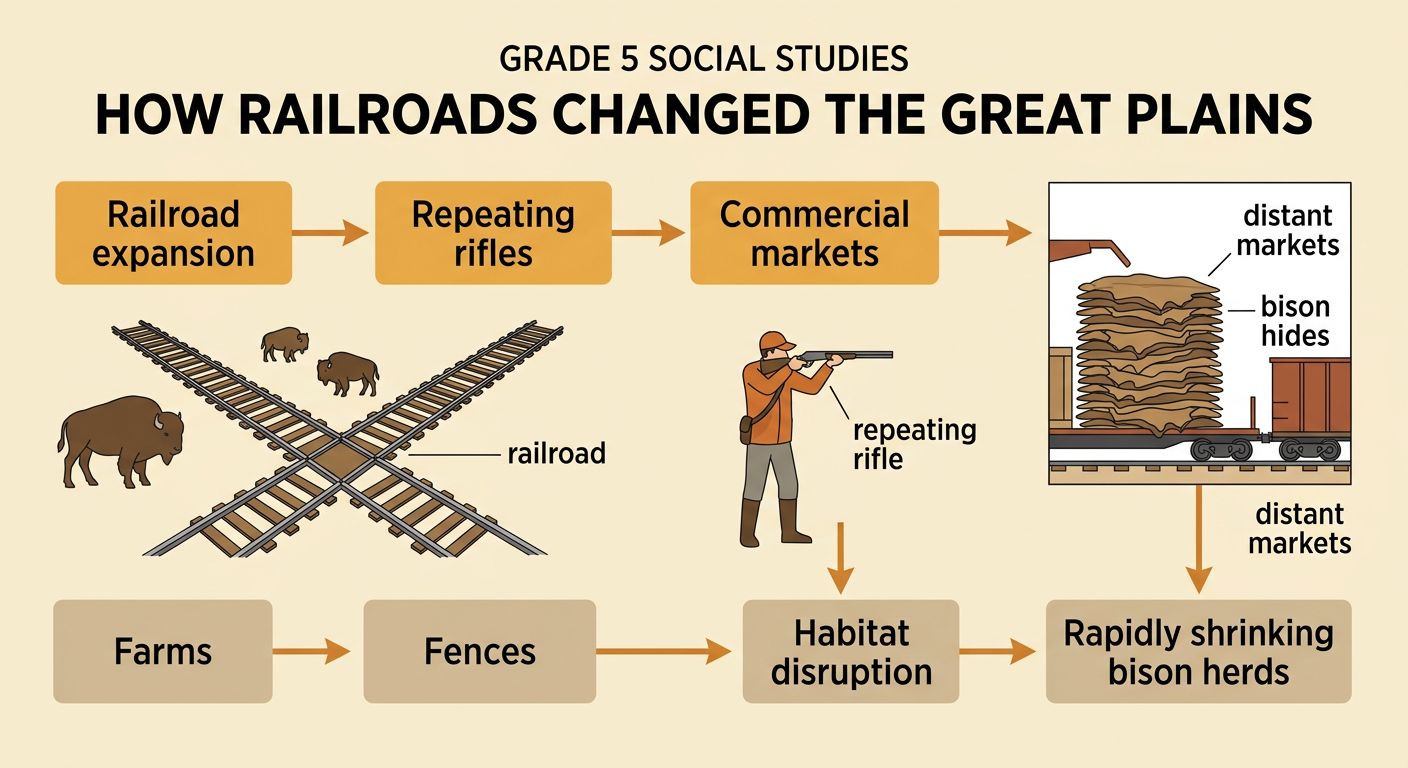
After the Civil War, railroad construction and westward settlement rapidly changed the Great Plains. Railroads crossed bison habitat, disturbed migration routes, and carried large numbers of hunters into the region. They also transported hides and bones to distant factories and markets. Commercial hunters often killed bison mainly for hides, leaving much of each animal unused. New repeating rifles made killing faster, while market demand encouraged hunters to take far more animals than local communities needed. Settlers also changed grasslands through farming, fencing, and livestock grazing. For example, a commercial hunting team could ship stacks of hides east by rail, where factories turned them into machine belts or leather goods. Together, transportation, technology, settlement, and profit created intense pressure on the herds that traditional subsistence hunting had not caused.
Government Policy and the Decline of the Herds
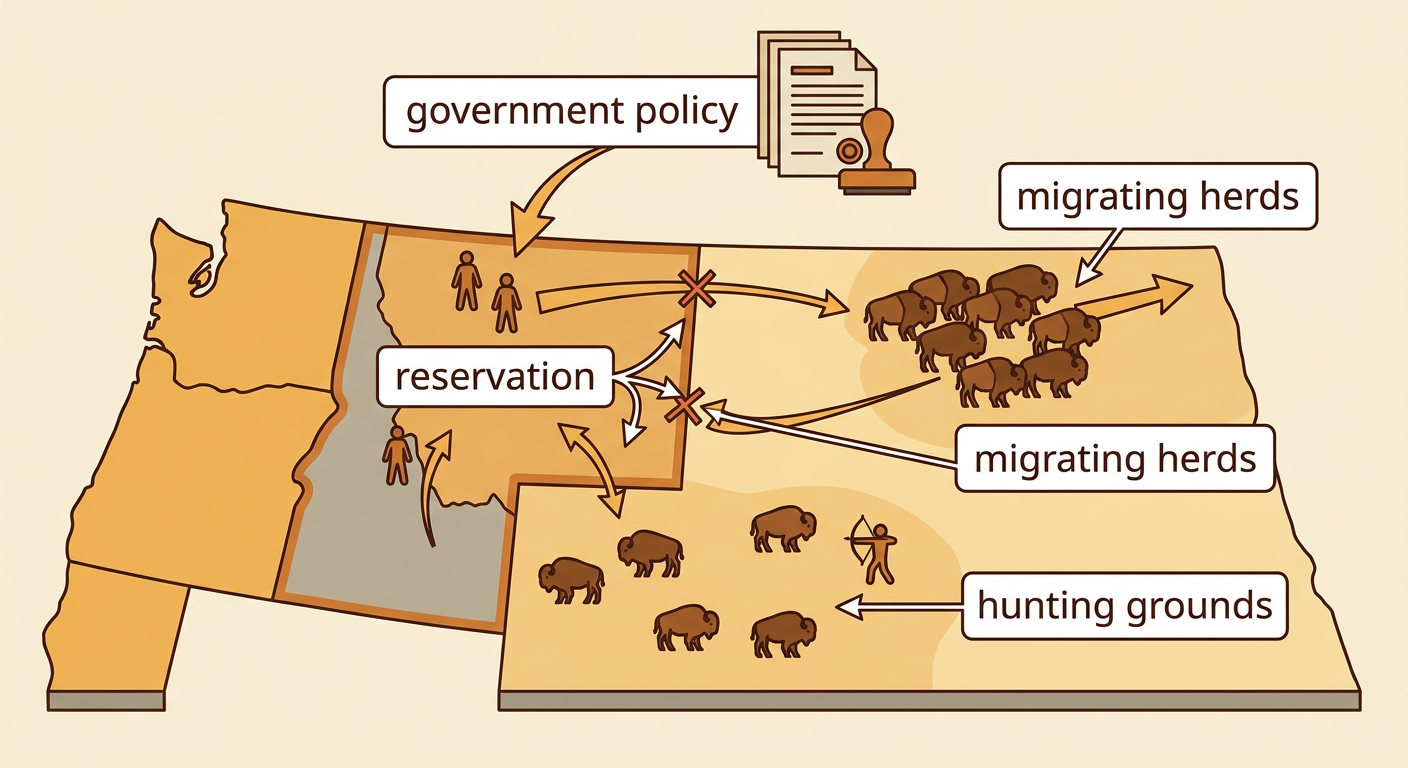
United States government policies also contributed to the bison decline. Federal laws and treaties opened large areas of Indigenous land to railroads, settlers, and hunters. The government generally failed to stop commercial killing when protection might have slowed it. Some military officers and other officials supported bison destruction because they believed the loss of the herds would force Plains Nations to depend on government supplies and remain on reservations. At the same time, military campaigns restricted Indigenous movement and access to hunting grounds. For example, when Native families were confined to reservations, they could no longer follow migrating herds across their homelands. By the late 1880s, only a few hundred wild bison remained in the United States, compared with the millions that had once lived across North America. The collapse resulted from connected economic, environmental, military, and political causes.
Consequences for Plains Nations
The destruction of the bison caused hunger, poverty, displacement, and major cultural disruption for Plains Nations. Communities lost a primary source of food and materials at the same time that federal policies confined many people to reservations. Government food deliveries were often inadequate, late, or used to pressure Native people to obey officials. Families became more dependent on outside supplies because they could no longer move freely to hunt. The loss also harmed ceremonies, trade networks, teaching traditions, and relationships with the land. For example, a family that once obtained food, clothing, shelter materials, and tools from bison might have to rely on limited government rations and manufactured goods. Plains peoples resisted, adapted, and preserved their identities, but these changes were forced upon them. Their effects continued across generations and remain important to many Tribal communities today.
Conservation and the Return of the Bison
By the late 1800s, conservationists, ranchers, government workers, and Indigenous people began protecting the few surviving bison. Small private herds and protected groups, including bison in Yellowstone National Park, helped prevent extinction. During the 1900s, animals from surviving herds were moved to refuges, parks, and Tribal lands. Today, Tribal nations are leaders in bison restoration because returning bison can strengthen grassland ecosystems, food sovereignty, community education, and cultural traditions. For example, the InterTribal Buffalo Council helps Tribes return bison to Tribal lands and manage herds for community goals. Bison grazing can shape plant growth and create habitat used by other species, although herds require enough land and careful management. Bison numbers have increased greatly, but most do not roam freely across their former range. Conservation combines scientific evidence, habitat protection, and Indigenous knowledge.
