The Dust Bowl: Drought, Farming, and Migration
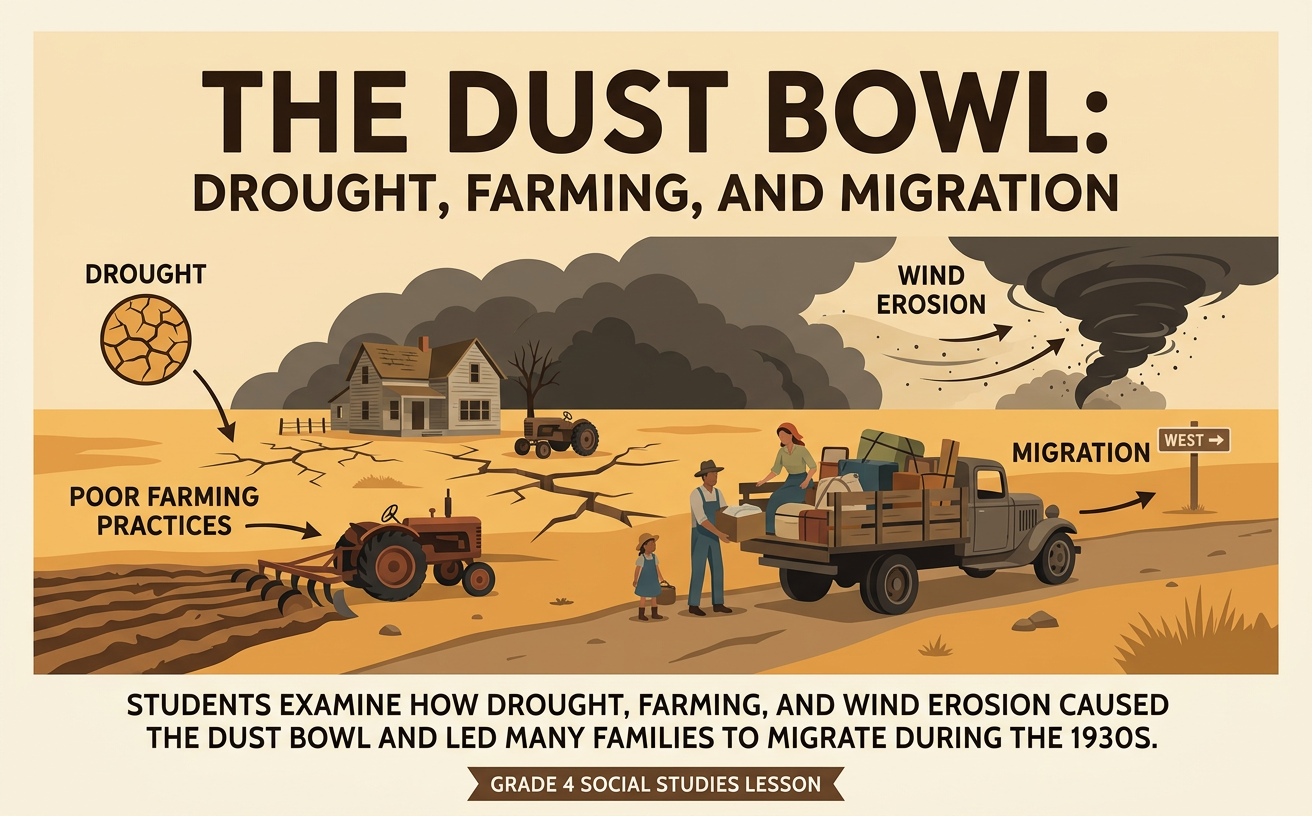
Students examine how drought, farming practices, and wind erosion caused the Dust Bowl and led many families to migrate during the 1930s.
Illustrations are auto-generated and may be placeholders. They can be refreshed to match the narration.
Life on the Great Plains
The Great Plains are broad, mostly flat grasslands in the central United States. The southern Plains include parts of Texas, Oklahoma, Kansas, Colorado, and New Mexico. Before the Dust Bowl, deep-rooted prairie grasses held the soil in place, even during dry periods. During the 1920s, high crop prices and new tractors encouraged farmers to plow large areas of grassland. Many planted wheat year after year. Farm families built homes, raised animals, and depended on crops for food and income. For example, a Kansas family might plant hundreds of acres of wheat and sell the harvest to pay its bills. When wheat grew well, the land seemed productive. However, removing native grasses left much of the soil less protected when severe drought arrived in the 1930s.

Drought and Farming Practices
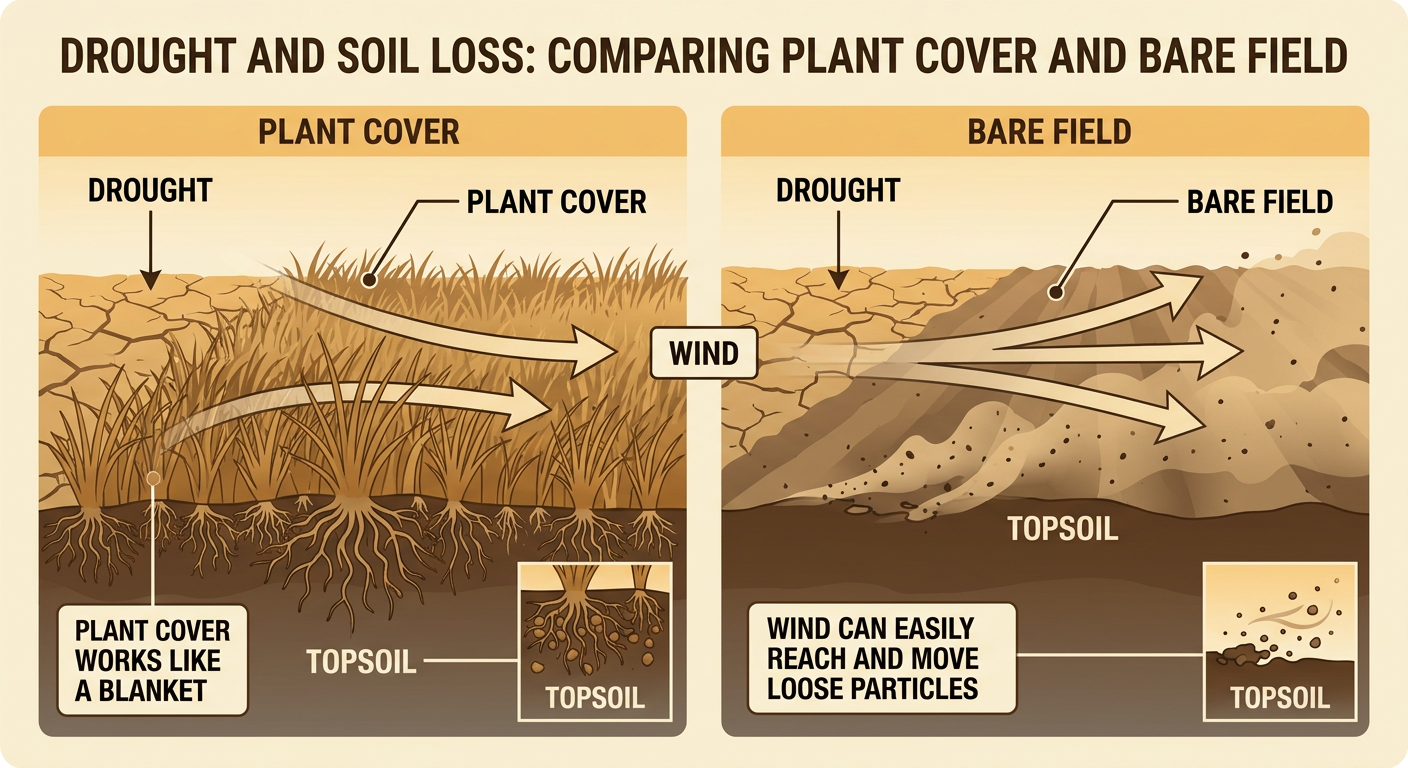
A drought is a long period with much less rain or snow than usual. Beginning around 1930, severe drought affected much of the Great Plains. Crops failed, and prairie plants dried out. At the same time, years of deep plowing had broken up the soil and removed grasses whose roots once held it together. Some farmers also left fields bare between crops. Without enough moisture or plant cover, the dry topsoil became loose and dusty. Drought was a natural weather event, but certain farming practices made its effects worse. For example, compare two fields during a dry, windy week. A field covered with grass or crop remains keeps more soil in place. A freshly plowed, bare field loses more soil because the wind can reach and move loose particles easily.
How Wind Erosion Removed Topsoil
Topsoil is the upper layer of soil where many plants grow. It contains nutrients and decayed plant material. During the Dust Bowl, drought made topsoil dry, and plowing left it loose and uncovered. Strong winds then lifted small soil particles into the air and pushed larger particles along the ground. This movement of soil from one place to another is erosion. Some blowing particles struck the ground and knocked other particles loose, causing even more soil to move. For example, after a windstorm, a farmer might find soil piled against a fence while part of the field had become thinner and less fertile. Students can model this process by observing dry soil in two trays, one bare and one protected by grasslike material, while the same gentle airflow passes over each tray.

Black Blizzards and Daily Life
Dust storms became a frightening part of life on the Great Plains. Some were called black blizzards because thick clouds of dark soil blocked sunlight and made daytime look like night. Dust entered houses through cracks, covered furniture and food, and irritated people’s eyes and lungs. Families hung wet sheets over windows, stuffed cloth into gaps, and sometimes wore masks or damp cloths over their faces. Animals and crops also suffered. On April 14, 1935, a storm later called Black Sunday swept across parts of the southern Plains. People saw a huge wall of dust approaching and hurried indoors. A child caught outside might have used a fence line to find the way home because visibility was so poor. These storms were an effect of drought, exposed soil, and powerful winds working together.

Why Families Migrated
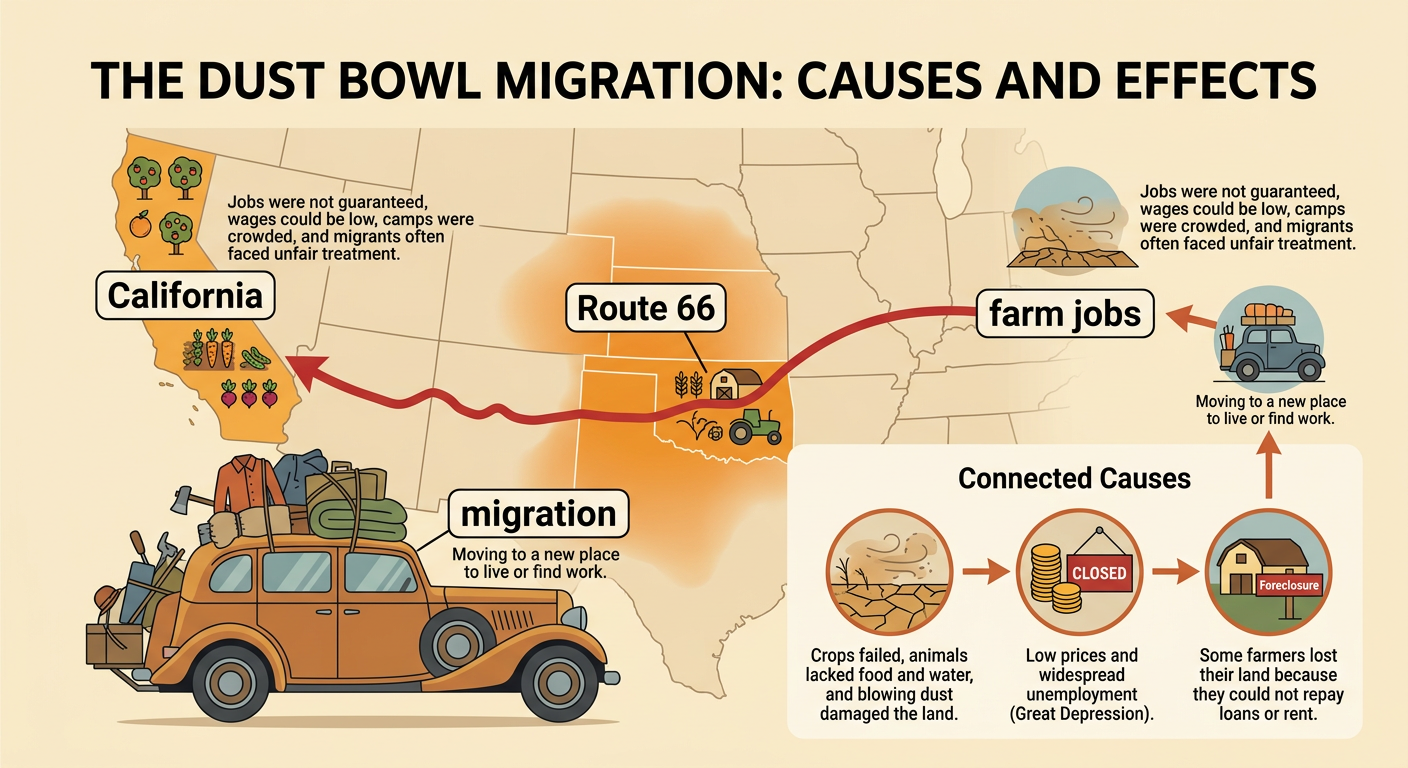
The Dust Bowl made it difficult for many families to remain on their farms. Crops failed, livestock lacked food and water, and blowing soil damaged land. At the same time, the Great Depression caused low prices and widespread unemployment. Farmers who could not earn enough money sometimes lost their land when they could not repay loans or rent. Hundreds of thousands of people left the Plains, although many others stayed. Some migrants traveled west to California because they had heard about jobs picking fruit and vegetables. For example, an Oklahoma family might pack clothing, tools, and bedding into a car and follow U.S. Route 66 west. The trip was long, and jobs were not guaranteed. Migrant families often faced low wages, crowded camps, and unfair treatment. Their movement resulted from several connected economic and environmental causes.
Lessons from the Dust Bowl
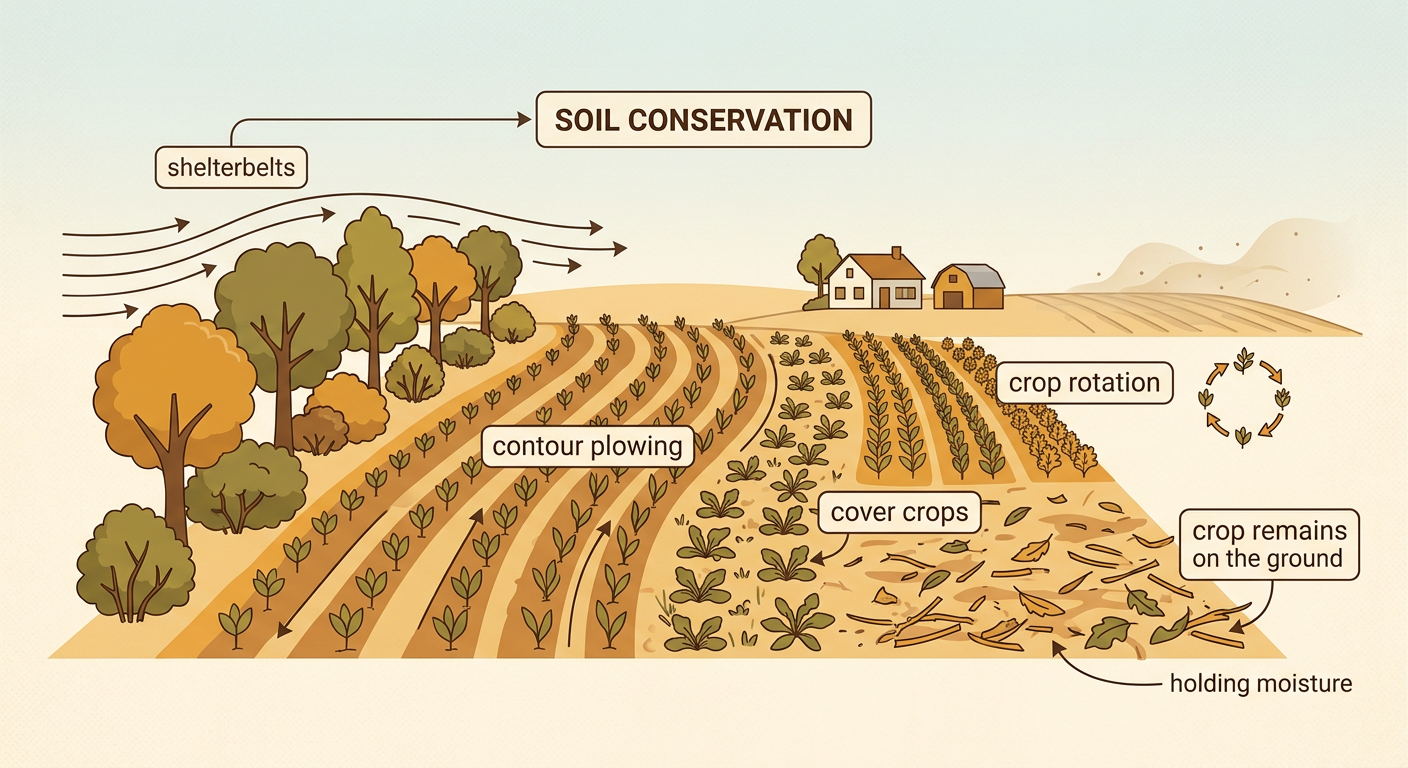
The Dust Bowl showed that weather and human choices can combine to change land and communities. Drought could not be prevented, but better farming methods could reduce wind erosion. Farmers began planting rows of trees called shelterbelts to slow the wind. They also used contour plowing, crop rotation, and cover crops to keep soil protected. Leaving crop remains on fields helped hold moisture and reduced the amount of loose soil. Government programs taught soil conservation and helped farmers try these methods. For example, a line of trees beside a field can lower wind speed before it reaches bare ground, so fewer soil particles are lifted. The Dust Bowl also teaches historians to connect causes and effects: drought and exposed soil contributed to erosion, erosion damaged farms, and farm losses helped cause migration. Caring for soil remains important today.