
The Dust Bowl: Environment, Agriculture, and Government Response
Students examine how drought, farming practices, economic hardship, and federal policies combined to cause and address the Dust Bowl crisis.

Illustrations are auto-generated and may be placeholders. They can be refreshed to match the narration.
The Great Plains Before the Dust Bowl
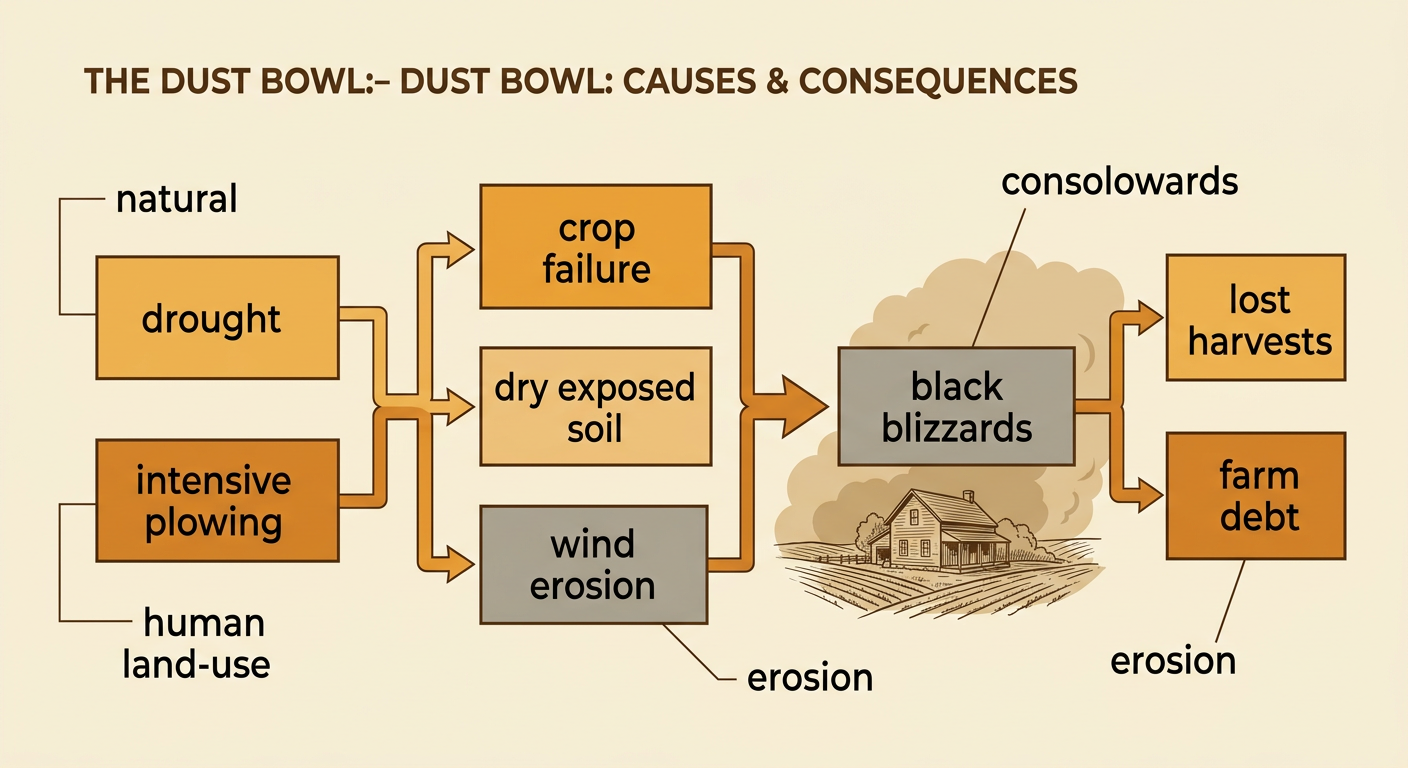
Before the 1930s, the Great Plains was a grassland ecosystem shaped by limited rainfall, strong winds, grazing animals, and periodic drought. Deep-rooted native grasses held soil in place and helped it retain moisture. During the late 1800s and early 1900s, railroads, federal land policies, and high wheat prices encouraged settlement and farming. World War I increased demand for wheat, so farmers plowed millions of acres of grassland and purchased tractors to cultivate larger fields. In Kansas, Oklahoma, Texas, Colorado, and New Mexico, farms and towns grew during wet years. This expansion created income, but it also removed protective vegetation. When rainfall later decreased, large areas of exposed topsoil could be lifted by wind. The region’s earlier prosperity therefore helped create environmental vulnerability.

Drought and Unsustainable Farming
The Dust Bowl resulted from interacting natural and human causes rather than from drought alone. Beginning in 1930, recurring drought reduced soil moisture and caused crops to fail across much of the Great Plains. At the same time, farmers had removed native grasses, repeatedly plowed fields, and often left soil uncovered after harvest or crop failure. Strong winds then carried dry, loose topsoil into enormous dust storms called black blizzards. On April 14, 1935, a storm remembered as Black Sunday swept across parts of the central and southern Plains and turned daylight dark. Economic pressure made the problem worse because indebted farmers often tried to plant more land to earn enough money. Drought was the natural hazard, but land use decisions increased the amount of damage it caused.
Reading Climate and Migration Data
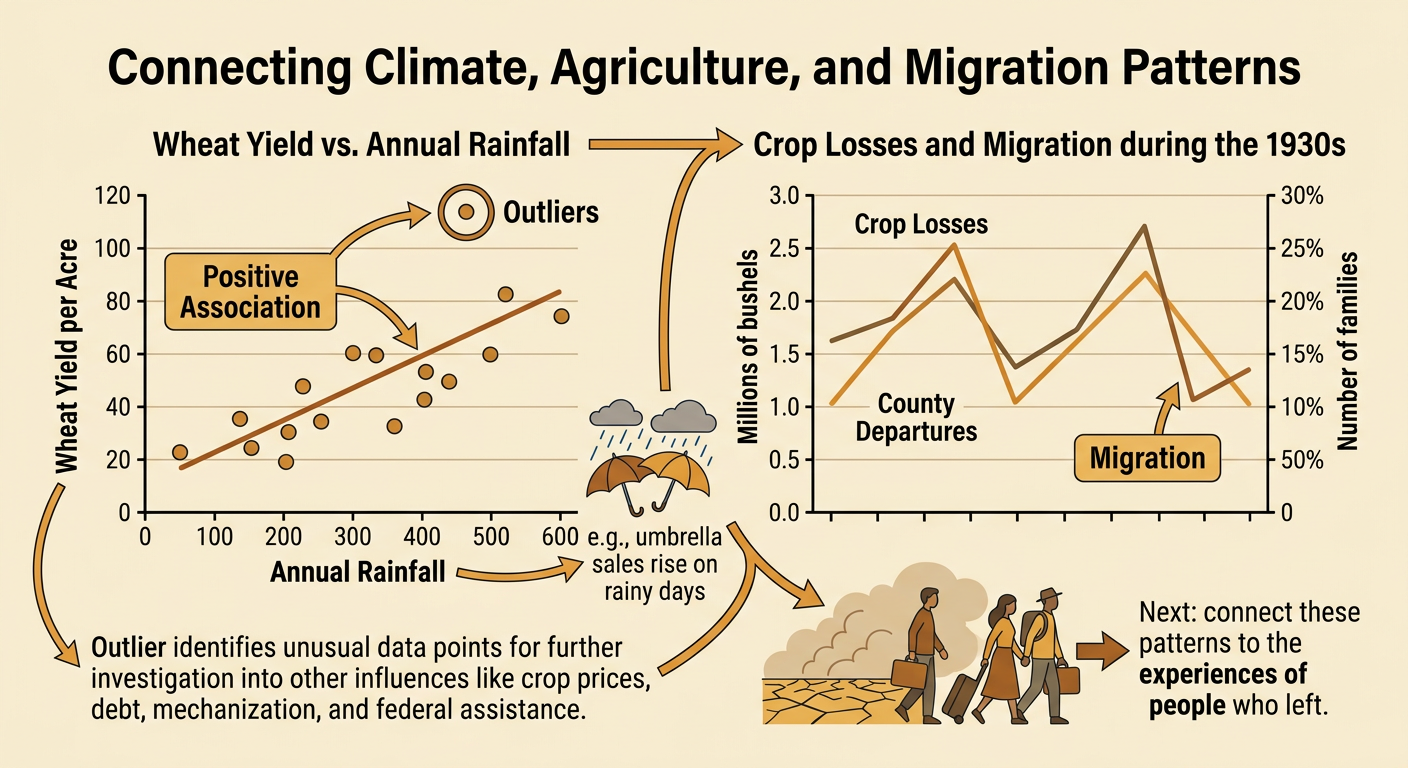
Quantitative data can reveal relationships among climate, agriculture, and migration. Students can create a scatter plot using annual rainfall on the horizontal axis and wheat yield per acre on the vertical axis for one Great Plains county during the 1930s. If lower-rainfall years generally appear with lower yields, the plot shows a positive association between rainfall and crop production, although it does not prove that rainfall was the only cause. A second graph can compare crop failures or dust-storm frequency with the number of people leaving a county. For example, a year with very low rainfall, severe crop losses, and increased departures may suggest that environmental and economic hardship influenced migration. Students should identify outliers and consider other variables, including crop prices, debt, mechanization, and federal assistance, before drawing conclusions.
Experiences of Displaced Families
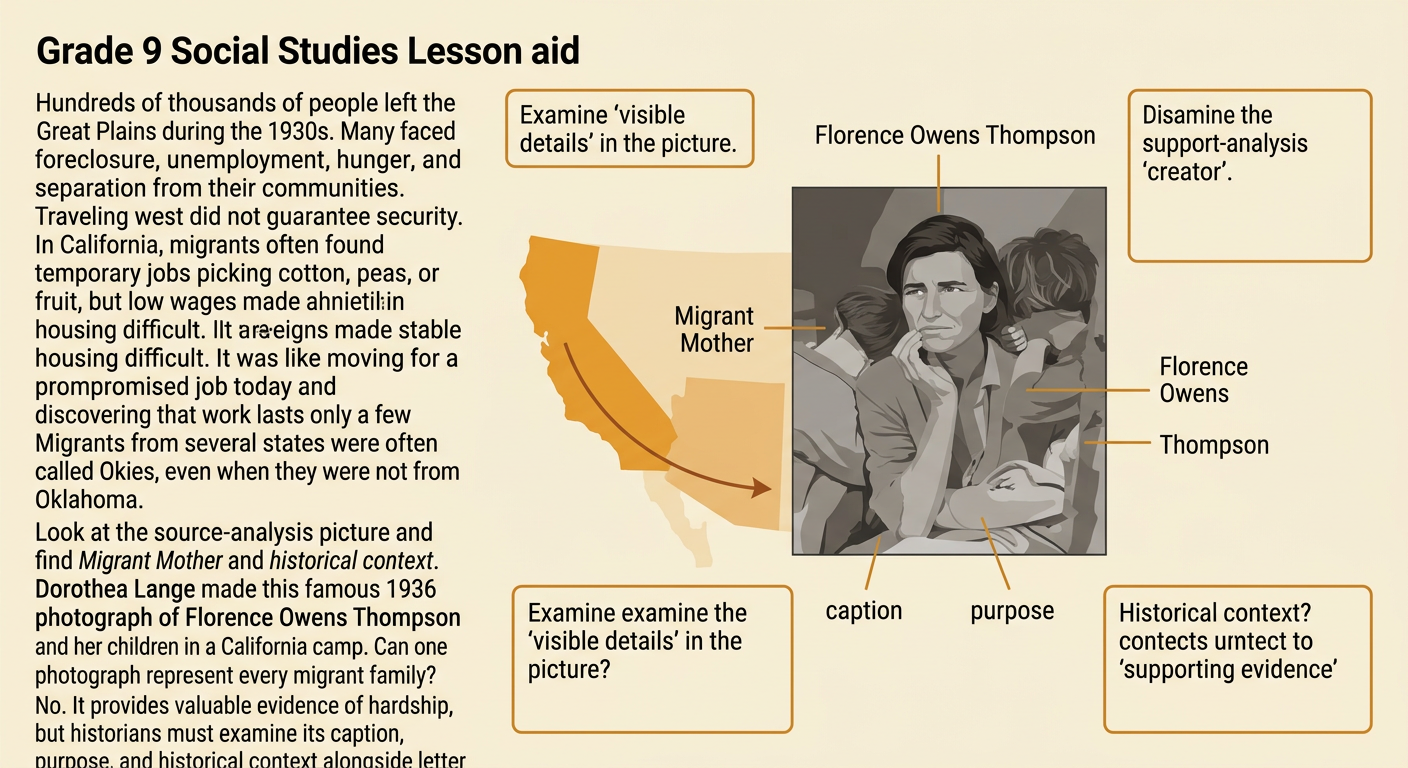
Dust Bowl migration affected families unevenly, but many migrants faced foreclosure, unemployment, hunger, and separation from their communities. Hundreds of thousands of people left the Great Plains during the 1930s, and many traveled west in search of agricultural work. Migrants from several states were often labeled “Okies,” even when they were not from Oklahoma. In California, families might find seasonal jobs picking cotton, peas, or fruit, but low wages and temporary employment made stable housing difficult. To study these experiences, historians compare letters, photographs, oral histories, newspapers, and government reports. Dorothea Lange’s 1936 photograph commonly called “Migrant Mother,” for example, shows Florence Owens Thompson and her children in a California camp. The image is valuable evidence of hardship, but students should also examine its caption, purpose, and historical context rather than treating one photograph as the experience of every family.
New Deal Conservation Programs
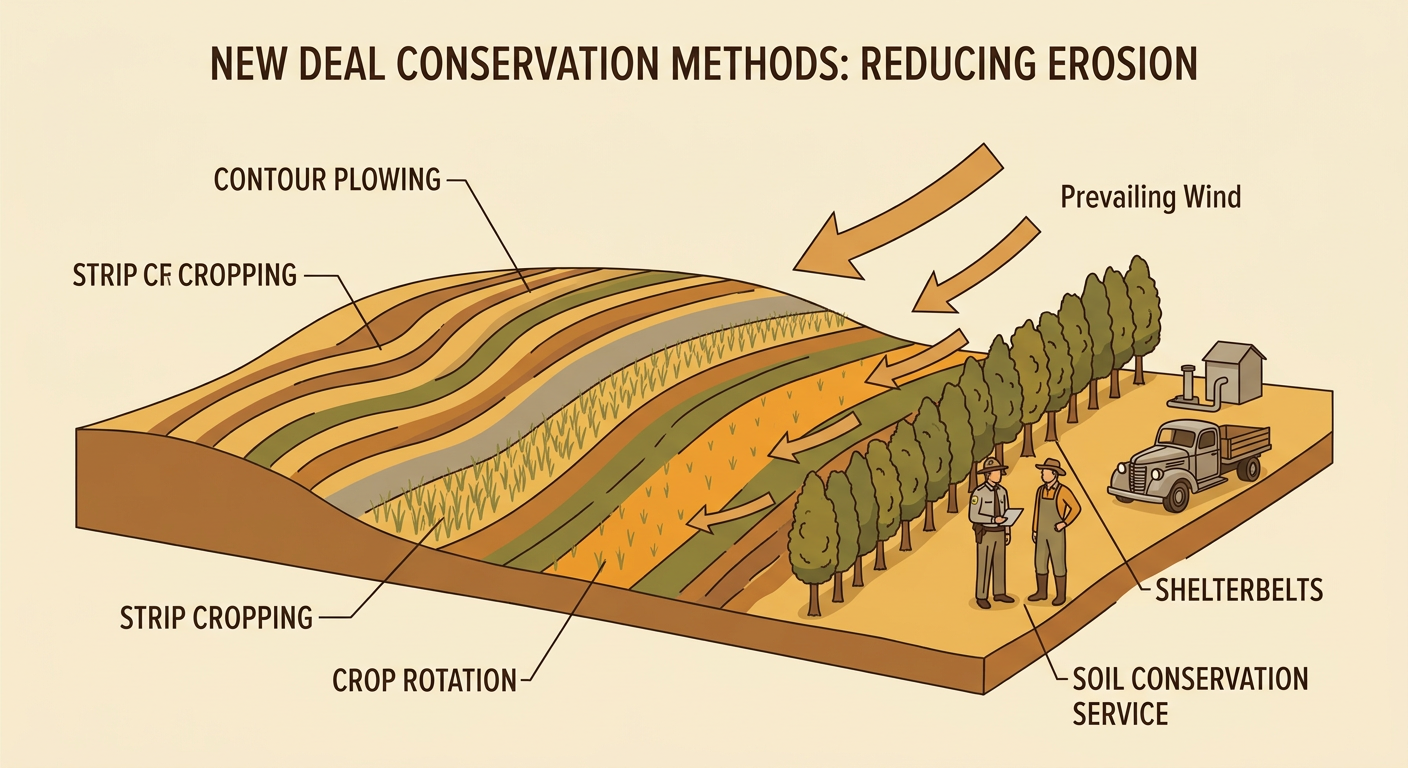
The federal government responded to the Dust Bowl with relief, farm policy, and soil conservation programs. The Soil Conservation Service, created in 1935, taught farmers methods intended to reduce erosion. Contour plowing followed the shape of the land, strip cropping alternated crops or vegetation, and crop rotation helped protect soil fertility. The Prairie States Forestry Project planted shelterbelts, or rows of trees, to slow wind near fields and farms. The Civilian Conservation Corps also completed conservation work, while the Resettlement Administration built camps that offered some migrant families cleaner water, sanitation, and shelter. Government payments sometimes encouraged farmers to reduce production or adopt conservation practices. For example, a shelterbelt could lower wind speed before it crossed a cultivated field, reducing the movement of loose soil. These programs improved land management, although they did not immediately end drought, poverty, or displacement.
Evaluating Causes and Government Responses
A strong historical explanation weighs several connected causes and effects. Drought reduced available water, but extensive plowing and the loss of native grasses made soil erosion more severe. Low crop prices, debt, and the Great Depression limited farmers’ choices, while crop failure and dust storms increased poverty and migration. Government programs offered jobs, camps, payments, technical advice, and conservation projects. Evidence suggests that these measures reduced erosion in some places and created lasting soil-management institutions, but they could not control rainfall or fully protect every family. Some policies also favored landowners more than tenants or farmworkers. To evaluate the response, students can make a claim such as, “Federal conservation programs addressed harmful farming practices more directly than immediate migrant poverty.” They should support the claim with specific evidence, compare sources, acknowledge limitations, and explain how environmental, economic, and political factors interacted.
