
The French Revolution: Food Crisis, Inequality, and Political Change
Students analyze evidence to explain how food shortages, unequal taxation, and Enlightenment ideas contributed to the outbreak and consequences of the French Revolution.
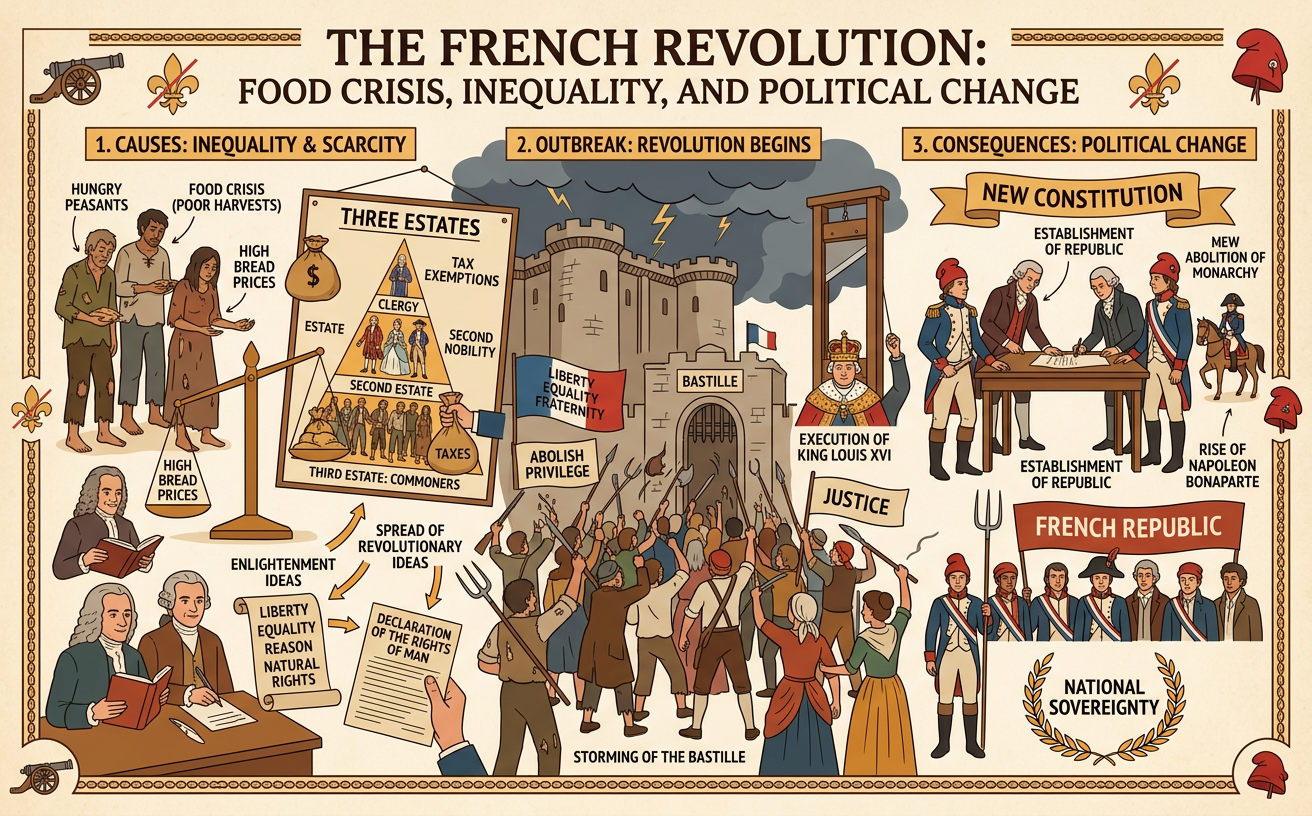
Illustrations are auto-generated and may be placeholders. They can be refreshed to match the narration.
France's Three Estates
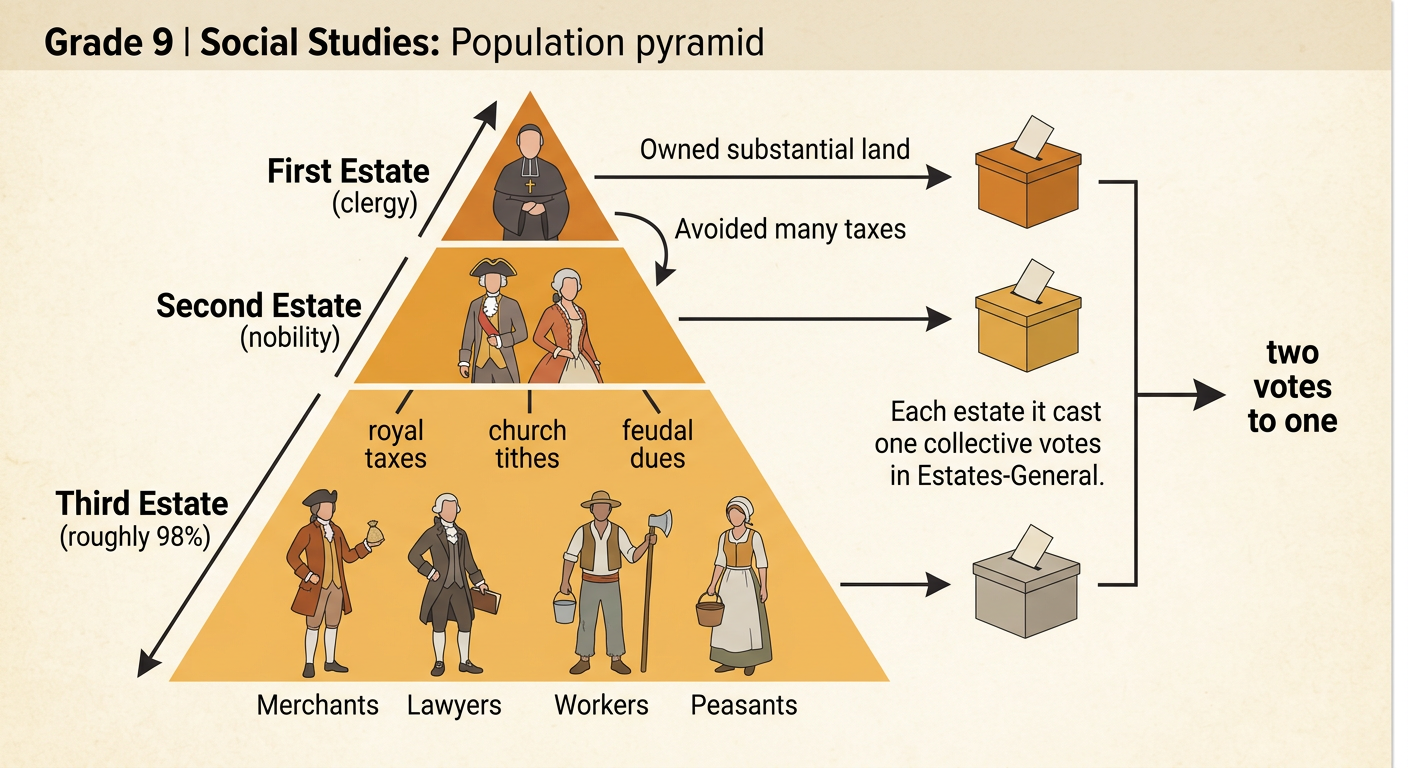
Before 1789, French society was legally divided into three estates. The First Estate was the clergy, and the Second Estate was the nobility. Together, these privileged groups owned substantial land and enjoyed exemptions from many taxes. The Third Estate included nearly everyone else, from wealthy merchants and lawyers to urban workers and peasants. Although the Third Estate made up about 98 percent of the population, it had less political power as an estate. Inequality was especially visible in rural areas, where peasants paid royal taxes, church tithes, and feudal dues. For example, when the Estates-General met in 1789, each estate traditionally received one collective vote. The clergy and nobility could therefore defeat the much larger Third Estate by two votes to one. This system turned economic inequality into a political grievance.
Harvest Failures and Rising Bread Prices
Food shortages made France's social tensions more dangerous. Poor harvests in the late 1780s followed damaging weather, including drought, severe winter conditions, and storms in some regions. Reduced grain supplies caused bread prices to rise. Because bread was the main food for many ordinary families, a price increase could consume most of a worker's daily earnings. In Paris, bread prices rose sharply by 1789 while many workers faced low wages or unemployment. A laborer's family might have had to choose between buying enough bread and paying for rent, fuel, or clothing. Hunger encouraged protests against bakers, grain merchants, and public officials, even though the causes involved weather, markets, transportation, and government policy. This evidence shows how climate conditions and the availability of grain influenced human activity by increasing migration, unrest, and demands for government action.

Taxation and Government Debt
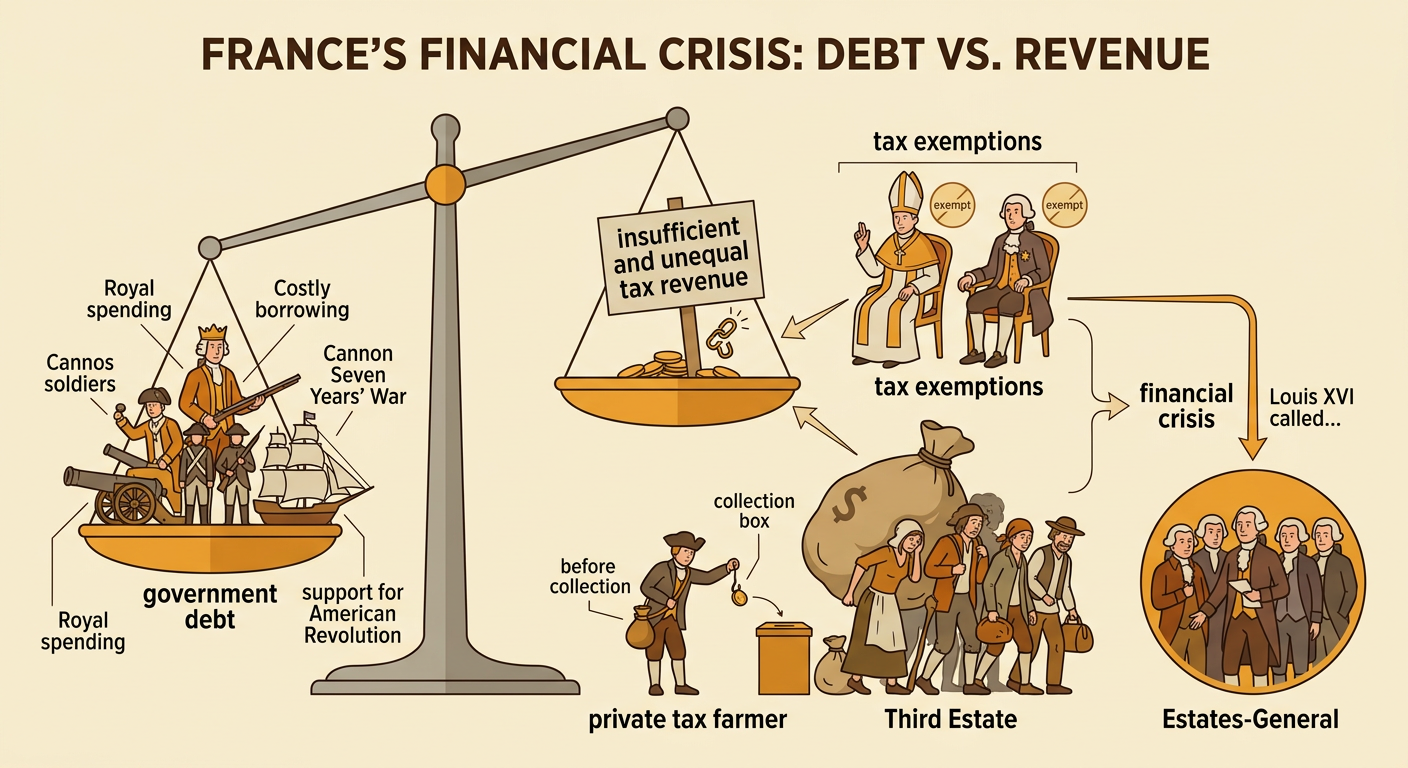
France's government faced a severe financial crisis before the Revolution. The monarchy had accumulated debt through expensive wars, including the Seven Years' War and French support for the American Revolution. Royal spending and the costs of borrowing added to the problem. Yet the tax system did not collect revenue fairly or efficiently. Many nobles and clergy members enjoyed exemptions from important taxes, while peasants and other members of the Third Estate carried much of the burden. Tax collection also involved private tax farmers, who collected certain taxes for the government and kept part of the money. Reforming this system required cooperation from privileged groups, but many resisted losing their exemptions. For example, after attempts at financial reform failed, King Louis XVI called the Estates-General in 1789 to seek approval for solutions. That decision opened a national political debate the monarchy could no longer control.
Enlightenment Ideas and Popular Demands
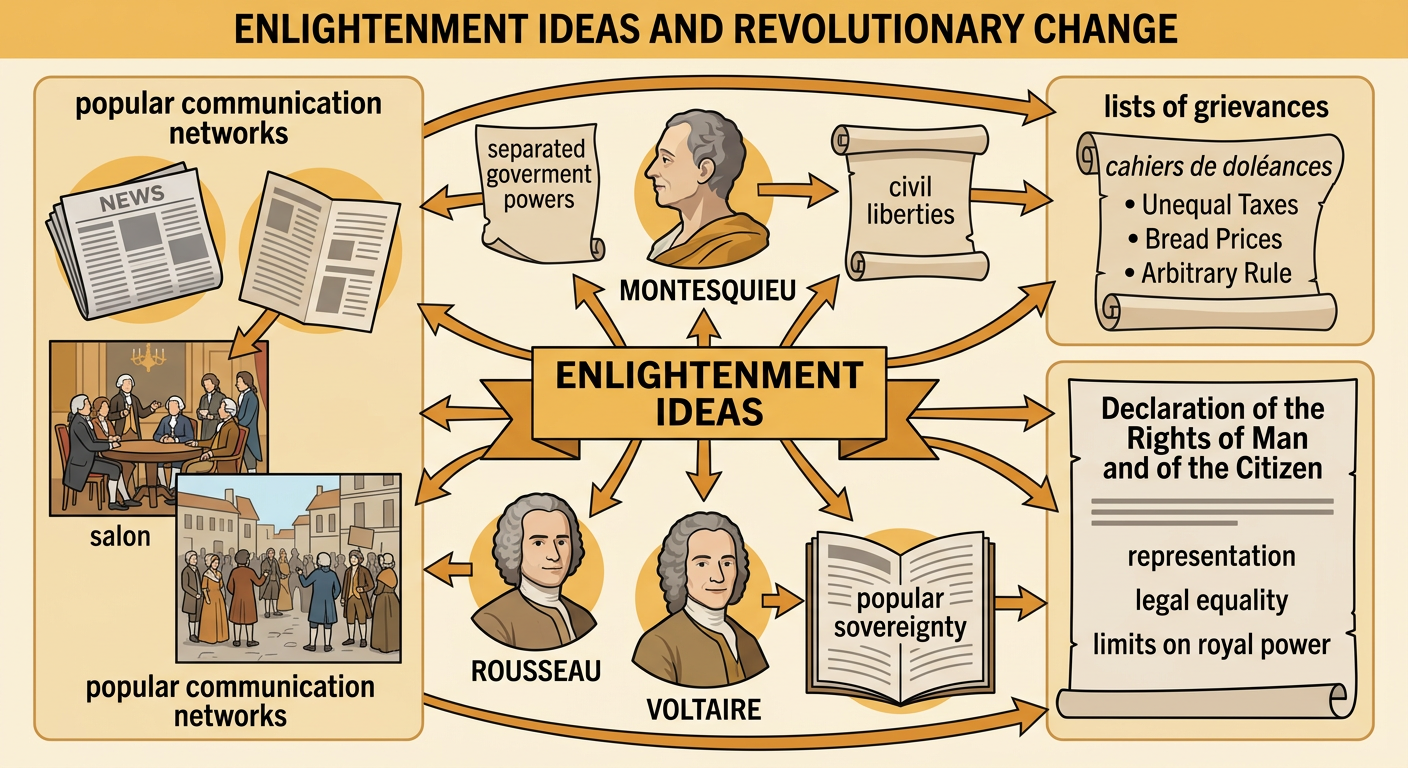
Economic hardship alone did not determine how people responded. Enlightenment writers offered new language for criticizing absolute monarchy and inherited privilege. Montesquieu discussed separated government powers, Voltaire challenged intolerance and defended civil liberties, and Rousseau argued that legitimate political authority came from the people. Educated members of the Third Estate used these ideas to demand representation, legal equality, and limits on royal power. Such ideas also circulated through pamphlets, newspapers, salons, and public discussion. In 1789, communities prepared lists of grievances called cahiers de doléances. A town's list might complain about unequal taxes, high bread prices, and arbitrary government while asking for regular representative assemblies. Later that year, the Declaration of the Rights of Man and of the Citizen stated that people were born free and equal in rights. Enlightenment principles thus helped transform specific complaints into broad political demands.
From the Bastille to Revolutionary Change
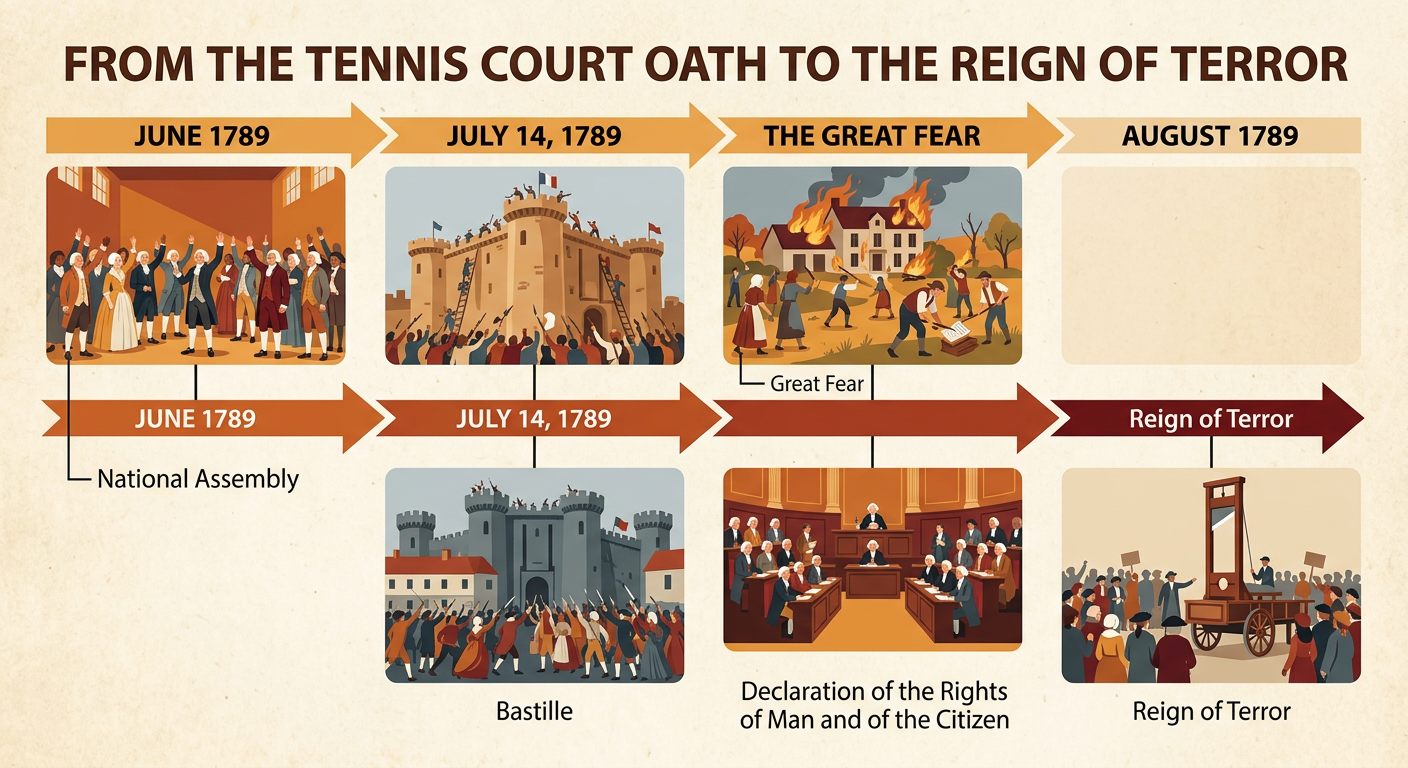
Political conflict became open revolution during the summer of 1789. After the Third Estate declared itself the National Assembly, it claimed authority to write a constitution. Fear that royal troops might crush the movement helped drive Parisians to attack the Bastille on July 14. The prison held few inmates, but it represented royal authority and contained weapons and gunpowder. In the countryside, rumors of attacks by nobles contributed to the Great Fear, during which peasants targeted manor houses and feudal records. In August, the National Assembly ended many feudal privileges and adopted the Declaration of the Rights of Man and of the Citizen. Revolutionary change continued beyond 1789: France became a constitutional monarchy and then a republic, Louis XVI was executed, and political violence intensified during the Reign of Terror. The Revolution weakened inherited privilege but produced war, instability, and contested definitions of citizenship.
Explaining Multiple Causes and Effects
The French Revolution resulted from several connected causes rather than one single event. Harvest failures reduced the grain supply, and rising bread prices created immediate suffering. Unequal taxes and feudal obligations deepened resentment, while government debt forced the monarchy to seek political support. Enlightenment ideas then gave critics principles such as equality, rights, and popular sovereignty. A strong historical explanation connects these factors with specific evidence. For example, a student might argue that the 1789 crisis became revolutionary because hunger increased public anger, the Estates-General exposed unequal representation, and the Third Estate used Enlightenment ideas to challenge the political system. The effects were also complex. The Revolution ended many legal privileges and promoted equal citizenship for men, but it also led to violence, war, and political instability. Historians compare primary sources, such as grievance lists and declarations, with secondary accounts to evaluate these linked causes and consequences.
