
The Great Depression and the Dust Bowl
Students investigate how economic collapse, drought, and farming practices contributed to the Great Depression and Dust Bowl and evaluate their effects on American families, migration, and government policy.
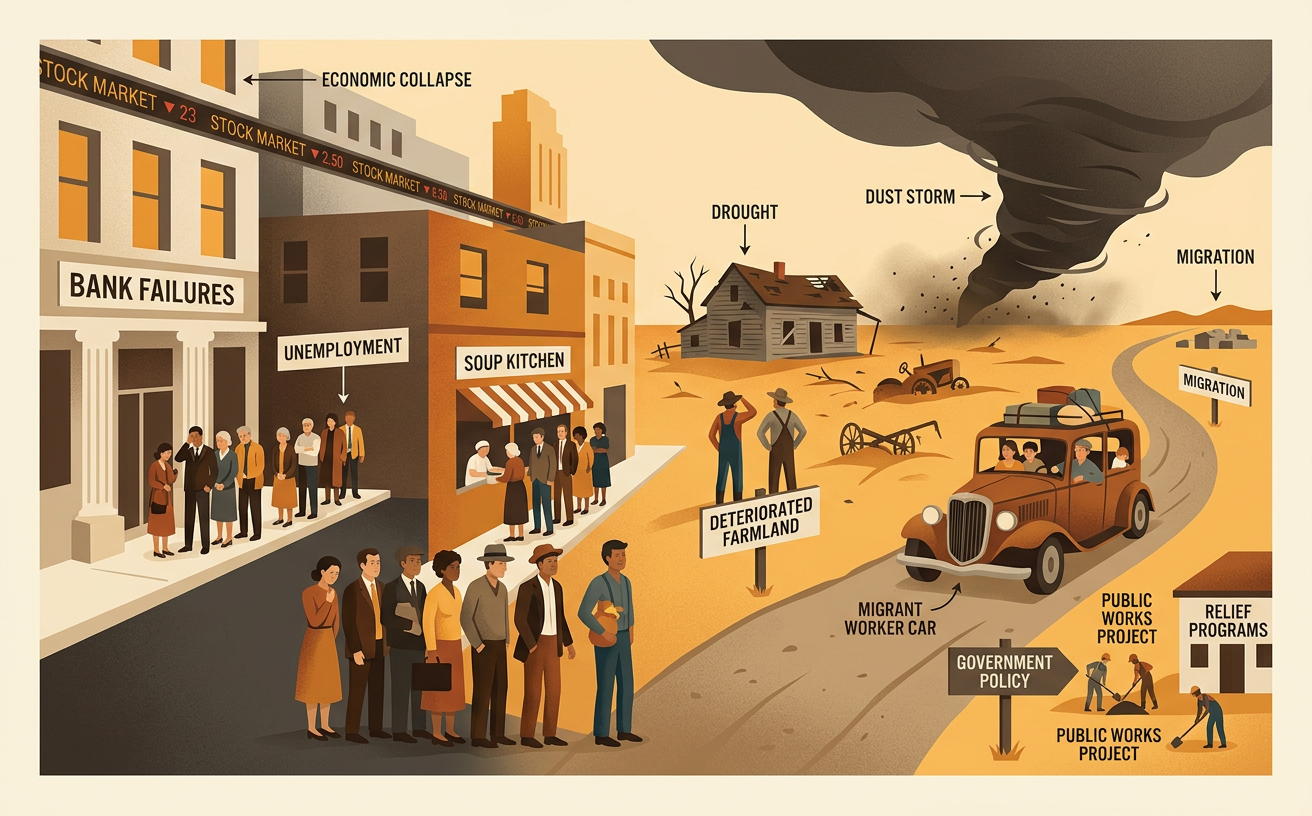
Illustrations are auto-generated and may be placeholders. They can be refreshed to match the narration.
The 1929 Stock Market Crash
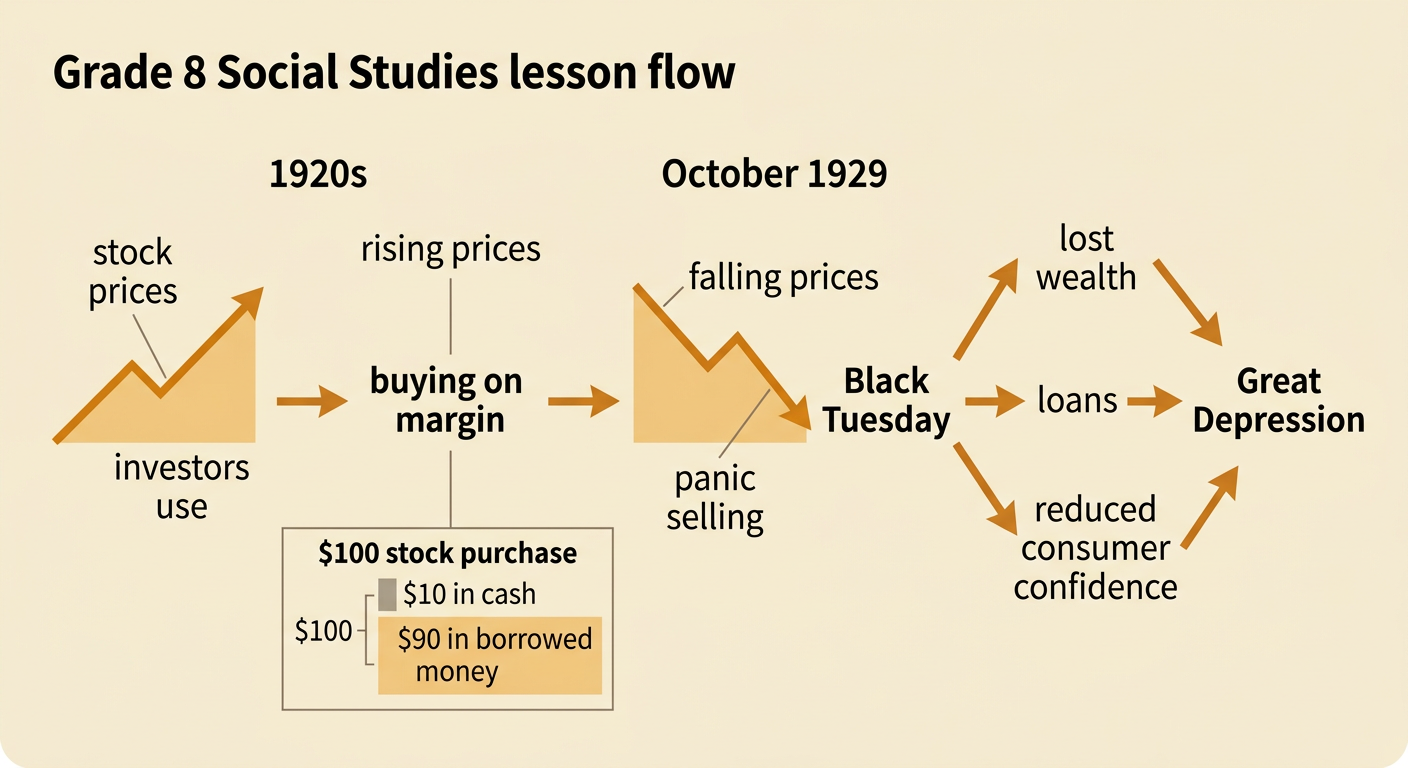
During the 1920s, stock prices rose rapidly, and many people expected them to keep rising. Some investors bought stocks on margin, meaning they borrowed most of the purchase price. When prices began falling in October 1929, worried investors rushed to sell. On October 29, known as Black Tuesday, millions of shares were traded as prices collapsed. For example, a person who paid $100 for stock using $10 of personal money and $90 in loans could lose the $10 and still owe money when the stock’s value fell. The crash destroyed wealth and confidence, but it did not cause the Great Depression by itself. Weak banks, unequal incomes, falling consumer demand, business failures, and international debt and trade problems also helped turn the crash into a long economic crisis.
Banks, Unemployment, and Hardship
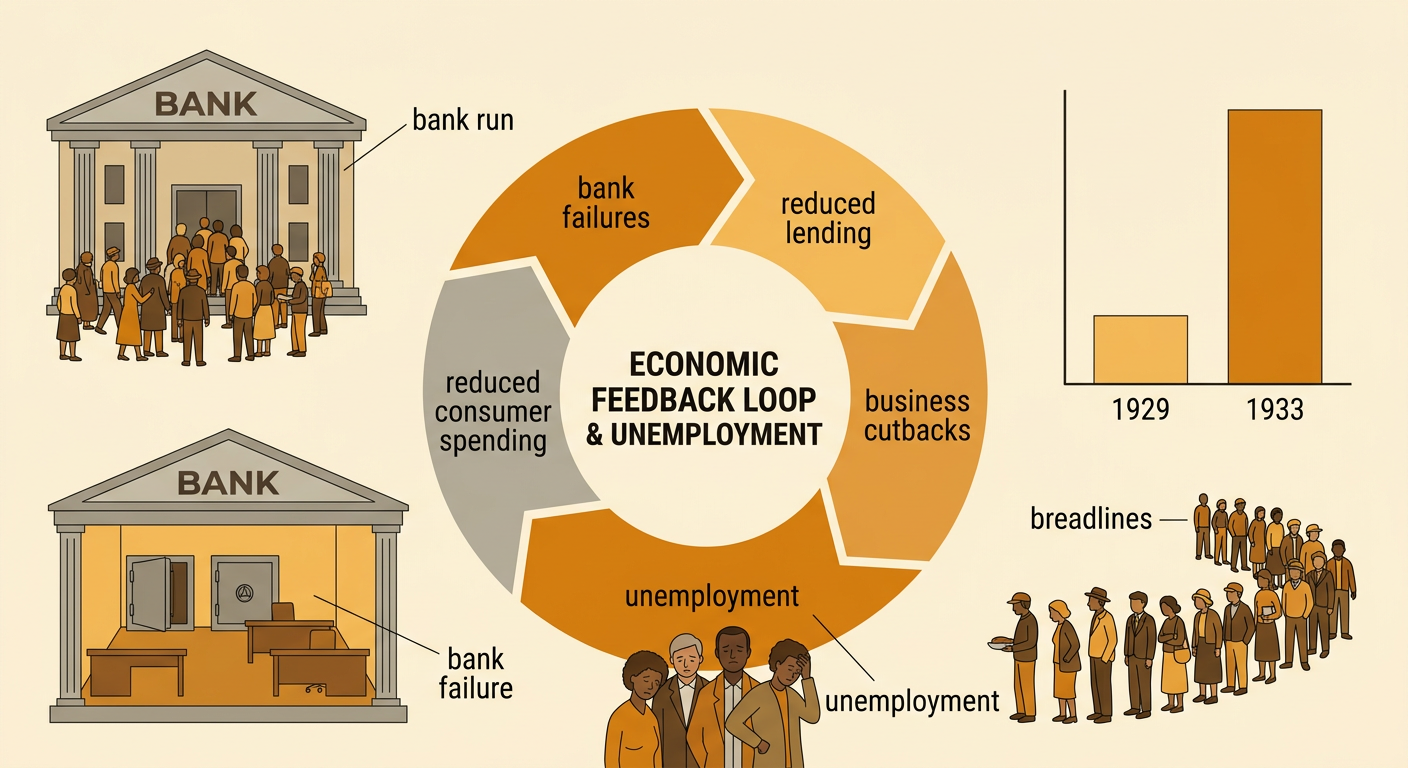
After the crash, many banks failed because they had made risky loans and did not have enough cash to repay every depositor at once. Fear sometimes caused bank runs, in which crowds tried to withdraw their savings. Because federal deposit insurance did not yet exist, families could lose money when a bank closed. Bank failures also reduced lending to farms and businesses. Companies then cut production, wages, and jobs as customers spent less. By 1933, about one-fourth of the U.S. labor force was unemployed. A laid-off factory worker, for example, might be unable to pay rent or buy food, causing a store or landlord to lose income too. Primary sources such as unemployment records, photographs of breadlines, and family letters provide evidence of how this cycle affected daily life.
Drought and Damaging Farming Practices
The Dust Bowl developed from both natural conditions and human decisions. During years of good rainfall and high crop demand, farmers plowed large areas of the Great Plains. Tractors made it possible to remove native grasses from more land. Those grasses had deep roots that held soil in place and helped it retain moisture. In the 1930s, severe drought dried exposed topsoil, and strong Plains winds carried it away in enormous dust storms. For example, a field left bare after a wheat harvest could lose much more soil than nearby land protected by grasses or crop residue. The drought was natural, but farming practices increased its effects. Evidence from rainfall records, soil studies, farm reports, and photographs helps historians and scientists explain why the same event had environmental, economic, and human consequences.

Dust Bowl Data and Migration
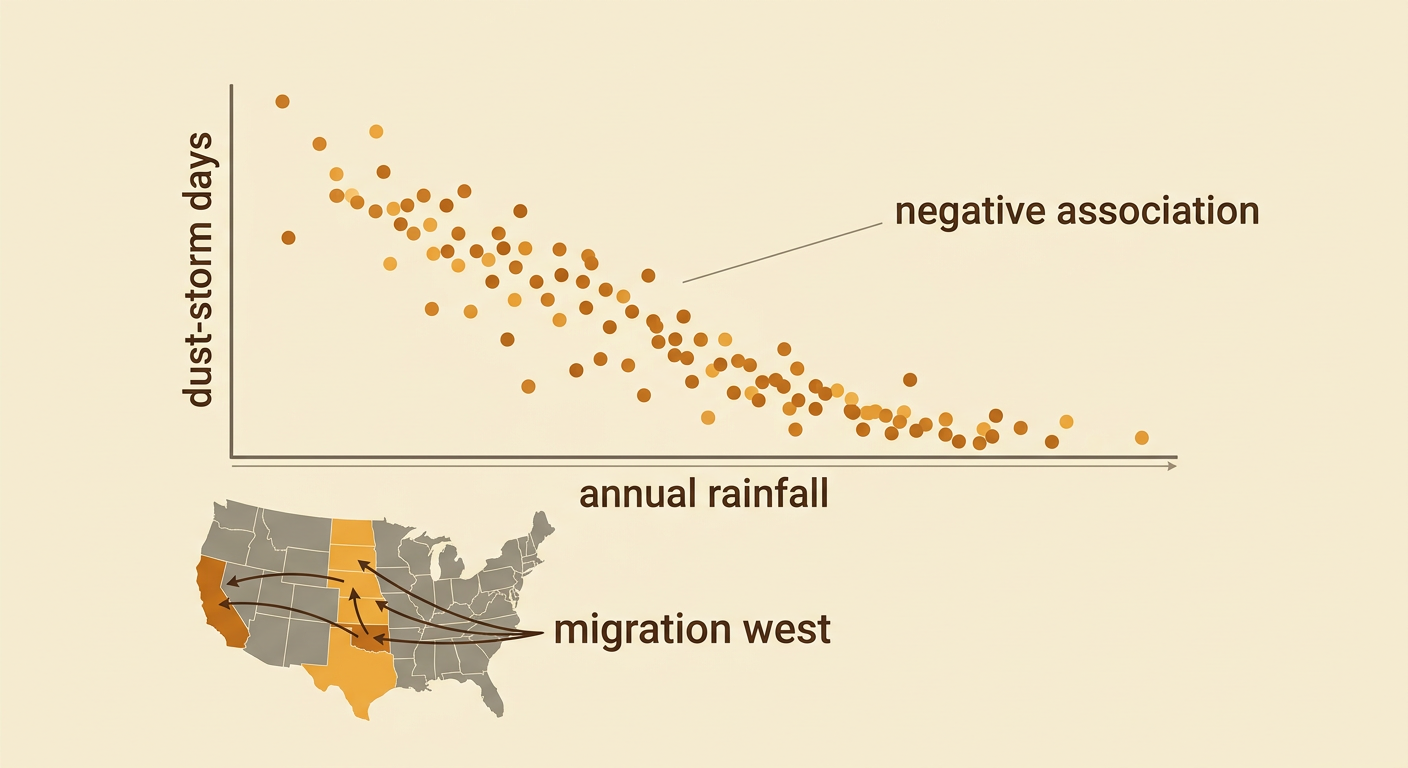
Data can help students test relationships among drought, erosion, and migration. A scatter plot might place annual rainfall on the horizontal axis and the number of dust-storm days on the vertical axis for one location over several years. If points generally slope downward from left to right, the data show a negative association: years with less rain tended to have more dust storms. This pattern supports a relationship, but it does not prove that rainfall was the only cause because wind, soil cover, and farming methods also mattered. Crop failures, debt, and dust storms pushed many Plains families to leave. During the 1930s, about 2.5 million people left the Great Plains states, although not all were Dust Bowl refugees. For example, some Oklahoma families traveled west to California seeking farmwork, where they often faced low wages, poor housing, and discrimination.
The New Deal Response
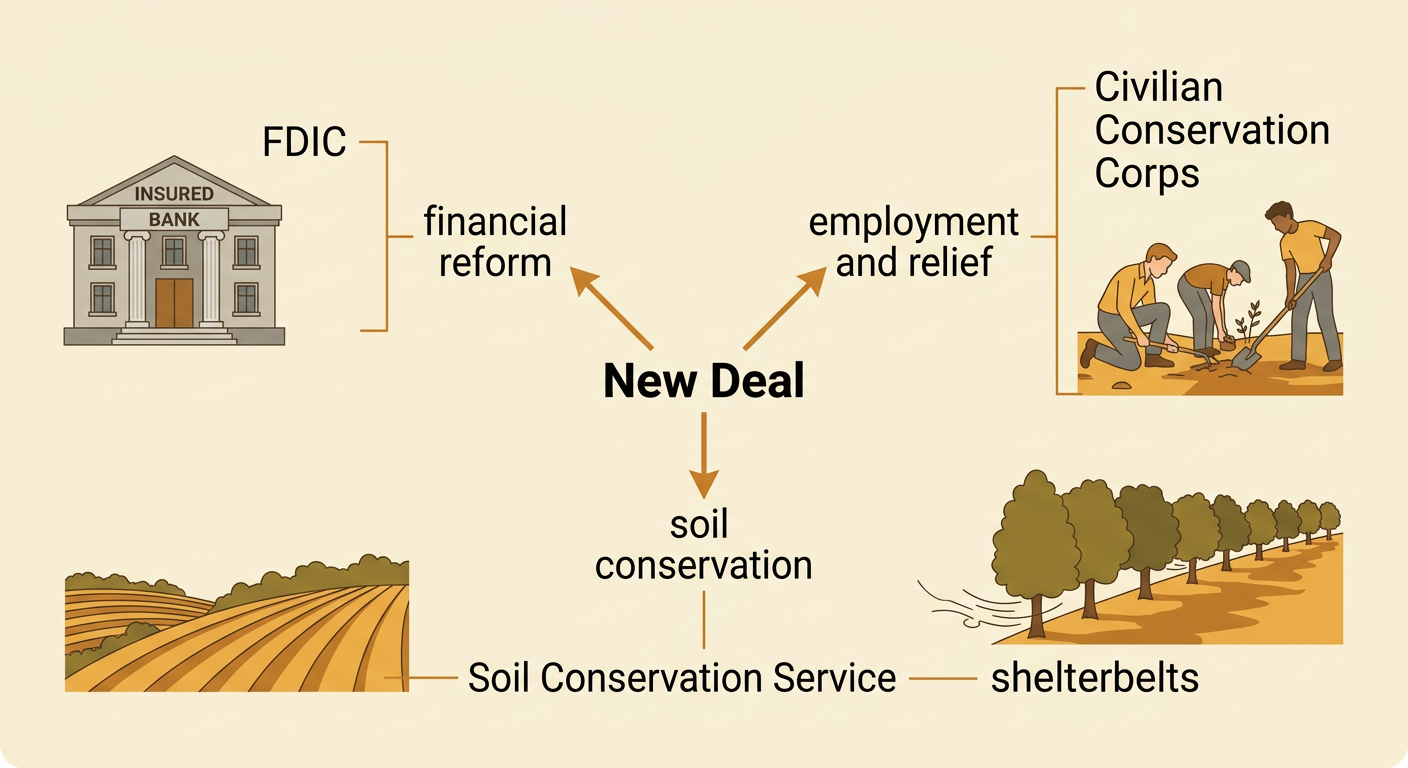
Beginning in 1933, President Franklin D. Roosevelt’s New Deal expanded the federal government’s role in economic recovery and relief. Banking reforms temporarily closed and inspected banks, while the Federal Deposit Insurance Corporation protected eligible deposits. The Securities and Exchange Commission later regulated stock markets. Work programs employed people on public projects, and the Civilian Conservation Corps hired young men for conservation work. In farming regions, the Soil Conservation Service promoted contour plowing, crop rotation, shelterbelts, and other methods that reduced erosion. For example, rows of trees planted across windy land slowed the wind before it reached exposed fields. New Deal policies did not end every hardship, and some programs excluded or disadvantaged Black Americans, Mexican Americans, women, and tenant farmers. Laws, speeches, employment data, and personal accounts can be compared to evaluate both achievements and limitations.
Lessons for Land and Economic Policy
The Great Depression and Dust Bowl show why governments and communities must monitor risks before a crisis becomes severe. Economic safeguards can include deposit insurance, responsible lending rules, market oversight, and unemployment assistance. Land protections can include keeping soil covered, rotating crops, reducing unnecessary tillage, and planting windbreaks. A modern monitoring plan might combine rain gauges, soil-moisture sensors, satellite images of plant cover, and regular measurements of wind erosion. Officials could set an action point: if soil moisture and ground cover fall below safe levels, farmers would receive warnings and support for protective practices. Students could graph rainfall and soil loss to evaluate whether the plan works. No single policy removes every risk, but evidence-based rules can reduce harm. The central historical lesson is that environmental and economic systems are connected, and public decisions can either increase vulnerability or strengthen resilience.
