The Industrial Revolution: Resources, Production, and Social Change
Students analyze historical evidence to explain how coal, technological innovation, labor, and investment transformed production and urban life during the Industrial Revolution.

Illustrations are auto-generated and may be placeholders. They can be refreshed to match the narration.
Britain Before Industrialization
Before industrialization, most British people lived in rural communities and worked in agriculture or small trades. Families often produced thread, cloth, tools, or other goods in their homes. Agricultural improvements, including crop rotation and selective breeding, increased food production and supported population growth. Enclosure reorganized many shared fields into privately controlled farms, changing rural work and sometimes displacing small farmers. Britain also had navigable rivers, expanding ports, overseas trade networks, and investors willing to finance new businesses. For example, merchants who earned money through Atlantic trade could invest capital in canals, mines, and textile machinery. These conditions did not cause industrialization by themselves. Together, however, available resources, labor, markets, transportation, and investment created a strong foundation for major changes in production.

Coal, Steam, and New Technology
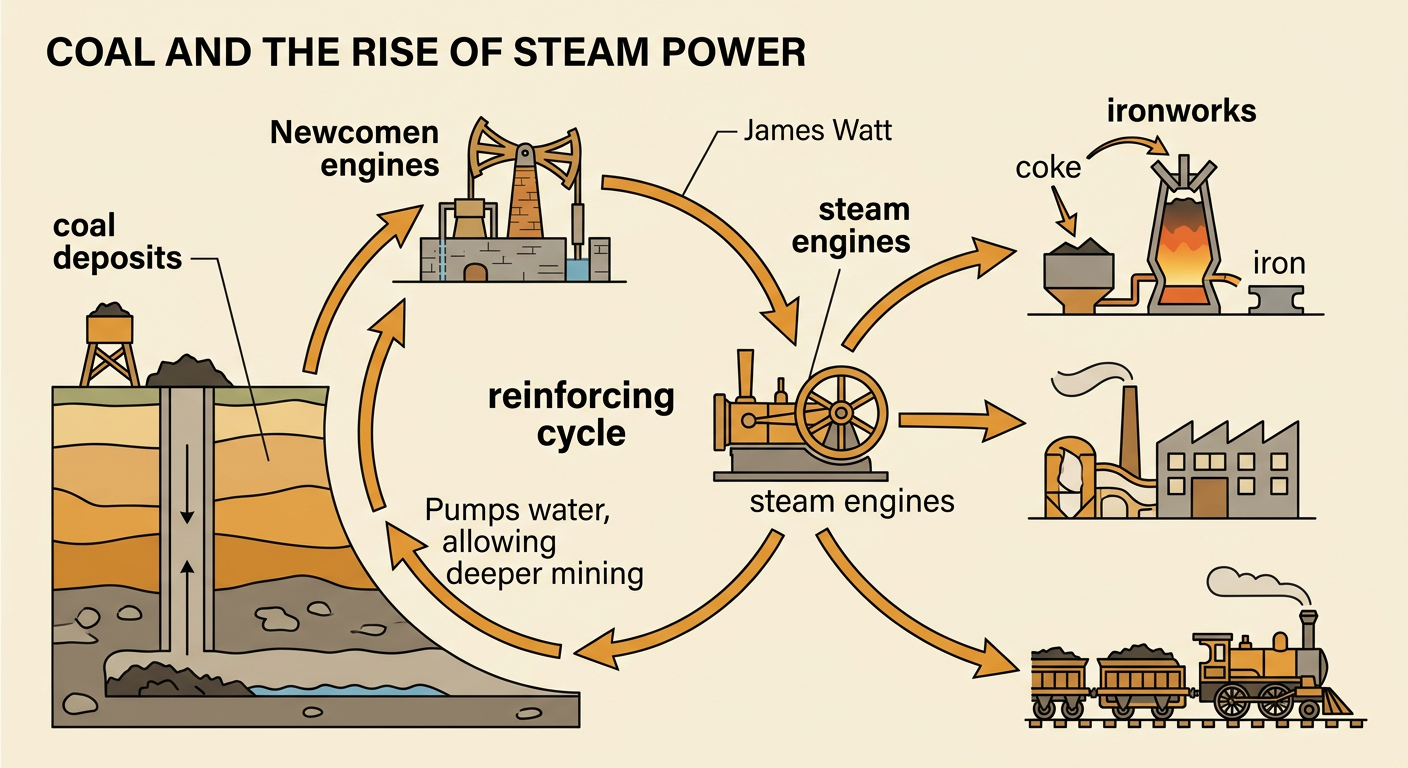
Britain possessed large coal deposits, including fields near growing towns and transportation routes. Coal provided concentrated energy for heating, metalworking, and steam engines. Early Newcomen engines pumped water from deep coal mines, allowing miners to reach additional deposits. In the late 1700s, James Watt improved steam-engine efficiency, and manufacturers increasingly used steam power to operate machinery. This created a reinforcing cycle: coal powered engines, engines expanded mining, and increased coal supplies powered more factories and transportation. Coke, a fuel made from coal, also helped iron producers smelt larger amounts of iron. For example, steam engines eventually allowed textile mills to operate in cities near workers and markets rather than only beside fast-flowing rivers. Natural resource availability influenced where people built mines, factories, railways, and industrial towns.
From Cottage Industry to Factories
Before factories, merchants used the putting-out system, supplying raw materials to families who spun thread or wove cloth at home. Workers usually controlled their own pace, but production was scattered and difficult for merchants to supervise. New machines changed this arrangement. Devices such as the spinning jenny, water frame, and power loom produced textiles faster, but many were too large or expensive for a cottage. Investors built factories that gathered machines, energy sources, and workers in one place. Richard Arkwright’s Cromford Mill, opened in 1771, used water-powered spinning machinery and employed adults and children under fixed schedules. Factory production increased output and lowered the cost of many goods. It also transferred control over time, tools, and working rules from households and skilled workers to owners and managers.

Urbanization and Working Conditions
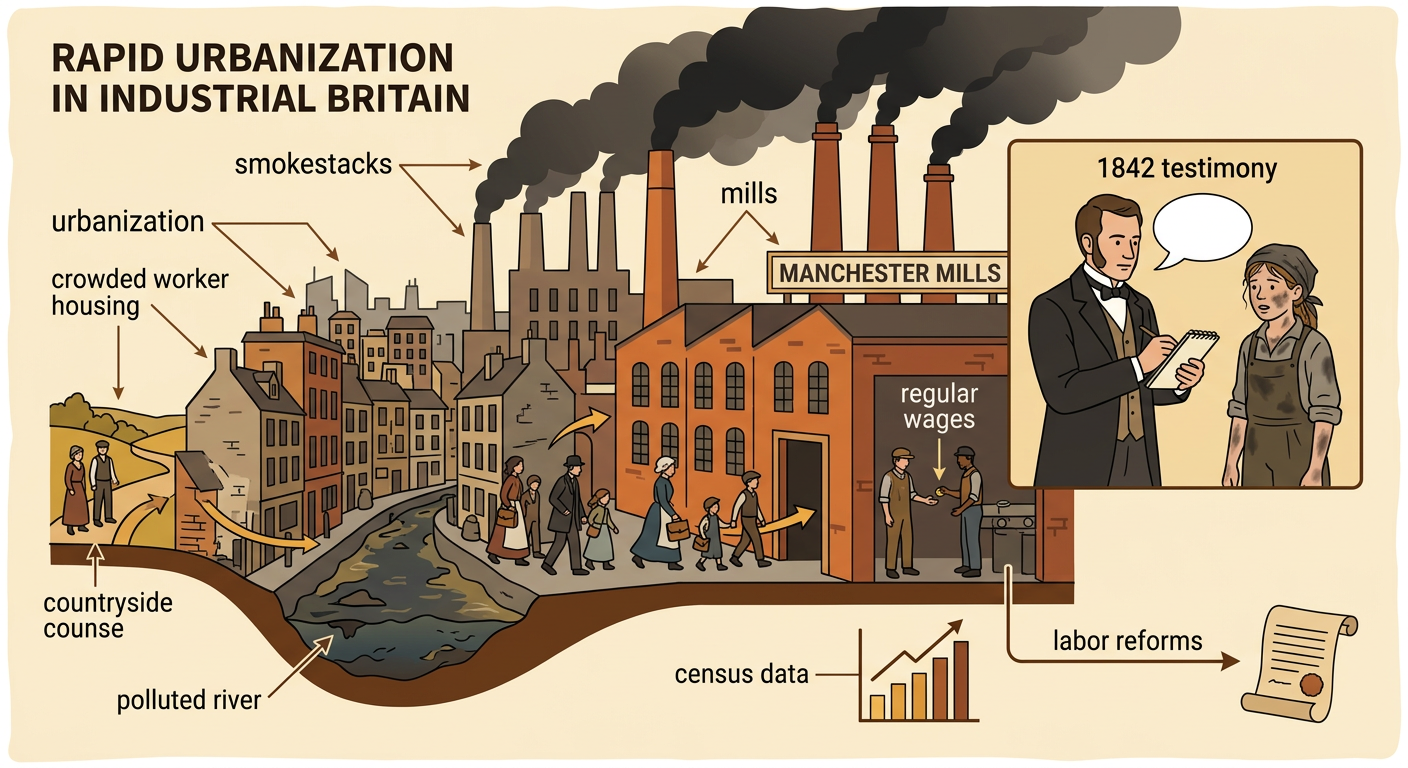
Factories attracted workers to industrial towns, causing rapid urbanization. Cities such as Manchester expanded faster than housing, sanitation, and clean-water systems could develop. Many working-class families lived in crowded neighborhoods near mills, mines, and polluted rivers. Factory labor could provide regular wages, but shifts were often long, injuries were common, and workers had limited power to challenge employers. Women and children were widely employed because owners could often pay them less than adult men. In 1842, British investigators published testimony describing dangerous mine labor performed by children and women. Such reports helped build support for labor reforms, including limits on child labor and working hours. Historians must still compare testimony, government records, census data, and factory reports because each source reflects a particular purpose and perspective.
Evaluating Causes and Consequences
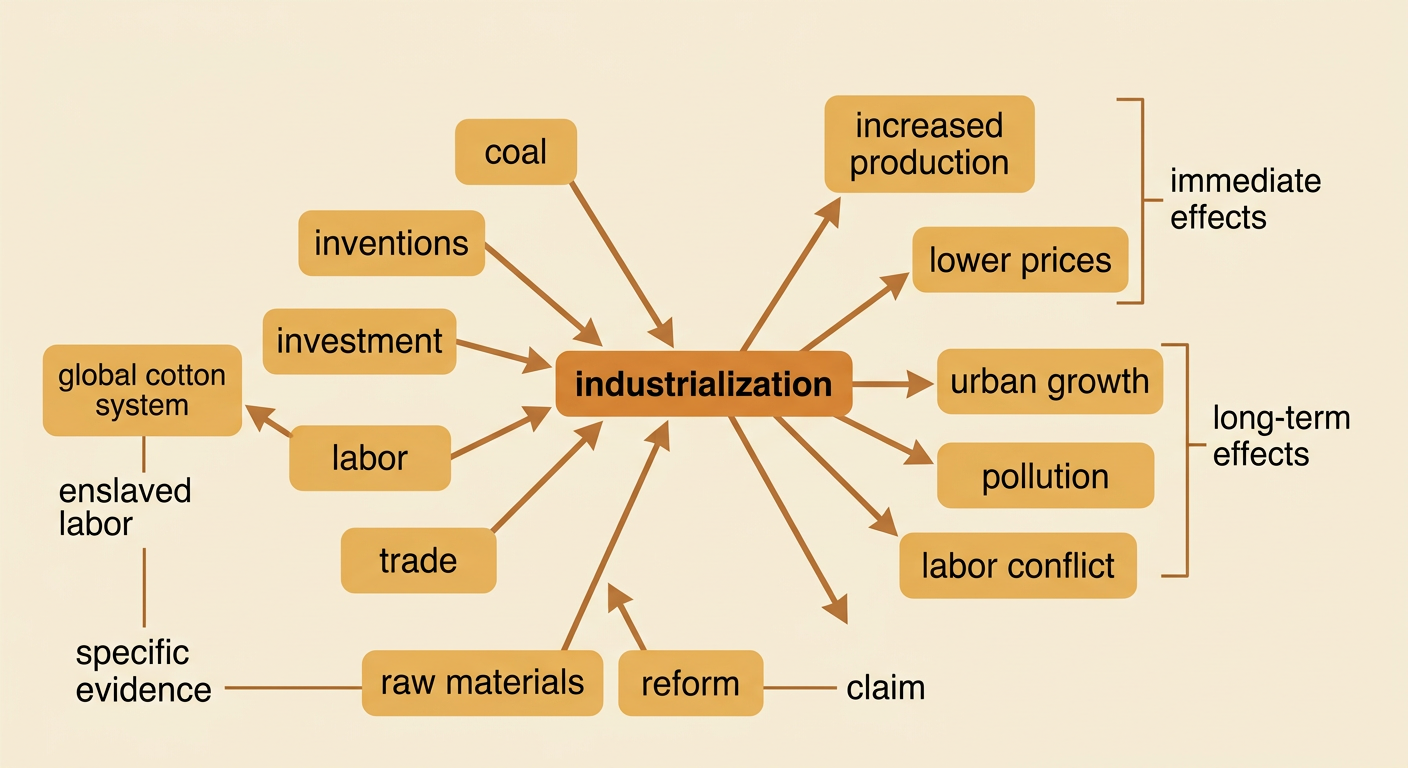
The Industrial Revolution had no single cause. Britain’s coal deposits supplied energy, inventions increased productivity, investors financed machinery, workers provided labor, and trade networks connected factories to raw materials and consumers. These causes interacted. For example, British cotton mills depended on machinery and steam power, but they also relied heavily on raw cotton produced by enslaved labor in the United States. Industrialization increased the quantity of goods and eventually made many products less expensive. It also contributed to urban crowding, pollution, harsh labor systems, and wider global demand for resources. A strong historical explanation states a claim, cites specific evidence, and explains how the evidence supports the claim. Students should also compare sources and distinguish immediate effects, such as factory employment, from long-term effects, such as labor laws, expanded cities, and increased fossil-fuel use.