The Three Branches of the U.S. Government
Students explore how the legislative, executive, and judicial branches divide power and use checks and balances.
Illustrations are auto-generated and may be placeholders. They can be refreshed to match the narration.
Why Governments Divide Power
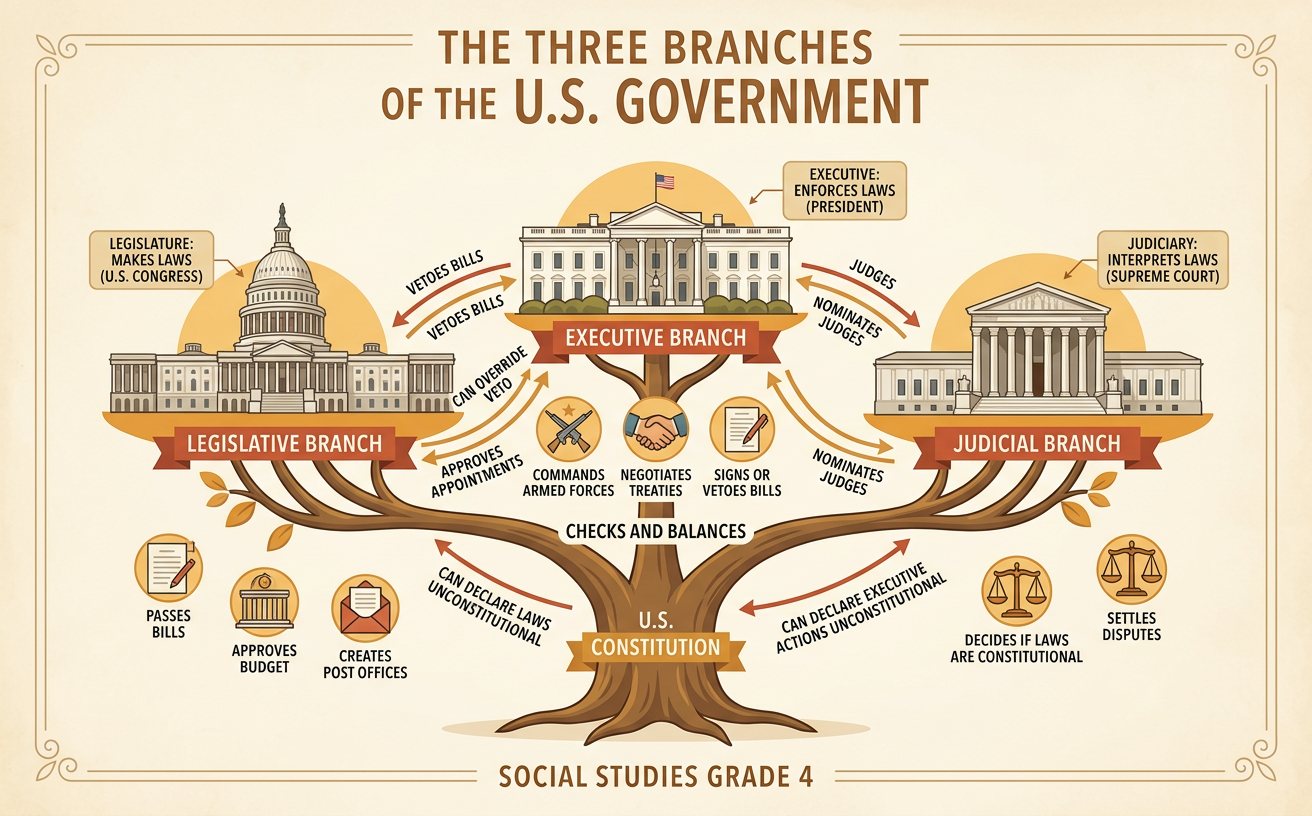
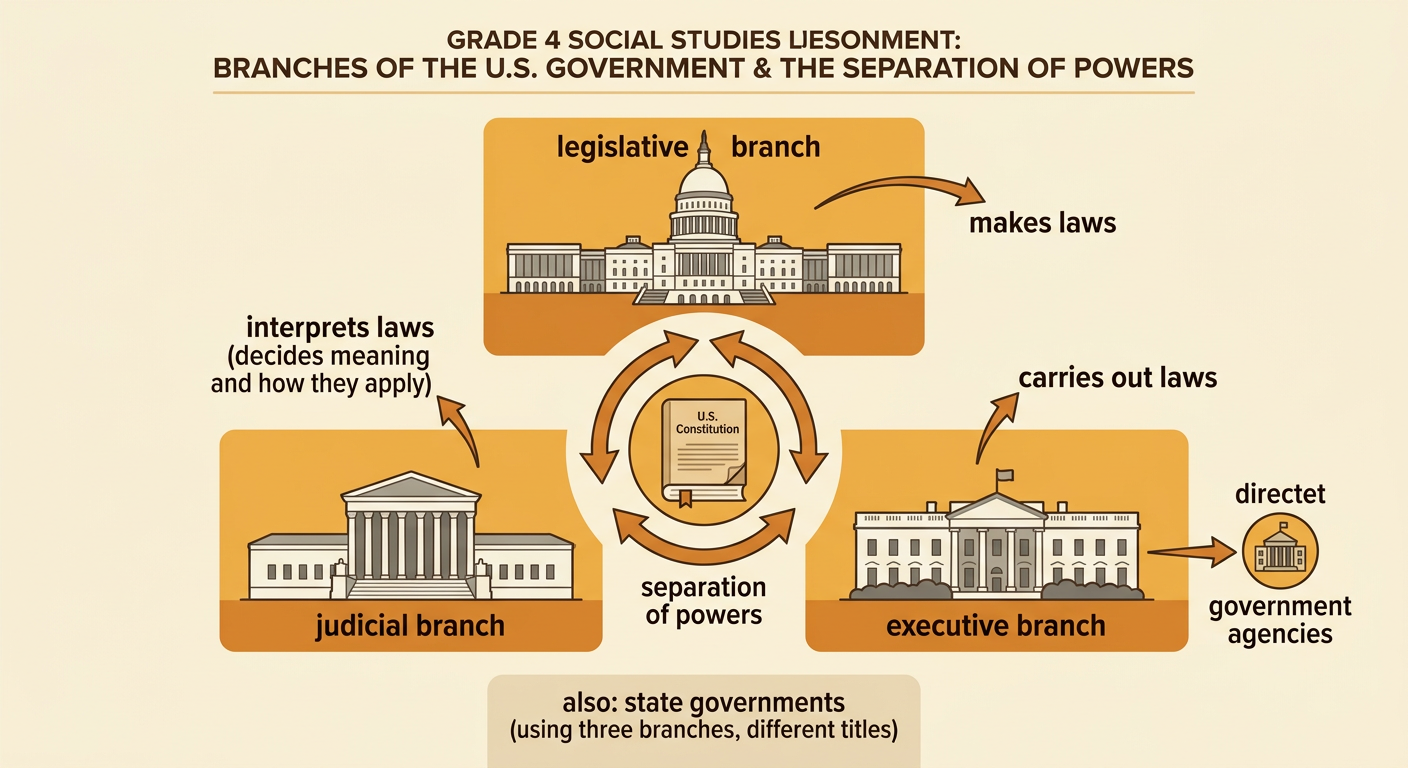
The U.S. Constitution divides the federal government’s power among three branches. The legislative branch makes laws, the executive branch carries out laws, and the judicial branch interprets laws. This division is called separation of powers. It helps prevent one person or group from controlling every government decision. Each branch has its own responsibilities, but the branches must also work together. For example, Congress may pass a law that protects national parks. The president then directs executive agencies to carry out the law. If people disagree about what the law means or whether it follows the Constitution, a federal court may decide the issue. State governments also usually have legislative, executive, and judicial branches, although their officials have different titles and responsibilities.
The Legislative Branch
The legislative branch is Congress, which meets in the U.S. Capitol. Congress has two parts: the House of Representatives and the Senate. Voters in each state elect members of both parts. Members write, discuss, and vote on bills, which are proposed laws. A bill must pass both the House and the Senate before it can be sent to the president. Congress also decides how federal money may be spent, investigates government activities, and has the power to declare war. For example, a representative might introduce a bill to provide money for libraries on military bases. House members and senators could debate and change the bill. If both chambers approve the same version, it goes to the president for action.

The Executive Branch
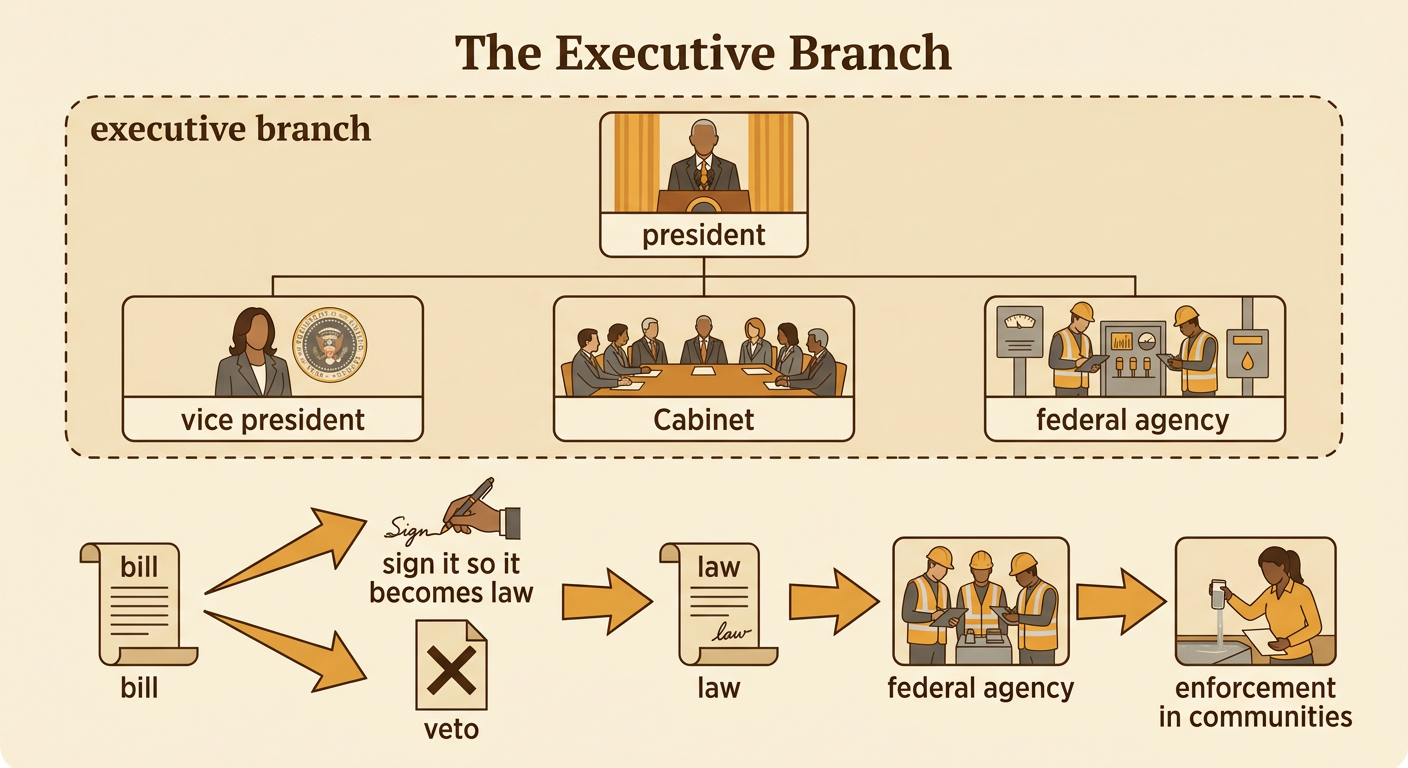
The executive branch carries out and enforces federal laws. The president leads this branch, while the vice president, Cabinet members, and many federal agencies help. The president may sign a bill to make it a law or veto, meaning reject, the bill. The president also directs executive agencies, represents the country in relations with other nations, and serves as commander in chief of the armed forces. However, the president must follow the Constitution and laws passed by Congress. For example, if Congress passes and the president signs a law requiring cleaner drinking water, an executive agency may create procedures, inspect water systems, and explain how communities must follow the law. The executive branch puts the law into action; it does not pass the law by itself.
The Judicial Branch
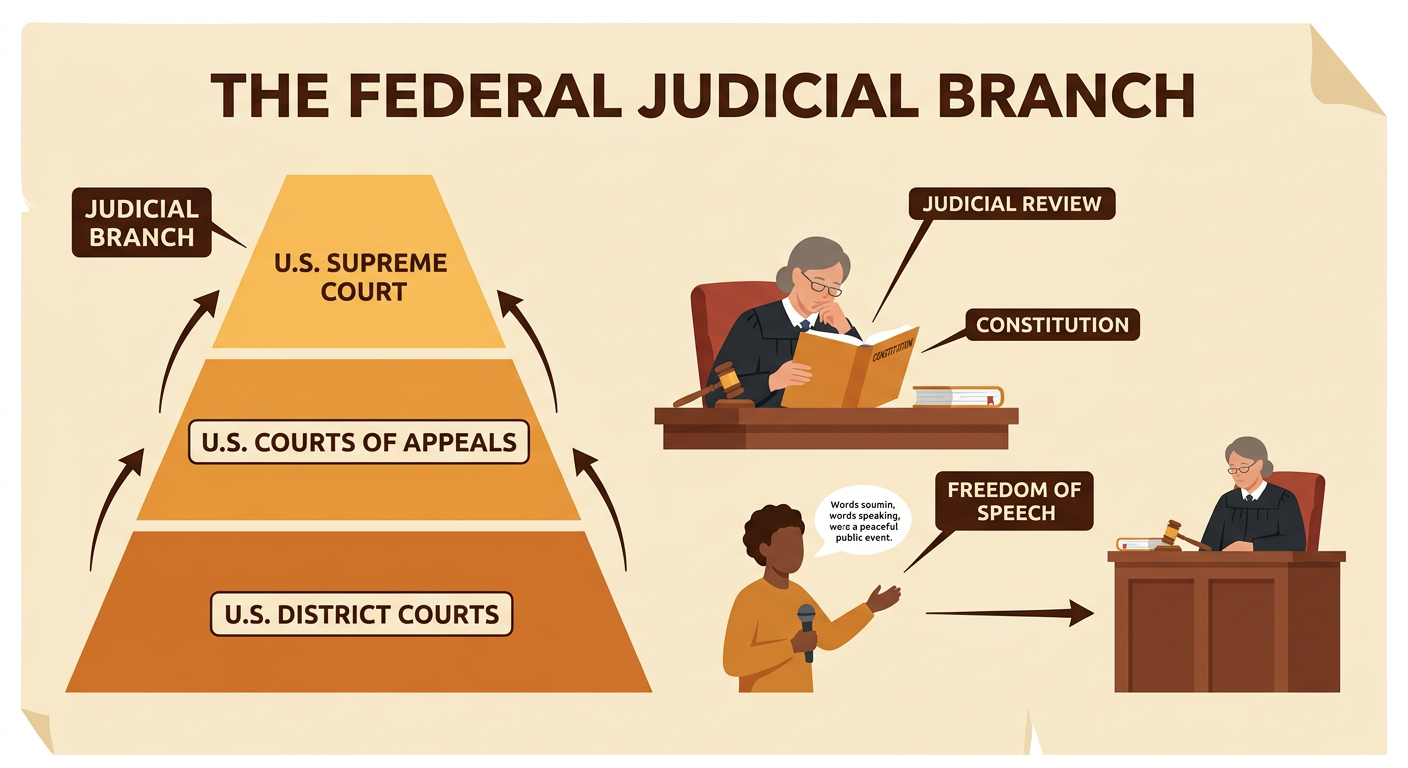
The judicial branch includes the U.S. Supreme Court and other federal courts. Judges hear cases involving federal laws, the Constitution, or disagreements that belong in federal court. They interpret laws by deciding what the words mean and how they apply to a case. Courts can also determine that a law or government action conflicts with the Constitution. This power is called judicial review. Federal judges are nominated by the president and must be confirmed by the Senate. They do not campaign for election to these positions. For example, suppose a federal rule limits what people may say at a peaceful public event. People might challenge the rule in court. Judges would examine the facts, the rule, and the Constitution before deciding whether the rule violates freedom of speech.
Checks and Balances
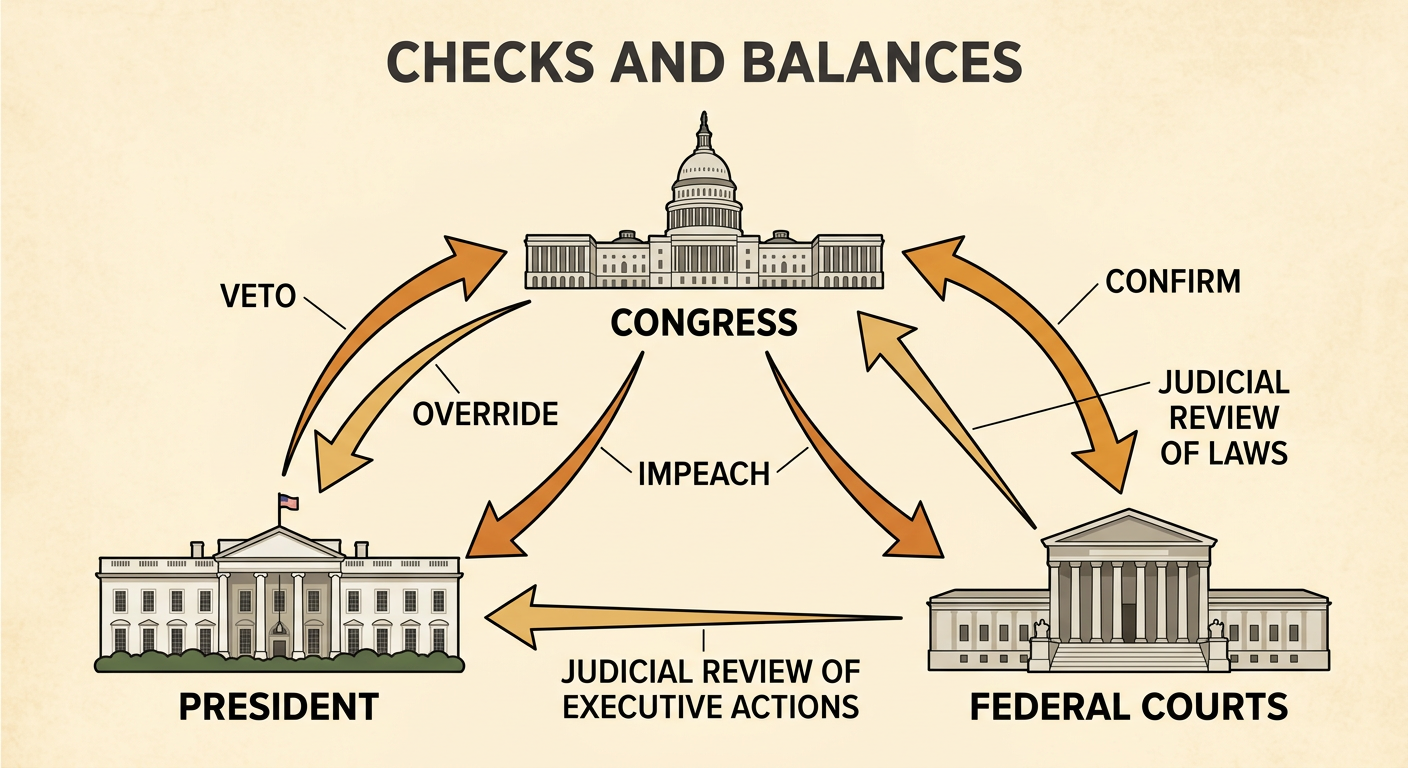
Checks and balances are powers that allow each branch to limit certain actions of the other branches. These checks keep power from gathering in one place. Congress passes bills, but the president can veto them. Congress can override a veto if two-thirds of both the House and Senate vote to do so. The president nominates federal judges, but the Senate must confirm them. Courts can rule that a law or executive action violates the Constitution. Congress can also impeach federal officials, and the Senate holds trials to decide whether impeached officials should be removed. For example, if the president vetoes a transportation bill, Congress may reconsider it. If enough representatives and senators support the bill, they can override the veto, and the bill becomes law without the president’s signature.
Branch-Matching Review
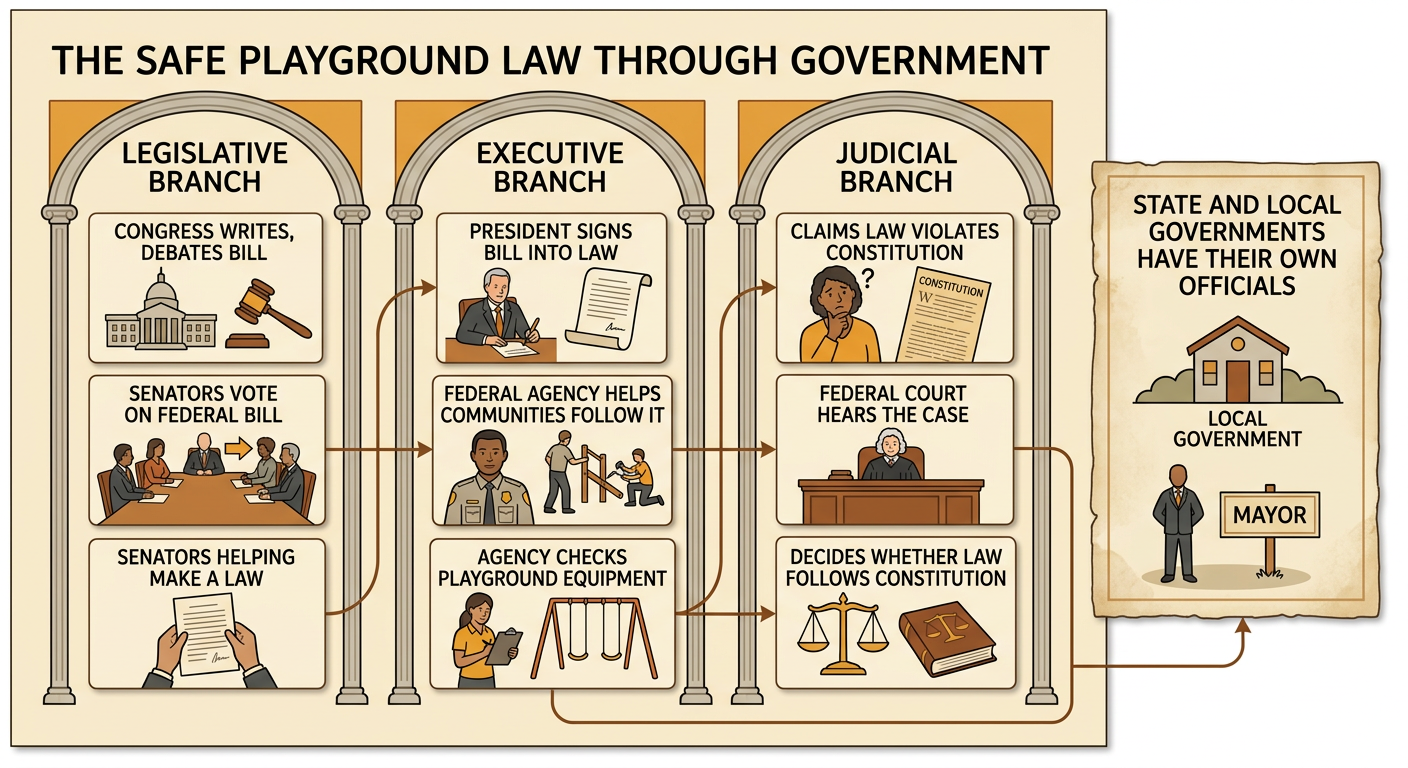
You can identify a branch by asking what government action is taking place. If officials are writing, debating, or voting on a federal bill, the action belongs to the legislative branch. If the president or a federal agency is carrying out a law, it belongs to the executive branch. If judges are deciding what a law means or whether it follows the Constitution, it belongs to the judicial branch. Consider a new federal law about safe playground equipment. Congress writes and passes the bill. The president signs it, and an executive agency helps carry it out. If someone claims the law violates the Constitution, a federal court hears the case. Remember that state and local governments have their own officials and powers. A mayor, for example, is a local executive official, not the president.