The Three Sisters: Indigenous Agriculture and Community Life
Students examine how many Indigenous nations cultivated corn, beans, and squash together and connected this agricultural knowledge to community life and the environment.

Illustrations are auto-generated and may be placeholders. They can be refreshed to match the narration.
What Are the Three Sisters?
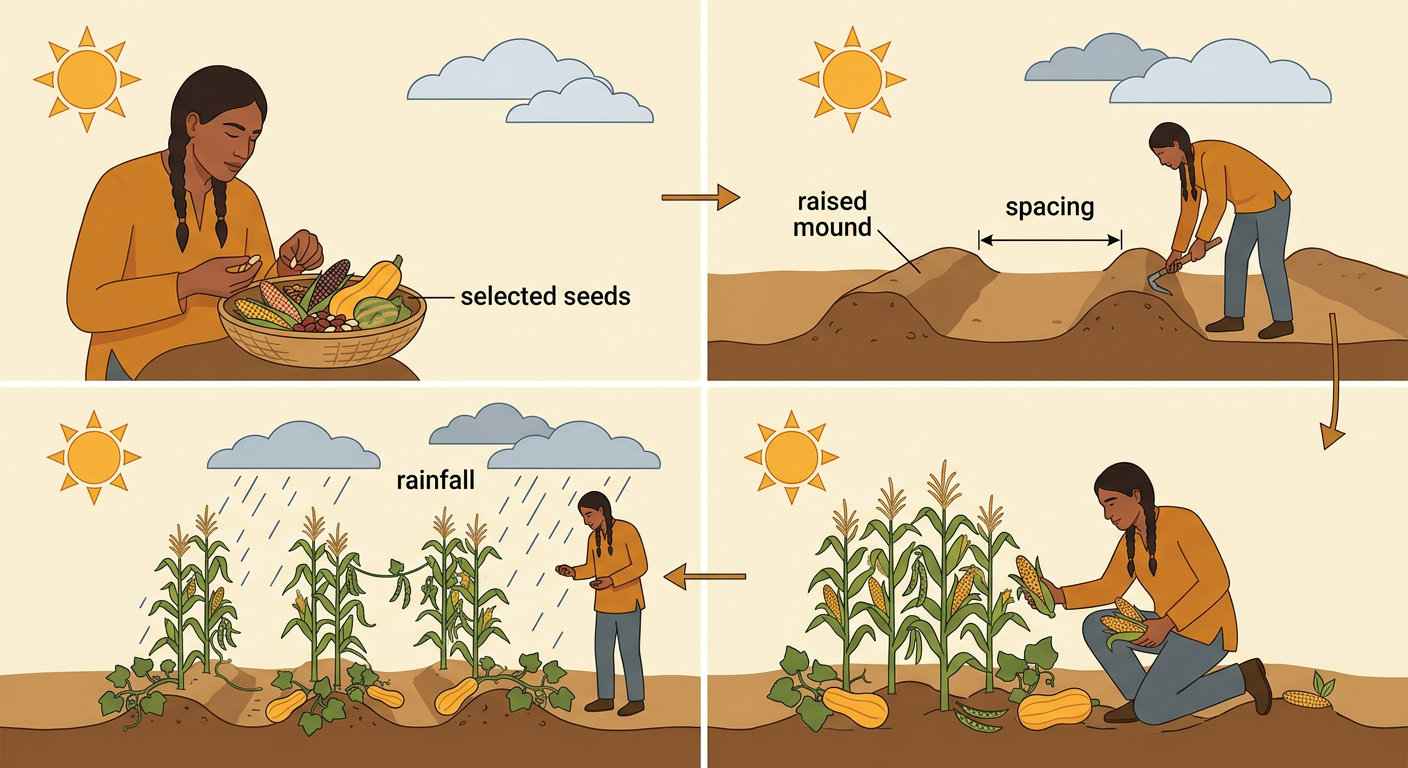
The Three Sisters are corn, beans, and squash grown together in one planting area. Many Indigenous nations of North America developed and used this farming system, especially in the Eastern Woodlands and parts of the Southwest, although practices differed by nation and environment. Farmers often planted several corn seeds in a small mound. After the corn began growing, they planted beans nearby and squash around the mound. The plants were important foods that could be eaten fresh, cooked, dried, or stored. For example, a Haudenosaunee farmer might have planted corn first so its stalk would be tall enough to support climbing bean vines. This system shows that agriculture was based on careful observation, experience, and knowledge passed from one generation to the next.

How the Plants Support One Another
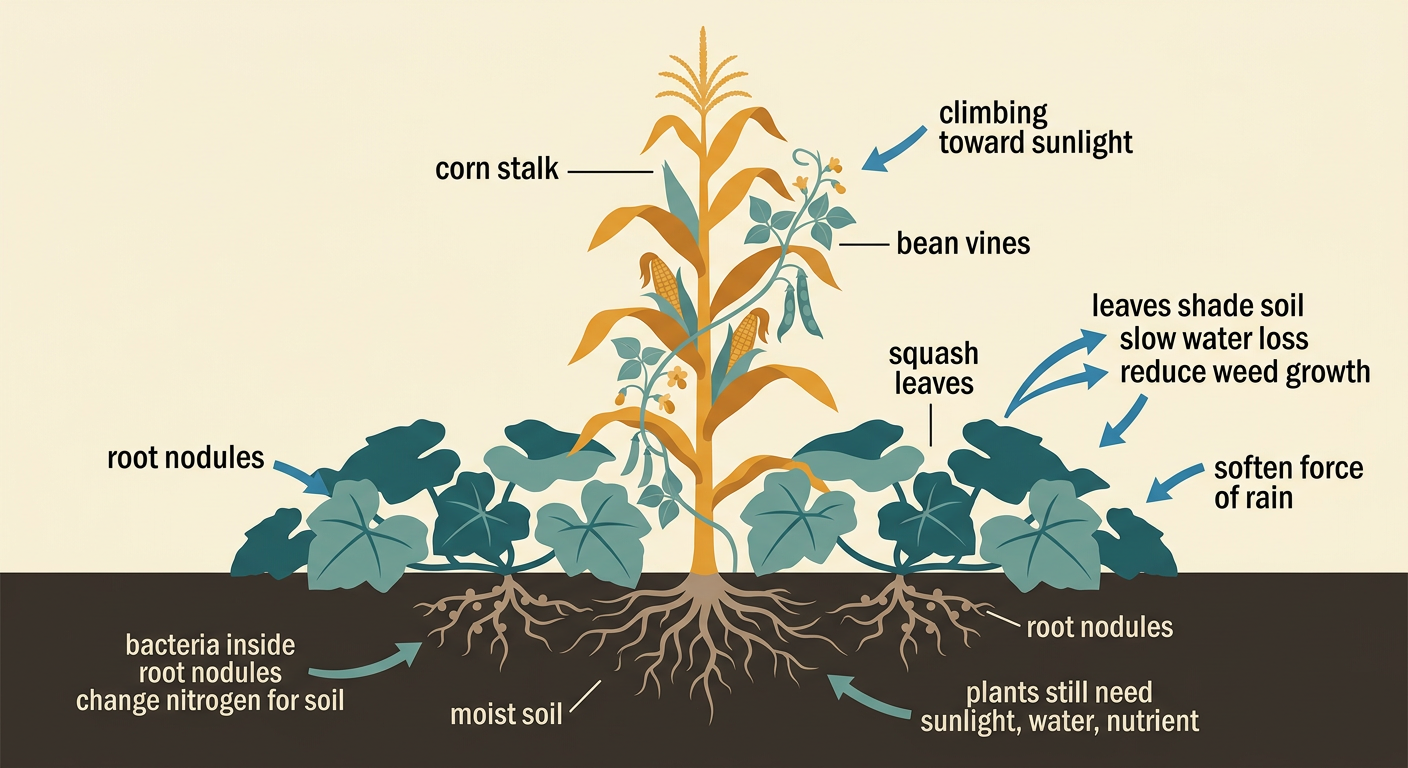
Each of the Three Sisters has structures that help it survive and can also benefit the planting area. A corn plant has a strong, upright stalk that gives climbing bean vines support. Bean plants have curling stems that wrap around the corn. Bacteria living in nodules on bean roots change nitrogen from the air into forms that can enter the soil and be used by plants. Squash has broad leaves and long vines that cover the ground. This cover can slow water loss, reduce some weed growth, and protect soil from heavy rain. For example, after a hot day, soil beneath squash leaves may remain cooler and moister than bare soil. The plants do not remove the need for sunlight, water, nutrients, and care, but their different structures help them share space effectively.
Indigenous Knowledge and Innovation
The Three Sisters system is an example of Indigenous scientific knowledge and agricultural innovation. Over many generations, farmers observed plant growth, weather, soil, insects, and seasonal changes. They tested planting times, seed types, mound sizes, and spacing, then shared successful practices. Methods were not identical everywhere. Communities adapted farming to local conditions such as rainfall, temperature, soil, and the length of the growing season. For example, a community in a dry region might space plants farther apart to reduce competition for limited water, while farmers in a wetter area might use raised mounds to improve drainage. Indigenous farmers also selected seeds from healthy plants, helping create varieties suited to local environments. This knowledge demonstrates how culture influences the ways people modify land while adapting to the opportunities and limits of an ecosystem.
Food, Culture, and Community
Corn, beans, and squash supported both daily meals and community life for many Indigenous nations. Together, these foods provide carbohydrates, protein, fiber, vitamins, and minerals. They could also be dried and stored for times when fresh food was scarce. People worked together to prepare fields, plant seeds, control weeds, harvest crops, preserve food, and cook meals, although responsibilities varied among nations and families. For example, harvested corn and beans could be dried for storage and later cooked with squash in a nourishing soup or stew. Among the Haudenosaunee, the Three Sisters also have cultural and spiritual importance and appear in teachings and ceremonies. Agriculture was therefore more than a way to obtain food. It connected knowledge, responsibilities, gratitude, seasonal activities, and relationships among people, plants, land, and future generations.

Reading Evidence and Drawing Conclusions
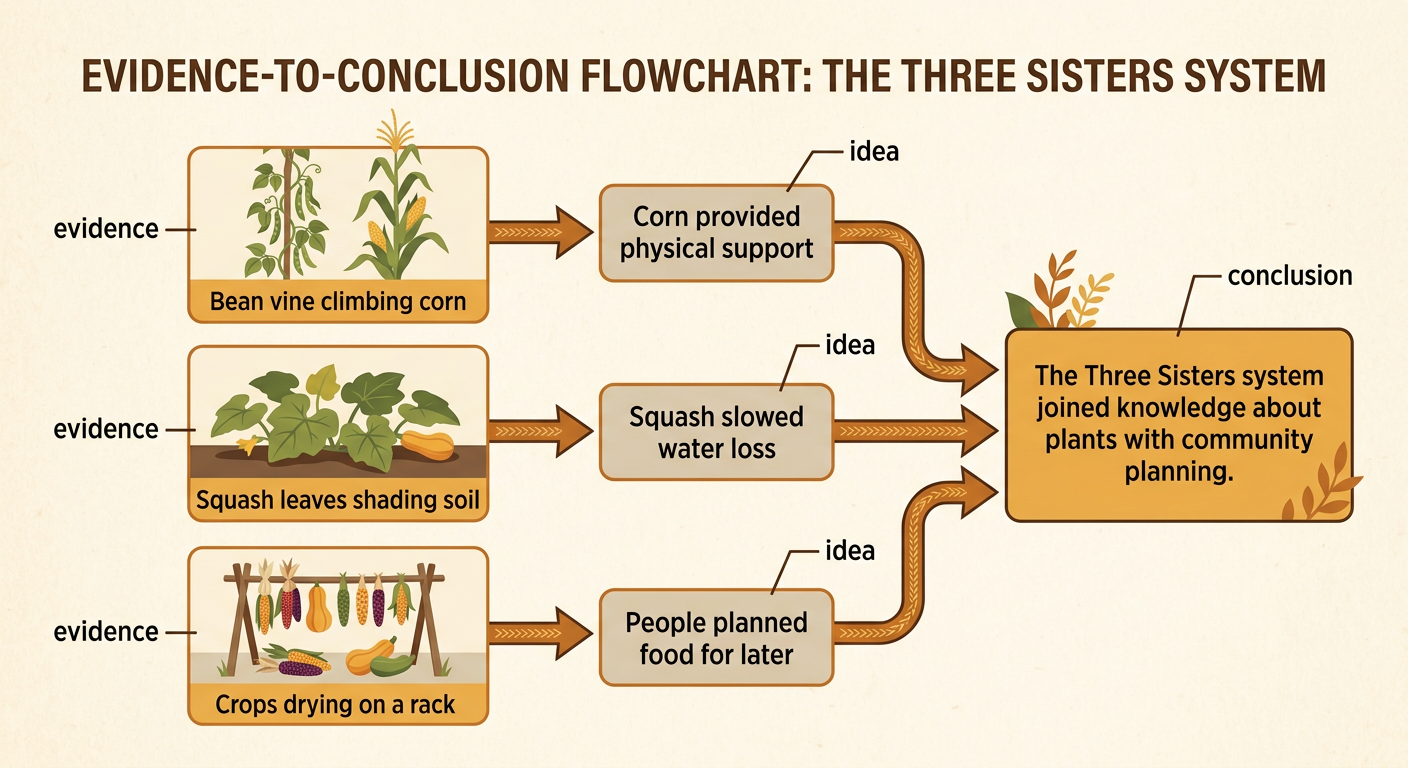
Readers use details from historical and scientific texts to explain how the Three Sisters system worked. First, identify statements that can serve as evidence. A text might say that bean vines climbed corn stalks, squash leaves shaded the ground, and families dried crops after the harvest. Next, connect each detail to an idea. The climbing vines are evidence that corn provided physical support. The shaded soil is evidence that squash helped slow water loss. Drying crops is evidence that people prepared food for later use. Finally, draw a conclusion that is supported by several details. For example, a reader could conclude that the planting system joined plant science with community planning. A strong conclusion does not depend on a guess. It explains how specific evidence supports an idea and recognizes that agricultural practices varied among Indigenous nations and environments.