The Transcontinental Railroad: Engineering, Labor, and Consequences
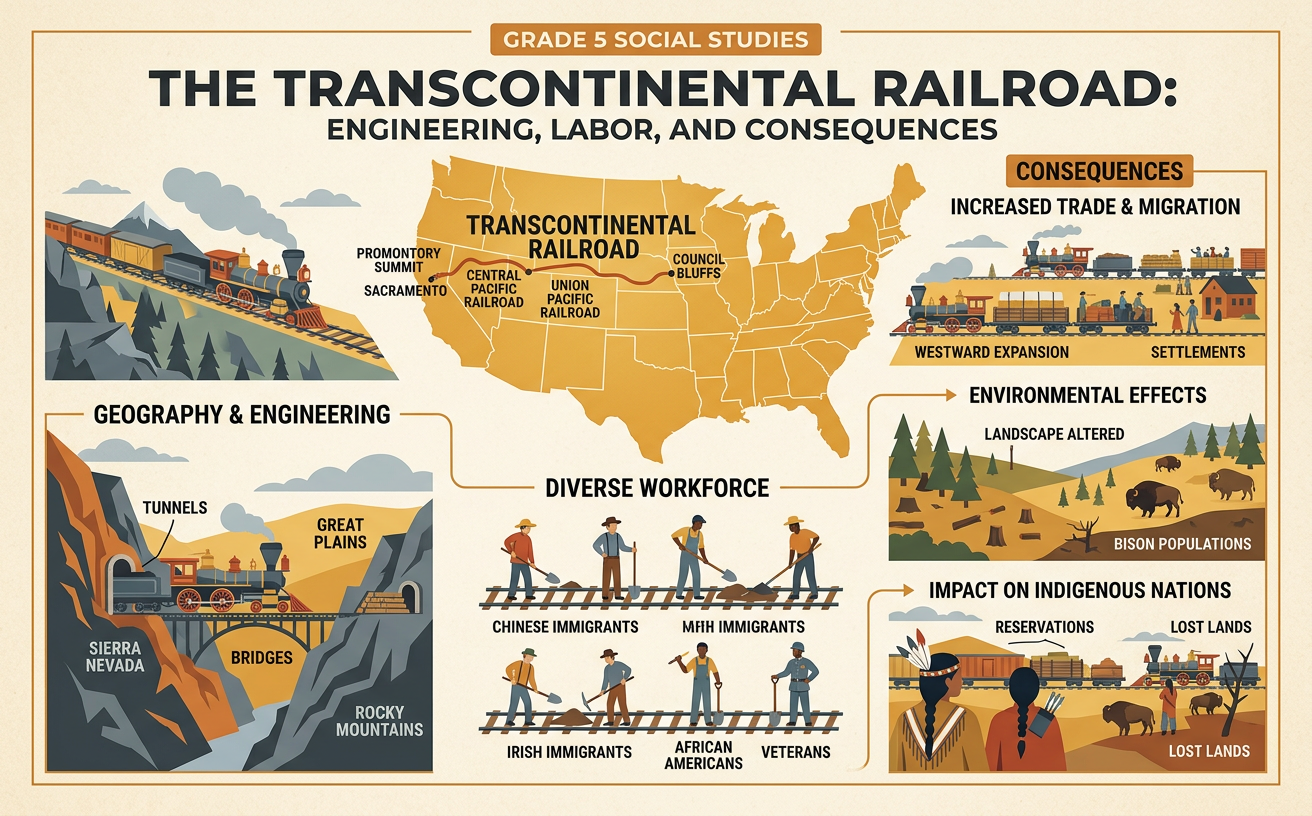
Students examine how geography, engineering decisions, and a diverse workforce made the transcontinental railroad possible while evaluating its effects on trade, migration, the environment, and Indigenous nations.
Illustrations are auto-generated and may be placeholders. They can be refreshed to match the narration.
Why Build a Railroad?
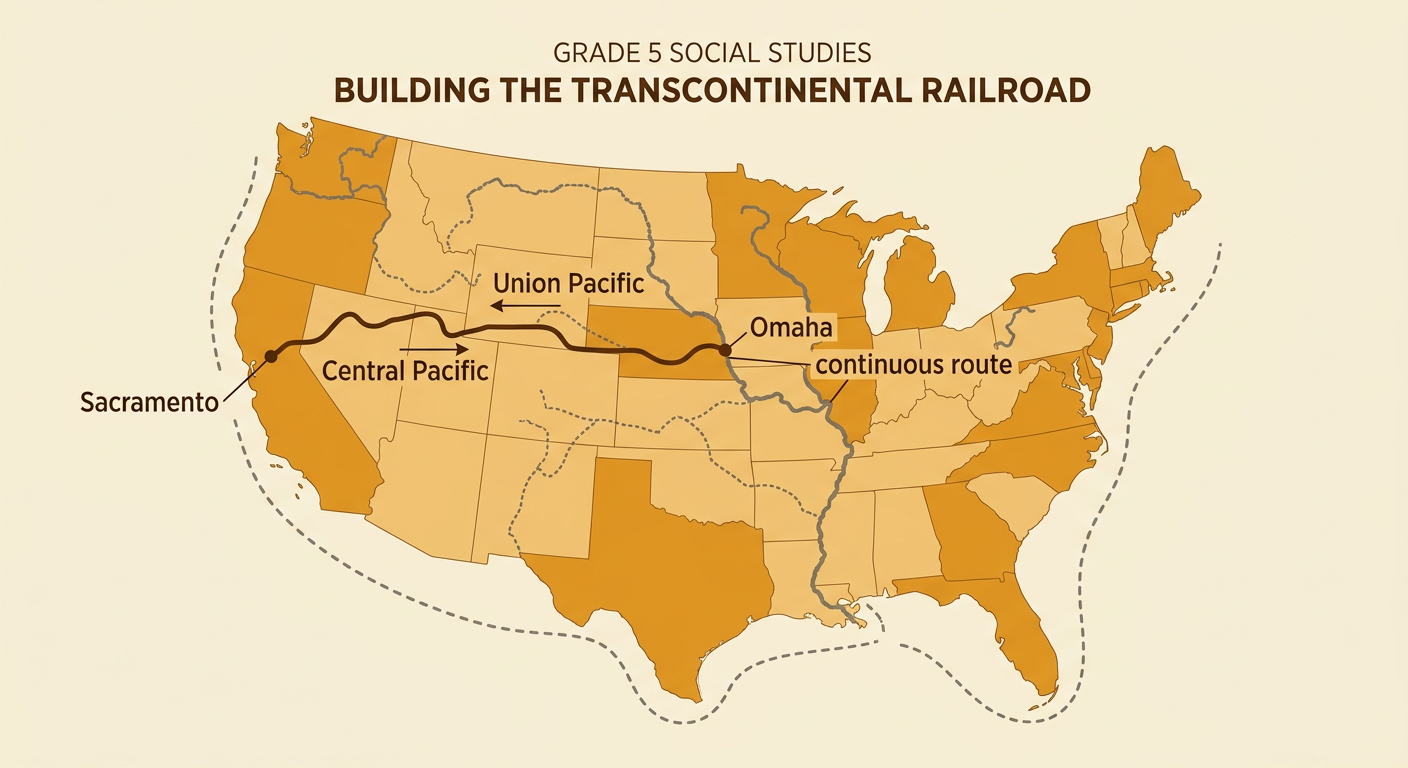
In the 1860s, traveling between the eastern and western United States was slow, expensive, and dangerous. People and goods moved by wagon, ship, riverboat, or short railroad lines that did not cross the continent. The federal government supported a connected railroad to shorten travel, carry mail and products, encourage settlement, and strengthen control of western lands. The Pacific Railway Acts gave railroad companies loans and land for construction. The Union Pacific built west from Omaha, Nebraska, while the Central Pacific built east from Sacramento, California. Geography, limited money, available materials, and construction time were important constraints. Success meant building a safe, continuous route where trains could operate. For example, a journey that had taken months by wagon could eventually be completed by train in about a week.
Crossing Mountains and Deserts
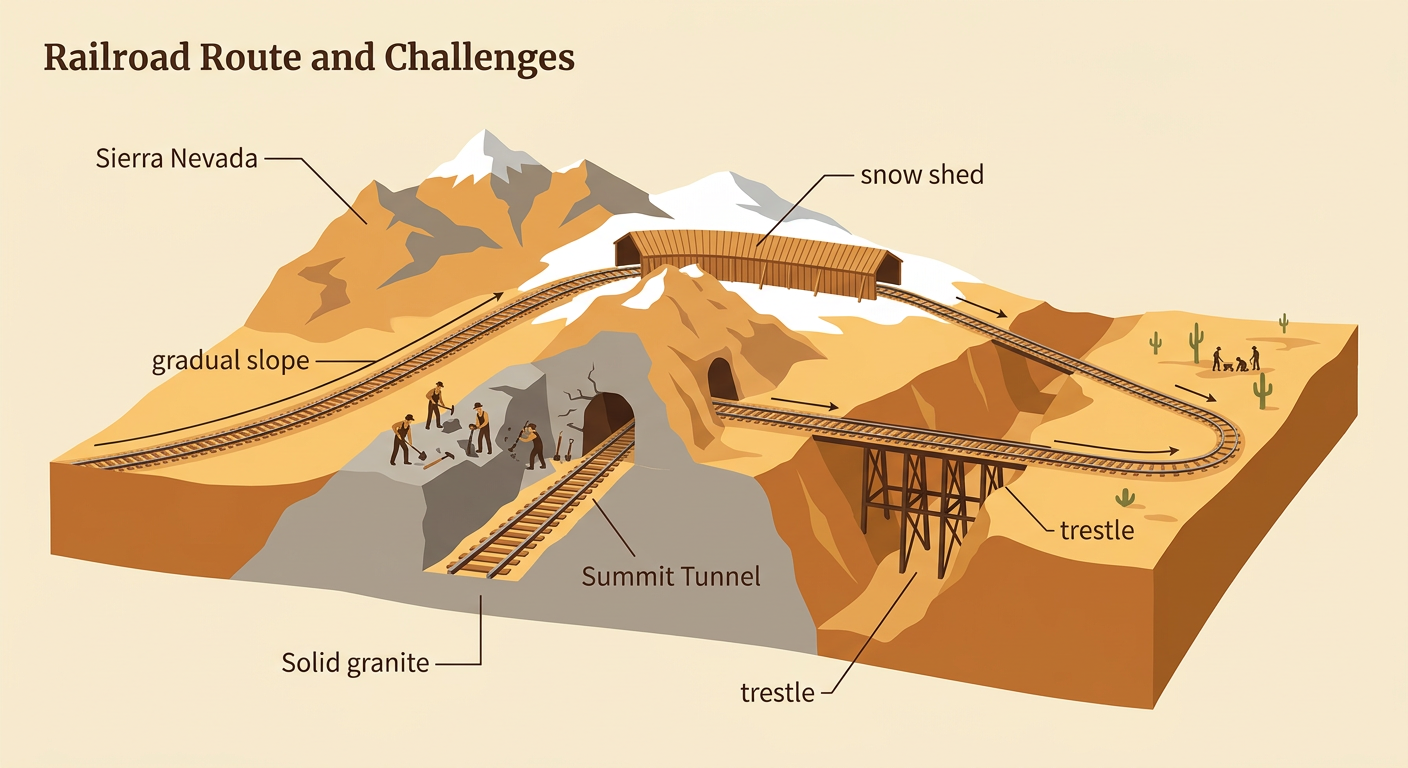
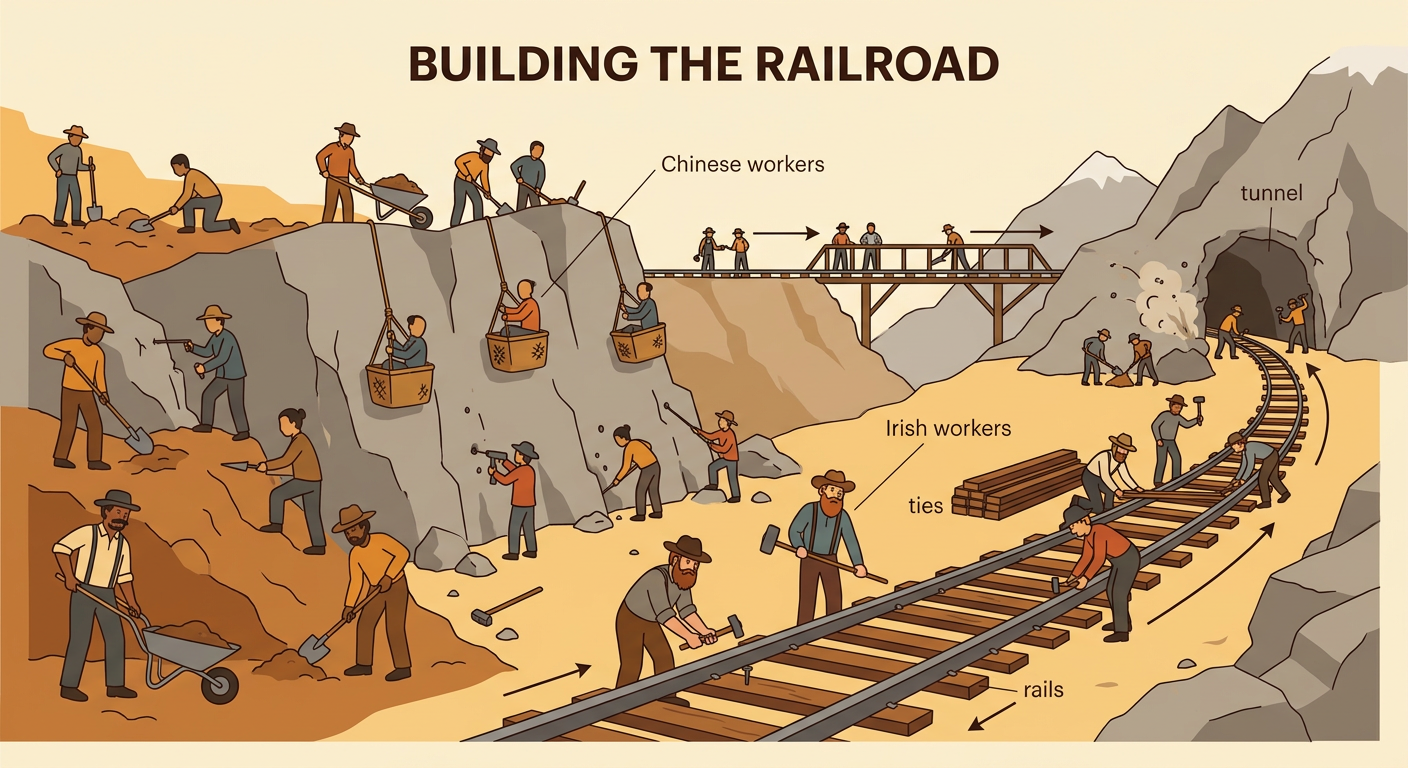
Railroad engineers had to design a route across steep mountains, deep canyons, rivers, and dry deserts. Trains could not safely climb very steep slopes or turn sharp corners, so surveyors searched for passes and gradual routes. In the Sierra Nevada, Central Pacific workers cut tunnels through granite, built wooden trestles over gaps, and constructed snow sheds to keep tracks clear. Blasting rock was slow and dangerous, especially with the tools available at the time. In desert areas, crews faced extreme heat and limited water. Engineers had to consider criteria such as a stable track and a manageable slope while working within constraints of time, cost, materials, and geography. For example, the Summit Tunnel near Donner Pass required workers to drill and blast through solid mountain rock before rails could continue eastward.
Workers Who Built the Railroad
Thousands of workers from different backgrounds built the transcontinental railroad. The Central Pacific workforce included many Chinese immigrants, who became the large majority of its construction workers. The Union Pacific employed many Irish immigrants, Civil War veterans, and other laborers. Black workers, Mexican workers, and members of the Church of Jesus Christ of Latter-day Saints also contributed to railroad construction. Workers cleared land, moved soil, laid ties and rails, built bridges, and blasted tunnels. They faced harsh weather, injuries, explosions, disease, and exhausting schedules. Discrimination affected jobs, treatment, and pay, especially for Chinese workers. For example, Chinese crews performed dangerous work in the Sierra Nevada, sometimes lowering workers in baskets to drill holes for explosives on steep rock faces. The railroad depended on their skill and labor, although historical celebrations often failed to recognize them fully.
The Golden Spike
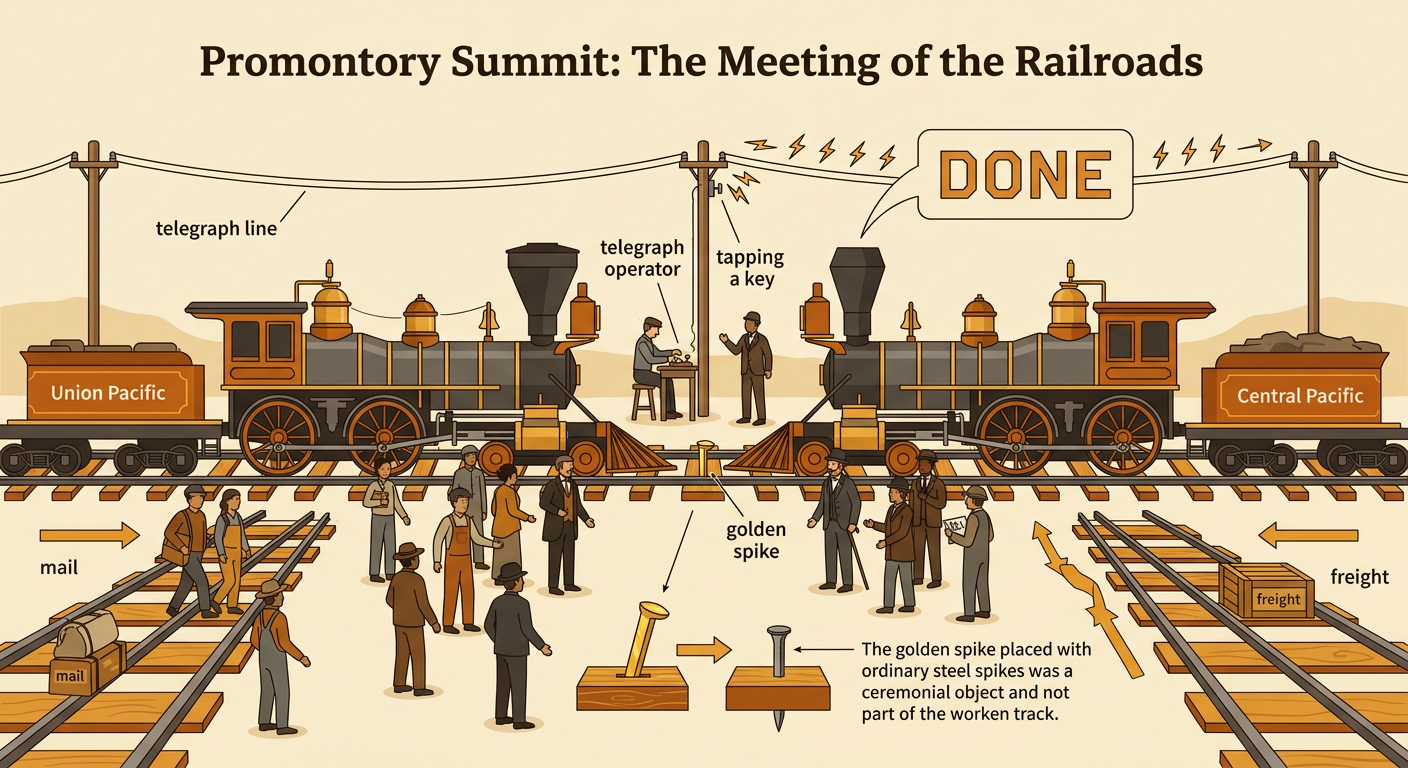
The Union Pacific and Central Pacific lines met at Promontory Summit in Utah on May 10, 1869. Railroad leaders held a ceremony to mark the completion of the first transcontinental railroad. A ceremonial golden spike was placed in a polished wooden tie while people gathered around two locomotives. It symbolized the joining of the rail lines, but it was not left as part of the working track; regular materials were used afterward. A telegraph message announced “DONE” across the country. The event connected existing rail networks so passengers, mail, and freight could travel much more quickly between regions. However, the famous ceremony did not fairly represent everyone who made the railroad possible. For example, Chinese workers had completed much of the difficult Central Pacific construction, yet they were largely excluded from the best-known ceremony photographs.
Economic and Environmental Changes
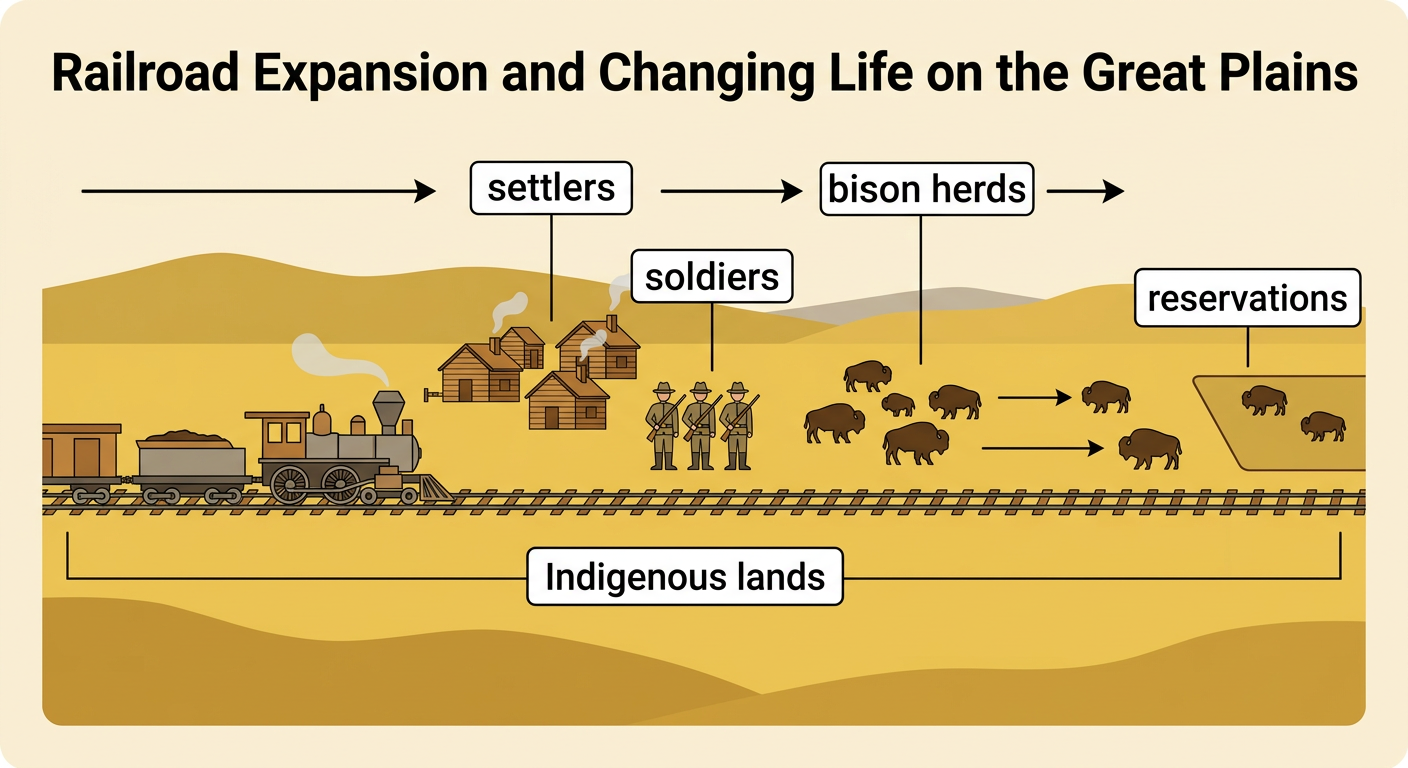
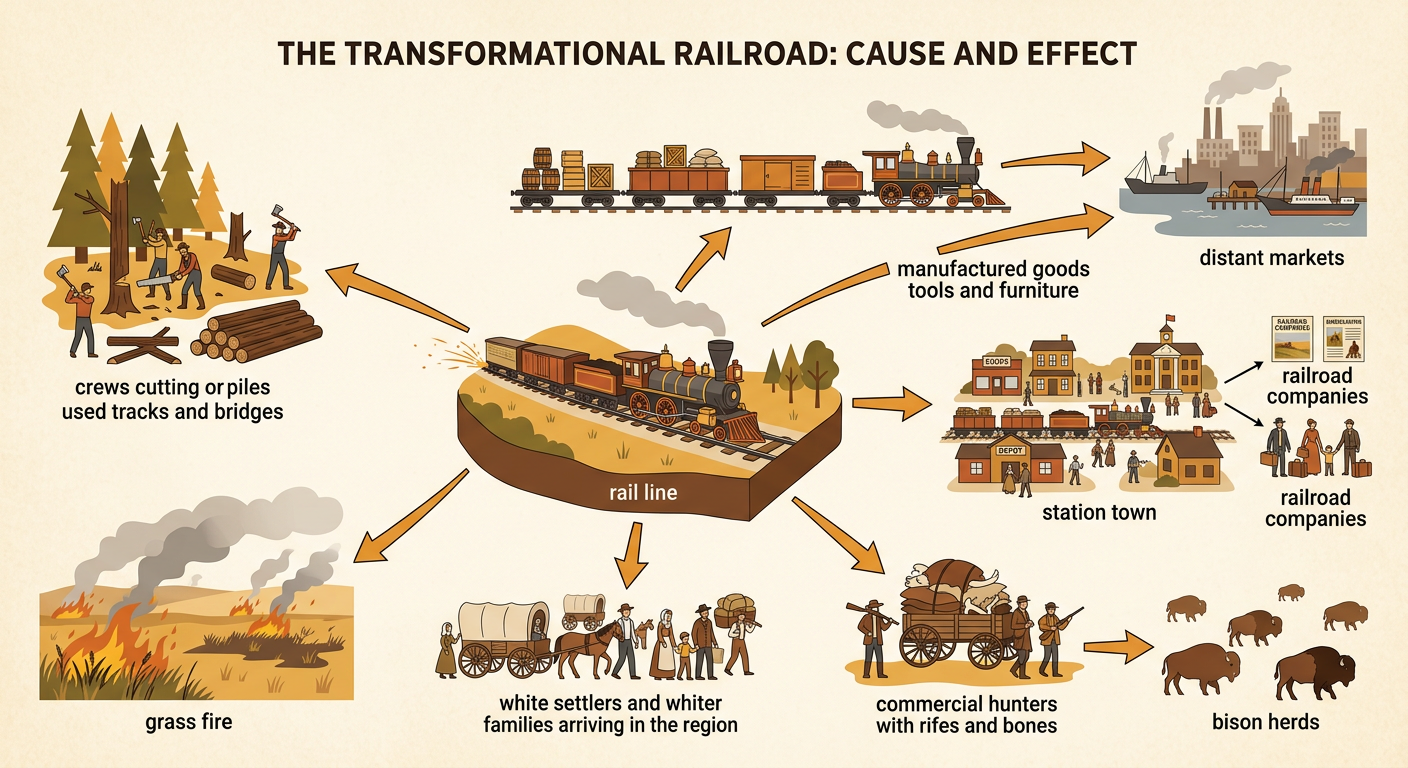
The railroad changed trade, migration, and the environment. Farmers, miners, ranchers, and businesses could send products to distant markets faster and at lower cost. Towns grew near stations, and more settlers moved west. Railroad companies also advertised land they had received from the federal government. These changes increased business and connected regional markets, but the railroad reshaped ecosystems. Crews cut trees for ties, bridges, and fuel, disturbed soil, and altered waterways. Sparks from locomotives sometimes started grass fires. Trains also helped commercial hunters reach the Great Plains and ship bison hides and bones to markets, contributing to the destruction of enormous bison herds. For example, cattle or grain from western areas could travel by rail to eastern cities, while manufactured goods moved west. The same transportation system that supported trade also increased pressure on land, wildlife, and natural resources.
Consequences for Indigenous Nations
The transcontinental railroad crossed lands that Indigenous nations had lived on and cared for over many generations. Federal officials and railroad companies often treated these lands as available for settlement, even when treaties recognized Indigenous rights. Tracks, stations, farms, and towns brought more settlers and soldiers into the West. Rail traffic and commercial hunting contributed to the destruction of bison herds that many Plains nations relied on for food, clothing, shelter, tools, and cultural practices. Competition over land and resources led to conflict, forced removal, and greater confinement on reservations. Indigenous nations resisted in different ways, negotiated, adapted, and worked to protect their communities. For example, the decline of the bison made it harder for many Plains peoples to maintain established ways of life. The railroad therefore brought benefits to some Americans while causing severe and lasting harm to many Indigenous nations.