The Triangle Shirtwaist Factory Fire and the Rise of Workplace Reform
Students examine primary-source evidence, casualty data, and factory conditions to explain how the 1911 fire accelerated labor protections and building-safety reforms.
Illustrations are auto-generated and may be placeholders. They can be refreshed to match the narration.
Industrial Work in the Progressive Era
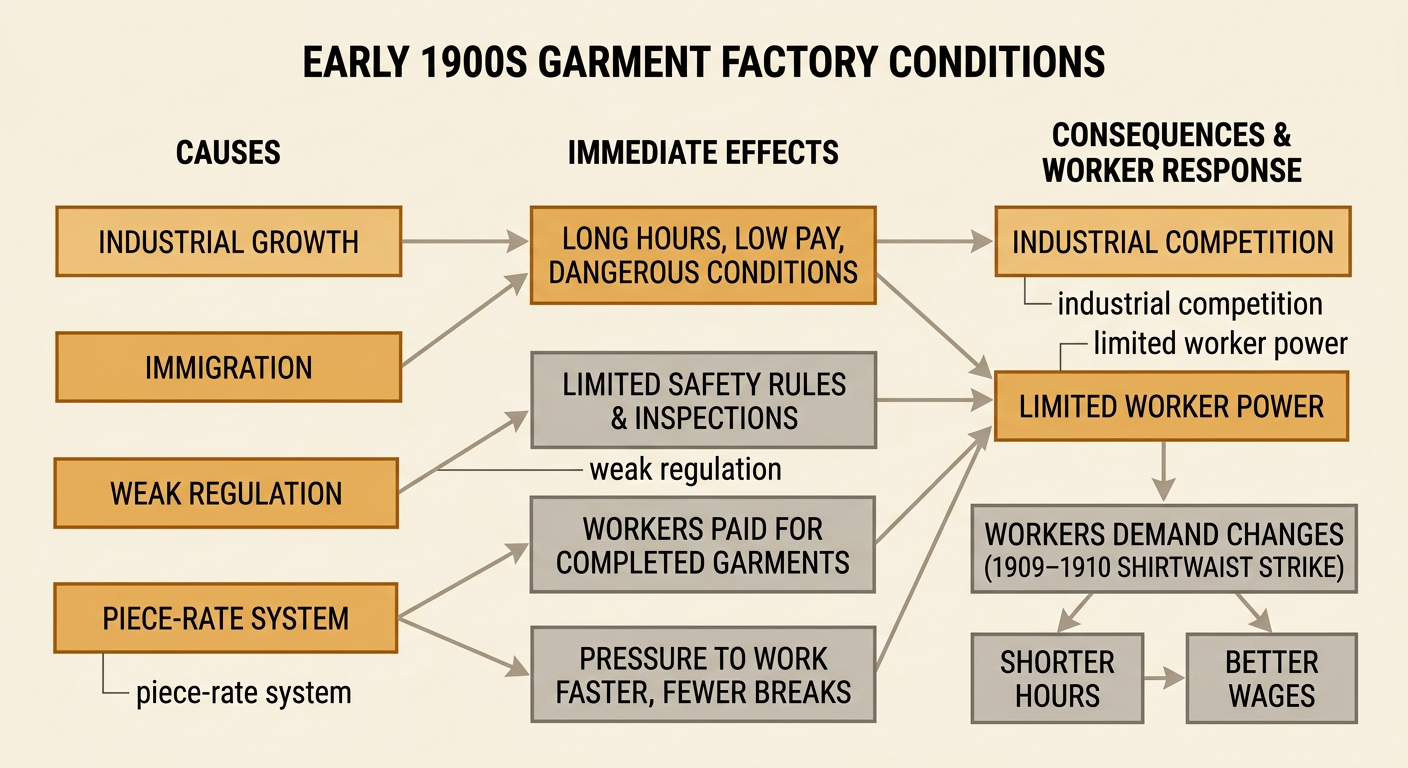
In the early 1900s, rapid industrial growth created jobs but also exposed workers to long hours, low pay, and dangerous workplaces. New York’s garment industry employed many young immigrant women and girls. Factory owners often used piece-rate systems, paying workers for each item completed rather than for each hour worked. This encouraged speed and helped employers keep production costs low. Government safety rules were limited, inspections were inconsistent, and unions faced strong opposition from employers. For example, garment workers who joined the 1909–1910 shirtwaist strike demanded shorter hours, better wages, and safer conditions. Some companies accepted agreements, but the Triangle Waist Company resisted major union demands. These conditions resulted from several connected causes, including industrial competition, weak regulation, limited worker power, and a large supply of people seeking employment.
Conditions Inside the Triangle Factory
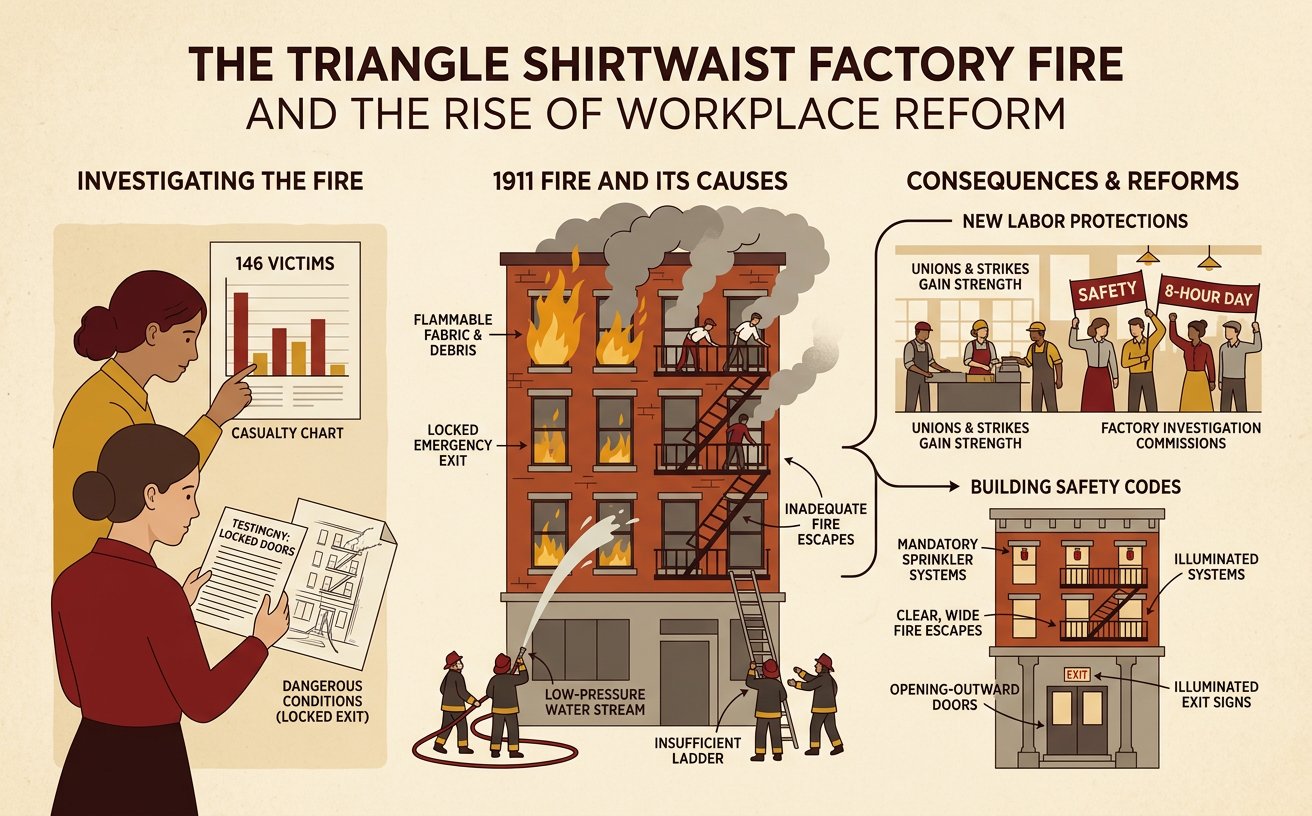
The Triangle Waist Company occupied the eighth, ninth, and tenth floors of New York City’s Asch Building. On March 25, 1911, a fire began in scrap material on the eighth floor, although the exact source of ignition was never proved. Workers had only minutes to escape. Some reached the roof, stairways, or elevators, but smoke and flames blocked other routes. The Washington Place stairway door on the ninth floor was reportedly locked, and the exterior fire escape soon collapsed. Fire department ladders could not reach the highest occupied floors, and safety nets failed under the force of people jumping. A concrete example of the building’s design problem was its limited dependable exit capacity: when one stairway became unavailable, hundreds of workers were directed toward only a few remaining escape routes.

Analyzing Testimony and Casualty Data
Historical conclusions should be supported with specific evidence and careful attention to a source’s origin. Students can compare survivor testimony about smoke, crowded exits, and locked doors with fire department reports, photographs, and later investigations. They should identify the speaker, date, and exact detail before making an inference. Casualty records report 146 deaths: 123 women and girls and 23 men. A two-way frequency table can organize the victims by sex and recorded background. One useful grouping shows 38 female and 15 male Italian victims, 18 female and 5 male Russian victims, and 67 female and 3 male victims in other or unknown categories. The table reveals that female workers made up most fatalities, but it does not by itself explain why. Testimony and factory records are needed to connect the pattern to workforce composition, location, and working conditions.

Why the Fire Became a Turning Point
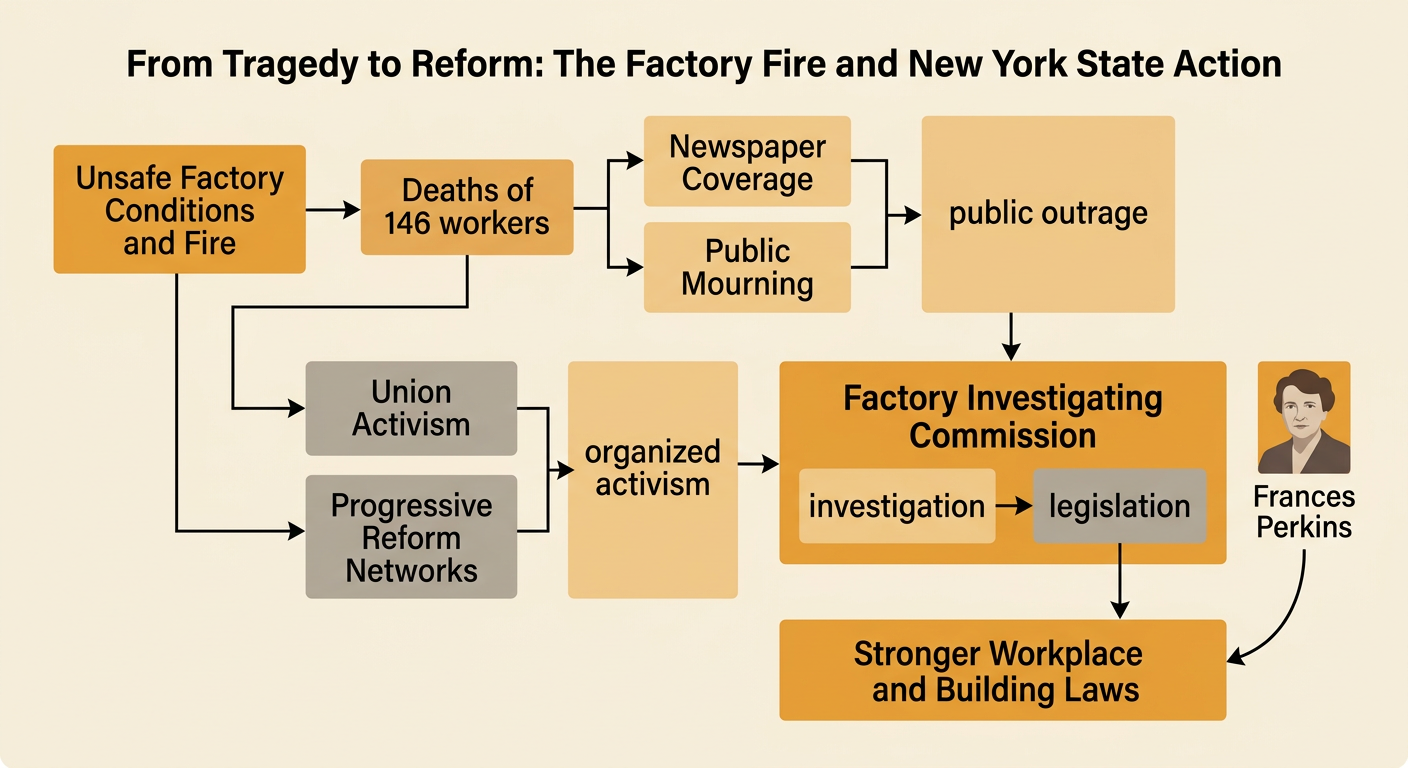
The fire became a turning point because the scale of the tragedy combined with existing reform movements and intense public attention. The deaths of 146 workers occurred in view of witnesses and were widely reported in newspapers. Labor organizations and Progressive reformers argued that the disaster showed the consequences of weak inspection systems and employer control over workplace safety. Massive public mourning increased pressure on New York officials. The state created the Factory Investigating Commission in 1911 to examine workplaces and recommend changes. Investigators documented hazards in many industries, helping produce stronger fire, building, sanitation, and labor laws. Frances Perkins, who witnessed the fire and later became U.S. secretary of labor, carried its lessons into later public service. The fire did not create workplace reform by itself; rather, it accelerated action by connecting public outrage, organized activism, investigation, and legislation.
Evaluating Safety and Labor Reforms
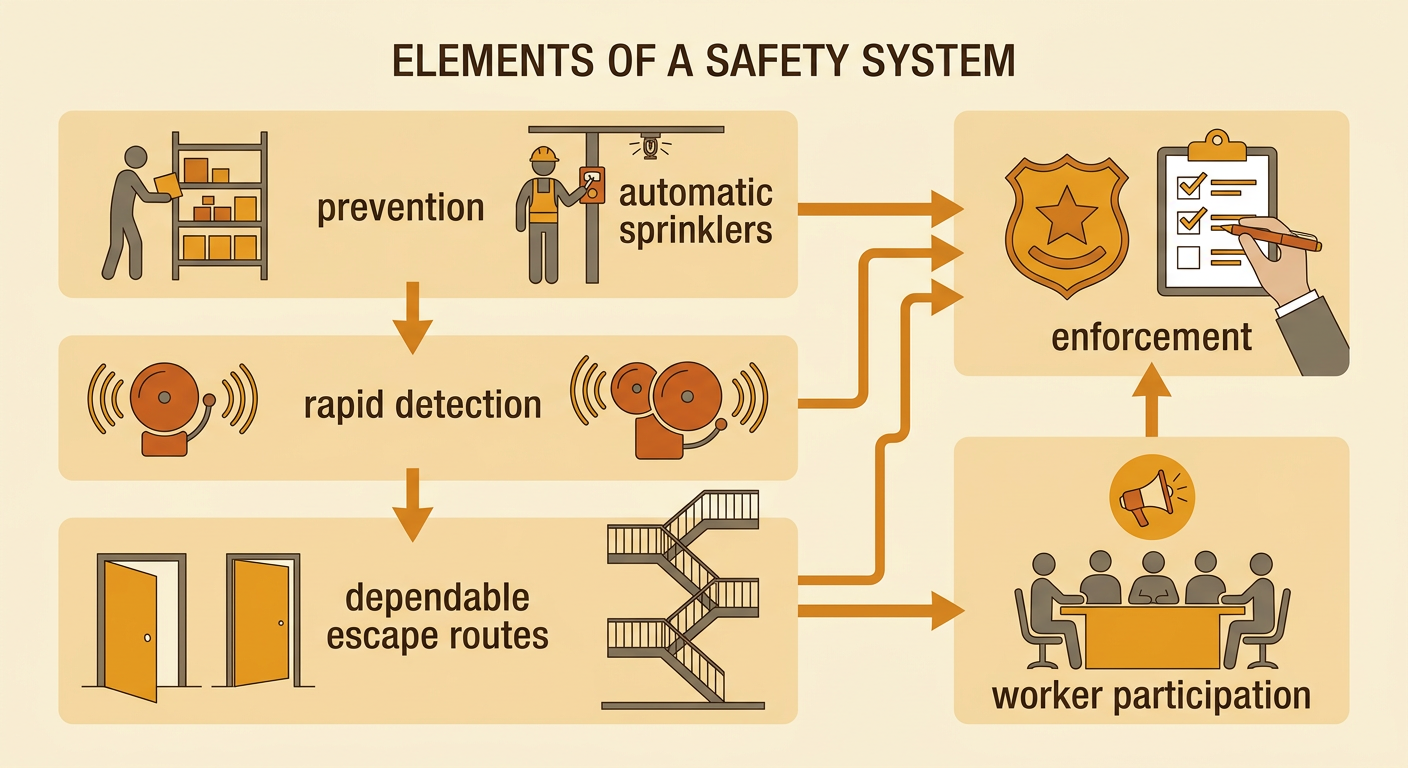
Reformers had to compare possible solutions using criteria such as lives protected, cost, enforceability, worker rights, and speed of implementation. Building reforms included unlocked and outward-opening exit doors, additional stairways, automatic sprinklers, fire alarms, occupancy limits, and regular inspections. Labor reforms included limits on working hours, protections for organizing, and systems for reporting hazards. Each choice involved trade-offs. For example, installing sprinklers required owners to pay construction and maintenance costs, but sprinklers could control a fire before escape routes became unusable. Keeping exit doors unlocked was inexpensive and improved evacuation, although owners claimed that locked doors prevented theft and unauthorized breaks. Students can evaluate a reform package rather than selecting only one measure. A strong plan combines prevention, rapid detection, dependable escape routes, enforcement, and worker participation because no single safety feature can address every failure.