
Then and Now: How Daily Life Has Changed
Students compare pictures and short accounts from the past and present to identify how daily life has changed and what has stayed the same.

Illustrations are auto-generated and may be placeholders. They can be refreshed to match the narration.
What Do Past and Present Mean?
The past is a time that has already happened. Yesterday, last year, and long ago are all in the past. The present is the time happening now. We can learn about the past from photographs, objects, letters, and stories. For example, a photograph from long ago might show a child writing on a small slate at school. A photograph from today might show a child writing in a notebook or using a tablet. Both children are learning, but their tools are different. When we compare the past and present, we ask two questions: What has changed? What has stayed the same? Remember that people did not all live in the same way in the past, just as people live in different ways today.

Look Closely at Then-and-Now Pictures
Pictures give us clues about daily life. First, look quietly at a picture and name only what you can see. Notice clothing, buildings, tools, roads, and ways of traveling. Next, read or listen to a short account about the picture. Imagine one text says, “Mina walked to school and carried her books.” A second text says, “Jay rides a bus to school and carries a backpack.” Both children travel to school and bring learning materials. The way they travel is different. Ask questions such as, “When was this picture made?” and “What is that object used for?” Do not guess when evidence can help you. Compare details from both the pictures and the words to find similarities and differences.

Compare Homes, Schools, and Transportation
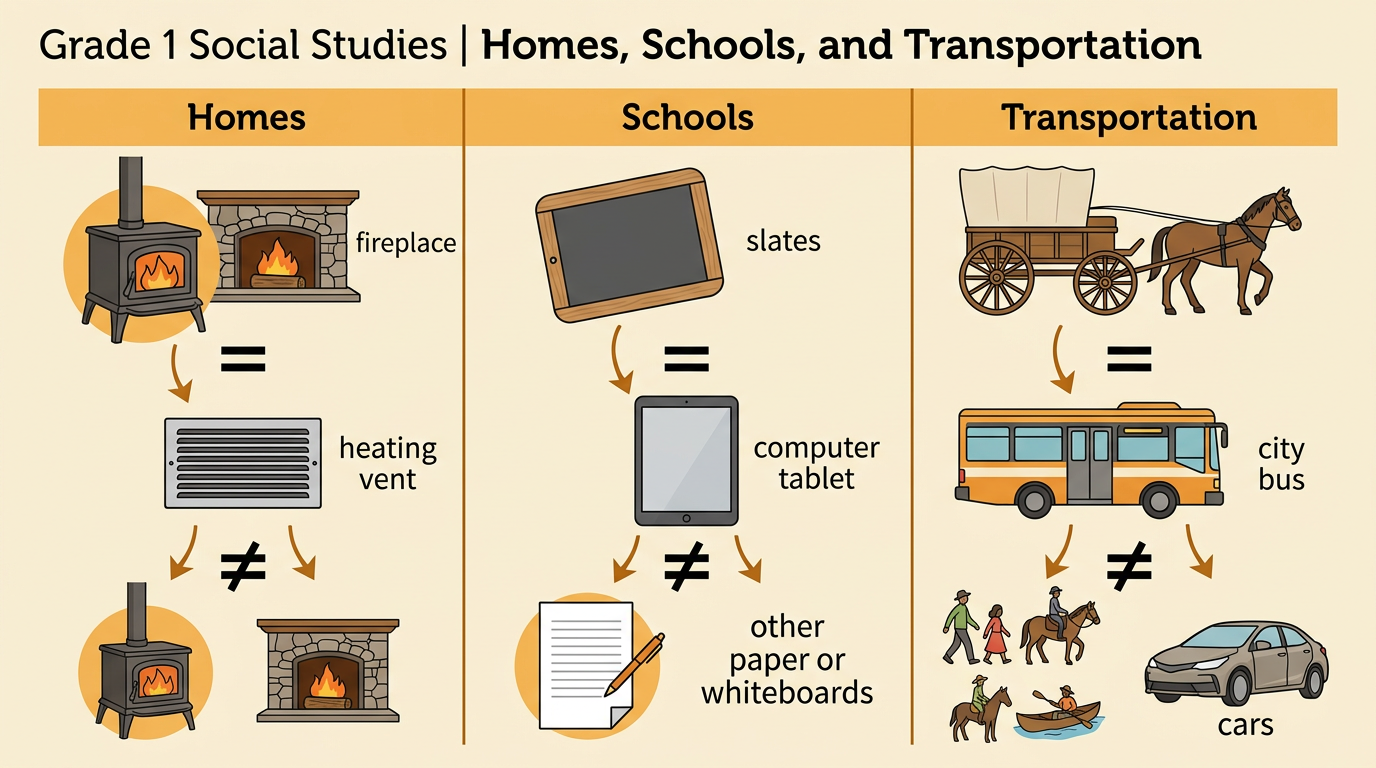
Daily life includes where people live, learn, and travel. Compare one detail at a time. In some homes long ago, families used fireplaces or wood-burning stoves for heat. Many homes today use heating systems, although fireplaces and wood stoves are still used in some places. In some earlier classrooms, students wrote on slates. Today, students may use paper, whiteboards, or computers. Transportation has changed too. People once traveled mainly by walking, riding animals, using boats, or riding wagons. Today, people may also use cars, buses, trains, and airplanes. Some older ways are still used. Make a three-column chart for homes, schools, and transportation. Add one past detail and one present detail in each column, then explain how they are alike or different.
How Tools Changed Daily Life
People design tools to solve problems or make tasks easier, faster, safer, or more comfortable. A tool can be simple, like a broom, or complex, like a washing machine. Long ago, some people scrubbed clothing by hand with soap, water, and a washboard. Many people today use washing machines. Both methods clean clothing, but the machines can reduce the time and physical effort needed. To study a changed tool, ask: What job does it do? What problem did people want to solve? Observe its parts and gather information from pictures, labels, or short texts. Then compare the older and newer objects. Newer does not always mean better in every way. A tool may use electricity, cost money, or need repairs. Good comparisons include both benefits and limits.

What Stayed the Same?
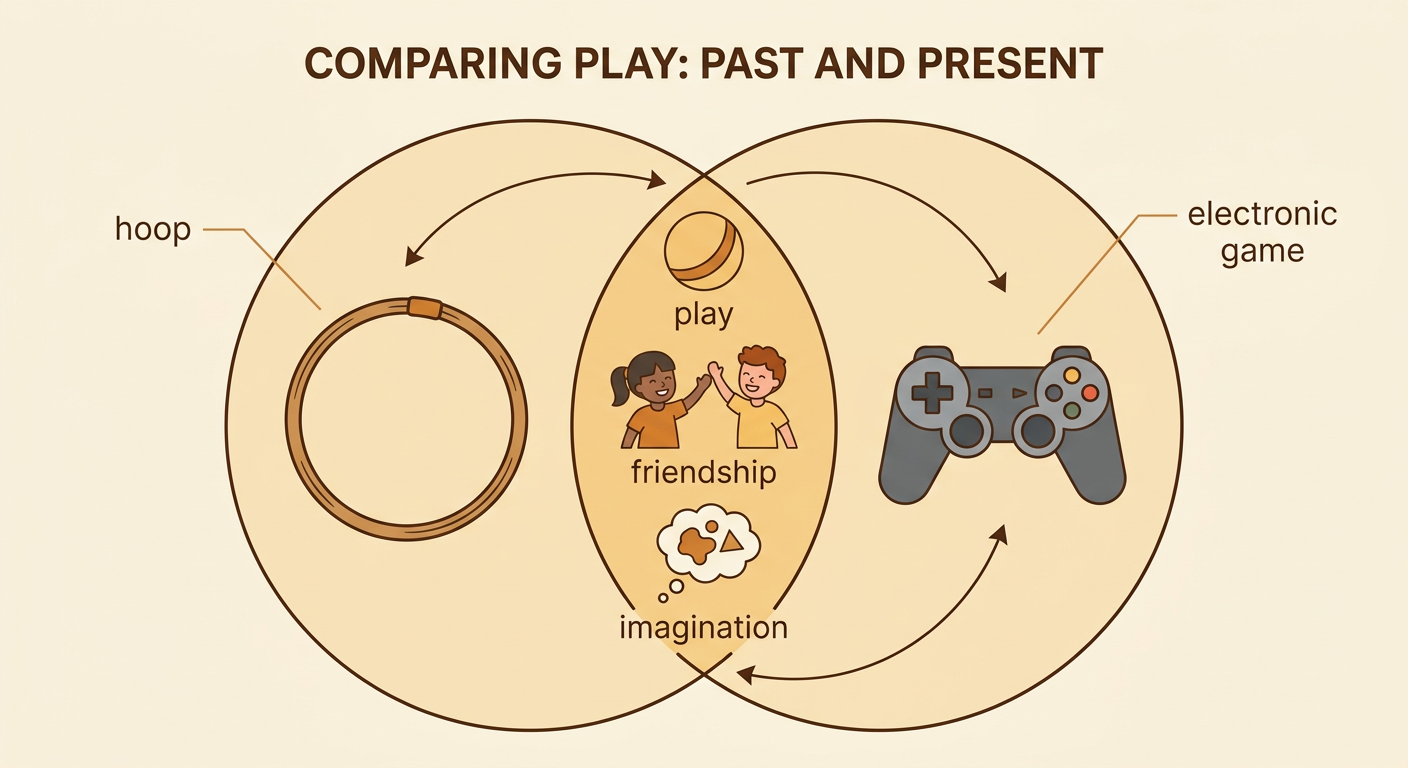
Not everything changes. People in the past and present have many of the same basic needs. They need food, water, shelter, clothing, care, and ways to learn. Families and communities have also spent time working, helping one another, playing, and celebrating. The objects used for these activities may look different. For example, children long ago played games with balls, dolls, hoops, or homemade toys. Children today still play with balls and dolls, along with newer toys and electronic games. The toys may change, but the need for fun, movement, friendship, and imagination stays the same. When you compare two accounts, look beyond the objects. Ask what people are doing and why. This helps you notice important similarities between life then and life now.
Share One Change You Noticed
Choose one clear change to share with the class. Use evidence from two pictures or short accounts about the same topic. Begin with what you observed in the past source. Then explain what you observed in the present source. You might say, “In the past picture, a family listened to news on a radio. In the present picture, a family watched news on a television. Both tools shared information, but they shared it in different ways.” Point to the details that support your idea. You can also ask a question, such as, “How did families get news before radio?” Listen as classmates share. Their evidence may help you notice a detail you missed. End by naming one similarity and one difference. A strong comparison tells what changed, what stayed the same, and how the evidence shows it.
