Thermal Energy Transfer and Insulation
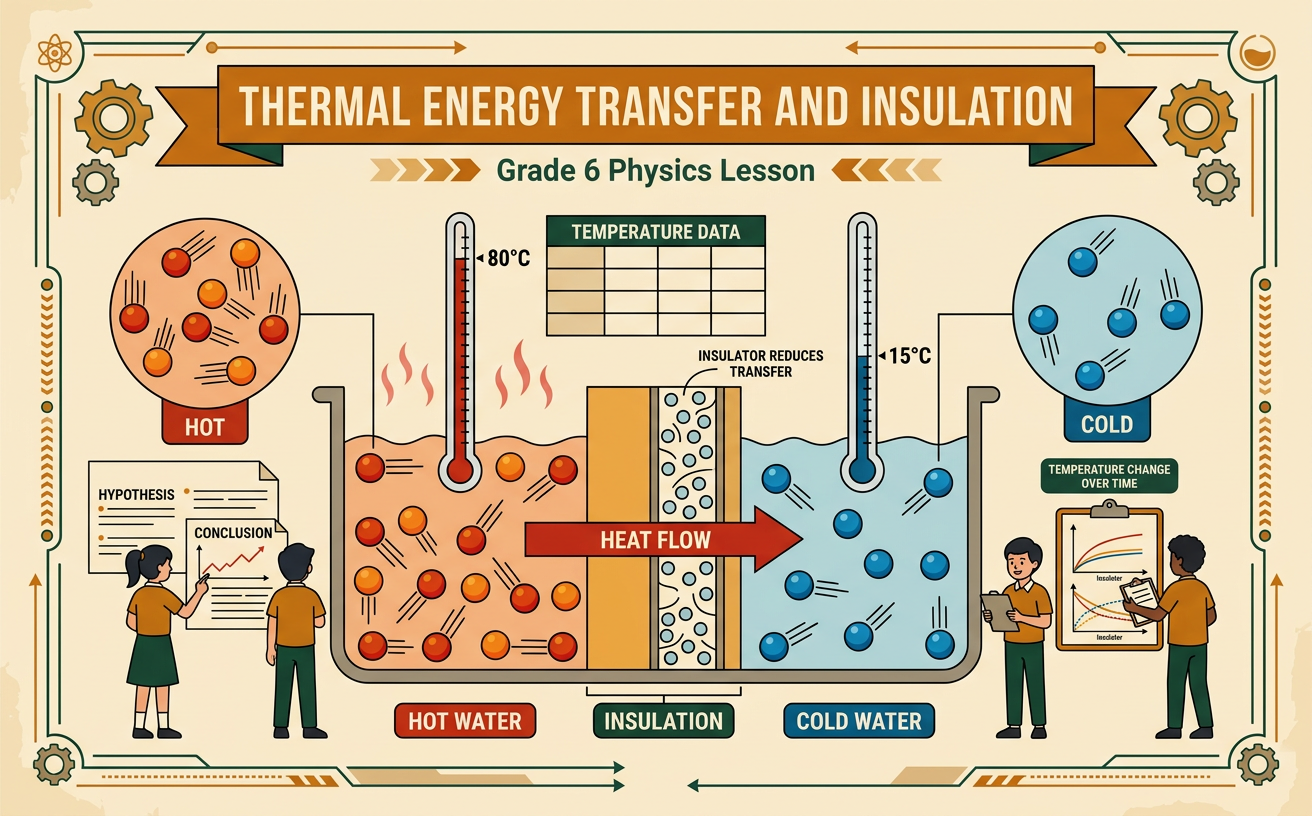
Students use temperature data and particle models to explain how thermal energy moves between materials and how insulation slows that transfer.
Illustrations are auto-generated and may be placeholders. They can be refreshed to match the narration.
Temperature and Particle Motion
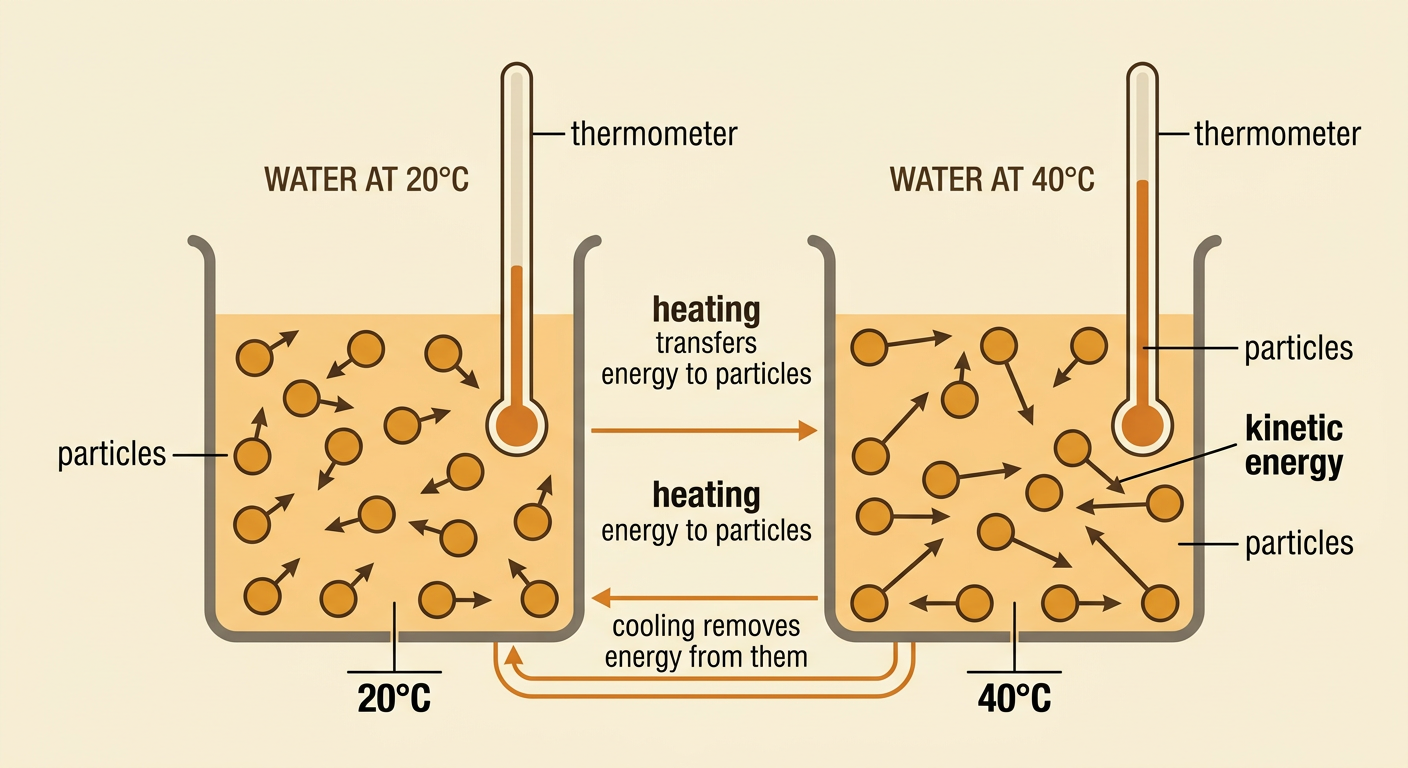
All matter is made of particles that are always moving. Temperature measures the average kinetic energy of those particles. In a warmer material, particles move or vibrate faster on average than they do in the same material at a lower temperature. Heating a substance transfers energy to its particles, while cooling it removes energy. Temperature is not the same as total thermal energy because the amount of matter also matters. For example, a full bathtub of warm water can contain more total thermal energy than one cup of hotter water. In an investigation, a thermometer provides evidence about changes in average particle motion. If water warms from 20°C to 40°C, its particles are moving faster on average, even though they are still water particles.
How Thermal Energy Moves
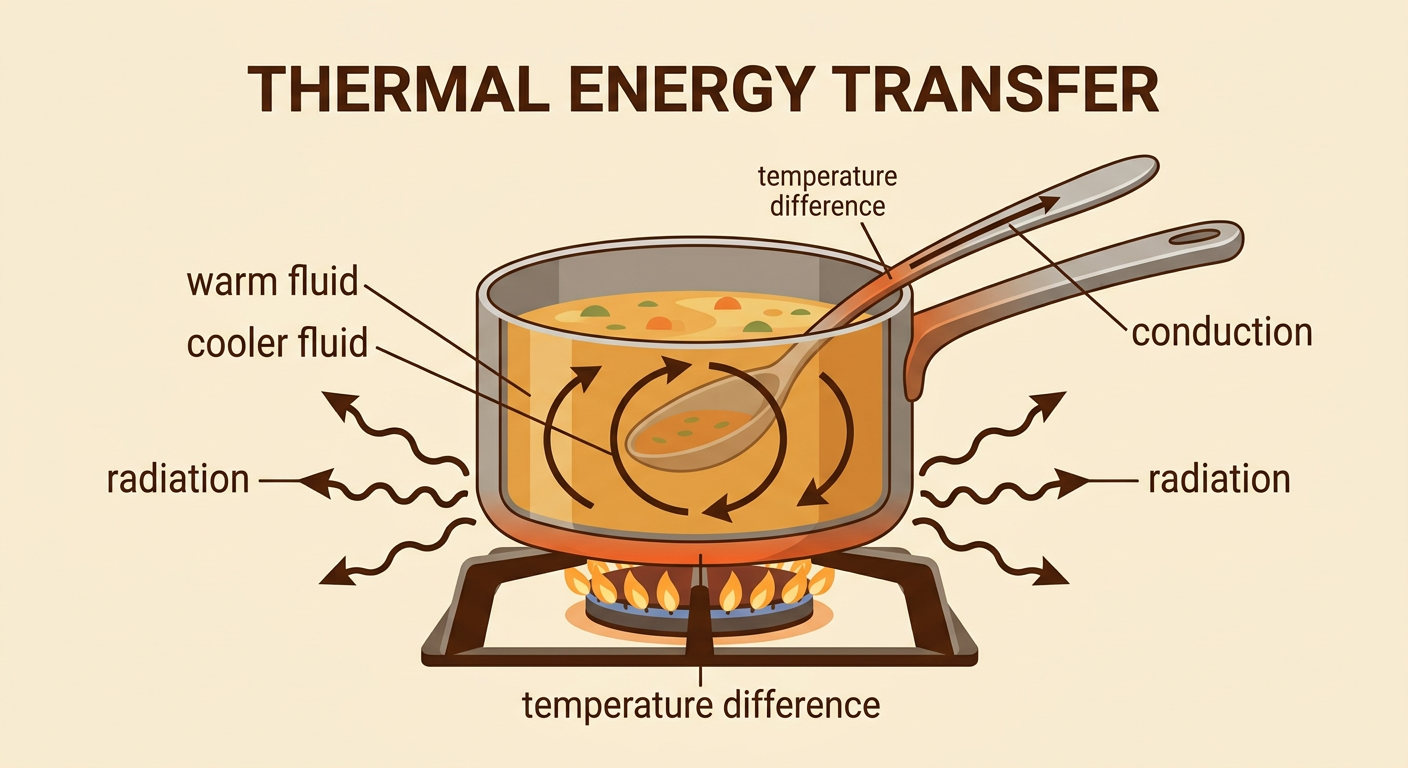
Thermal energy moves from a higher-temperature object or region to a lower-temperature one until their temperatures become closer. Conduction occurs through direct contact, such as when a metal spoon warms in hot soup. Convection transfers energy as liquids or gases move; warm fluid rises while cooler, denser fluid sinks. Radiation transfers energy through electromagnetic waves and does not require matter, which is how energy from the Sun reaches Earth. Imagine holding an ice cube. Energy transfers by conduction from your warmer hand to the colder ice, causing the ice to melt. Cold does not move into your hand. The transfer happens because of the temperature difference. A larger temperature difference usually produces a faster rate of transfer under otherwise similar conditions.
Comparing Insulating Materials
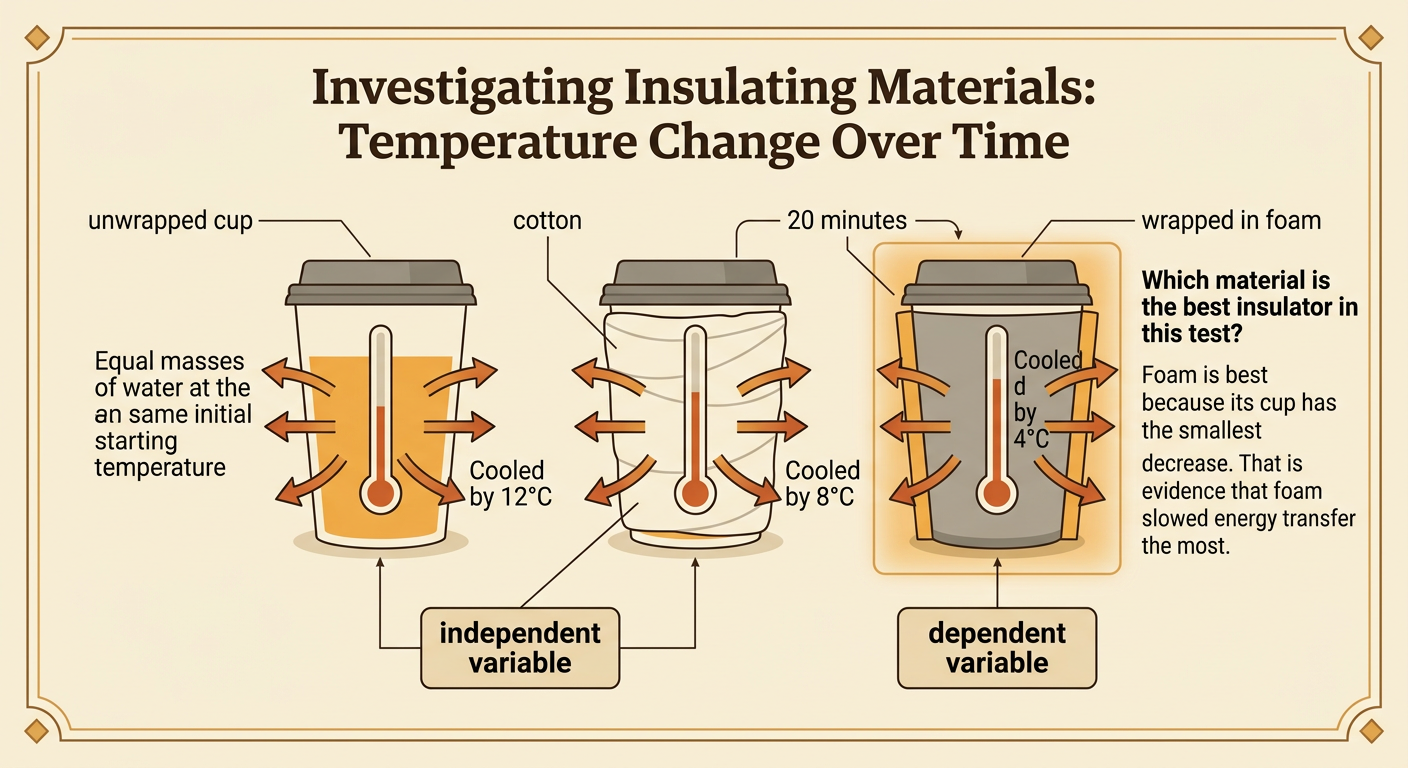
An insulator slows thermal energy transfer. Materials such as foam, wool, and trapped air are often effective because energy does not pass through them quickly. To compare insulators fairly, students can wrap identical cups of warm water with different materials. Each cup should contain the same mass of water at the same starting temperature. The cups should also be placed in the same room and measured after equal time intervals. The independent variable is the insulating material, and the temperature change is the dependent variable. Suppose an unwrapped cup cools by 12°C, a cotton-wrapped cup cools by 8°C, and a foam-wrapped cup cools by 4°C in 20 minutes. Foam is the best insulator in this test because the smallest temperature decrease indicates that it slowed energy transfer the most.
Reading Temperature Data
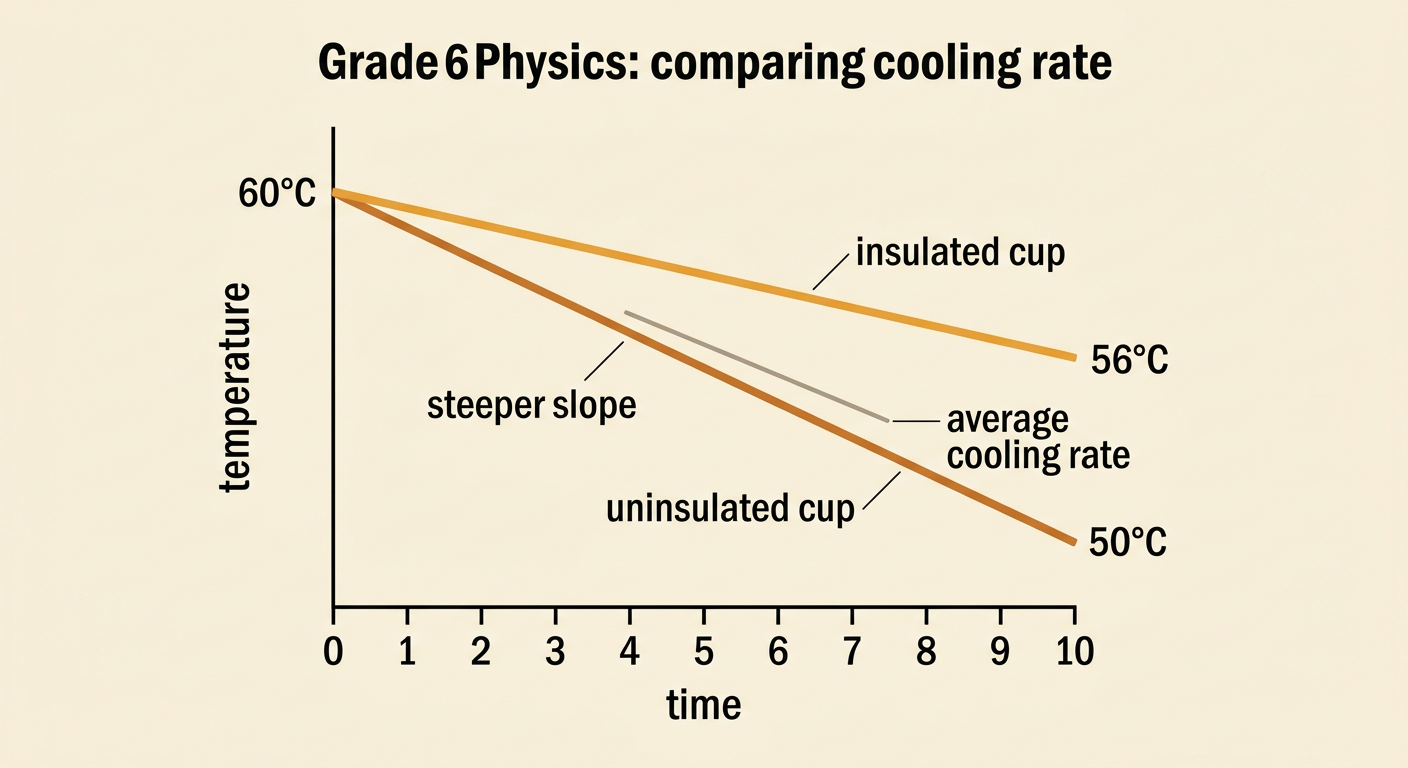
Temperature data can show both the amount and rate of energy transfer. Consider two identical cups that begin at 60°C. After 10 minutes, an uninsulated cup is 50°C and an insulated cup is 56°C. The uninsulated cup decreases by 10°C, so its average cooling rate is 10°C ÷ 10 minutes, or 1°C per minute. The insulated cup decreases by 4°C, giving an average rate of 0.4°C per minute. The ratio of the rates is 1 to 0.4, or 2.5 to 1. Therefore, during this interval, the uninsulated cup cools 2.5 times as fast. On a temperature-versus-time graph, its line slopes downward more steeply. Students should connect the numbers, graph slopes, and physical model: the steeper decrease provides evidence of faster thermal energy transfer to the surroundings.
Explaining Energy-Efficient Choices
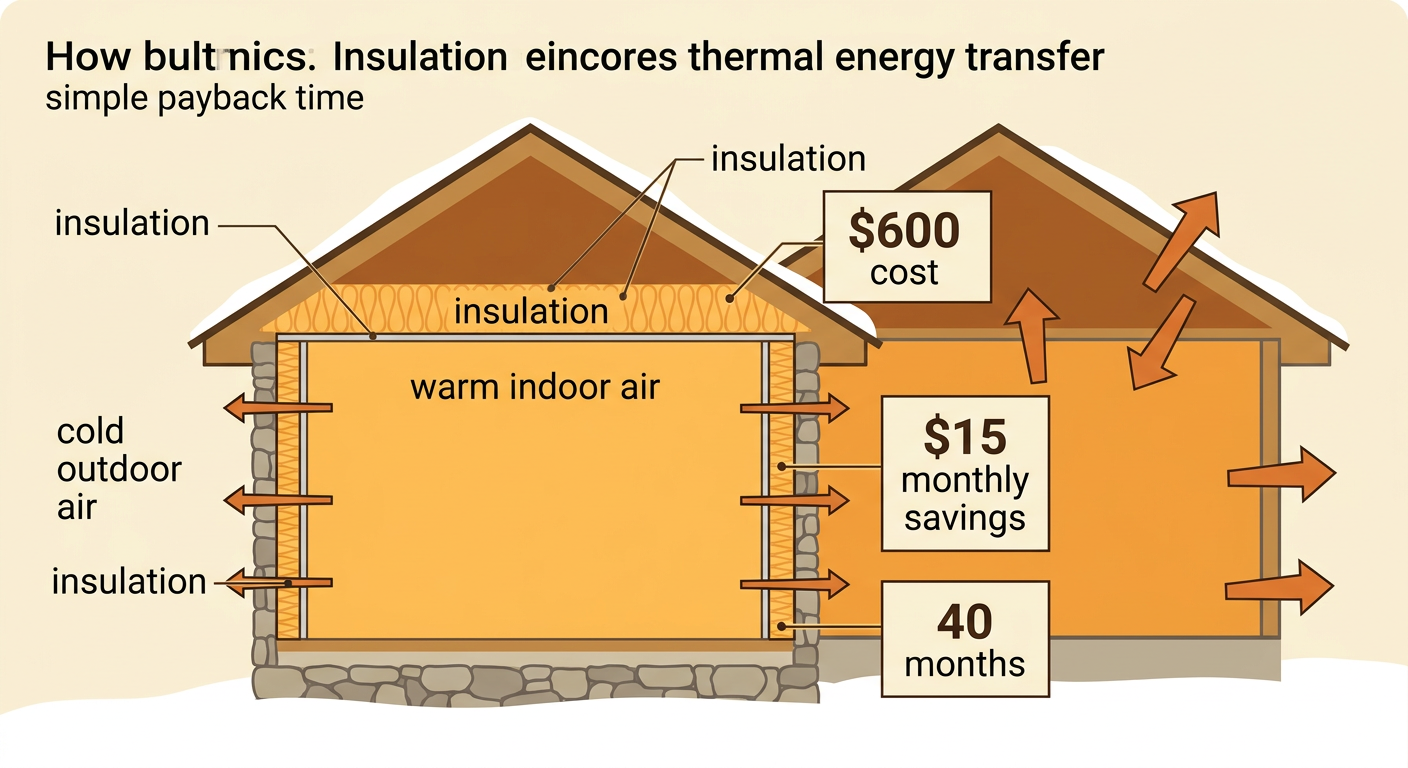
Energy-efficient insulation slows unwanted thermal energy transfer in buildings. During winter, insulation reduces energy transfer from warm indoor air to colder outdoor surroundings. During summer, it slows energy transfer from hot surroundings into cooler rooms. As a result, heaters and air conditioners need less energy to maintain a comfortable temperature. Installing insulation costs money at first, but lower energy bills can repay that cost over time. For example, if attic insulation costs $600 and saves $15 per month, the simple payback time is $600 ÷ $15 per month, or 40 months. The choice can benefit a household through lower bills, a business through reduced operating costs, and society through lower demand for energy resources. A complete decision should also consider climate, building design, material lifespan, safety, and installation cost.