
Tracing Theme Development in Literary Texts
Students analyze how a central theme emerges and develops through key details, character choices, and plot events in a Grade 11 literary text.
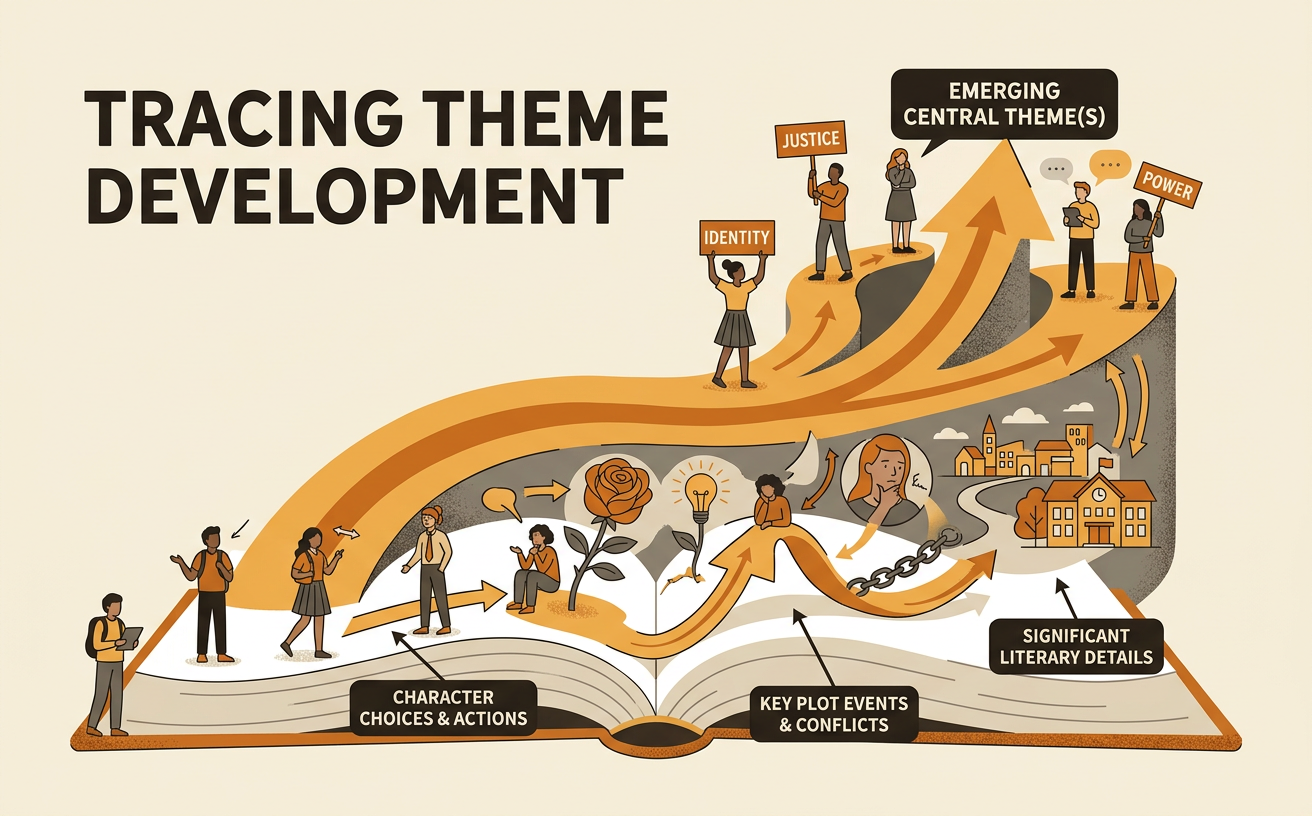
Illustrations are auto-generated and may be placeholders. They can be refreshed to match the narration.
Define Theme and Topic
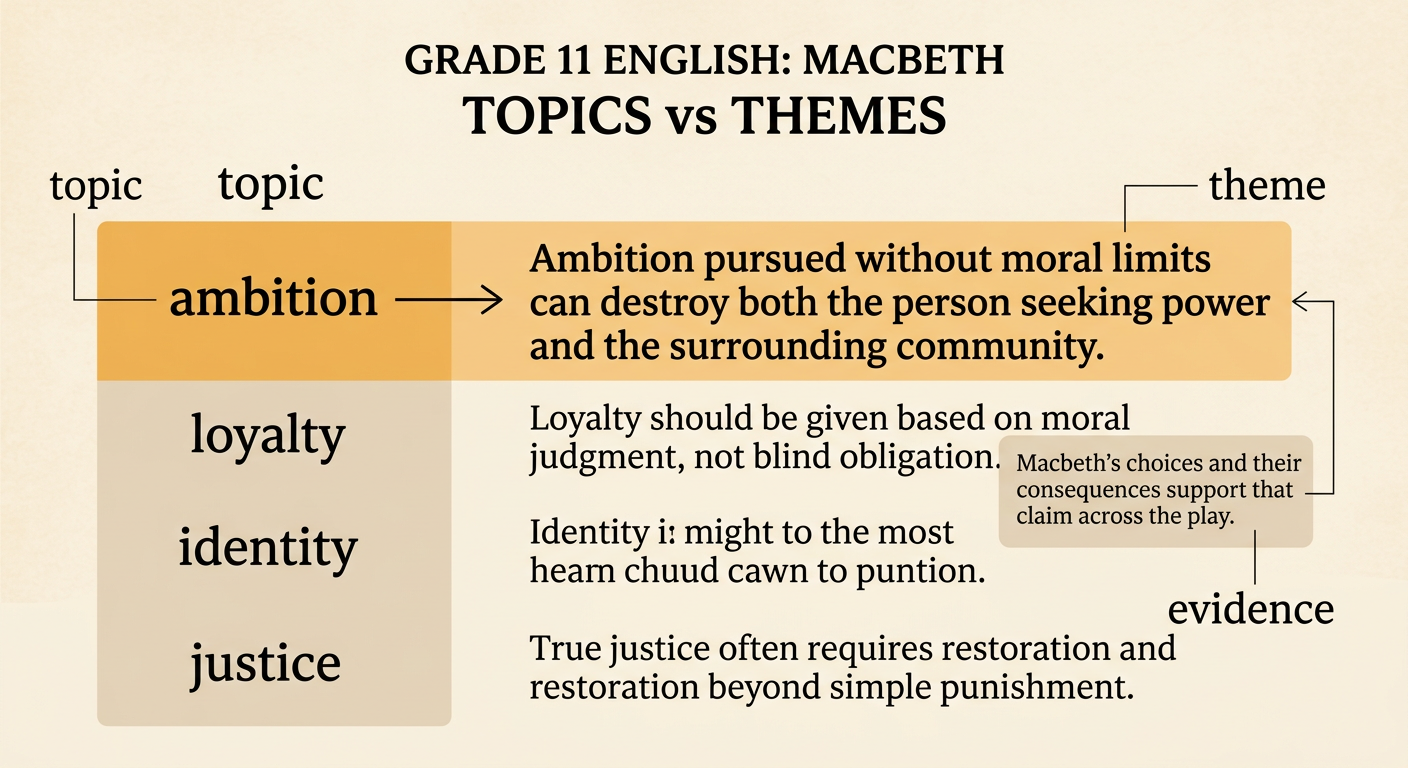
A topic is a broad subject explored in a literary text, such as ambition, loyalty, identity, or justice. A theme is a complete statement about what the text suggests regarding that topic. Themes should be expressed as ideas that can be supported by multiple details, not as single words or universal rules. In Shakespeare’s Macbeth, ambition is a topic. A possible theme is that ambition pursued without moral limits can destroy both the person seeking power and the community around that person. This statement develops through Macbeth’s choices and their consequences. Avoid treating a lesson spoken by one character as the theme automatically. Instead, examine patterns across the entire work. Because complex texts can support several interpretations, a strong theme statement should be specific, defensible, and grounded in evidence.
Identify Recurring Ideas
Themes often emerge through recurring ideas, images, conflicts, and character concerns. As you read, record details that repeat or change rather than relying on one dramatic moment. In Macbeth, references to blood recur after acts of violence. At first, blood represents the physical evidence of King Duncan’s murder. Later, Macbeth and Lady Macbeth connect blood with guilt that cannot easily be removed. Lady Macbeth’s sleepwalking and imagined bloodstains reveal that guilt continues even when the crime is hidden from others. These repetitions help develop the theme that wrongdoing can produce lasting psychological consequences. A recurring detail is meaningful when its context contributes to a larger pattern. Ask what the detail represents each time, which characters encounter it, and whether its meaning grows more complicated as the plot advances.

Trace Key Details and Turning Points
To trace a theme, place important details in plot order and explain how each one changes or strengthens the thematic idea. Focus on choices, conflicts, consequences, and turning points. In Macbeth, the witches predict that Macbeth will become king, but the prediction does not force him to act. Encouraged by Lady Macbeth, he chooses to murder Duncan. After gaining the crown, Macbeth orders additional killings to protect his position. His choice to rely on violence becomes a pattern, and that pattern creates fear, resistance, and his eventual defeat. These events develop the theme of unchecked ambition from temptation to decision, escalation, and destruction. Do more than list events. For each detail, explain its thematic significance: what the character chooses, why the choice matters, and how its outcome changes the reader’s understanding of the theme.

Analyze Interacting Themes
Literary works often develop two or more themes that interact rather than remaining separate. One theme may cause, complicate, or intensify another. In Macbeth, the theme that unchecked ambition leads to destruction interacts with the theme that guilt disturbs the mind and weakens a person’s sense of control. Ambition motivates Macbeth and Lady Macbeth to murder Duncan, while guilt emerges as a consequence of that decision. Their reactions then diverge: Macbeth responds to fear and insecurity with more violence, while Lady Macbeth becomes mentally overwhelmed by the crime. Together, the themes create a more complex account of wrongdoing. The play suggests that the pursuit of power causes harm not only through public violence but also through private psychological suffering. When analyzing interacting themes, identify the shared events and explain how each event develops both ideas in a different way.

Write an Objective Thematic Summary
An objective thematic summary identifies the text, presents its main events in logical order, and explains how central themes develop without adding personal opinions. Include only details necessary to show the important conflicts, choices, and consequences. For example: In Shakespeare’s Macbeth, a Scottish nobleman hears a prophecy that he will become king. Driven by ambition and encouraged by his wife, he murders King Duncan and takes the throne. Macbeth then uses further violence to protect his power, creating fear and opposition. Meanwhile, guilt affects both Macbeth and Lady Macbeth, though they respond differently to it. Their actions lead to psychological suffering, political disorder, and death. Through these events, the play develops interacting themes about the destructive effects of unchecked ambition and unresolved guilt. This summary remains objective because it avoids judgment, unsupported interpretation, quotations, and minor plot details.
