
Tracing Theme Development in Literature
Students identify a central theme and analyze how characters, conflicts, and key events develop it across a literary text.
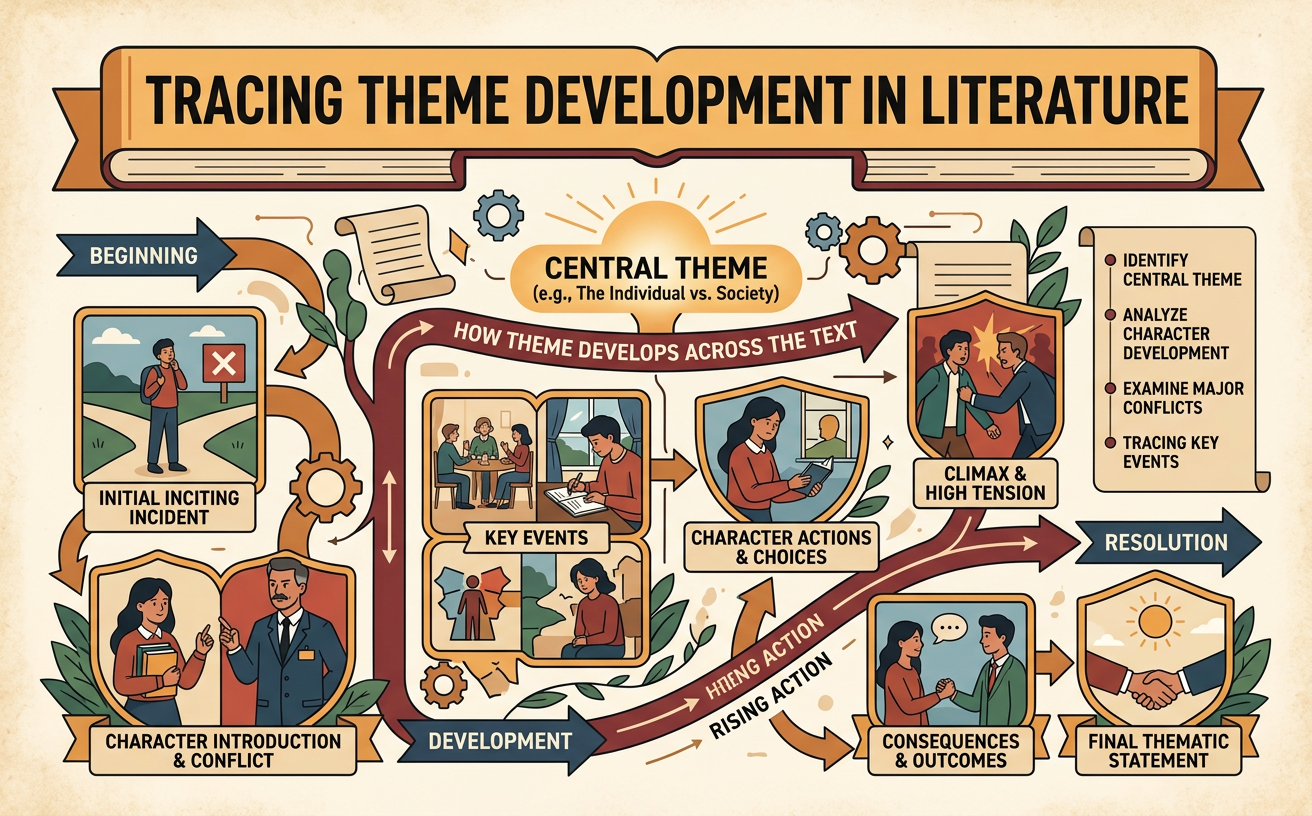
Illustrations are auto-generated and may be placeholders. They can be refreshed to match the narration.
Theme Versus Topic
A topic is a broad subject explored in a literary text, such as love, courage, freedom, or loss. A theme is the text’s message or insight about that topic. Because a theme expresses an idea, it should usually be written as a complete sentence rather than as one word. In O. Henry’s “The Gift of the Magi,” love and sacrifice are topics. A central theme is that selfless love gives sacrifice meaning even when the result is unexpected. This statement describes what the story suggests about love and sacrifice. It also applies beyond the specific characters and events. Avoid stating a theme as a command, such as “Always make sacrifices.” Instead, explain the observation about life or human behavior that the author develops through the text.

Finding a Central Message
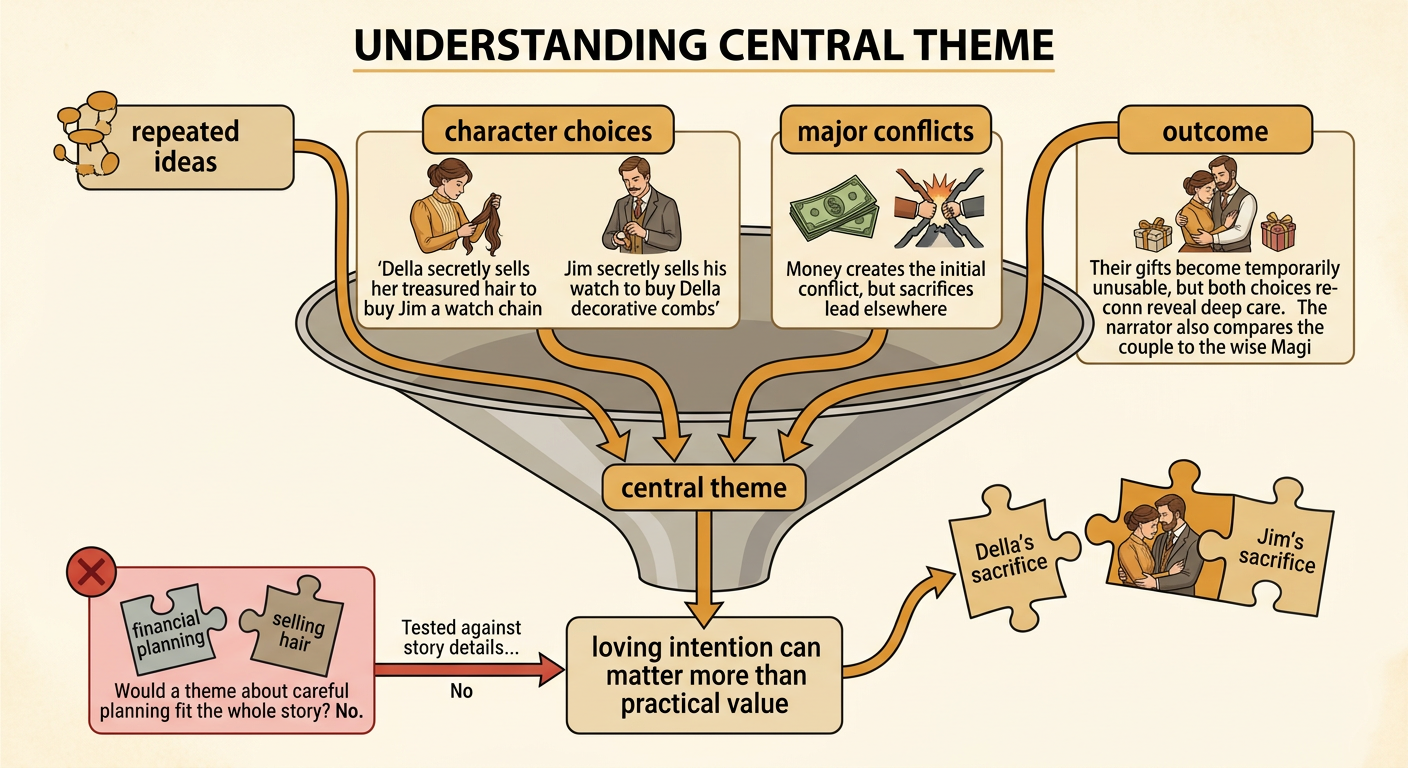
To find a central theme, notice repeated ideas, important character choices, major conflicts, and the outcome of the story. Ask what the main character learns or what the reader understands by the end. Then write a possible theme and test it against several details. In “The Gift of the Magi,” Della and Jim each secretly sell a prized possession to buy a gift for the other. Their gifts become temporarily unusable, but their choices reveal deep care rather than foolishness. The narrator’s comparison of the couple to the wise Magi further supports the message. These details point to the theme that the loving intention behind a gift can matter more than its practical value. A strong central theme fits the whole text, not just one scene.
Tracing Key Details
Tracing a theme means following the specific details that develop it from beginning to end. Select details that reveal changes in a character, intensify a conflict, repeat an important idea, or shape the resolution. Record each detail in chronological order and explain its connection to the theme. In “The Gift of the Magi,” Della first worries because she has too little money for Jim’s gift. Next, she sells her treasured hair to buy a chain for his watch. Jim later reveals that he sold the watch to buy combs for her hair. Finally, the narrator calls them wise gift-givers. Each detail strengthens the idea that their love is shown through willing sacrifice. Do not list every plot event; choose only details that clearly contribute to the theme’s development.

Analyzing Theme Development
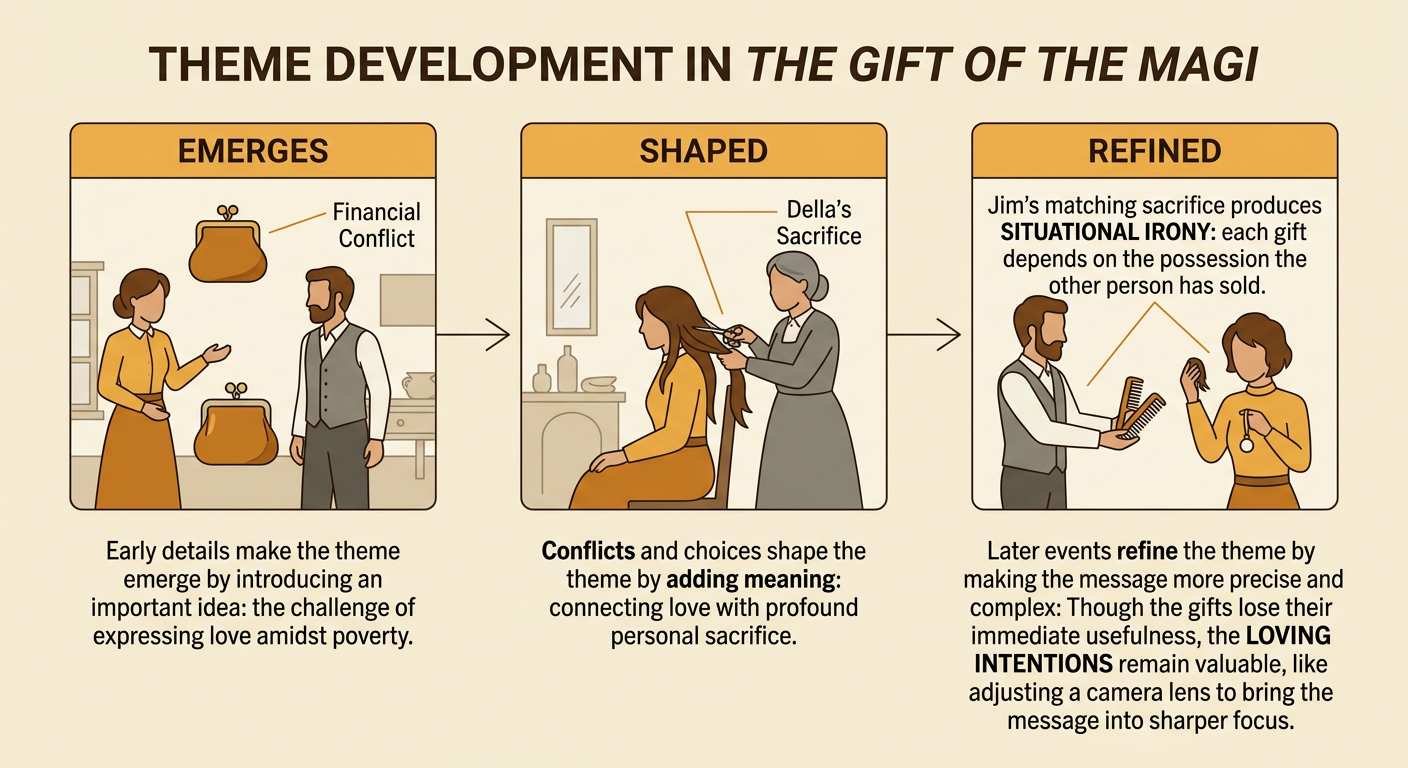
Analysis explains how a theme emerges, is shaped, and is refined. A theme emerges when early details introduce an important idea. It is shaped when conflicts and choices add meaning, and it is refined when later events make the message more precise or complex. In “The Gift of the Magi,” the theme begins to emerge through Della’s financial problem and her determination to give Jim a worthy gift. Her decision to sell her hair shapes the theme by connecting love with personal sacrifice. Jim’s matching sacrifice creates situational irony because each gift depends on the possession the other person sold. This ending refines the theme: the gifts lose their immediate usefulness, but the couple’s loving intentions remain valuable. Effective analysis explains these relationships instead of merely retelling what happened.
Writing an Objective Summary
An objective summary briefly states the text’s central events and theme without opinions, judgments, or unnecessary details. Begin by naming the title, author, main characters, and central situation. Then present the most important events in a logical order. End with the outcome and the theme the events develop. Use neutral language and present tense. For example: In O. Henry’s “The Gift of the Magi,” Della and Jim, a young married couple with little money, each sell a treasured possession to buy the other a Christmas gift. Della sells her hair for a watch chain, while Jim sells his watch for decorative combs. Although the gifts cannot be used immediately, their choices reveal their devotion. The story develops the theme that selfless love gives sacrifice value beyond material usefulness. This summary avoids personal reactions and minor plot details.
