
Tracing Theme Through a Literary Text
Students analyze how multiple themes develop and interact through key details in a Grade 12 literary text and produce an objective summary.

Illustrations are auto-generated and may be placeholders. They can be refreshed to match the narration.
Identify Central Ideas
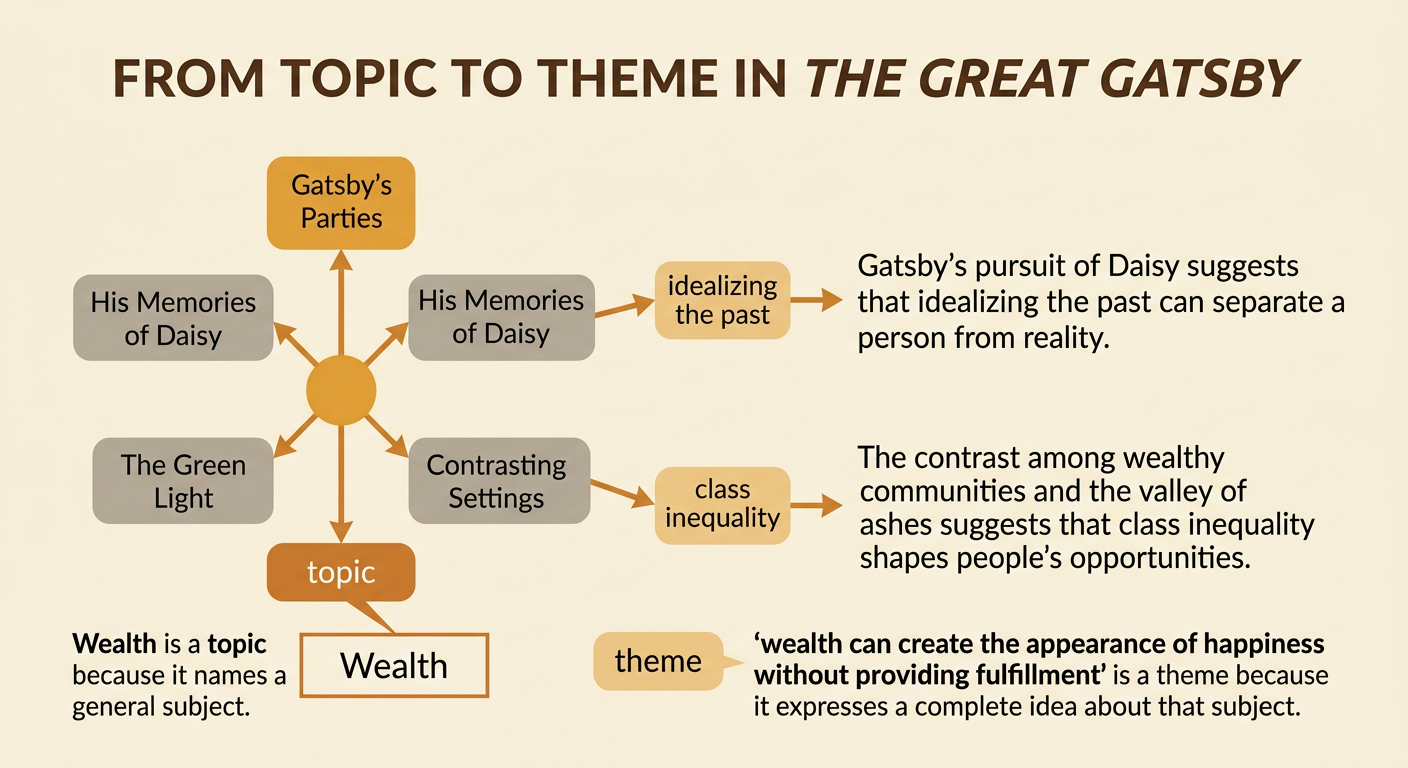
A theme is a broad insight about life, society, or human behavior that a text develops. It should be stated as a complete idea rather than as a single topic. For example, “wealth” is a topic, while “wealth can create the appearance of happiness without providing fulfillment” is a possible theme. Begin by noticing repeated conflicts, choices, images, and outcomes. Then ask what the text suggests about them. In The Great Gatsby, Gatsby’s pursuit of Daisy points toward a theme about the danger of idealizing the past. The differences between East Egg, West Egg, and the valley of ashes suggest another theme about social class and inequality. Treat early theme statements as working ideas. Revise them as later events reveal complications, contradictions, or limits.
Gather Key Textual Details
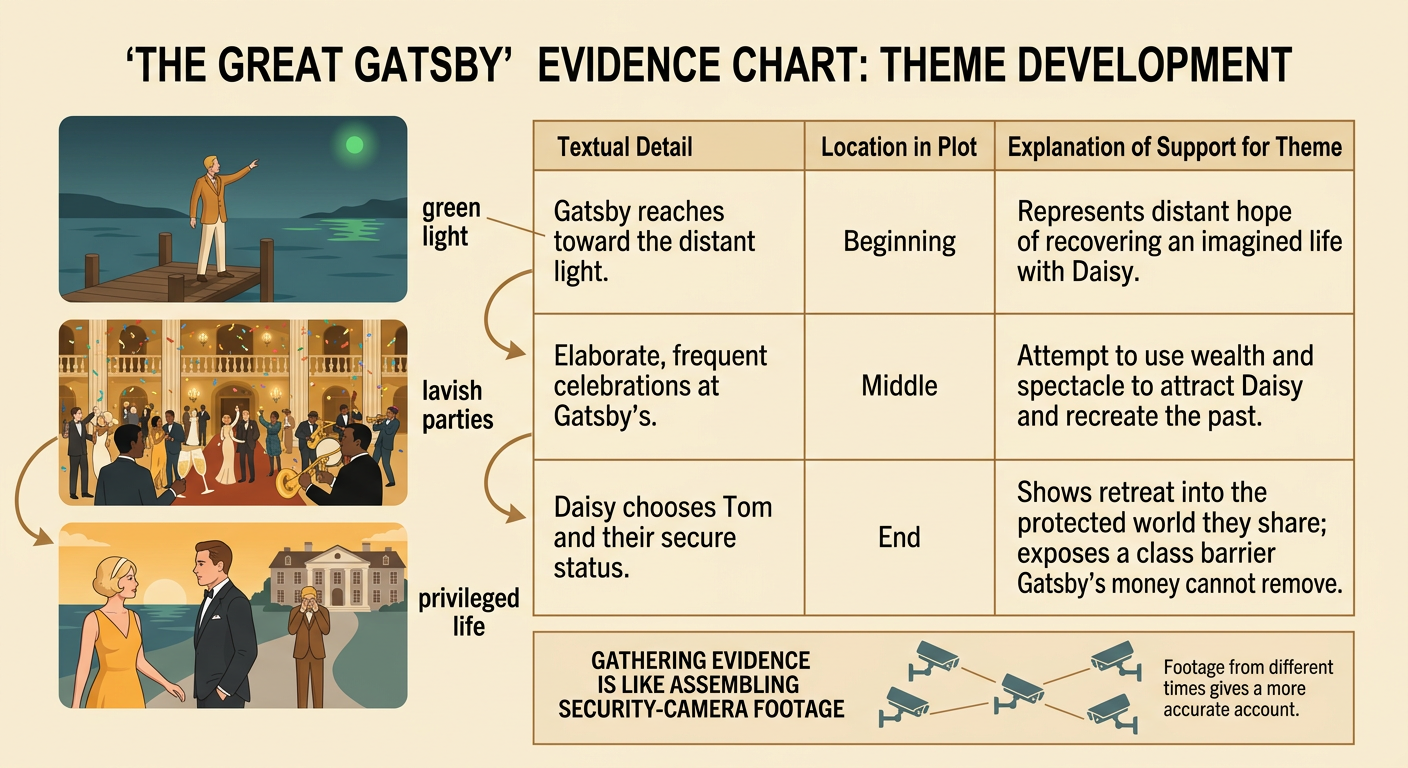
After identifying possible themes, collect details that directly reveal how each idea develops. Useful evidence includes characters’ decisions, conflicts, dialogue, setting, imagery, symbols, and consequences. Record where each detail occurs and explain its significance instead of merely listing it. In The Great Gatsby, Gatsby’s reaching toward the green light reflects his distant hope of recovering an imagined future with Daisy. His lavish parties show how he uses wealth to attract attention and recreate a desired past. Later, Daisy’s retreat into her privileged life reveals the social barriers Gatsby cannot overcome. These details support themes about illusion, the past, and class. Include evidence from the beginning, middle, and end so that your analysis represents the entire text rather than one memorable scene.
Trace Theme Development
To trace a theme, examine how it emerges, changes, and becomes more complex from the beginning to the end. A theme rarely appears fully formed in one scene. Early details may introduce an idea, middle events may challenge it, and the ending may reveal its consequences. In The Great Gatsby, Gatsby’s dream initially seems hopeful and ambitious. As Nick learns more, however, the dream appears rooted in Gatsby’s refusal to accept time and change. Gatsby’s reunion with Daisy briefly makes his goal seem possible, but Daisy cannot match the perfect image he has created. His death and the final reflection on struggling against the past complete the theme: pursuing an idealized past can prevent a person from recognizing reality. A strong analysis explains this progression rather than simply repeating the same theme statement.

Analyze Interacting Themes
Complex literary works often develop themes that influence one another. To analyze interaction, ask whether one theme causes, complicates, supports, or contradicts another. In The Great Gatsby, the theme about idealizing the past interacts with the theme about class inequality. Gatsby believes that money and self-invention will allow him to recover Daisy, but the established privilege of Daisy and Tom limits his access to their world. His personal illusion is therefore strengthened by a social illusion: the belief that wealth alone can erase class boundaries. When Daisy chooses Tom and avoids responsibility, Gatsby’s failed dream becomes both a personal tragedy and a criticism of a class system that protects the powerful. An effective analysis explains this relationship, showing how the two themes build a more complex account than either theme could produce alone.

Write an Objective Summary
An objective summary presents the text’s main events and central ideas without personal opinions, judgments, or unnecessary details. Begin with the title, author, main characters, and central situation. Then describe the most important events in chronological order, including the resolution. Use neutral language and explain thematic relationships without turning the summary into an argument. For example: In F. Scott Fitzgerald’s The Great Gatsby, narrator Nick Carraway observes Jay Gatsby’s effort to reunite with Daisy Buchanan, whom Gatsby has idealized for years. Although Gatsby has gained wealth, Daisy remains tied to Tom Buchanan and their privileged social world. After a confrontation exposes the limits of Gatsby’s dream, Daisy returns to Tom, and Gatsby is killed. Nick concludes that Gatsby’s pursuit reflects the human tendency to reach for an imagined future while remaining bound to the past. This summary is concise, accurate, and free of personal evaluation.
