Tracing Theme Through Story Elements
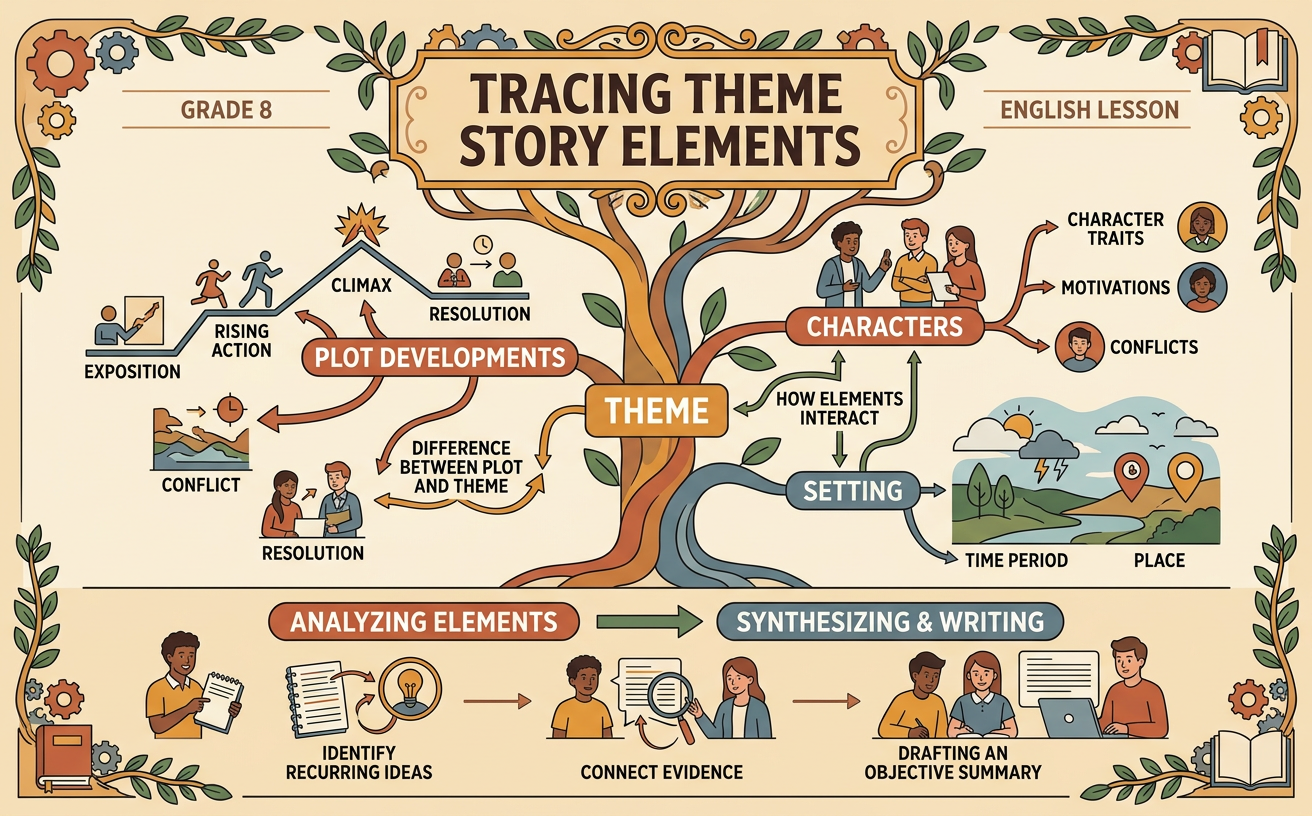
Students analyze how characters, setting, and plot developments reveal a literary text’s theme and then write an objective summary.
Illustrations are auto-generated and may be placeholders. They can be refreshed to match the narration.
Theme and Central Idea Review
A theme is a message about life, people, or society that a literary text develops. A topic is only the subject, such as courage, friendship, or change. A complete theme states what the text suggests about that topic. For example, “courage” is a topic, while “Courage grows when people act despite their fear” is a theme. A central idea is the main point developed in a text. In literature, readers often discuss the central message as the theme. Authors usually reveal theme indirectly through characters’ choices, the setting, conflicts, and outcomes. Suppose a girl repeatedly practices speaking before finally addressing a crowd. Her actions and the plot’s result may support the theme that confidence develops through persistent effort. A theme should be a general statement, not a detail that applies only to one character.

Read and Annotate the Passage
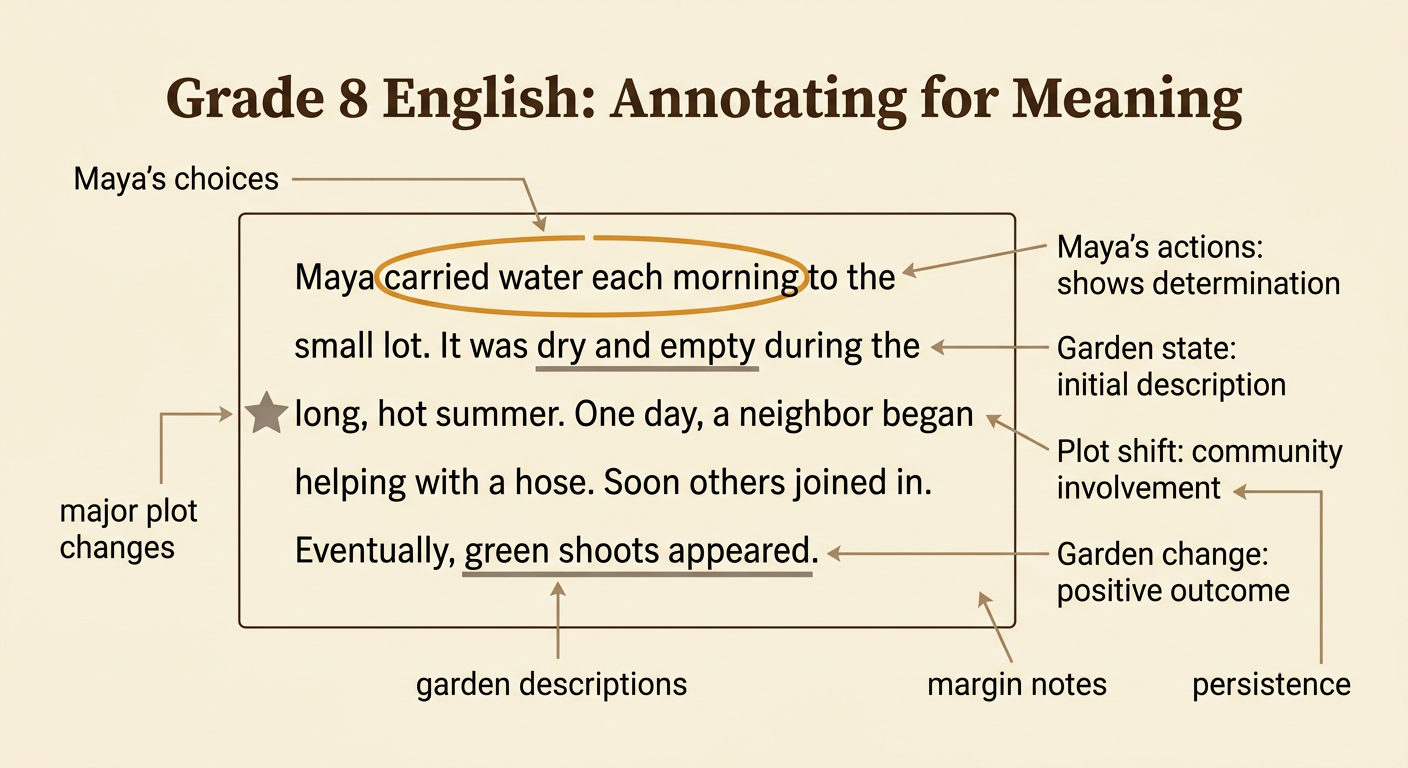
Read this brief example: Maya’s neighborhood garden had become dry and empty during a long, hot summer. Although the city planned to close it, Maya carried water there each morning before school. At first, neighbors hurried past her. Then Mr. Ortiz brought a hose, younger children pulled weeds, and other families planted seeds. Weeks later, green shoots appeared, and the city allowed the garden to remain open. As you read, annotate details that may develop a theme. Circle Maya’s choices, underline descriptions of the garden, and place a star beside major changes in the plot. In the margin, note what each detail suggests. Maya’s repeated watering may suggest persistence. The changing garden may represent renewed hope. The neighbors’ growing participation may suggest that one person’s effort can inspire a community. Annotations should explain why details matter, not merely identify them.
Trace Characters, Setting, and Plot
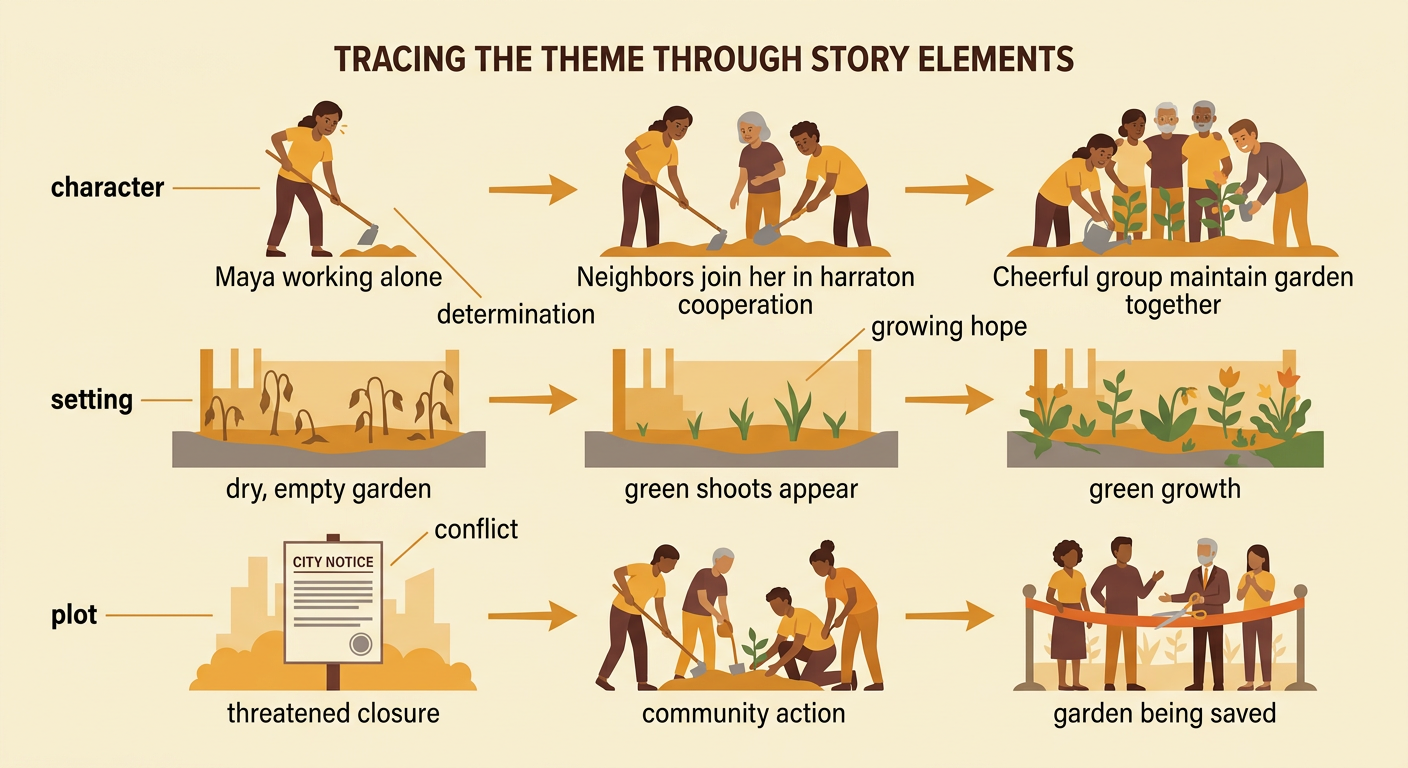
To trace a theme, follow how story elements change from beginning to end. First, examine the character. Maya chooses to water the garden even when she works alone, showing determination. Next, study the setting. The dry, empty garden creates a mood of discouragement and represents a struggling community space. As the garden becomes green, the setting reflects growing hope. Then trace the plot. The city’s plan to close the garden creates a problem. Maya responds through steady action, the neighbors join her, and the garden is saved. These developments are connected: Maya’s persistence changes other characters’ behavior, and their shared effort transforms both the setting and the outcome. A theme is strongest when several story elements support the same message. Do not base a theme on one isolated quotation or event.
State and Support the Theme
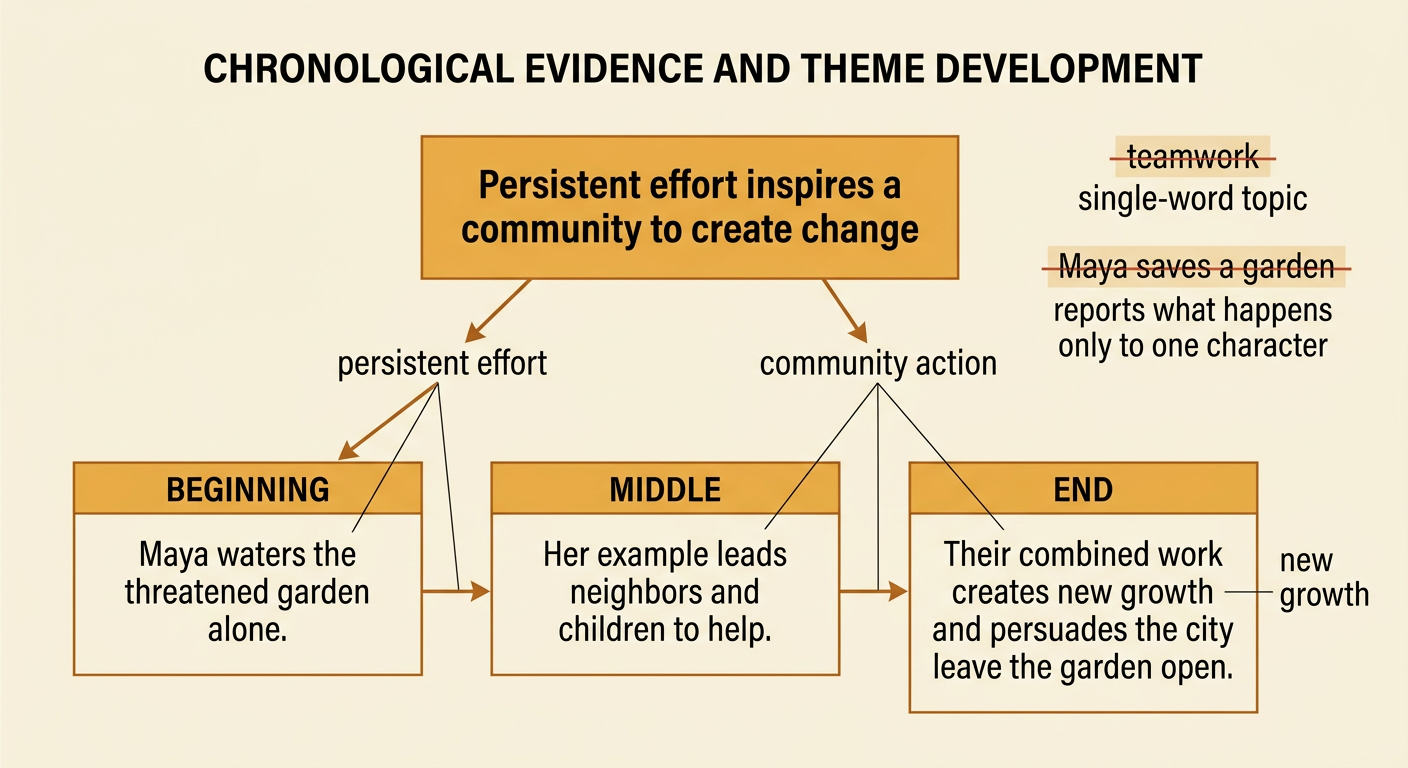
State the theme as a complete, general sentence that could apply beyond the story. One supported theme for the garden passage is “One person’s persistent effort can inspire a community to create change.” This statement is more precise than the topic “teamwork” and more general than “Maya saves a garden.” Support the theme with evidence from across the text. At the beginning, Maya waters the garden alone even though it is dry and threatened with closure. In the middle, her example encourages neighbors and children to help. By the end, their combined work produces new growth and persuades the city to keep the garden open. Explain the connection between each detail and the theme. Do not simply list events. Strong analysis shows how Maya’s choices begin a chain of actions that changes the people, the place, and the final outcome.
Write an Objective Summary
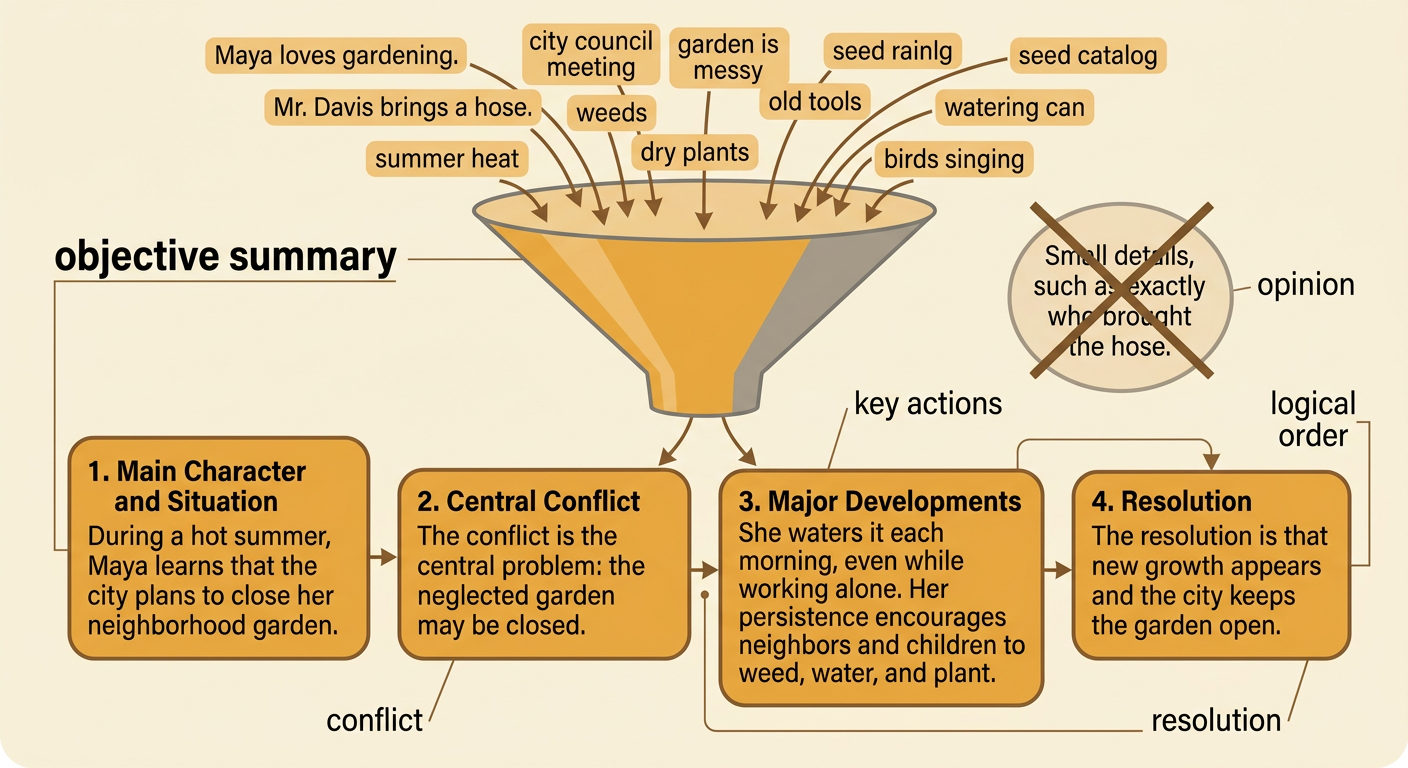
An objective summary briefly explains the text’s most important characters, conflict, major developments, and resolution without adding opinions or unnecessary details. Use your own words and present events in a logical order. Do not write reactions such as “I loved Maya’s brave decision,” because that is subjective. An objective summary might read: During a long, hot summer, Maya learns that the city plans to close her neighborhood’s neglected garden. She begins carrying water to the garden each morning, even though she initially works alone. Her persistence encourages neighbors and children to help weed, water, and plant. When new growth appears, the city agrees to keep the garden open. This summary includes the central conflict, key actions, and outcome. It does not retell every event or directly explain the theme, although the selected details reflect the text’s development of persistence and community action.