Transportation Then and Now
Students compare transportation from the past and present, classify examples, and discuss how people design ways to travel more easily.

Illustrations are auto-generated and may be placeholders. They can be refreshed to match the narration.
What Is Transportation?
Transportation means moving people or things from one place to another. People use many kinds of transportation. We can walk, ride a bicycle, travel in a car, take a bus, sail in a boat, or fly in an airplane. Each kind helps with a different trip. A bicycle can help someone travel to a nearby park. An airplane can carry people to a faraway city. Transportation can also move things. For example, a truck may carry apples from a farm to a grocery store. As you learn about transportation, ask: What moves? Where does it go? How does it help people? These questions help us understand why people create different ways to travel.

Travel Long Ago
Long ago, people did not have cars, buses, or airplanes. Many people walked to nearby places. Depending on where they lived, some rode horses, traveled in horse-drawn wagons, or paddled canoes. Sailboats used wind to move across water. These trips could take a long time. Roads were often rough, and travelers had less protection from rain, snow, or heat. Imagine a family taking vegetables to a town market in a horse-drawn wagon. The horse pulled the wagon while the family sat with the baskets. People designed wheels, wagons, boats, and other tools to make travel and carrying goods easier. Transportation in the past was different in different places and communities.

Travel Today
Today, many vehicles use engines or electric motors to move. Cars, buses, trains, airplanes, and motorboats can carry people farther and often faster than older forms of transportation. Bicycles, scooters, and walking are still useful for short trips. Different vehicles solve different travel problems. A city bus can carry many people at one time. A fire truck quickly carries firefighters and their tools to an emergency. A train can move passengers or heavy goods over long distances. Modern transportation also needs roads, tracks, stations, airports, or charging places. For example, a child might ride a bus to school because the school is too far away to walk. People continue to improve vehicles to make travel safer, easier, and cleaner.

Sort and Count Vehicles
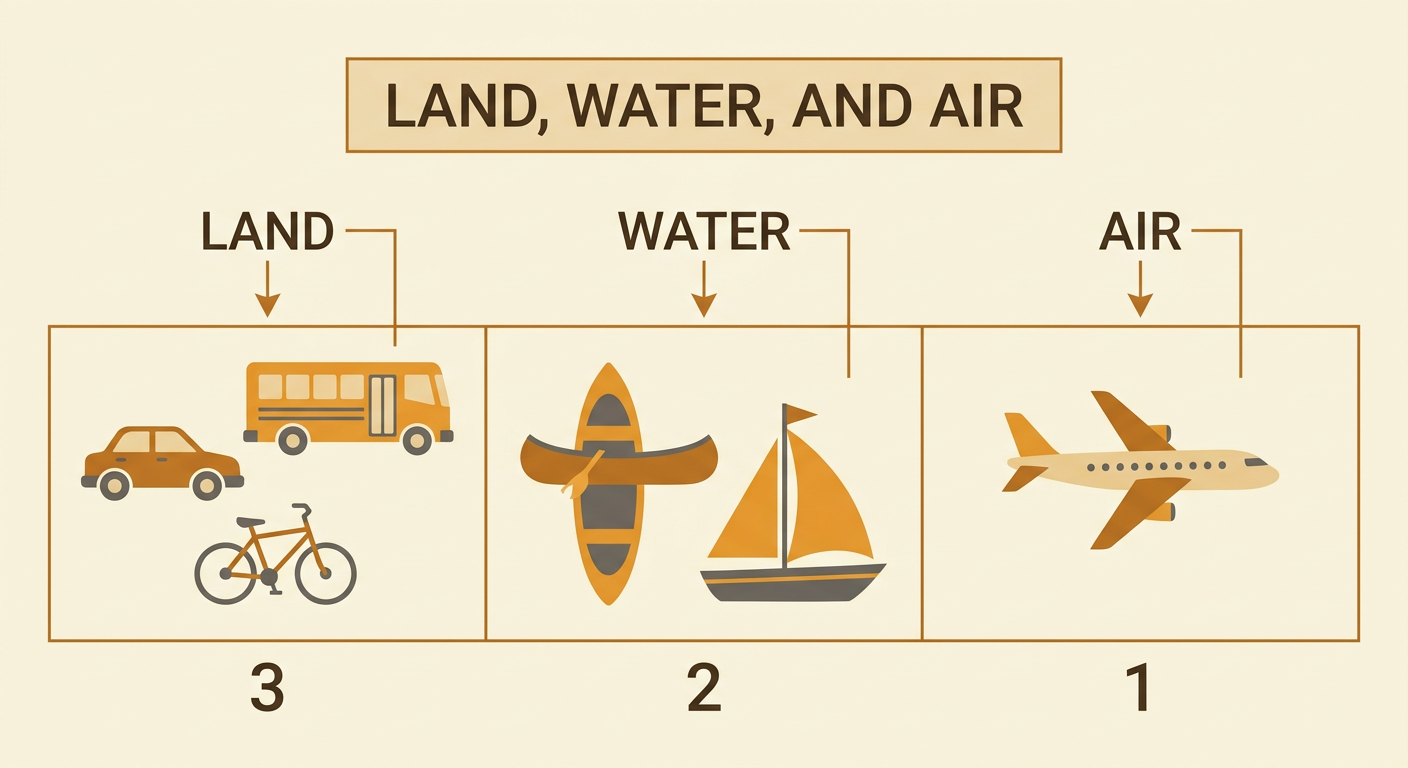
We can classify vehicles by placing them into groups. One helpful rule is to sort them by where they travel: land, water, or air. Cars, buses, trains, and bicycles travel on land. Canoes and sailboats travel on water. Airplanes and helicopters travel through the air. Now sort this set: one car, one bus, one bicycle, two boats, and one airplane. The land group has three vehicles. The water group has two vehicles. The air group has one vehicle. Which group has the most? The land group has the most. Which has the fewest? The air group has the fewest. Each vehicle should be counted only once when we use this sorting rule.
Compare Past and Present
Transportation from the past and transportation today can be alike and different. A horse-drawn wagon and a car both carry people on land. Both have wheels, but they move in different ways. A horse pulls the wagon, while an engine or electric motor moves the car. A wagon trip was often slower and more open to the weather. A modern car can usually travel faster and has a roof, seat belts, lights, and other safety features. Some older forms of travel are still used today. People still walk, ride horses, paddle canoes, and sail boats. When we compare past and present, we look for what stayed the same and what changed. These details help us understand how daily life has changed over time.

Design a Better Way to Travel
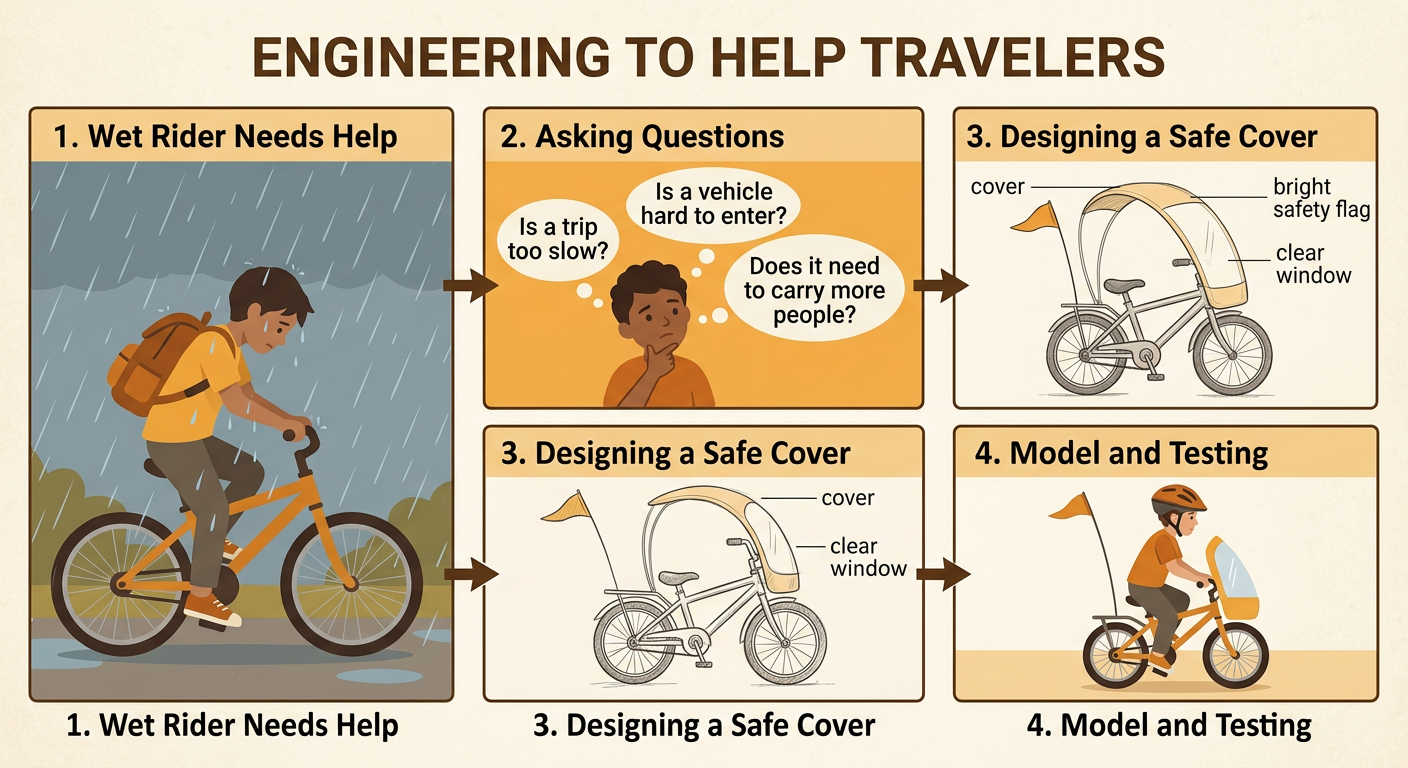
People design new or improved transportation to solve problems. First, ask what travelers need. Is the trip too slow? Is the vehicle hard to enter? Does it need to carry more people? Next, observe and gather information. Imagine that a child wants to ride a bicycle to school, but rain makes the rider and backpack wet. Ask, “How can we keep the rider dry?” One idea is a light cover that attaches safely without blocking the rider's view. Draw the bicycle and label the cover, clear window, and bright safety flag. Then explain how each part helps. A designer can build a model, test it, and make changes. Good designs must help solve the problem and keep travelers safe.